

Listen to this article
Estimated 4 minutes
The audio version of this article is generated by AI-based technology. Mispronunciations can occur. We are working with our partners to continually review and improve the results.
The Town of Lunenburg has closed the door — for now — on the controversial development plan for a large piece of municipal land.
Last week, town council reversed a spring 2024 decision to declare the nine-hectare Blockhouse Hill lands as surplus.
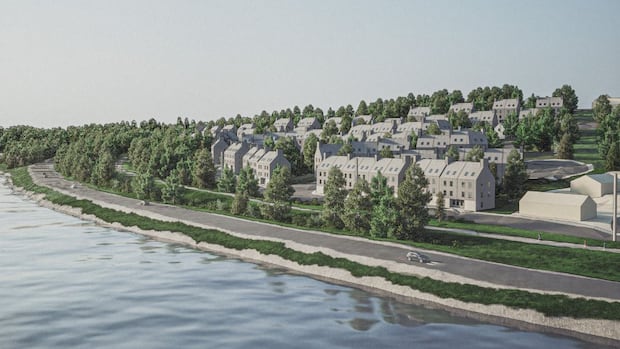
The town was considering a design to create about 250 units of single-family homes and townhomes on the back slope of the hill, built in phases over years, but the land had not yet been sold.
Mayor Jamie Myra said it has become clear to the new council, elected in October 2024, that the town’s electrical grid is at capacity.
“Before we expand … we need to get our current grid and our current electrical system up to basically this century to be quite honest,” Myra said in a recent interview.
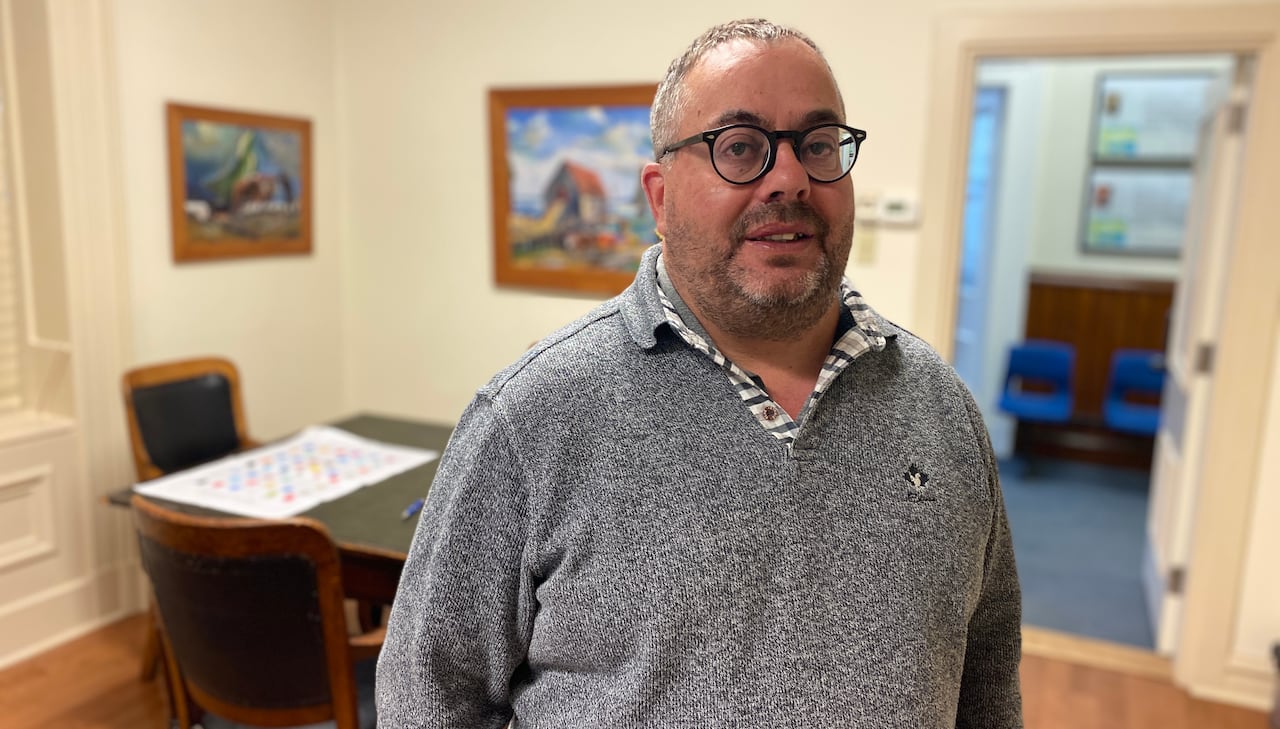 Jamie Myra is mayor of the Town of Lunenburg. (Haley Ryan/CBC)
“We just felt at this time it was no sense having that possibility, or the fear or the desire, to build on that land when it’s actually not possible at this time.”
Council recently voted to move ahead with a five-year capital plan in electrical upgrades, totalling about $18 million to $20 million. Lunenburg is one of the few Atlantic municipalities that owns its own utility.
The plan to sell and develop Blockhouse Hill encountered strong opposition as soon as the town floated the idea in early 2023, and a petition from more than 700 residents called for the project to be paused.
Myra said there is always the possibility the lands could be developed in future, but the process to declare the site as surplus would start all over again. That would include public comment and a hearing.
“Let’s … look for other areas we can develop, get our infrastructure fixed up and move forward,” Myra said.
Resident Paula Rennie of Friends of Blockhouse Hill has long-standing concerns about the proposed development, and said she was happy council had changed course.
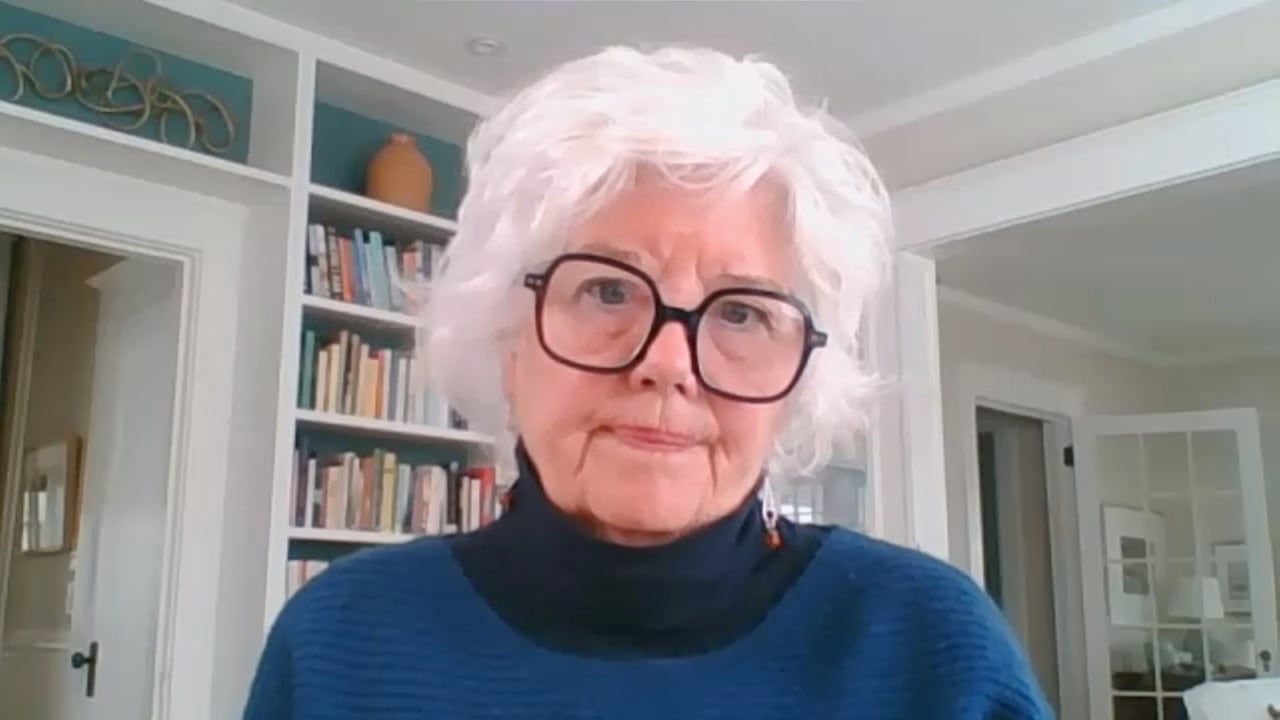 Lunenburg resident Paula Rennie opposed the proposed development on Blockhouse Hill, and welcomed council’s move to reverse the surplus designation. (CBC)
Rennie said she is worried about how it may impact the town’s UNESCO World Heritage Site designation.
“Lunenburg’s brand is UNESCO. I don’t think you want to risk that,” Rennie said Monday.
“We’re not anti-development. But there are other places in town where development can take place.”
Rennie said she is looking forward to the town’s upcoming review of its municipal planning strategy, and would like to see permanent protections against developing the top and upper slope of Blockhouse Hill.
Melissa Duggan was a member of the council that approved the surplus designation for the property, and said she is disappointed by the reversal.
While there were a handful of “loud voices” opposed to development, Duggan said she heard from families, health professionals, and many others who were hopeful the project would allow them to move into town —but did not want to speak up publicly and face backlash.
 Melissa Duggan is a former Town of Lunenburg councillor, and currently lives in the District of Lunenburg. (Peter Zwicker)
Duggan said rather than throwing out years of work by staff and consultants MacKay-Lyons Sweetapple Architects, council could continued to revise the plans until residents were more comfortable.
“We were hoping to just open up possibilities. I feel like those possibilities have been shut down now,” Duggan said Tuesday.
Duggan said the need for housing of all kinds in Lunenburg is personal for her, as she recently had to move to the rural District of Lunenburg to find affordable housing for her and her children.
It makes no sense to halt all development in the town and build up infrastructure alone, Duggan said, when developers shoulder the cost of service upgrades for their projects. She also said new housing units mean more property taxes and revenue from new electrical customers, to help the town’s and utility’s finances.
A housing assessment for Lunenburg states the town of 2,300 people needs 120 new housing units by 2027, and 170 by 2032 to accommodate its growing population.
Myra said since the assessment was released in 2023, Lunenburg has approved at least 40 units including new provincial housing for health-care workers, and 20 units on Pelham Street in the centre of town for a Mackay-Lyons Sweetapple project.
Myra said Lunenburg is hoping to get provincial or federal funding to help move along the town’s electrical upgrades more quickly, and enable more housing projects.
MORE TOP STORIES