

Traffic Lab is a Seattle Times project that digs into the region’s transportation issues to explore the policies and politics that determine how we get around and how billions of dollars in public money are spent.
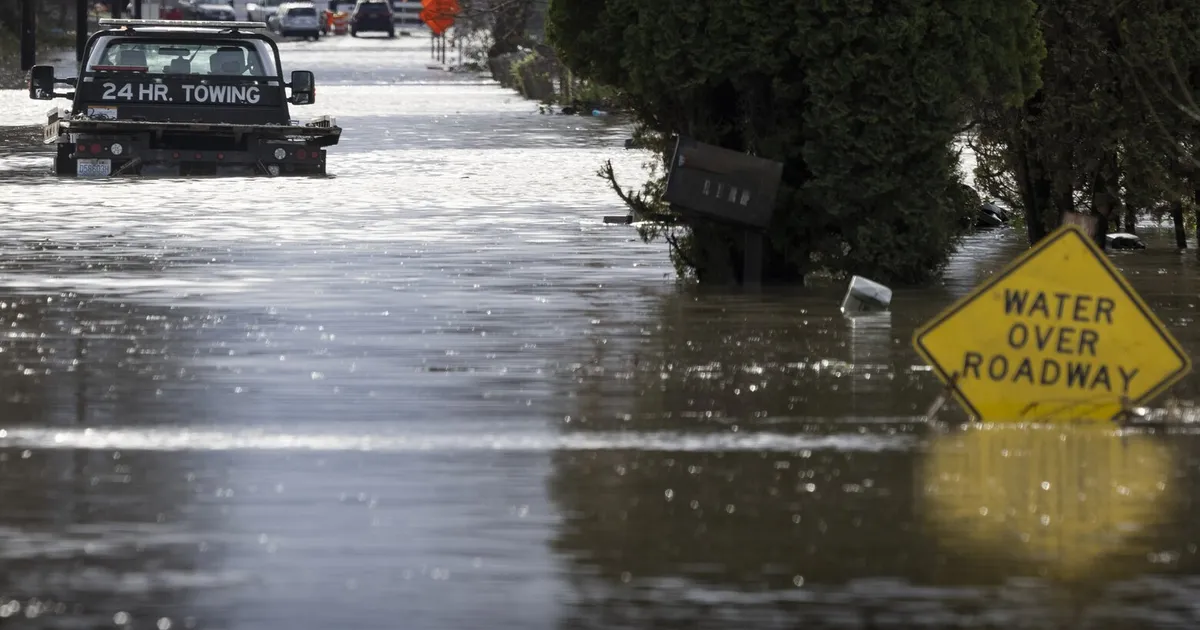
Even after the rain ends and waters recede, after workers remove trees and clean up landslides, after engineers finally get a good look at the damage to the region’s roads and bridges, Washington state’s transportation system faces a long, expensive and daunting road to recovery following this month’s devastating weather.
Yet an even more elusive — and immediate — task is determining when traffic will flow again on roads like Highway 2, where Tuesday’s news that a 50-mile stretch will be closed for months forced grim questions about the expense of repairing ravaged roads and the immediate economic future of communities in the Cascades.
“Mother Nature is driving some of the planning and timing,” said Tina Werner, who works with WSDOT’s Maintenance Operations and Emergency Management offices. “Most timelines for repairs and damage estimates are not yet available — and there is another round of rain, snow and wind on the way, which could alter conditions at some sites.”
Geotechnical experts and other specialists have been in the field since the start of the storm, assessing highways and surrounding slopes, determining risks and evaluating repair options. Their photos show Highway 12 collapsed into the muddied Naches River, water flowing over Highway 544 near Everson like a broad waterfall, a chunk of road bitten out of Highway 2 by the swollen South Fork of the Skykomish River, and more.
Yet even with that work and knowhow, the future of some roads is unknowable, like the stretch of Highway 2 between Skykomish and Leavenworth, where rocks, trees and mud cover the road in multiple locations. There is no detour in place or even available on this mountainous route, and state officials don’t know when it will reopen.
At a news conference Tuesday, Gov. Bob Ferguson said Highway 2 will be closed “for months.” WSDOT head Julie Meredith said sections of the road “are not there any longer.”
WSDOT officials note that more than 60 highways statewide have reopened since the storm began Dec. 9, and point to Highway 12 in Naches, where emergency repairs began over the weekend and expected to complete in January.
Other roads have reopened and then been blocked again, like Highway 167, which closed, opened and closed again as the Green River spilled its banks, and Interstate 90, where slides have hit the highway three times since the storm’s onslaught.
Highway 2
In its entirety, Highway 2 connects Everett to the Upper Peninsula of Michigan, a nearly transcontinental route that passes over the Cascade Range, where it surmounts Stevens Pass.
It’s this section — between the mountain town of Skykomish and the Bavarian-themed Leavenworth — that has been devastated.
“We are going to do everything we possibly can to repair it as quickly as possible, but it’s literally underwater at some stages,” Ferguson said. “There are major, major issues on that roadway.”
One section in particular has the attention of state officials, where the Bolt Creek fire burned 10,000 acres in King and Snohomish counties in 2022. The areas downhill and downstream from the fire are more susceptible to flash floods and flowing debris, especially on steep terrain.
“Rainfall that would normally be absorbed will run off extremely quickly after a wildfire, as burned soil can be as water-repellent as pavement,” according to the National Weather Service. “As a result, much less rainfall is required to produce a flash flood.”
Washington’s mountainous terrain and underlying geology increase the risk of landslides during heavy rainfall. The potential for erosion and landslides has WSDOT’s attention, said Meagan Lott, WSDOT’s South Central Region spokesperson.
“We work closely with our geotechnical experts, who evaluate each slope and help determine when it’s safe to reopen the roadway,” Lott said in an email. “Reopening depends on the weather and field assessments, and conditions can change quickly during these kinds of weather events.”
On Monday, Google Maps said the road would reopen in February, which WSDOT said was incorrect.
Interstate 90
Even absent damage from a recent fire, with the amount of rain the region has seen “it’s not unusual for slides to occur,” said WSDOT’s Lott.
On Monday, for example, a landslide closed the right two lanes of eastbound I-90 near milepost 36 between North Bend and the Snoqualmie summit, the third time in a week a hillside collapsed onto the major roadway. Last week, and about 2 miles from Monday’s slide, a large amount of debris shut eastbound I-90 overnight. Two days later, a slide blocked the interstate for 24 hours, closing it between Snoqualmie and North Bend.
It’s hard to predict where slides or other road issues can occur, but WSDOT crews have been checking road conditions 24 hours a day since the storm began. The agency also gets road condition reports through 911 emergency dispatchers, local jurisdictions and other emergency management partners, WSDOT’s Werner said.
Once a slide or other road obstruction happens, engineering geologists and geotechnical engineers with WSDOT visit the site to determine the amount of damage and suggest possible repairs.
But only if these areas are safe to evaluate.
“If debris is still coming down, it is not safe for our crews to enter. In locations where water remains on the roadway, conditions must improve and water must recede before clearing, repairs and reopening can safely occur,” Werner said.
Another thing that can delay assessment and repair is a shift in weather.
“Significant rain, ground shifts or strong winds can affect our work, especially with the ground already very saturated,” Werner said. “Technical staff may need to begin anew. Unstable weather can delay this step until it is safe to for assessment teams to re-enter and give all clear for crews. Safety for our crews is always the top priority.”
Highway 410
Repairs moved quickly on other roads, like on Highway 410 east of Enumclaw, where Boise Creek “had aspirations of riverhood and took a little bite under the bank there,” said Paul Sowers, fire chief of Pierce County Fire Protection District #26, which covers Greenwater and Crystal Mountain.
For five days, Sowers led a twice daily convoy up and down the mountain — a 20-mile trip that avoids just about 200 yards of damaged road.
WSDOT crews are placing rock at the creek edge to stabilize the washout, and on Tuesday the agency installed temporary traffic signals, reopening the road to alternating, one-way traffic.
Before the fix, Sowers’ convoys had pilot vehicles in front and back, and about 30 cars joined each trip.
Greenwater doesn’t have the amenities of Seattle, but it does have a grocery store, gas station, tavern and coffee shop. But people have used Sowers’ convoy to get supplies like propane, and to go to the doctor.
Sowers said the convoys were “pretty large” the first couple of days, when about 100 vehicles made each trip.
“This is a courtesy system. Not a great time for sightseers to go up there,” Sowers said. “Let’s try to limit it to community members and not stress the system.”
Highway 12
Last week, just a day after WSDOT closed Highway 12 in Naches, more than 300 feet of the highway was washed out by the Naches River.
Three days later, WSDOT contractor Apollo Inc. began emergency repairs with the construction of a buttress to block the river. After rebuilding the embankment, backfilling the highway with gravel and, finally, paving and striping the road and installing guardrail, the highway is expected to reopen in early January.
County roads
As of late Tuesday afternoon, 24 King County roads remained closed, and 30 fully reopened.
Pierce County has seven roads that remain off limits, due to landslides, water on the roadway or fallen trees.
In Snohomish County, at least 13 roads are closed due to flooding. Among the worst is Index-Galena Road outside of Index, completely shut to traffic east of milepost 3.
“Crews are doing the best they can to open the roads, but we need a break in the weather,” said Bill Craig, a spokesperson with the Snohomish County Public Works Department. “The rain is just persistent. If we had some cooler weather we might get some stabilization.”
Seattle Times staff reporter Jim Brunner contributed to this report.
Nicholas Deshais: 206-464-2932 or ndeshais@seattletimes.com. Nicholas Deshais is a transportation reporter at The Seattle Times.