
This Editor’s Note was sent out earlier Wednesday in ToI’s weekly update email to members of the Times of Israel Community. To receive these Editor’s Notes as they’re released, join the ToI Community here.
For over 800 days, The Times of Israel has kept a numbered red tag, “Israel at War,” at the very top of our site, underlining that we entered a new and terrible era with the Hamas invasion, slaughter and mass abductions of October 7, 2023.
There are compelling reasons to argue that the war is now over, and compelling reasons to assert that it is not. Several readers have written to us about this, more making the first argument than the second. I’m not quite persuaded.
Wars tend to end with ceasefires, and a ceasefire agreement of sorts was indeed signed by Israeli and Hamas representatives in Sharm el-Sheikh on October 9 this year, was sort of approved by the Israeli government, and took effect the following day.
US President Donald Trump, who was central to the brokering of that agreement, has repeatedly declared the war over, and made clear his determination to prevent a resurgence of intense military conflict.
Get The Times of Israel’s Daily Edition
by email and never miss our top stories
By signing up, you agree to the terms
Most of Israel’s troops have withdrawn from the Gaza Strip, most reservists have been sent home, and the IDF has generally, though not exclusively, been confining itself to defensive operations.
And all but one of the hostages abducted on October 7 have been released, or their bodies returned.
On the other hand, the two core declared goals of the war have not been fully achieved.
Hamas has not been disarmed, and indeed is adamant that it will not lay down its weapons as required by the second phase of Trump’s 20-point Gaza peace plan, which itself has yet to be finalized, much less to come into effect.
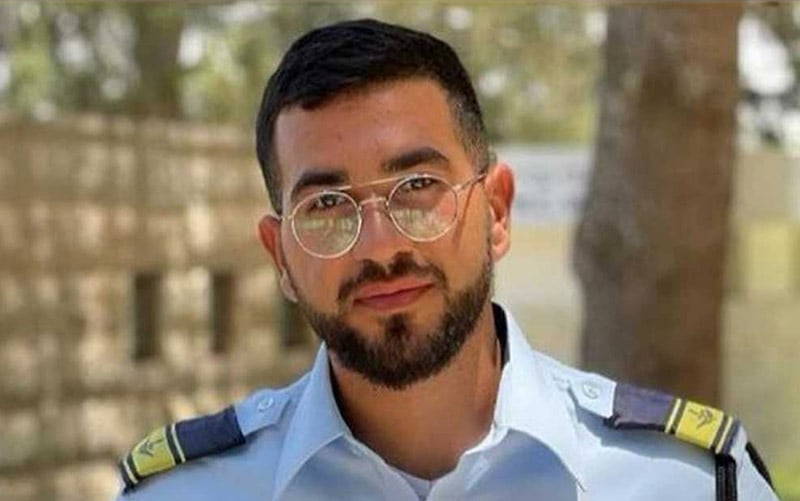
And the body of one last deceased hostage, Master Sgt. Ran Gvili, a member of the Yasam police elite counter-terror unit who was killed battling terrorists at Kibbutz Alumim on that darkest of days, has yet to be brought home. The return of all the hostages held in Gaza was required under the first phase of the ceasefire deal.
There are also legal and political arguments to be made about whether the war is over and, for that matter, whether an Israeli website should indicate that it is over.
Did Israel legally declare the war at an end when the full cabinet voted in the early hours of October 10 in favor of a government resolution on Gaza that provided for all hostages to be freed within three to four days in exchange for Palestinian security prisoners? The answer is not cut and dried.
To give just one example of the complexity: Despite reports to the contrary at the time, the government resolution did not ratify an end to the war. But appendices to the resolution included the October 9 Sharm agreement, which states in its opening clauses: “1. President Trump announces the end to the war in the Gaza Strip, and that the parties have agreed to implement the necessary steps to that end. 2. The war will immediately end upon the approval of the Israeli government.”
Does an independent Israeli website retaining or removing an “Israel at War” tag help or hinder a government whose prime minister has not explicitly declared it at an end — a prime minister who may not wish to enter an election campaign with the country still at war and Hamas far from destroyed, on the one hand, but whose coalition partners have vowed to bring down the government if it is terminated, on the other? Should we give any weight at all to any such considerations?
Needless to say, in common with most Israelis and those who love Israel, I deeply want this war to be over. That is, I want the nightmare era in which this country has struggled, and battled, and managed to hold itself together, since it was attacked by Hamas and so deeply failed by its (still presiding) political and (largely replaced) military leadership, to be well and truly done. But that’s not the case.
As things stand, Hamas is reviving, Israel is largely holding its fire, and nobody but Israel is prepared to take it on. There’s no knowing how long that situation could persist.
More definitively, Ran Gvili’s body has yet to be returned. And for over 800 days, Israel, led by the families of the hostages, has chorused its insistence that the war is not over until all the hostages are home. Every last one.
Ran Gvili was on medical leave when Hamas invaded, soon to undergo surgery on a shoulder he broke in an off-road motorbike accident. Even as his father asked him how he would be able to shoot, he put on his uniform and went to war.
We owe it to him, and his loved ones, to make the symbolic decision to wait a little longer before declaring that the war in which he knowingly put his life on the line for his nation, and lost that life protecting his people from the invading terrorist army of the quasi-nation next door, is over.
**

Rob Reiner poses at a photo call for ‘This is Spinal Tap’ at the 75th international film festival, Cannes, southern France, May 18, 2022. (AP Photo/Daniel Cole)
Following the horrifying, heartbreaking murder of Rob Reiner, a filmmaker of extraordinary skill and diversity who brought so much light — so much humor, wisdom and joy — to so many of us, I just want to direct your attention to a little line in a piece in the Guardian, by a writer named Tim Jonze, who interviewed Reiner in February 2024.
In a tribute piece on Monday, Jonze said he had gone over the notes from that interview, conducted almost five months after October 7, 2023, and found there were quite a few things he didn’t have space to squeeze into the original article. Among them, this quote from Reiner: “Right now the world is shifting away from Israel – and that to me is very sad.”
**
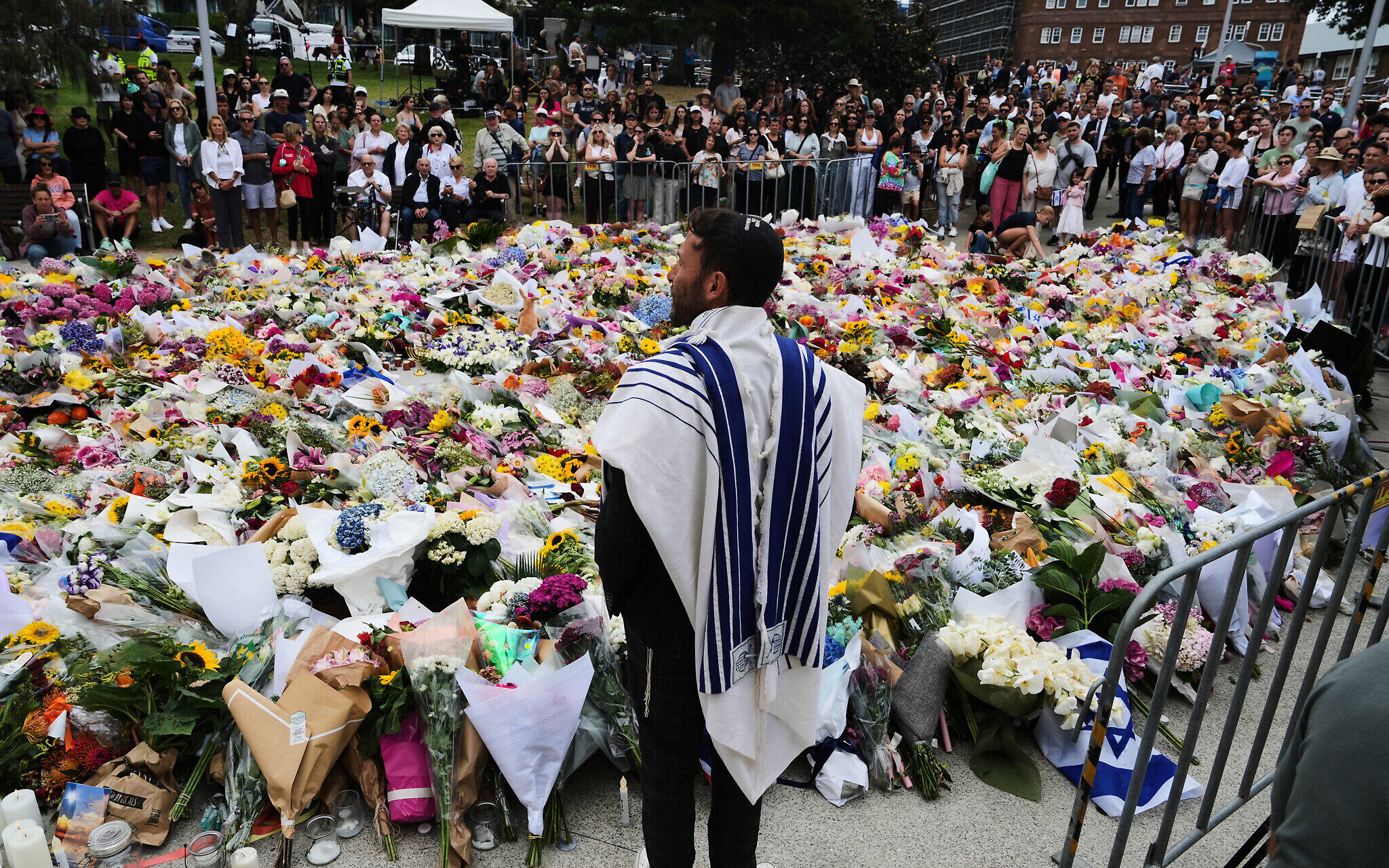
Rabbi Yossi Friedman speaks to people gathering at a flower memorial by the Bondi Pavilion at Bondi Beach, December 16, 2025, following Sunday’s antisemitic terror attack in Sydney, Australia. (AP Photo/Mark Baker)
I wrote a piece two days ago, amid the grief over the mass murder on Bondi Beach and the fury over the failure of the Australian government to protect its Jewish community, trying to at least sketch out a practical, strategic, global process for defeating death-cult Islamic terror.
With every new revelation, the anger at what amounts to the Australian leadership’s indifference to the fate of the Jews only grows. You allow haters to march, including in Sydney, with calls to gas the Jews and destroy their revived homeland? And then you deploy precisely two police officers to secure a Jewish public event in the same city with 1,000 participants?
That’s a government unfit for purpose.