
Stay informed with free updates
Simply sign up to the Climate change myFT Digest — delivered directly to your inbox.
The Arctic has experienced its warmest and wettest year on record, a long-running study by the leading US atmospheric agency has found, and the rapid melt of permafrost has caused rivers to turn orange from leached metals.
Climate change is affecting the northernmost part of the planet by more than double the global rate since annual tracking by the National Oceanic and Atmospheric Administration (Noaa) began 20 years ago.
The Arctic surface air temperature from October 2024 to September 2025 was the warmest since measurements began in 1900, it said, while each of the past 10 years ranked among the 10 warmest on record.
The global average temperature rise last year was more than 1.5C since pre-industrial times.
The report landed even as Noaa comes under intense pressure from the Trump administration, with hundreds of jobs cut and research projects ended at the federal agency with the role of tracking and forecasting changes in the climate and weather.
Matthew Druckenmiller, a research scientist at the National Snow and Ice Data Centre at the University of Colorado and one of the authors of the study, said it “did not receive any political interference with our results”.
Describing the Arctic as the “refrigerator for the planet”, Druckenmiller said the major changes to the region would have ramifications globally.
“The Arctic is really critical to global climate,” he said, referring to the role of snow and ice in reflecting heat back into the atmosphere, while ice melt was driving sea level rise.
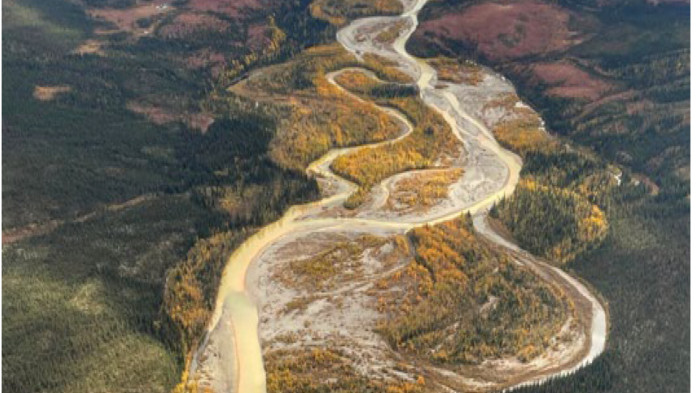
Over the past decade, thawing permafrost has also released iron and other elements into more than 200 Arctic Alaskan rivers, turning water courses orange in a phenomenon known as “rusting rivers”.
Abagael Pruitt, a postdoctoral researcher at the University of California, Davis, said: “This phenomenon is expected to continue, with significant consequences for water quality, aquatic biodiversity and the communities that rely on these streams.”
The report also warned of an “Atlantification” of the region, with an influx of water from lower latitudes reaching the central Arctic Ocean, hundreds of miles from the former edge of the Atlantic Ocean.
Historically, this deep, warm, saltier water had been blocked from the Arctic by the Eurasian Basin halocline, said Gabriel Wolken at the University of Alaska Fairbanks.
But this insulating barrier was weakening, allowing Atlantic water to rapidly erode sea ice and threatening ocean circulation patterns that exert a long-term influence on the weather.
“This creates a process that is fundamentally altering the Arctic’s thermal structure and reshaping entire ecosystems,” Wolken said.
The report found that Arctic winter sea ice reached the lowest annual maximum extent in the 47-year satellite records this year.
Recommended

The oldest, thickest Arctic sea ice had declined by more than 95 per cent since the 1980s, with multi-year-old sea ice now largely only found in the area north of Greenland and the Canadian archipelago.
Glaciers in Arctic Scandinavia and Svalbard experienced the largest annual net loss of ice on record between 2023 and 2024.
The study said that several Arctic monitoring programmes had been cut or faced cuts, which could affect future monitoring and risked introducing inconsistencies into data sets.
This included several satellites that are scheduled to be decommissioned in 2026, which are used to measure sea ice extent.
It also warned that a dataset tracking the greening of tundra would no longer be updated because of funding cuts at Nasa.
Speaking at a press conference, Steve Thur, Noaa assistant administrator for oceanic and atmospheric research and acting chief scientist, said: “We recognise that the planet is changing dramatically.”
Climate Capital
Where climate change meets business, markets and politics. Explore the FT’s coverage here.
Are you curious about the FT’s environmental sustainability commitments? Find out more about our science-based targets here