
Since he received a call that every prime minister would dread on Sunday night, Anthony Albanese has been trapped in a time warp of expectations. Even before gunmen targeted Jews celebrating Hanukah at Bondi beach, Labor’s critics said it had not done enough to stem a rising tide of antisemitism.
And after the bullets stopped, the prime minister has been captured by events, rather than controlling them.
But as the country mourns and the political blame-game ratchets up, Albanese moved to reset the clock on Thursday. Appearing at parliament house as the funeral for 10-year-old Bondi victim Matilda took place in Sydney, a humbled Albanese conceded he could have done more to prevent the tragedy, stopping short of specifying what that was.
While not apologising, his body language and choice of words spoke to the intense blowback that had been felt.
“Of course more could have always been done,” he said. “Governments aren’t perfect. I’m not perfect.”
Albanese confirmed he would belatedly take up the report by the envoy for curbing antisemitism, Jillian Segal, and announced plans to strengthen hate speech laws and target extremist groups.
As the states move on gun reforms, the federal government will beef up powers to cancel visas of people spreading division in the community and establish a new taskforce to focus on the education system. Labor will also redouble efforts to stop antisemitism spreading on social media.
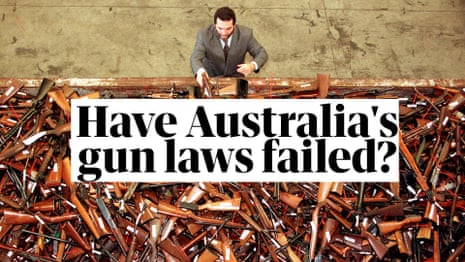 Bondi beach terror attack: how Australia’s gun laws have eroded – video
The prime minister’s signature cautious approach to government has come up short since the shooting, giving room to the Coalition and media to criticise his response to the terror attack. If he attends funerals for the victims at Bondi, he risks being shouted at. Former treasurer Josh Frydenberg has even made the extraordinary demand that the prime minister accept personal responsibility for the 15 deaths.
But Thursday’s response is not as clear as it might seem.
Segal’s report contained nearly 50 recommendations, including unworkable proposals for her to monitor media reporting by public broadcasters and advise the government on stripping funding to universities and arts organisations she considers are not doing enough to stamp out hatred for Jewish Australians.
More than six months after it was received, Albanese’s team has condensed the report into 13 major themes, and says the government will work through the plan in consultation with Jewish leaders. Segal is proceeding with a report-card system for universities and will work as part of the new education panel led by businessman David Gonski.
Efforts to turn off the firehose of antisemitic and hateful invective on social media won’t succeed, and policing media and the arts – let alone protests on university campuses – risks badly infringing free speech, including legitimate criticism of the Israeli government.
The opposition leader, Sussan Ley, accused Albanese of missing the mark again, calling the government’s immediate plans too little and too late.
Ley and other Coalition figures are working hard to avoid criticism that they are politicising the tragedy even as they look set to oppose tougher restrictions on the gun ownership and the proliferation of weapons across the community.
Some kind of commission of inquiry into the Bondi tragedy is inevitable. Labor should take the lead in considering when to announce such a probe, working in concert with the New South Wales premier, Chris Minns.
Demands by the Coalition for parliament to be recalled before Christmas have sensibly been ignored.
Despite his obvious empathy, Albanese has struggled to take up the traditional role for prime ministers in times of crisis – that of mourner-in-chief. He has been outshone by Minns at times.
Albanese’s challenges makes his efforts to reset the clock on legislative responses to the attacks all the more critical.