
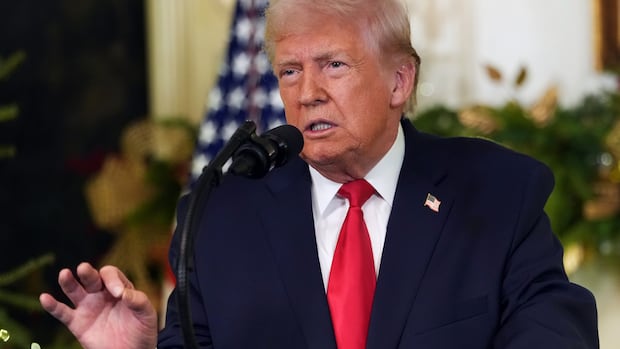
U.S. President Donald Trump delivered a prime-time address Wednesday largely focused on past grievances with his predecessor, Joe Biden, who he blamed for persistent affordability challenges that polls suggest have hurt his standing among voters.
Trump, who was, at times, shouting into the microphone and rushing through his scripted remarks, claimed Biden brought the country to its knees and he’s spent the past 11 months trying to rebuild it.
“I inherited a mess, and I’m fixing it,” Trump said, pointing to his success at curbing illegal border crossings and supposedly bringing down some prices as a sign his plan is working.
“You have a president who fights for the law-abiding, hard-working people of our country. The ones who make this nation run, who make this nation work. And after just one year, we have achieved more than anyone could have imagined,” he said.
While Trump is blaming former president Biden’s administration for the country’s troubles, some economic indicators are actually worse now than they were when he was inaugurated in January, including inflation and unemployment rates.
Trump, who promised on “Day 1” to “end inflation and make America affordable again,” has struggled to follow through on that commitment.
Federal data shows inflation is stuck at about three per cent while health-care premiums have soared and are expected to go even higher, barring a congressional breakthrough on extending federal Obamacare subsidies.
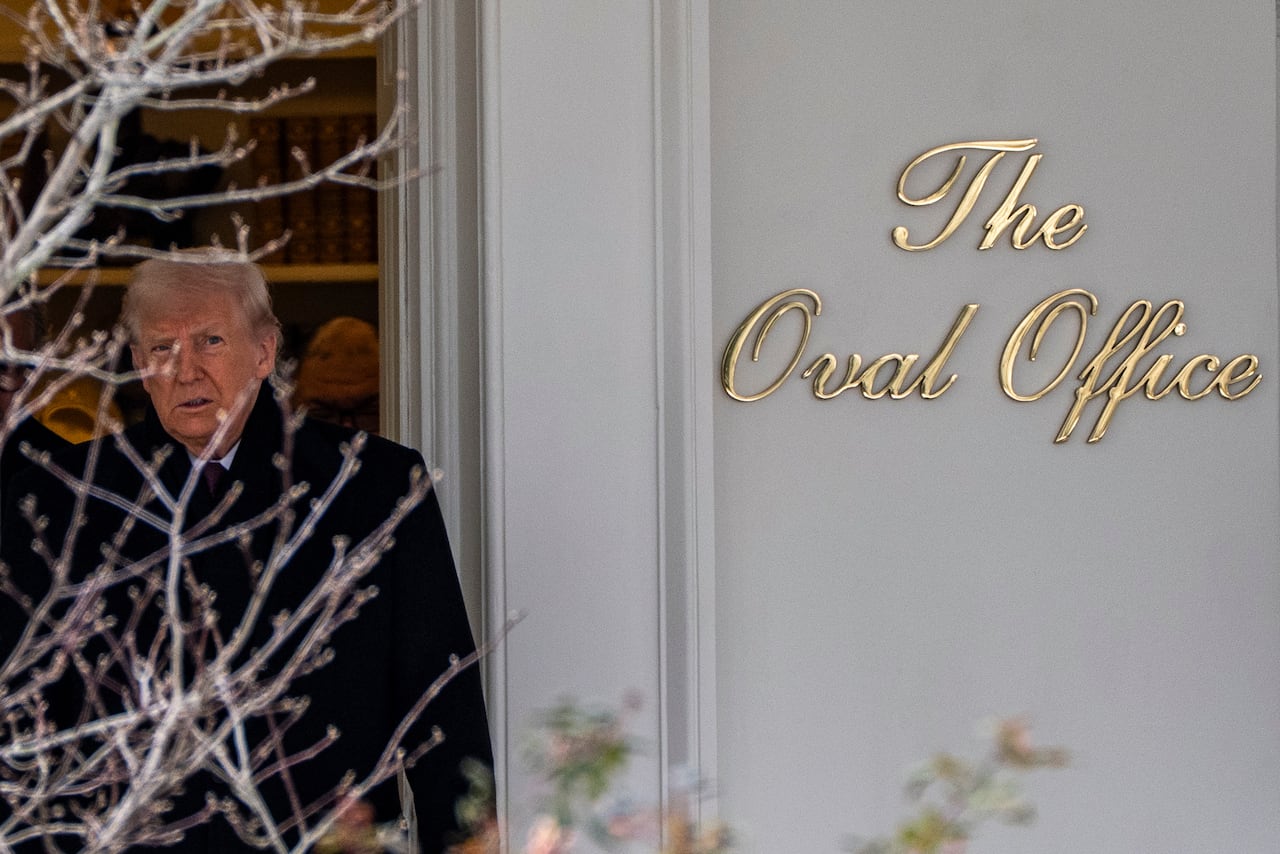 Trump steps out of the Oval Office at the White House on Wednesday. (Alex Brandon/The Associated Press)
Polls suggest about two-thirds of Americans surveyed disapprove of Trump’s handling of the economy — an issue many voters cited when casting a ballot for him last fall. The latest unemployment data, released Tuesday, shows the economy added 64,000 jobs in November.
By comparison, Canada, which is roughly nine times smaller by population, added 54,000 jobs in the same month — a sign that the country’s economy seems to be holding up in the midst of Trump’s trade war, which experts say has in fact pushed prices up for American consumers and businesses, filling federal coffers but delivering few of the promised jobs.
In fact, the U.S. economy shed more than 100,000 jobs in October, many of them in manufacturing.
According to recent data from the Center for American Progress, 58,000 net U.S. manufacturing jobs have been lost since April, when the Trump administration announced its “reciprocal” tariffs, ostensibly to boost jobs in the sector.
WATCH | Trump says the U.S. economy is strong: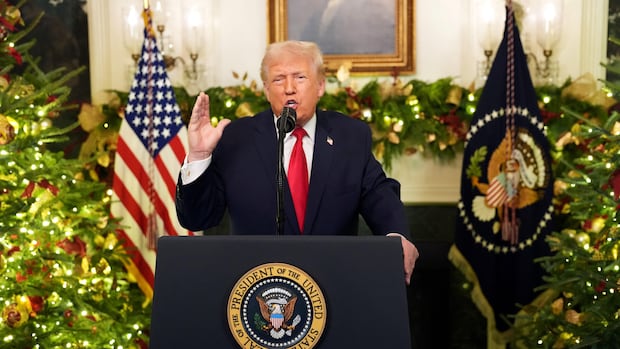
Trump touts U.S. economy in prime-time address
U.S. President Donald Trump addressed Americans from the White House on Wednesday night, saying that the U.S. economy is strengthening despite weak hiring and high inflation.
The U.S. unemployment rate for November 2025 was 4.6 per cent, according to the U.S. Bureau of Labour Statistics — six-tenths of a percentage point higher than it was in January when Trump took over for Biden.
Jerome Powell, the chairman of the Federal Reserve, who last week announced an interest rate cut to help boost a sluggish economy, said “labour demand has clearly softened.”
“The downside risks to employment appear to have risen in recent months,” Powell said.
Trump, who has sparred with Powell throughout his tenure, said he will announce his replacement soon, someone who “believes in lower interest rates, by a lot.”
Despite some of the U.S. government’s own data that paints an uneven picture of the economy, Trump boasted about his record on the issue.
“Here at home, we’re bringing our economy back from the brink of ruin,” Trump said.
“You will see in your wallets and bank accounts in the new year, after years of record-setting falling incomes, our policies are boosting take home pay at a historic pace,” he said.
The latest data from the U.S. Bureau of Labour shows that real average hourly earnings were essentially unchanged in August and September.
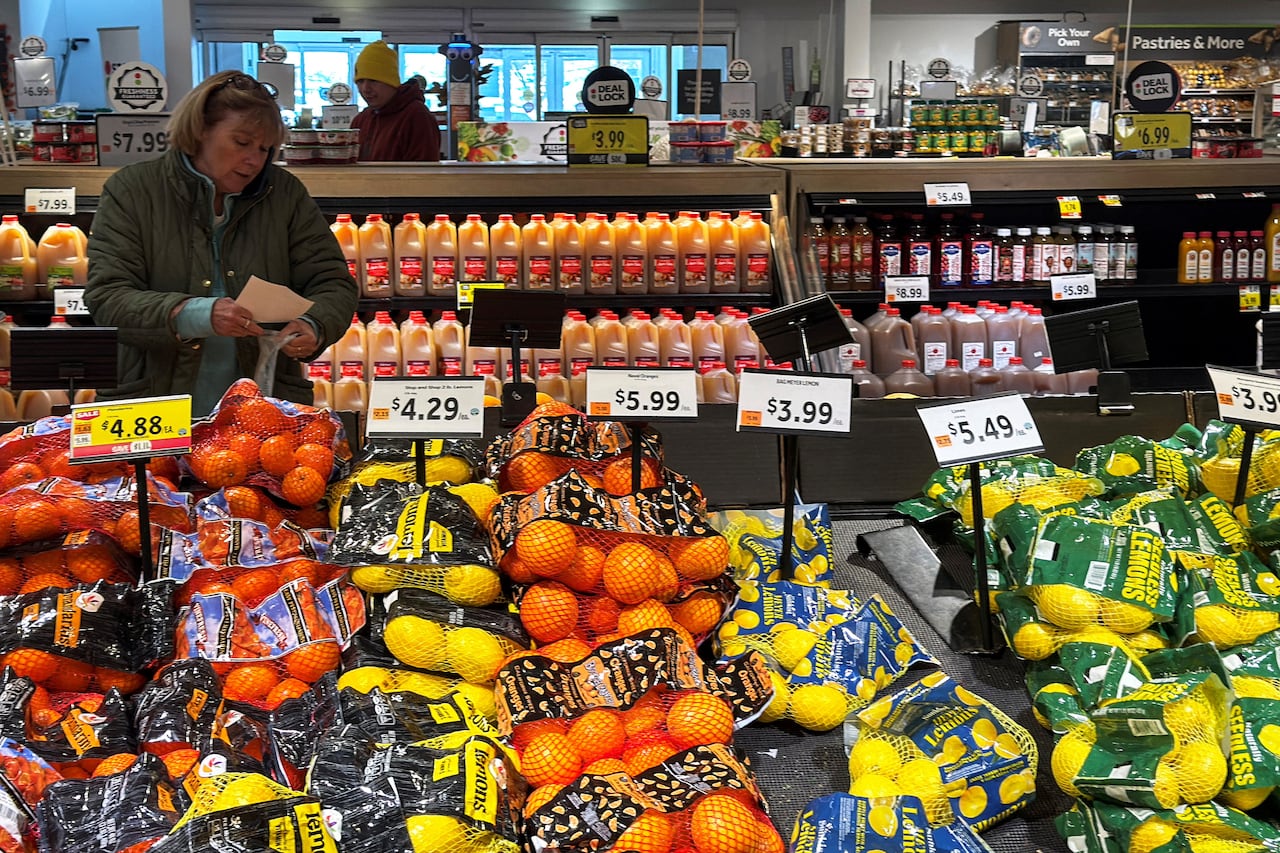 People shop for groceries at a store in Port Washington, New York, U.S., November 19, 2025. REUTERS/Shannon Stapleton (Shannon Stapleton/Reuters)
Trump used his address to remind cash-strapped voters they could be in for a bigger tax return next year thanks to his One Big Beautiful Bill, which slashed taxes for some but also made cuts to some federal health programs.
The Republican-controlled ways and means committee, which is responsible for spending bills, has estimated a family of four with a household income below $100,000 a year will save about $600 in taxes.
“Next spring is projected to be the largest tax refund season of all time,” Trump said.
Trump has repeatedly teased the idea of sending one-time $2,000 rebate cheques to some families, a potentially huge outlay that could be funded in part by the billions of dollars collected from his sweeping global tariffs — but there was no mention of that initiative in his remarks Wednesday.
Trump did promise, however, payments for military personnel soon — $1,776 to match the year the U.S. declared its independence.
There is one area where Trump’s claims aligned with the data and that’s on immigration.
Trump blamed Biden for allowing the U.S. to be “invaded by an army” of illegal immigrants, the number of which did soar under the last Democratic president.
U.S. Customs and Border Protection figures show the number of “encounters” along the southern border have plummeted since Trump took office.
He has beefed up border security, pushed ahead with a new fence and essentially ended or suspended asylum and refugee programs. This week, Trump moved to curb immigration from what he calls “third-world” countries by barring some nationalities from the U.S. altogether.
“Our nation is strong. America is respected and our country is back stronger than ever before,” he said.