
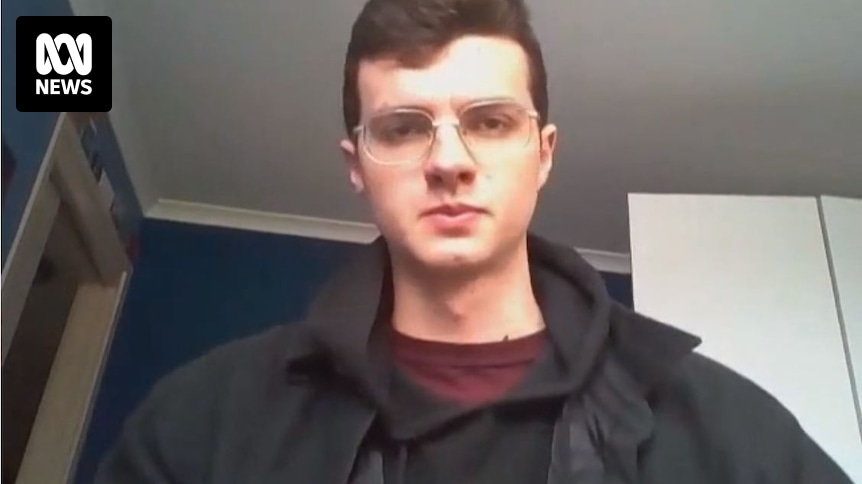
A Canberra judge says a man who stabbed two Australian National University (ANU) students in 2023 “may never be safe to be released into the community”.
Alex Ophel, 26, was found not guilty of two counts of attempted murder by reason of mental impairment, along with two counts of assault.
Mr Ophel will now remain in a secure mental health facility, with his case being managed by a tribunal.
On the day of the attack, Mr Ophel was on day release from the Gawanggal mental health facility, which had authorised some conditional release, for a half-hour bushwalk.
But Mr Ophel instead went to his parents’ house, where he collected a knife and frying pan.
At the university’s Fellows Oval, he hit a man on the head with the frying pan, before stabbing one woman who had been sitting under a tree reading a book.
If you need someone to talk to, call:Lifeline on 13 11 14Kids Helpline on 1800 551 800MensLine Australia on 1300 789 978Suicide Call Back Service on 1300 659 467Beyond Blue on 1300 22 46 36Headspace on 1800 650 890QLife on 1800 184 527
He later chased and stabbed a second female student as she ran away.
Mr Ophel had been placed in the mental health facility after pleading not guilty by reason of mental impairment in 2017 to five counts of attempted murder, after a baseball bat attack on his classmates at ANU.
Today, in sentencing for the 2023 attack, Chief Justice Lucy McCallum said Mr Ophel suffered chronic, severe, treatment-resistant schizophrenia, and described the incident as a “vicious, unprovoked attack in broad daylight”.
“The victims were terrified … their injuries horrific,” she said.
“Their lives have been shattered.”

The court heard one of the stabbing victims only survived because of the emergency medical care she received. (ABC News: Patrick Bell)
Chief Justice McCallum said Mr Ophel had a normal life until around the time he started university, when he appeared a little withdrawn.
“When he is in the grip of the illness, he is not the Alex his parents raised,” she said.
Chief Justice McCallum said the real danger was that he was able to mask his symptoms from even experienced mental health professionals.
“He may never be safe for release into the community,” she said.
The court heard one of the stabbing victims would have died but for medical intervention, but both were seriously injured.
Both women described the painful physical recovery over months, as well as the ongoing psychological scars, which have left each fearful of going out alone, or being near people they do not know.
Untreatable schizophrenia
Ahead of the agreement for the not guilty by reason of mental impairment plea, advice was sought from several experts.
They all agreed he had treatment-resistant schizophrenia, meaning the drugs available were ineffective.
But the court heard Mr Ophel had been convincing, seeming as though he was getting better, when he was allowed out of the facility.
The prosecution said it now appeared he had “pulled the wool” over the eyes of those around him, and feigned wellness, as his condition deteriorated.
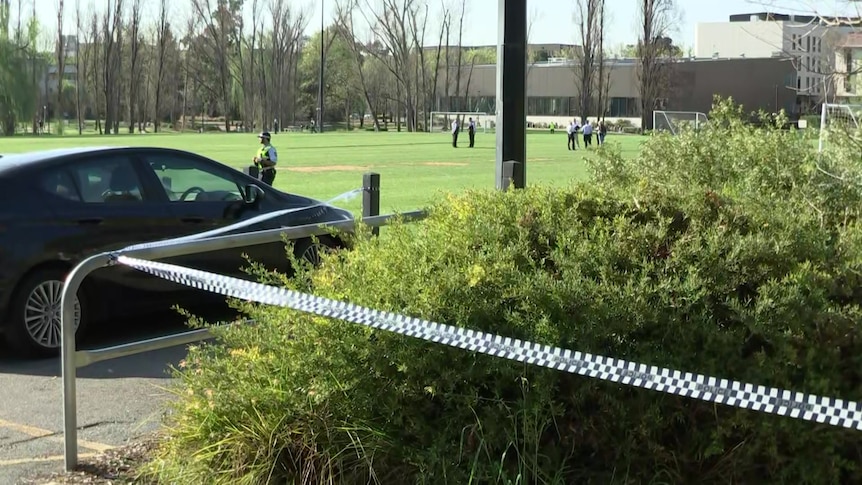
The court heard the first stabbing victim was sitting under a tree reading a book when she was allegedly attacked by Alex Ophel. (ABC News)
One of the doctors who prepared a report said Mr Ophel had begun to talk about “higher beings” putting thoughts in his head.
Prosecutors told the court, he told one doctor he had thoughts about committing the offences “probably the day beforehand”, so the attack was premeditated.
Anger over release
When it was revealed that Mr Ophel had been out on a day release from the mental health facility at the time of the stabbings, serious questions were raised about the detention system for people in his position.
The government set up a review by the ACT Chief Psychiatrist.
No significant failings were found in the ACT’s acute mental health services, although the review produced 35 recommendations.
A task force was later set up to implement the plans.
But a second report on the details about how Mr Ophel came to be released was not made public under laws protecting patient confidentiality.
Today, Chief Justice McCallum said Mr Ophel’s chronic schizophrenia made him a danger to the community and gave him a nominated sentence of life, to be carried out in a secure mental health facility.
Mr Ophel will continue to be managed by the ACT Civil and Administrative Tribunal.
The nominated life sentence gives the tribunal authority to detain Mr Ophel for that period of time.