
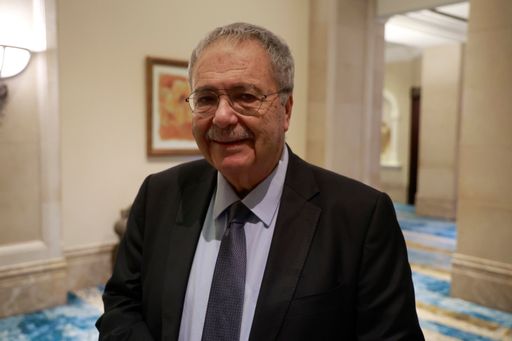
Mitri added that foreign envoys have conveyed Israeli concerns over Hezbollah rebuilding its capabilities and have urged Beirut to accelerate efforts to extend state authority and address an issue related to weapons.
In August, Lebanon’s government approved a plan to place all weapons, including those held by Hezbollah, under state control. In September, it endorsed a five-phase plan drawn up by the army to implement the decision, though no timeline was set.
The first phase calls for the removal of Hezbollah weapons south of the Litani River by the end of the year. However, Hezbollah has repeatedly rejected disarmament, insisting Israel must first withdraw from all Lebanese territory.
What matters most to Beirut, Mitri said, is that the international community recognises the Lebanese army, with full government backing, is doing all it can to implement its commitments.
He added that excessive pressure on Lebanon is no longer justified, particularly given the shift from earlier perceptions that the state was slow to meet its commitments.
Israel and Lebanon reached a ceasefire after more than a year of cross-border attacks amid the war in Gaza. More than 4,000 people were killed, and 17,000 were injured.
Under the ceasefire, Israeli forces were supposed to withdraw from southern Lebanon in January but have only partially pulled out, maintaining a military presence at five border outposts.
Relations with Syria
Mitri said Lebanon is also seeking to expand cooperation with neighbouring Syria as part of renewed diplomatic engagement following the fall of the Assad regime late last year.
In November, Mitri held talks in Damascus with Syrian President Ahmed al Sharaa and senior officials to address long-standing bilateral issues and improve coordination between the two countries.
The most pressing issue, he said, is the status of Syrian detainees in Lebanese prisons.
Lebanon is preparing a judicial cooperation agreement that would include the transfer of Syrian prisoners and detainees held in Lebanon, whose number is estimated at about 2,000, Mitri said.
He said there is hope for a near-term solution and stressed the strong political will in Beirut to resolve the question of prisoners, describing talks with Damascus as fraternal, with joint committees addressing issues through negotiation and compromise.
Border security is another priority, followed by talks on demarcating the land border. Maritime boundary demarcation, he said, would be addressed at a later stage.