

December 17, 2025 — 12:24pm
Save
You have reached your maximum number of saved items.
Remove items from your saved list to add more.
Save this article for later
Add articles to your saved list and come back to them anytime.
Got it
Queensland has been warned of a 50,000-worker shortfall next financial year, as infrastructure construction ramps up ahead of the Brisbane 2032 Olympic Games.
But the state’s deputy premier and the man tasked with delivering the Games’ infrastructure both insisted there was no cause for alarm.
The Queensland Audit Office’s major projects report, tabled in state parliament on Wednesday, painted a stark picture of the delivery challenges ahead.
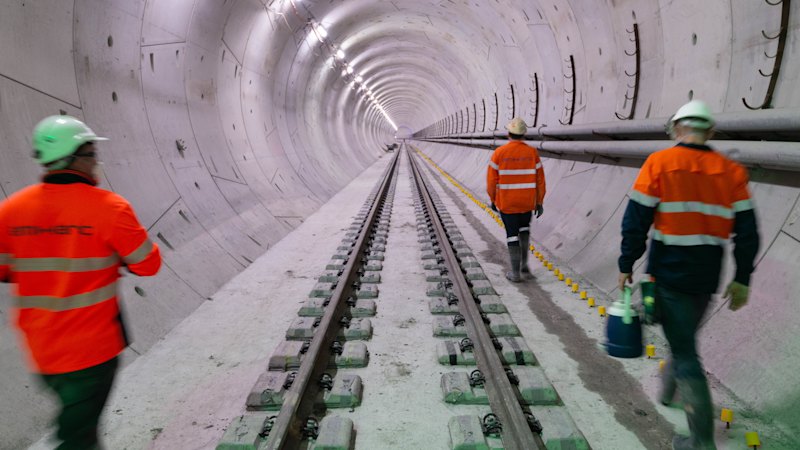
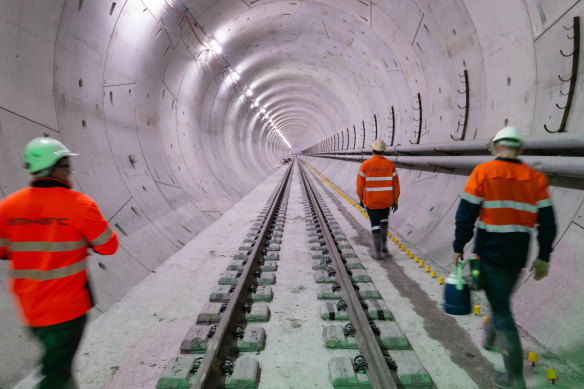 Cross River Rail is the single biggest piece of infrastructure under construction in Queensland.
It notes a Construction Skills Queensland estimate of an average 18,200-staff shortfall over the next eight years, peaking at 50,000 in 2026-27.
That shortfall would have dire consequences for the Queensland government’s infrastructure pipeline, such as hospitals, Olympic venues, and transport infrastructure.
“With fixed deadlines for Brisbane 2032, projects will continue to compete for limited resources to meet delivery requirements, such as skilled labourers, contractors, and suppliers,” the report notes.
“This competition may contribute to further cost increases, driven by supply and demand pressures in the market.”
The audit office noted that because many shortages affected key trade occupations, there was a higher risk of delay and cost escalations.
“Labour shortages pose a particular risk to projects that are in the planning stage or are yet to commence,” the report says.
“Transport projects, in particular, are expected to require project managers and engineers – occupational groups that … are also experiencing supply shortfalls.”
Deputy Premier Jarrod Bleijie said the report was a “picture of a moment in time”, and he was confident Queensland would have the required workforce to deliver all the infrastructure.
“[The report] only captures, I think, two or three months after our 2032 delivery plan was released, so I think it was more a report on what we were handed from the previous government, which was a basket case,” he said.
“Now we get on, and I think people will see, in the last six months particularly, a lot more contracts awarded. And then next year, you’re going to see construction contracts awarded.”
Games Independent Infrastructure and Coordination Authority chief executive Simon Crooks said the projected 18,200-worker shortage “isn’t scary” because the market moved with demand.
“I’ll make the point that there’s been a boom in New South Wales engineering, particularly, that has dropped off,” Crooks said.
“The building market in Melbourne has dropped off significantly in the last two or three years – the resources generally move.
“The work is all up here. You’ve got companies down there who won’t have work because the market’s contracting – they will move, and they already are.”
The report, delivered to the Speaker by Auditor-General Rachel Vagg, did not make any recommendations to the government.
The audit office found the total estimated cost of all projects in the capital statement has surged to $153 billion, up from $107 billion in the previous year – a 43 per cent increase.
And because 71 per cent of the costs outlined in the report related to expenditure beyond the next 12 months, there was a risk of unforseen cost escalations.
Related Article
The audit office also outlined the Department of Transport and Main Roads’ new approach to reporting costs, which was introduced in June.
“[TMR’s] review looked at how TMR manages its infrastructure pipeline and how the Queensland government can improve cost and risk management throughout the life of major projects,” the audit office noted.
“One key change from the review was to classify projects as either planned or contractually committed. Under this new approach, budget figures are only shown for projects that have reached contract award.”
That approach has been reflected in many of the Crisafulli government’s recent media statements, which have not outlined costs when announcing new projects.
Start the day with a summary of the day’s most important and interesting stories, analysis and insights. Sign up for our Morning Edition newsletter.
Save
You have reached your maximum number of saved items.
Remove items from your saved list to add more.
Most Viewed in NationalFrom our partners