
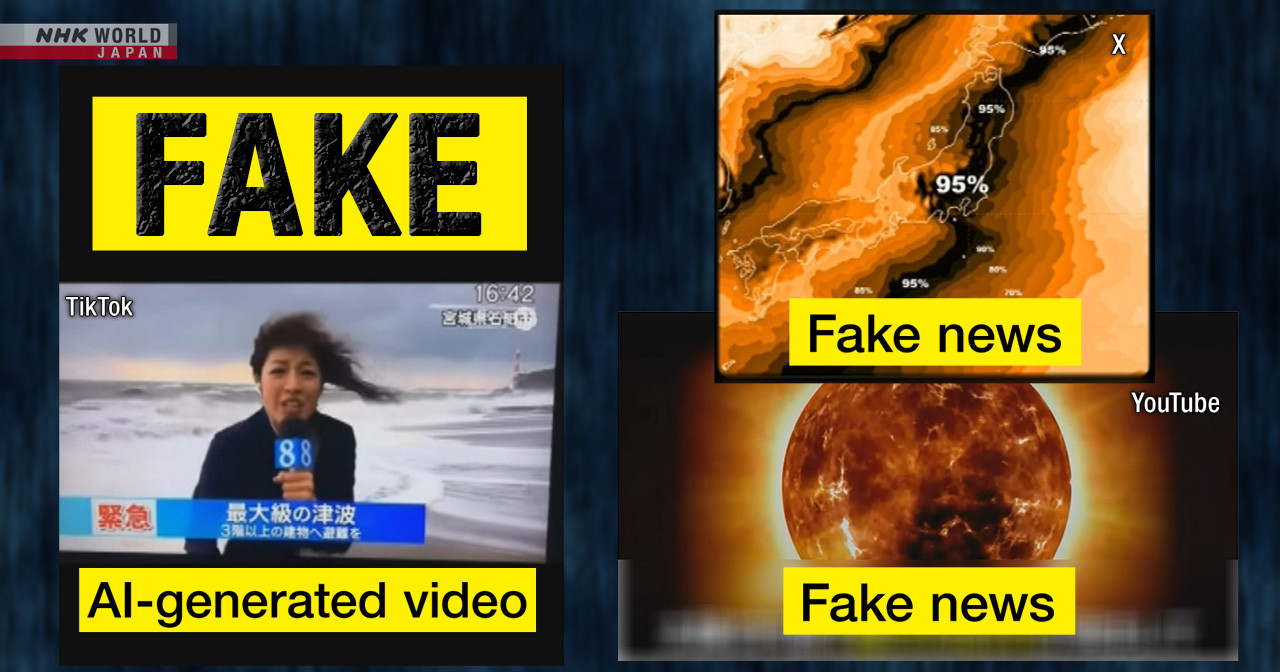
Fake news, including AI-generated videos, flooded social media in the wake of a major earthquake that struck northern Japan on December 8. NHK World’s Yabuuchi Junya explains why people post disinformation, and what we should do when we see it.
Watch video 0:08
Fake video posted on TikTok
This fake video shows a woman reporting on a tsunami hitting a beach. It was viewed more than 20,000 times on TikTok. But the “newscaster” and the alleged tsunami are fake. They were made using AI. The post was later deleted.
Watch video 0:33
False information video on YouTube
Some videos also make wildly unscientific claims. This one falsely suggests solar flares could trigger a massive quake. It has been viewed 720,000 times on YouTube.
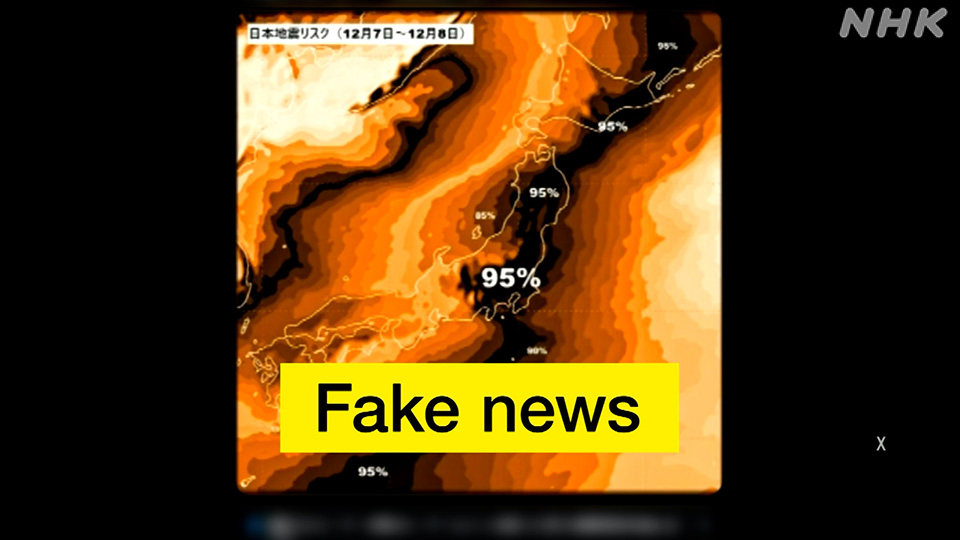
Fake information post on X
Fake news is not limited to video. A post claiming there would be an earthquake on December 8 was widely shared on X. Many commenters claimed it foresaw the disaster.
But the account makes baseless earthquake “predictions” almost every day. Any overlap is purely a coincidence.
The Japan Meteorological Agency says information that names a specific time and place of a potential quake is likely to be fake.
Government warns of fake news, urges vigilance
The morning after the earthquake, Chief Cabinet Secretary Kihara Minoru urged the public to be vigilant about unverified information, which he said had circulated following past disasters.
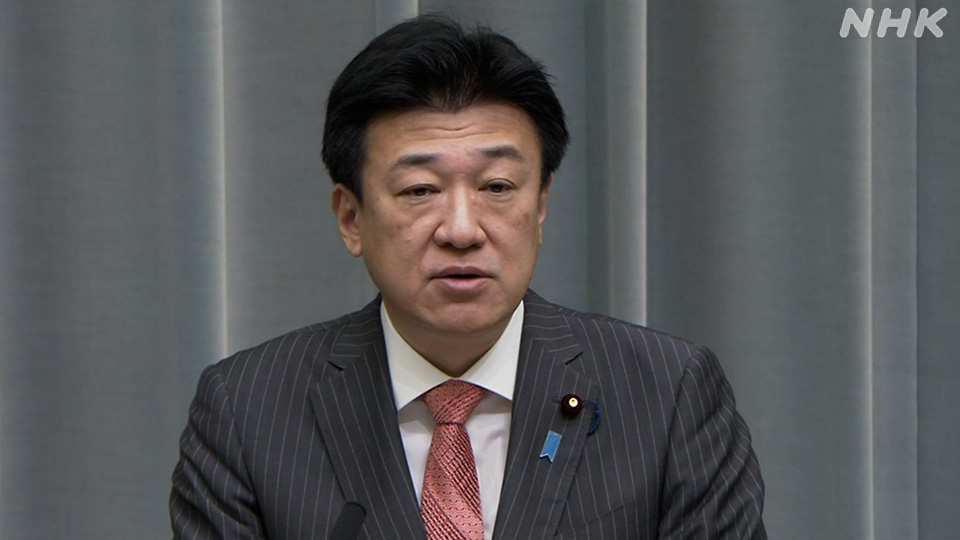
Chief Cabinet Secretary Kihara Minoru addresses the media on December 9.
However, two days after the tremor, Kihara said the government had identified false data on the Internet. He said: “The dissemination of false information must never be tolerated, as it could affect socio-economic activity and disaster response. We strongly urge people to exercise the utmost caution.”
He once again called on the public to turn to government sources or trusted media sites in the event of a disaster.
How and why fake news spreads after disasters
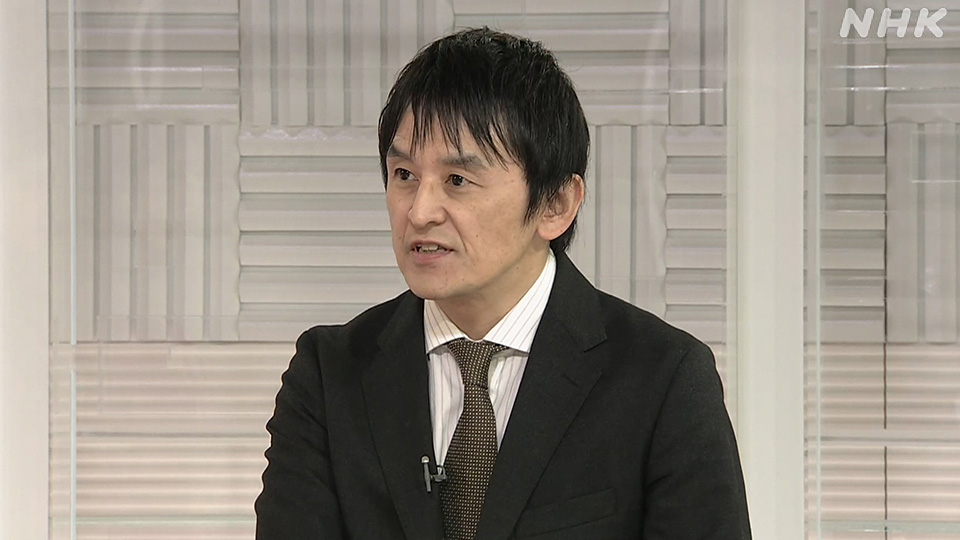
Yabuuchi Junya, NHK World
NHK World’s Yabuuchi Junya, who is in charge of countermeasures against misinformation and disinformation, explains how and why fake news spreads in the aftermath of disasters.
He says there are two main reasons this happens. First, some people seek attention after disasters. During disasters, the public is desperate for information. This creates a golden opportunity for those who want to gain followers or responses.
The second reason is money. Some social media sites offer a profit system. On X, for example, the more views a post gets, the more revenue the user can receive. That is why some people create fake news, knowing it will attract a lot of attention.
Some may even resort to direct scams. They pretend to be disaster victims and plea for users to send money.
AI quality is improving rapidly
Videos made via generative AI are everywhere. It is not a new trend, and has been around for years. We have seen them after disasters, such as the Myanmar quake, but they looked unreal.
Watch video 0:15
Fake video about Myanmar quake in March
But since the September release of OpenAI’s Sora 2, it has become easier to create high-quality AI videos. Now it is difficult to tell an AI video from a real one.
How to tackle fake news
Yabuuchi says the first thing to do when we come across fake posts is to remember these fakes prey on your emotions. Many people are on edge after a disaster. That makes it easy for anxiety-inducing posts to spread online. If you see a post that stirs your emotions, stop and take a breath.
Then, look at who posted it, and check what kind of things they usually say. Remember that anyone can be fooled by fake news, especially AI videos. If you do not know where the information comes from, do not share it. When in doubt, look at what public institutions and trusted media are saying. That is the best way to defend against fake news.
How and why fake news floods social media after disasters | NHK WORLD-JAPAN News