
It is the sort of place where it is difficult to see the “tree” for the forest — even if it is 70 metres tall.
In North Brooman State Forest, between Batemans Bay and Ulladulla on the NSW South Coast, a magnificent spotted gum peeks out of the canopy.
According to the National Register of Big Trees, “Big Spotty” is the tallest recorded spotted gum in the world, and has a girth of just under 12 metres at chest height.
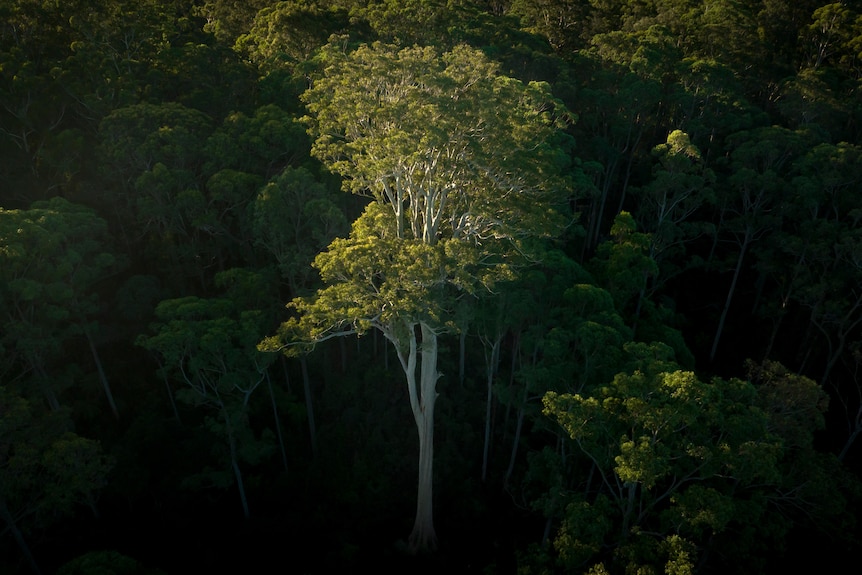
The towering spotted gum sits within North Brooman State Forest on the NSW south coast. (Supplied: Hayden Griffith)
Nick Hopkins from Friends of the Forest Mogo compares it to a blue whale.
“But even that’s not a fair comparison because it’s much longer than a whale,” he said.
“It really defies words.”
Celebrating a giant
The general manager of Eurobodalla Regional Botanic Gardens, Michael Anlezark, said local estimates that put the age of Big Spotty at 500 years were an “educated guess” that could not be verified without invasive procedures.
“In the scheme of things, it doesn’t matter how old it is,” he said
“We just know it’s very ancient.”
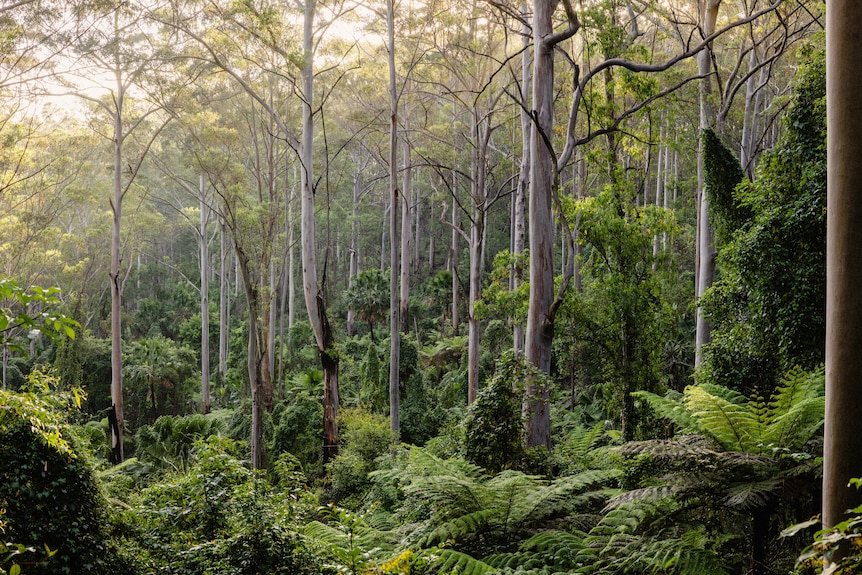
North Brooman State Forest lies between Batemans Bay and Ulladulla. (Supplied: Andrew Kaineder)
Local campaigners want the NSW government to protect and celebrate the giant gum by making North Brooman State Forest a nature reserve.
Mr Hopkins said the move would bring tourists to the local area to see the ancient tree.
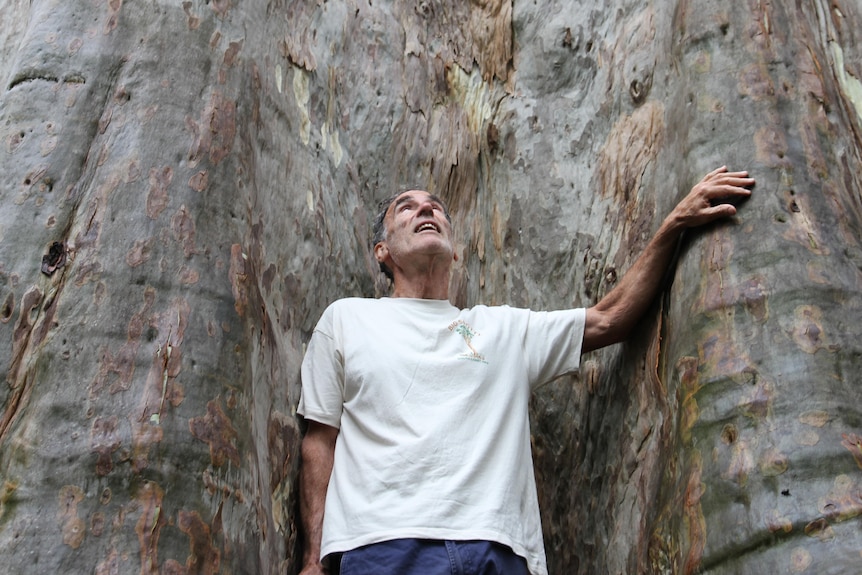
Nick Hopkins says the scale of Big Spotty defies words. (ABC South East NSW: Toby Hemmings)
“We think the South Coast forests could be a potential hotspot for giant tree tourism and Big Spotty would be a centrepiece of that,” he said.
“All it would really take for it to be a success would be improved road access, some signage, a car parking area and a boardwalk.
“Here we have a world champion that is completely unrecognised and uncelebrated, and we’d like to change that.”
Hidden in forest
The giant gum stands about 100 metres into the bush, off a dirt road in the North Brooman State Forest.
Its location is not marked on any local maps.
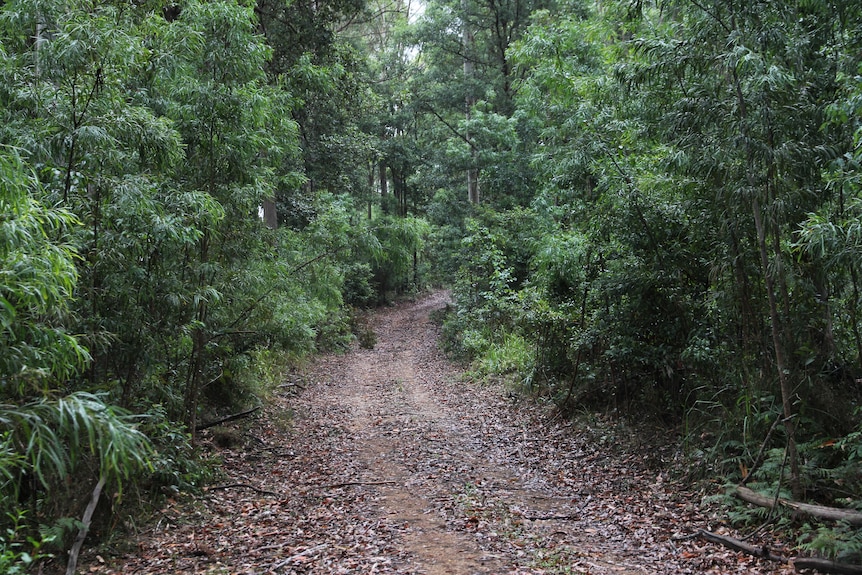
Currently, there’s no signage to find the spotted gum hidden deep within North Brooman State Forest. (ABC South East NSW: Toby Hemmings)
According to the Forestry Corporation New South Wales’s (FCNSW) harvest plan, sections of North Brooman State Forest are scheduled to be logged within the next six months.
FCNSW has previously designated the tree as significant, and gave it a 60-metre radius exclusion zone the last time logging occurred in the area.
In a statement, a FCNSW spokesperson said there were currently no plans to log near Big Spotty and that the tree had been protected in multiple harvesting operations over the past 70 years.
The NSW minister for agriculture, Tara Moriarty, said that Big Spotty would continue to be permanently protected into the future in an area of forest that is not being harvested.
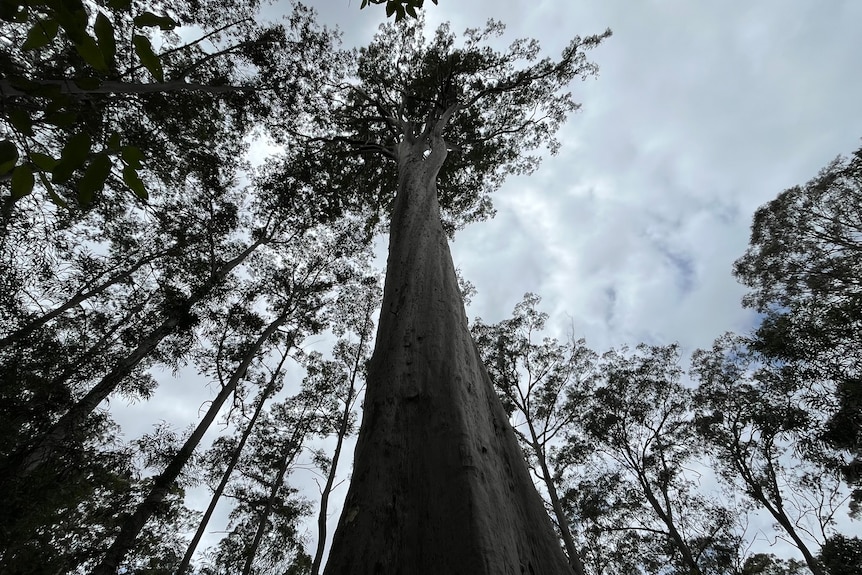
The spotted gum is believed to be over 500 years old. (ABC South East NSW: Toby Hemmings)
Protecting southern forests
The campaign for a nature reserve comes as local conservationists advocate for greater protection of South Coast native forests, following the announcement of the Great Koala National Park on the state’s north coast in September.
“[The Great Koala National Park] is a tremendous win for nature and native animals,” Forest Alliance NSW spokesperson Justin Field said.
“It’ll be great for the economy through nature-based tourism and investing in visitor infrastructure and infrastructure for recreational users of our natural environment.
“Let’s imagine a great southern forest as well, as a protected area down here for our gliders and birds and quolls, and all those in the community who want to enjoy nature.”
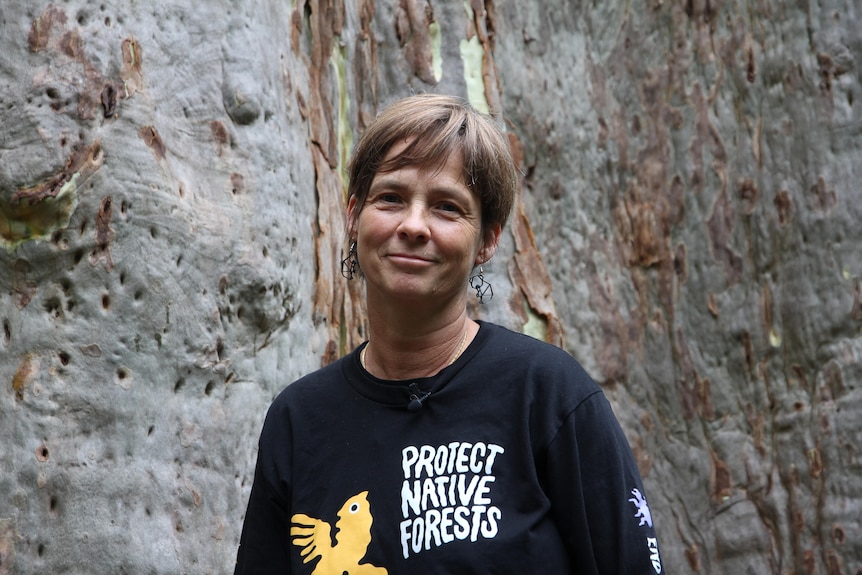
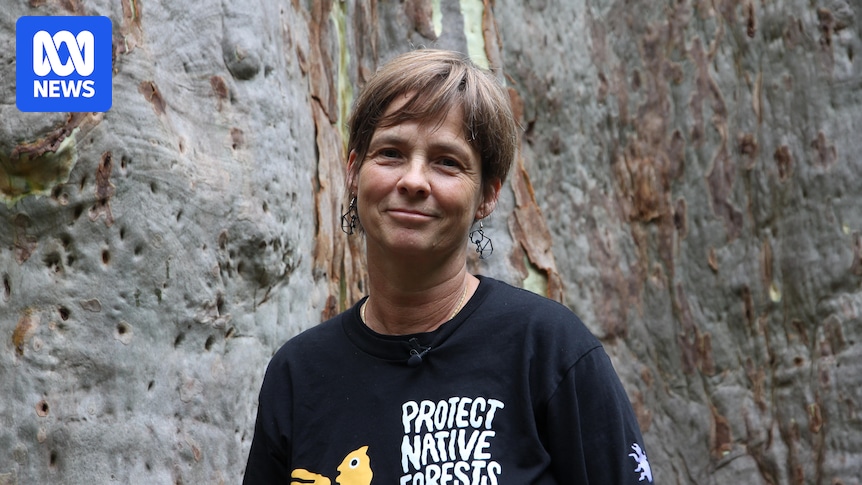
Doro Babeck said the time to protect native forests on the south coast is now. (ABC South East NSW: Toby Hemmings)
Doro Babeck from the Bob Brown Foundation said giant trees like Big Spotty should be celebrated.
“In Europe, we have these old cathedrals that people worship like Notre Dame,” she said.
“For me, the beauty in Australia is that we have these ancient pieces, luckily still left.
“These trees are the cathedrals of Australia.”
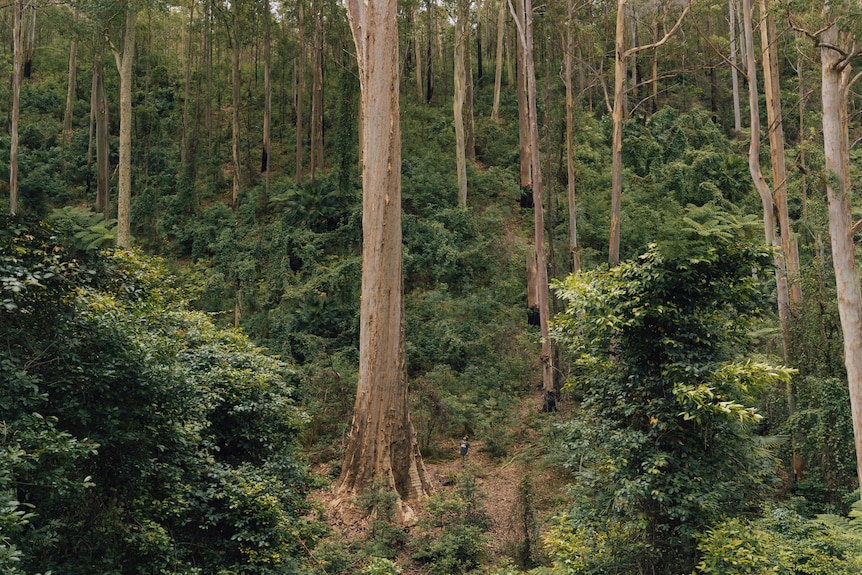
Activists want to see the giant spotted gum protected and made more accessible for tourists. (Supplied: Andrew Kaineder)