
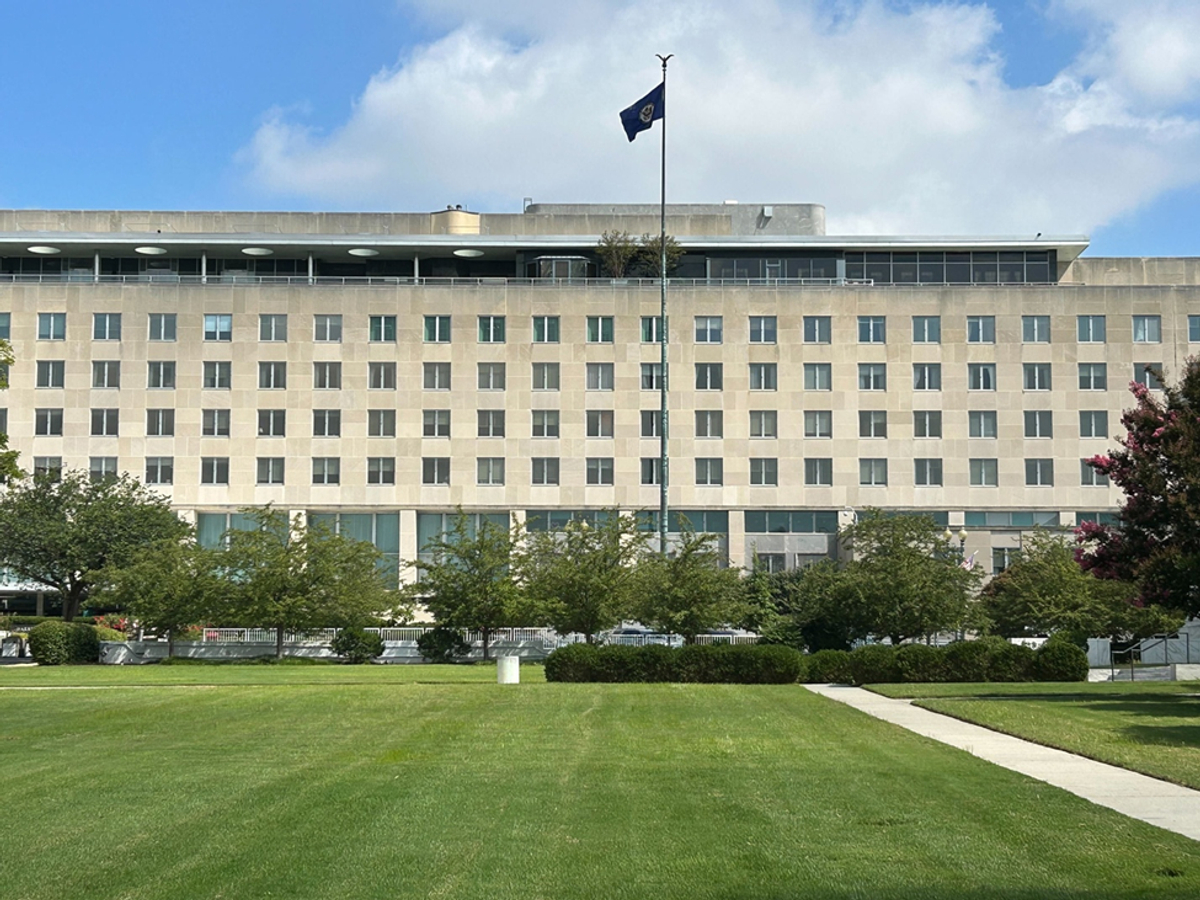
WASHINGTON DC – The Trump administration is doubling down on its strategy to compete in the global artificial intelligence race, even if it means allowing some US AI chips to flow to China, a senior State Department official said Wednesday.
Under Secretary of State for Economic Affairs Jacob Helberg, speaking during a virtual briefing with the Foreign Press Center, defended the administration’s decision to approve certain Nvidia AI exports to China, framing the move as part of a broader push to maintain US leadership in innovation while ensuring technological diffusion worldwide.
JOIN US ON TELEGRAM
Follow our coverage of the war on the @Kyivpost_official.
“Winning the AI race requires meeting two conditions: the best innovation and the most diffusion,” Helberg told Kyiv Post’s correspondent, acknowledging that wider distribution of US technology inevitably creates more competition – but insisting the administration has “struck the right balance.”
He confirmed that the State Department continues to participate in interagency reviews for every advanced chip export license, including Nvidia’s H200 series.
Securing silicon supply chains
Helberg also unveiled a major new initiative, Pax Silica, launched last week to secure global silicon supply chains and underpin emerging technologies from AI systems to advanced manufacturing.
Describing it as a “flagship initiative,” Helberg said Pax Silica represents a strategic effort to create a decentralized, resilient supply-chain ecosystem, avoiding the single points of failure that have rattled global markets in recent years.
Other Topics of Interest
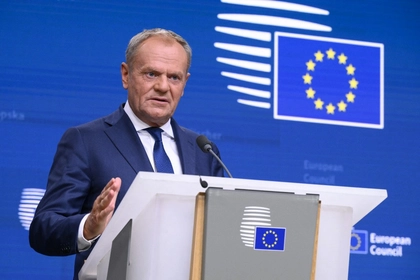
EU Agrees It’s ‘Worth Trying’ to Use Frozen Russian Assets for Ukraine Loan, Says Tusk
Of the total 210 billion euros of Russian assets frozen in the EU after Moscow’s invasion of Ukraine in 2022, 185 billion are held in Belgium’s Euroclear central securities depository.
Initial signatories of Pax Silica include Singapore, Israel, Japan, South Korea, Australia, and the UK, with the EU, Canada, and the OECD participating as observers.
Helberg emphasized that the initiative is a cooperative agenda, focused on strengthening supply chains among members rather than penalizing non-members like China.
How Pax Silica differs from previous efforts
The initiative diverges from previous efforts such as the Minerals Security Partnership, – joined by Ukraine – which focused primarily on buyers of critical minerals.
By contrast, Helberg said, Pax Silica engages countries and companies directly involved in manufacturing and operating the global silicon supply chain.
Success, he explained, will be measured by the creation of a robust, multi-vendor network capable of sustaining a thriving, globally integrated AI and semiconductor ecosystem.
Looking ahead, potential Pax Silica members are evaluated based on their alignment with US geopolitical priorities and their material contributions to the AI supply chain.
Countries like Singapore and South Korea, Helberg said, bring both industrial capacity and strategic alignment, while each candidate nation is assessed for its capacity to meaningfully contribute to securing the global AI and semiconductor ecosystem.
Economic security as national security
Helberg framed Pax Silica as part of a larger economic-security strategy structured around four pillars: rebalancing trade relationships, stabilizing conflict zones, re-industrializing the US, and securing global supply chains.
He cited record levels of capital expenditure and foreign investment from companies like Mitsubishi and Taiwan Semiconductor Manufacturing Company as evidence of progress on re-industrialization.
He described Pax Silica as a historic step toward treating economic assets as shared strategic tools. “Economic security is national security,” he said, adding, “Through this initiative, we aim to pour concrete, smelt steel, and rack servers – to literally build the physical backbone of the 21st-century global economy.”
Whether the initiative will tip the AI race in America’s favor remains to be seen – but for now, the Trump administration is betting that the next frontier in global competition will be fought as much with silicon as with strategy.