
In an apparent response to growing backlash and some deteriorating reconciliation and First Nations sentiment among the public, business community, and property owners — stemming from the major implications of a Supreme Court of British Columbia ruling that sided with the Cowichan Tribes’ land claims in Metro Vancouver — the leader of one of the region’s most prominent First Nations is speaking out against such disruptive, court-driven legal cases.
The ruling granted the Cowichan Tribes Aboriginal title over approximately 800 acres in southeast Richmond, prompting concern across B.C.
A public opinion survey of British Columbians in October 2025 found that 66 per cent of property owners believe the ruling harms reconciliation efforts with First Nations, compared with 48 per cent of non-owners. Moreover, strong overall majorities believe the implications for private property rights are a serious concern, and the decision needs to be appealed. A separate survey in November 2025 had similar findings.
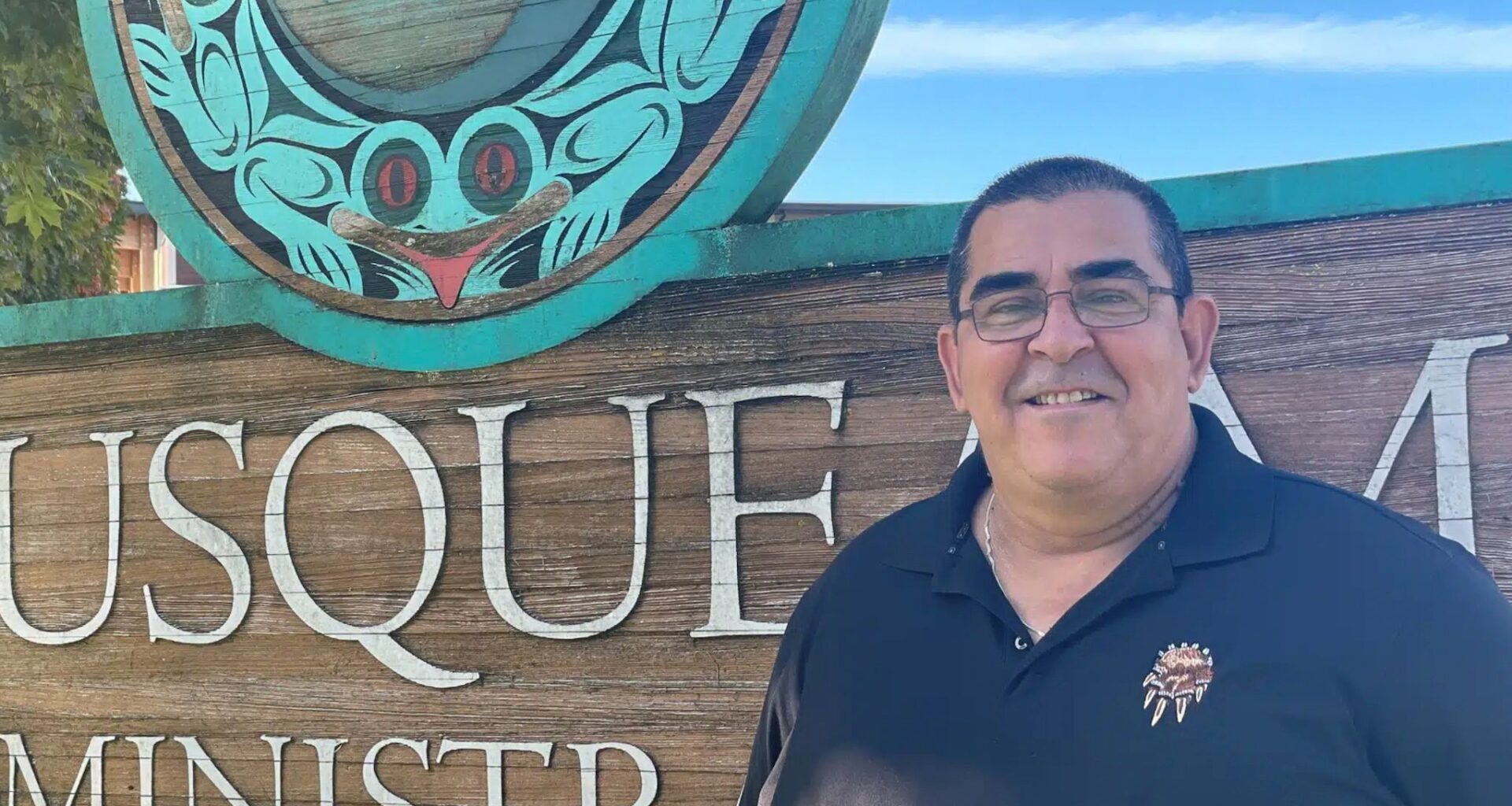
Today, Musqueam Indian Band chief Wayne Sparrow said his First Nation’s long-standing strategy prioritizes negotiations with governments outside the court system when seeking the transfer of government-owned public land — within areas it considers its traditional unceded territory — to its community.
The August 2025 ruling by trial judge Justice Barbara Young is being appealed by the Musqueam Indian Band, Tsawwassen First Nation, the City of Richmond, the Government of B.C., and the Government of Canada, all of whom were defendants in the trial.
At least one property owner — Montrose Properties, a major developer of industrial complexes within the land claim area that has been significantly financially impacted by the ruling due to the sole title certainty it needs to secure construction financing — is asking the court to be named as a party to the litigation and to reopen the decision. Additionally, although the land claim area does not fall within its municipal jurisdiction, the Township of Langley is seeking intervenor status in the appeal on the basis that the case has major precedent-setting implications for public and private property within its municipal borders and elsewhere in Metro Vancouver and the province.
Sparrow further strongly emphasized that his band’s appeal does not target private property or fee-simple title land.
“Musqueam is not coming for anyone’s private property,” stated Sparrow today. “Our approach to traditional unceded territory is one of partnership and relationship with our neighbours, not trying to take away our neighbours’ private property.”
During the trial, lawyers for both the Musqueam Indian Band and Tsawwassen First Nation argued that the Richmond land claims advanced by the Cowichan Tribes — a First Nation based on Vancouver Island — were infringing on their traditional territories, and they also disputed the legitimacy of the Cowichan Tribes’ claims.
Lawyers for the Cowichan Tribes asserted during the trial that they were not directly seeking Aboriginal title over private property, but left open the possibility of doing so in the future. Their legal team also emphasized that their client would retain final authority over land use and disposition. Ultimately, Justice Young sided with the Cowichan Tribes, granting Aboriginal title over less than half of the land requested, along with fishing rights in the adjacent Fraser River waterway.
According to the City of Richmond’s trial transcript, Cowichan Tribes’ lawyers stated: “Aboriginal title is not symbolic. It is full ownership interest. Once recognized, the Cowichan people will have exclusive right to decide how the land is used, including whether it may be developed, transferred, or accessed by others.”
“Any disposition of land, whether by the Province or a private party, would require the Cowichan’s agreement.”
From the outset of the lawsuit, the Cowichan Tribes sought Aboriginal title over 1,846 acres in southeast Richmond. While Justice Young declared less than half of this area to be under Aboriginal title, the Cowichan Tribes have launched their own appeal seeking to expand the declaration to the full 1,846 acres originally pursued — an area nearly twice the size of Vancouver’s Stanley Park, encompassing both public and private property.
In contrast, the Musqueam Indian Band highlighted its history of pursuing negotiated, win-win outcomes that avoid acrimony, disruption, and division.
The band pointed to its successful partnership with Vancouver International Airport (YVR), including a 2017 agreement that provides Musqueam Indian Band with one per cent of the Vancouver Airport Authority’s non-aeronautical revenues, along with education and employment opportunities for its members. In early 2025, the First Nation signed an additional YVR-related agreement with the federal government, setting aside a small portion of annual ground lease revenues received by the government from the airport authority for the Musqueam Indian Band.
The Musqueam Indian Band also highlighted its productive relationships with other First Nations, such as the Squamish and Tsleil-Waututh Nations. Together, they jointly own MST Development, a for-profit real estate company pursuing major high-density, mixed-use housing projects, including the Heather Lands and Jericho Lands developments in Vancouver.
Additionally, the band noted its successful partnerships with the provincial and federal governments and the City of Vancouver.
In 2008, through a negotiated reconciliation agreement, the Musqueam Indian Band acquired the 120-acre University Golf Course near UBC — which must remain a golf course until at least 2083 under the terms of the agreement — as well as nearby land within the University Endowment Lands, where the First Nation is now developing a 21-acre high-density, mixed-use residential project. The agreement also included a waterfront property in north Richmond, home to the River Rock Casino Resort.
In October 2025, it was announced that the Musqueam Indian Band and the Vancouver Island-based Snuneymuxw First Nation had partnered to acquire the business and gaming license of the River Rock Casino Resort from Great Canadian Entertainment, which began accepting bids earlier this year. Great Canadian’s lease for the property is set to expire in 2041.
All three properties acquired under the 2008 agreement are owned by the Musqueam Indian Band as fee-simple private property, not reserve lands.