
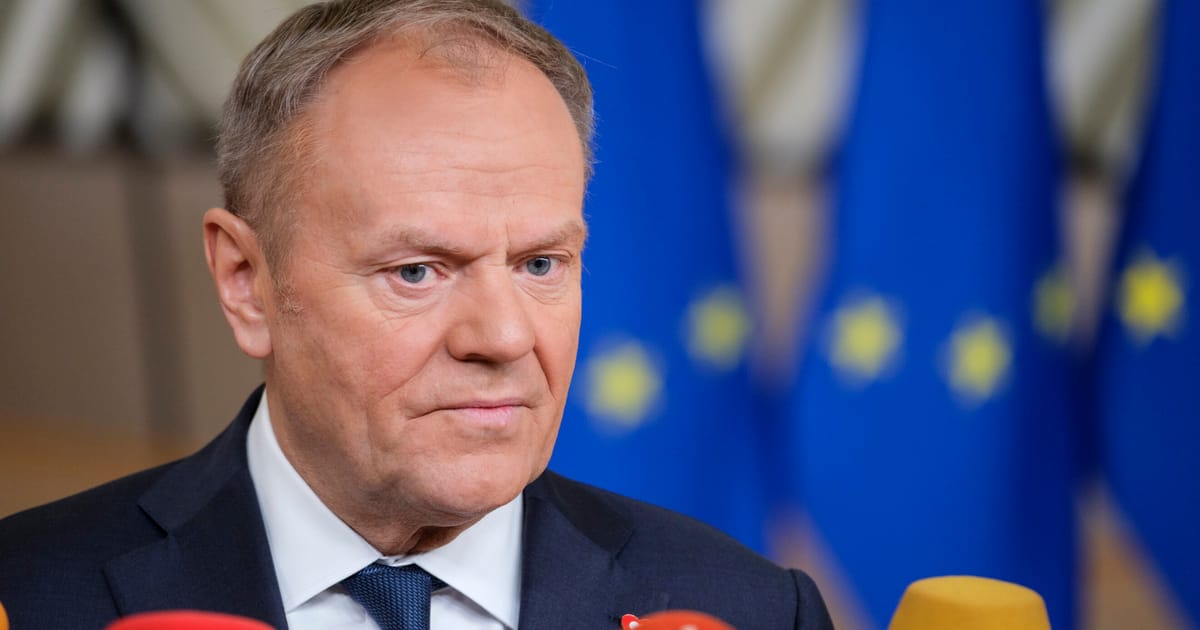
Tusk did not block the trip and confirmed that Przydacz had received government briefing materials. But he warned that cooperation did not amount to consent, accusing the president’s camp of trying to shift authority “by force of facts, subterfuge and intrigue.”
“That is simply unacceptable and contrary to Poland’s interests,” he said.
Nawrocki’s office rejected Tusk’s version of events. The president’s spokesperson, Rafał Leśkiewicz, called the comments about violating the constitution a “perfidious manipulation,” arguing there was no constitutional drama to the episode.
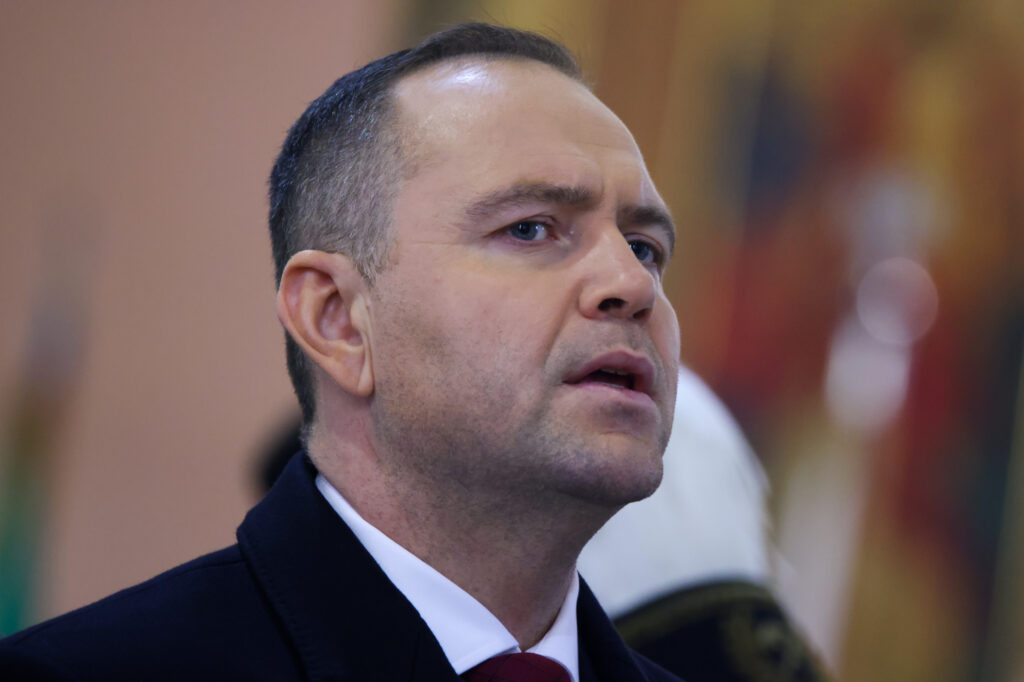 Liberal Prime Minister Donald Tusk is arguing with nationalist President Karol Nawrocki over who gets to represent Warsaw at the top table. | Beata Zawrzel/Getty Images
“Those words in no way reflect the truth,” he said.
Leśkiewicz said the White House dealt with Nawrocki and his people because it “fully understands” that the Polish president is the country’s highest representative internationally, while the government’s role is to execute agreed positions.
“We would very much like Poland to speak with one voice,” Leśkiewicz said, accusing Tusk of turning what he described as routine coordination into an international quarrel and of struggling to accept the outcome of this year’s presidential election won by Nawrocki.
Similar clashes over who represents Poland are looming on the even more critical question of Ukraine. Warsaw is fuming it has been left out of crucial peace talks, but the internal rifts between Tusk and Nawrocki are unlikely to have tempted an invite to negotiations.
As Foreign Minister Radosław Sikorski put it recently, Poland can resemble “a car with two steering wheels” — perfectly drivable, but only as long as both drivers agree where they’re going.