
As the Emperor Hirohito did not quite say: the Ashes situation has developed not necessarily to England’s advantage. After three days of a match they must win to keep the Ashes alive, they trail by 356 runs with six second-innings Australian wickets still to take. Only once, as long ago as 1902, has more than 300 been chased successfully on this ground, when a local left-handed hero, Clem Hill, commemorated now with a statue here, made a pair of 90s in an Australian victory.
Two local left-handers have hurt England badly in this game. After Alex Carey raised the roof with an emotional hundred on the opening day, Travis Head, such a thorn in England’s side on the previous Ashes tour, made his fourth hundred in consecutive Tests on this ground and his second of the series. England have simply not worked out how to contain a player who sits deep in his crease, stays leg side of the ball, and picks off boundaries at will. Build him a statue, will be the cry.
Ben Stokes and Jofra Archer posted England’s highest ninth-wicket partnership in Australia for more than a hundred years in the morning, but these efforts took their toll. Stokes must have been feeling the effects of the enervating conditions the day before, and did not bowl at all, while Archer only bowled two overs between lunch and tea. Will Jacks offered little control to the left-handers, picked off either side of the wicket, and it looked a threadbare attack by the end of the day.
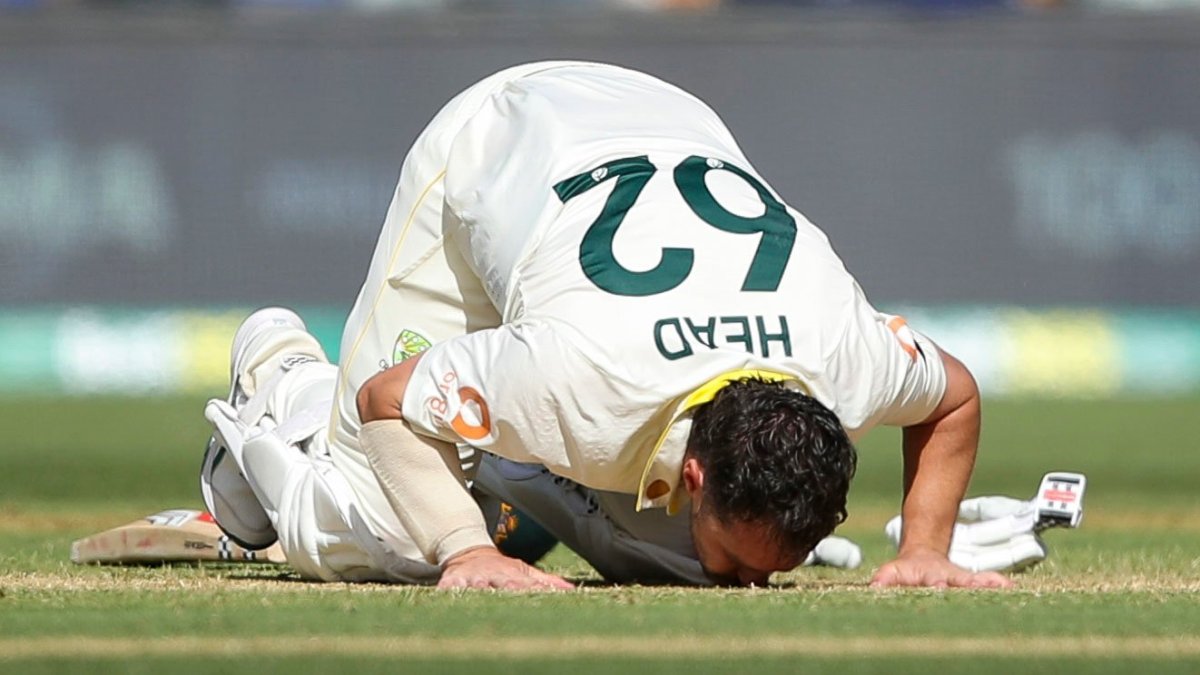
Head is a proud South Australian, and, after bringing up his 11th Test hundred, he knelt down and kissed the local turf before raising both arms in triumph and pointing towards the Sir Donald Bradman Pavilion, where his family were sitting. It clearly meant everything to him, so twitchy did he appear on 99; he tried to steal a quick single that was never there; was dropped by Harry Brook in the gully, a sharp chance, and spent eight balls fretting before belting Joe Root down the ground to raise another mighty cheer.
This innings was not as explosive as his scintillating hundred in Perth, but it did not need to be, with the game there for the taking. It was an important one, though, once Australia’s first-innings lead had been skimmed to 85 and four of the home side’s top five failed to pass 50. In its relative restraint, it was designed to consolidate Australia’s position and grind England into the Adelaide dirt.
The situation was analogous to the first Test in one way, though, and offers an insight into the contrasting attitudes of these teams. In Perth, England were effectively 99 for one in their second innings, but they somehow managed to lose the game two sessions later. Here, at lunch, Australia were, in effect, 102 for one, when accounting for their 85-run lead, but were intent on ruthlessly pressing home their advantage, which two significant partnerships — between Head and Usman Khawaja, and Head and Carey — allowed them to do.
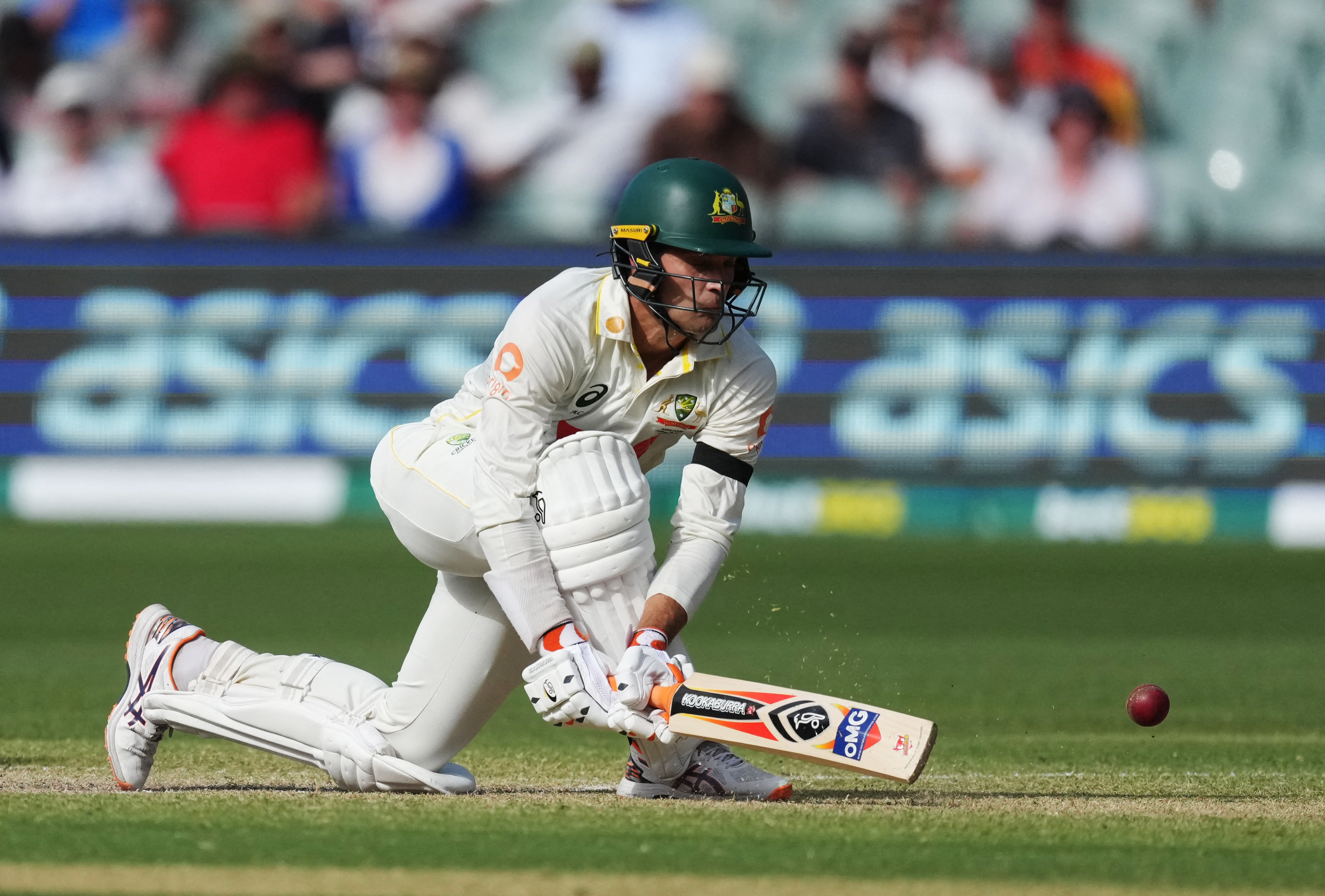
Carey was happy sailing in the slipstream of his fellow South Australian as he made an unbeaten fifty
ASANKA BRENDON RATNAYAKE/REUTERS
The day began more promisingly for England than their overnight position suggested it might, as Stokes and Archer stretched their partnership through the first hour, forcing Australia to take the second new ball. Stokes’s half-century (159 balls) was his slowest in Tests, and the slowest of any of the Bazball era, but he landed some blows in a way he had struggled to do in the debilitating heat of the second day.
On a cooler morning, under greyish skies, he drove Scott Boland beautifully to the cover boundary twice, once from the crease and once from down the pitch, and a reverse-sweep off Nathan Lyon brought back memories of the shot he played towards the end of his miraculous innings at Headingley in 2019. We were a long way from that territory here, but the England captain’s pulse was still beating, unmistakably.
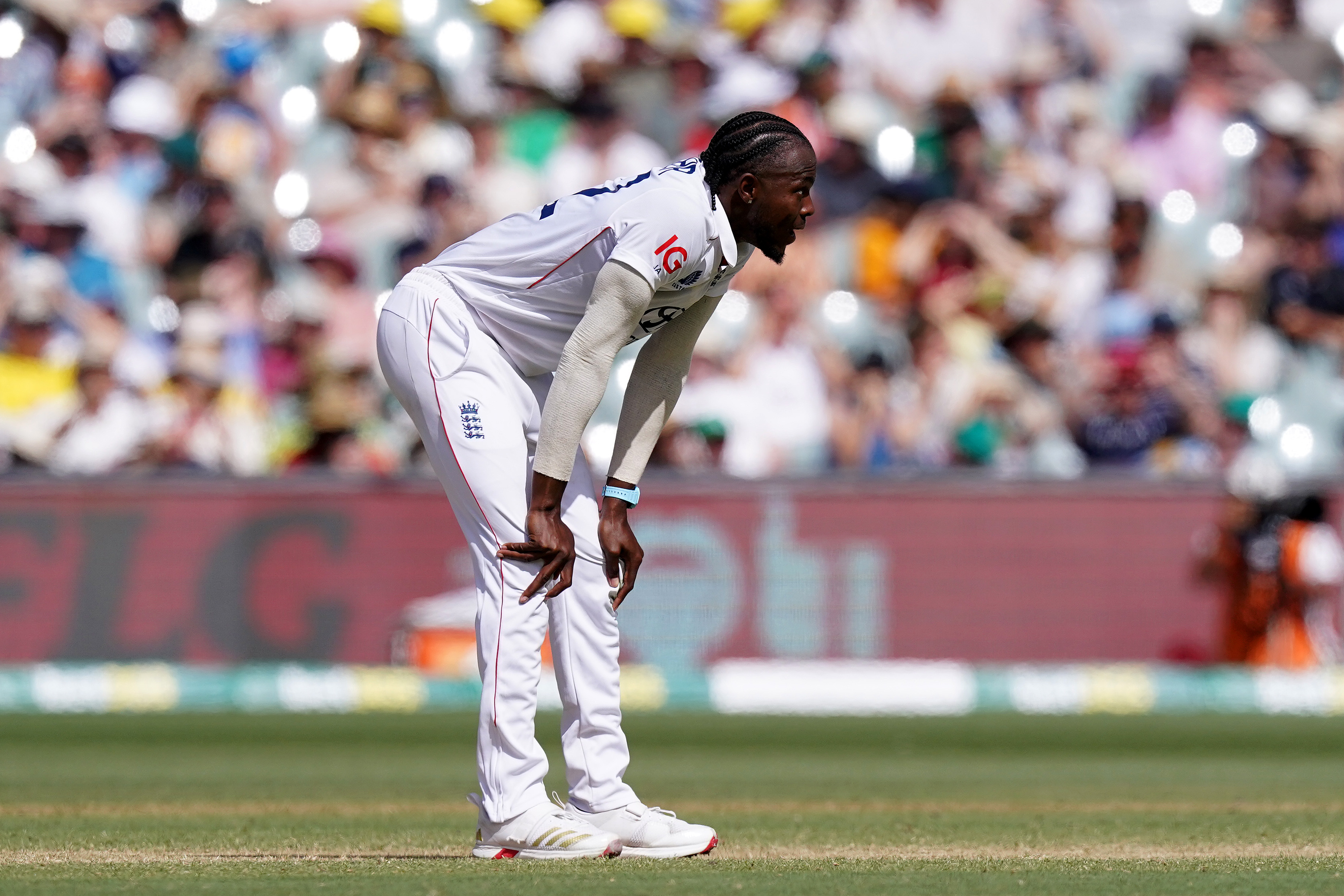
Archer’s efforts with the bat impacted his effectiveness with the ball
ROBBIE STEPHENSON/PA
Archer, confidence high on the back of five-wicket haul, batted with great care and no little skill to bring up his first half-century in Test cricket, the first for an England No10 in Australia since Stuart Broad at Melbourne in 2017. When Stokes was finally bowled by an off cutter from Mitchell Starc, Archer ran the length of the pitch to tap him encouragingly on the shoulder, as if to say he would carry on the good work.
It was a partnership that limited Australia’s advantage to more manageable proportions that the dreadful collapse of the second day had promised, and it put that top-order performance to shame, as well as highlighting just how flat the pitch really was. Another mark of the top-order failings was that Lyon did not prise out another wicket after the two he took in his opening over. That should have given Ollie Pope plenty to think about.
Archer’s exertions with the bat dulled his effectiveness with the new ball. He sent down a five-over spell, but he did not bowl again until the 43rd over and, with Stokes absent from action, the load rested on Brydon Carse, Josh Tongue and Jacks. Carse bowled his best spell with the new ball since the first innings at Perth, locating a much fuller length; Tongue persevered willingly but Jacks struggled with his consistency, a failure made more apparent by Lyon’s accuracy the day before.
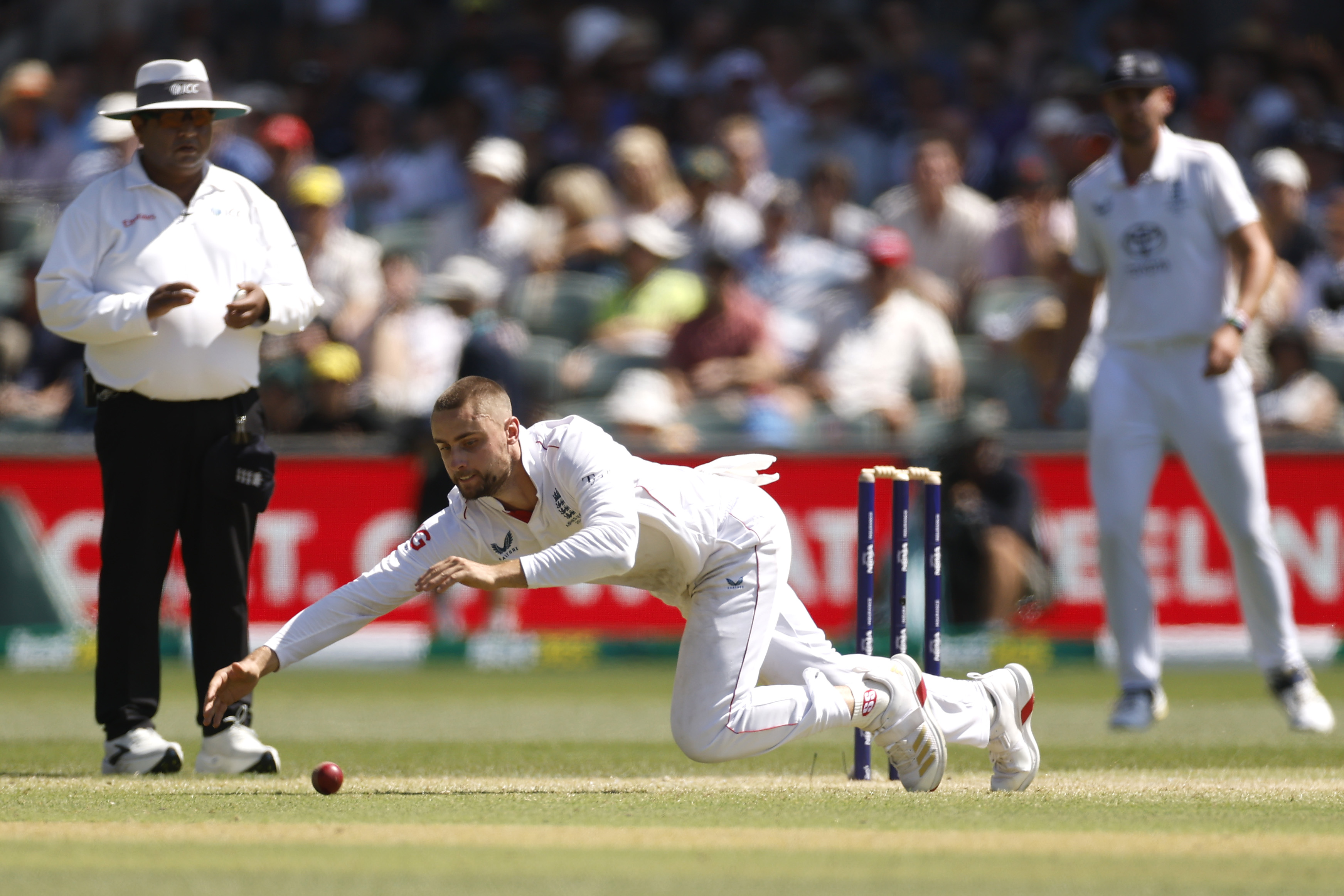
Jacks struggled to find any control with the ball, conceding 107 from his 19 overs
DARRIAN TRAYNOR/GETTY IMAGES
Carse deserved his initial success against Jake Weatherald — although he benefited from the left-hander’s reluctance to review a leg-before decision to a ball that pitched outside leg stump — and he beat Marnus Labuschagne frequently, one edge falling just short of Jamie Smith. At slip, Brook took two good low catches off Tongue, one in the afternoon session, one in the evening, to see the back of Labuschagne and Green, the latter for a low score again. Kolkata Knight Riders must have more money than sense.
In between, Khawaja added 86 with Head, before edging a short, wide ball from Jacks to Smith. With Weatherald failing to make an impression, Khawaja may have done enough to encourage the selectors to move him back to the top of the order in Melbourne, but he left kicking himself for gifting Jacks a wicket. Stokes was forced to call upon Root, with Jacks going for a gallon at more than twice the economy rate of Lyon the day before, and Carey was quickly into his stride against a tiring attack.
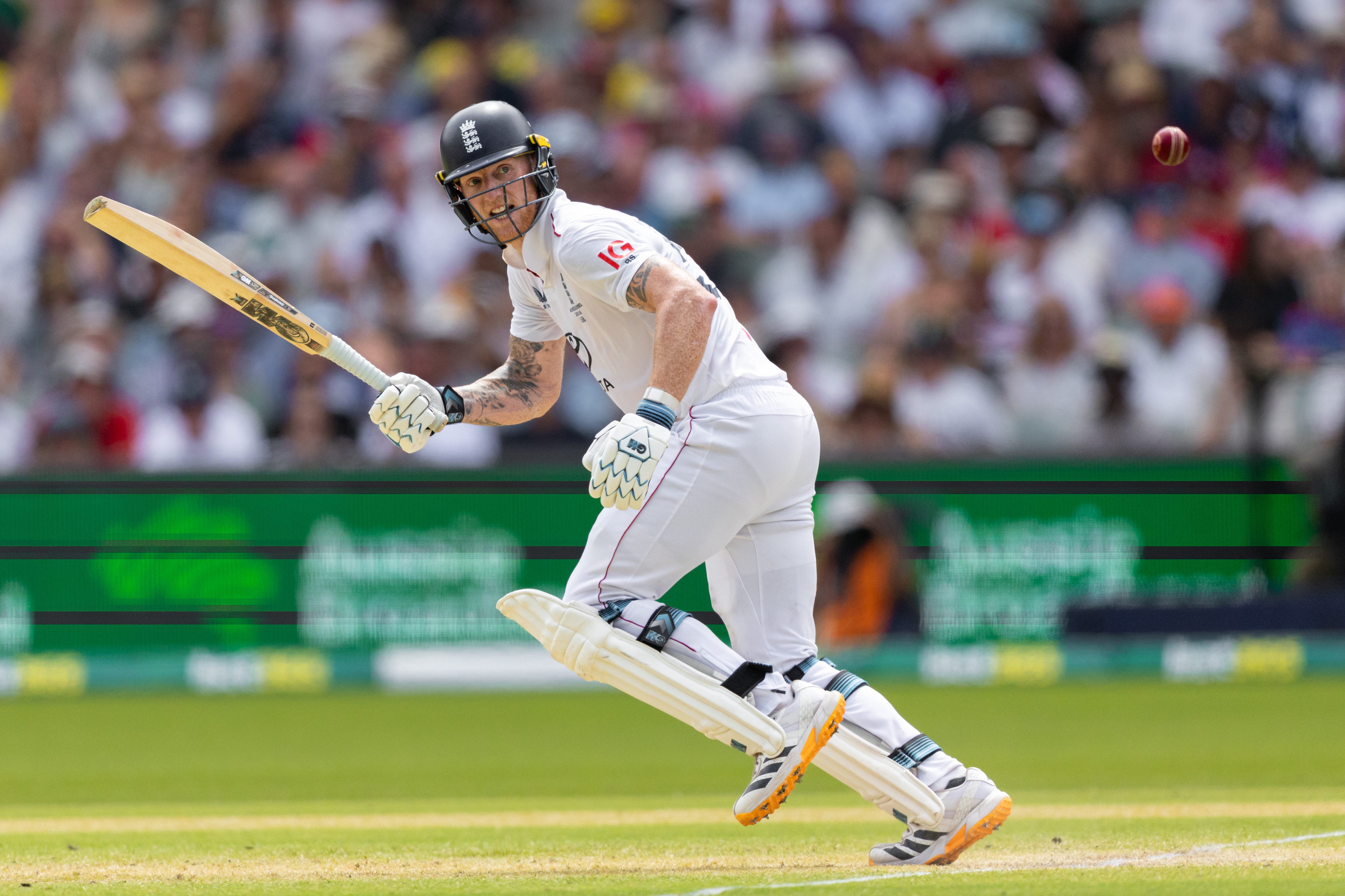
Stokes’s half-century, from 159 balls, was the slowest of the Bazball era
SANTANU BANIK/MB MEDIA/GETTY IMAGES
Under clear blue skies, the two local boys, Head and Carey, dominated the final two hours, adding 121 in 29 overs. After the drama of his hundred moment, Head settled again and was content to take what was on offer, while Carey, sailing happily in Head’s slipstream, milked a half-century in 84 balls.
On Thursday at Exeter, a horse called “Blowers” became the longest-priced winner in UK racing history at odds of 300-1. Sad to report, my dear old things, that England’s chances in the Ashes right now are correspondingly slim.