
The property market is expected to reach new highs in 2026 with some capital cities looking at double-digit price growth, even without any further rate cuts by the RBA.
The forecasts, released in the latest realestate.com.au Property Market Outlook, predict annual home price growth of between 6-8% nationally, and as much as 10% growth in the already-hot capital cities of Brisbane and Perth.
Property prices have already risen for 11 consecutive months as a series of interest rate cuts over 2025 boosted buyer confidence and activity.
But a recent spike in inflation has dampened hopes for further rate cuts next year, with many economists now predicting the next move by the RBA will be up, rather than down.

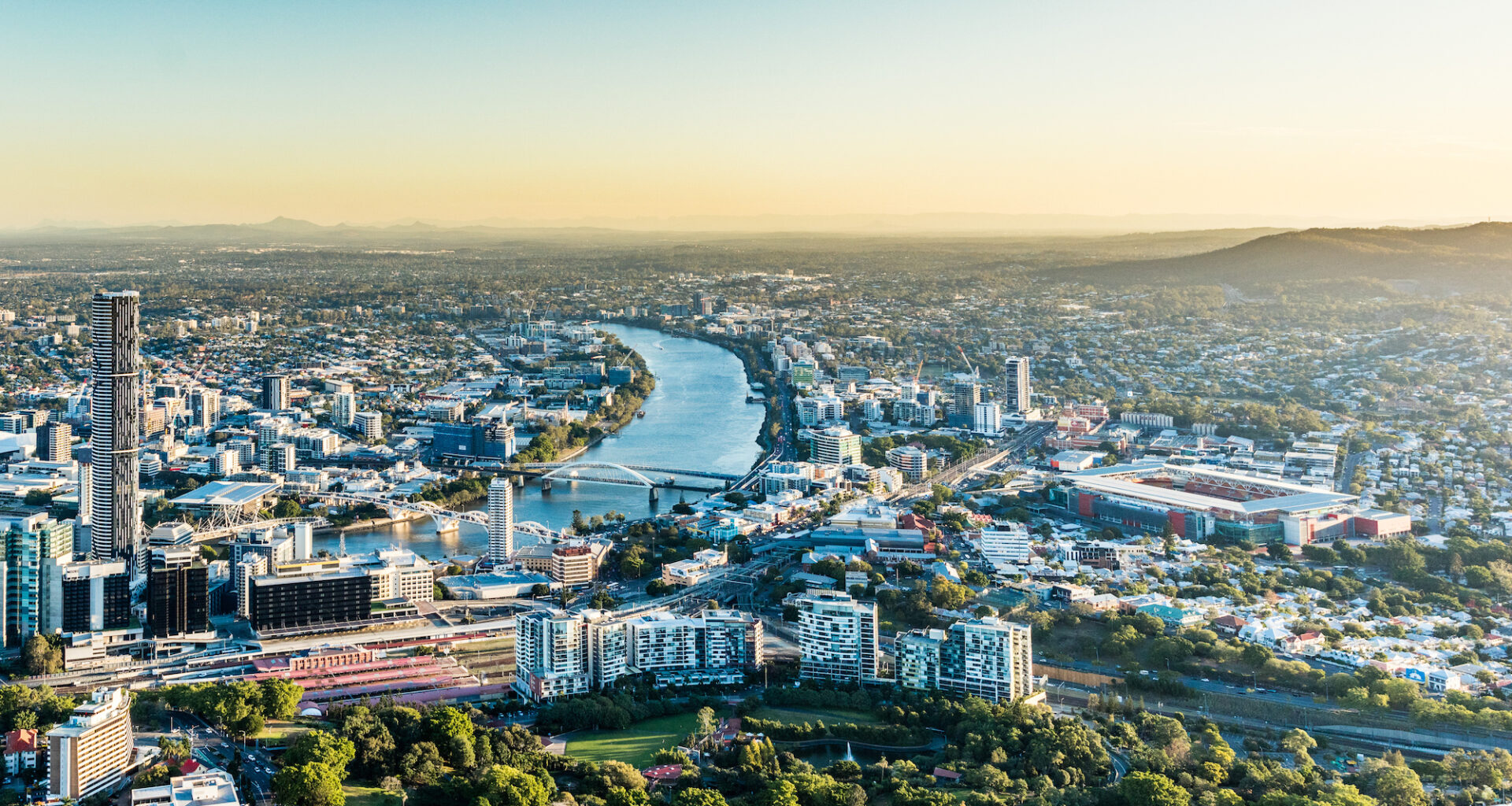
Brisbane and Perth are expected to be the strongest capital cities in 2026. Picture: Getty
This won’t stop property prices rising in the year ahead, but it is expected to slow the pace of price growth according to the report, which was authored by realestate.com.au economists Augus Moore, Eleanor Creagh and Anne Flaherty.
“The reasons that we’re expecting to see home prices continue to grow and reach new record highs is the fact that we’ve already seen a few rate cuts this year, and that’s still flowing through into home prices,” Mr Moore said.
“The tight supply backdrop that has supported price growth this year remains, yet stretched affordability and an extended pause on interest rates are set to temper the pace of growth.”
Source: realestate.com.au Property Outlook Report
Nationally, the median home price has risen 8.7% over the past year to a record $873,000, up 51% compared to five years ago.
Brisbane and Perth remain front of the pack
The report includes price forecasts for six capital city property markets, with Brisbane and Perth on track for the strongest price growth of between 7-10%.
Adelaide, which saw prices rise by 12.2% over the past year could see that rate almost halve as affordability constraints bite, though prices are still tipped to rise between 6-9%.
Sydney and Melbourne are expected to grow a more modest 5-7%, in line with price growth recorded this past year. Hobart has a slightly broader range of 4-7% projected.
A severe lack of supply in Perth, Brisbane and Adelaide is a key reason these markets will continue to outperform, with the number of active listings in these markets down around 45% from pre-pandemic levels.
“Brisbane and Perth are expected to be the two best performing capital cities in 2026 with the strongest price growth forecast,” Anne Flaherty said.
“What we’re seeing in these markets is that the rate at which new homes are being built is not keeping up with the rate at which the population is rising. These were also the fastest performing markets in 2025 and that momentum is likely to continue into next year.”
Source: realestate.com.au Property Outlook Report
PropTrack data shows the top ten best performing regions of the past 12 months were all located in Queensland and Western Australia.
“On the other hand, Sydney and Melbourne, which have been a little bit slower than other capitals throughout 2025 will probably continue to be a little bit slower in 2026,” Mr Moore said.
Without further rate cuts, affordability constraints will see Sydney’s more affordable outer and middle ring suburbs attract the bulk of demand, he said.
“Melbourne is still in the process of recovering from a number of years of underperformance relative to the other capitals, which will shape its 2026 outlook.”
Hobart, which is yet to return to its 2022 peak, is expected to see “a period of consolidation” rather than a renewed boom.
“Affordability [in Hobart] is stretched, with prices still high relative to local incomes. Meanwhile, population growth has slowed from its earlier highs. That combination points to steady price growth and a likely reclaiming of the 2022 peak in prices, but not a return to the exceptionally fast pace of gains seen in the pandemic boom.”
Price forecasts were not included for Darwin or Canberra.
Rising property prices drive household wealth higher
New data released by the Australian Bureau of Statistics (ABS) on Thursday showed total household wealth rose by $551.3 billion in the last quarter due to rising home values.
“Rising house prices were the main driver of the growth in household wealth this quarter,” ABS head of finance statistics Mish Tan said.
Ms Tan noted the 2.2% increase in house prices during the September quarter was the strongest quarterly growth since 2023.
Inflation has been rising faster than RBA forecasts. Picture: Nikki Short
While PropTrack data shows property prices have continued to rise in the months since, the pace of price growth has started to moderate.
Mr Moore said the property forecasts in the report are based on a scenario where rates remain on hold throughout 2026.
“While we’re expecting that rates will be broadly steady throughout next year, if inflation does come in stronger than expected, that could see rates have to move higher sooner, and that would be a downward pressure on home prices,” he said.
Economists at two of the major banks – CBA and NAB – this week have told borrowers to brace for a rate hike as early as February, while Westpac scrapped its forecast of two further rate cuts in 2026.