
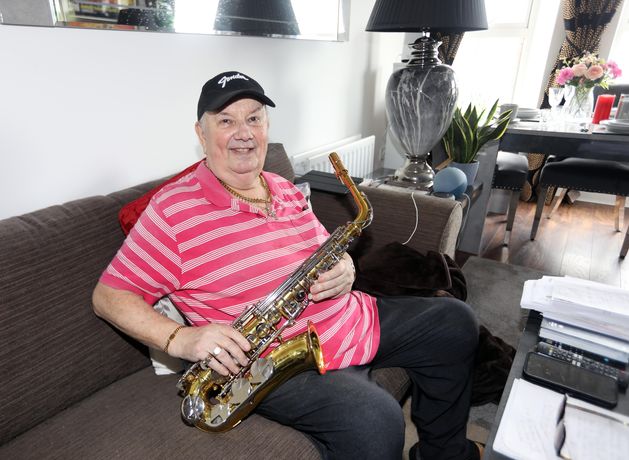
Three men – Fran O’Toole, Brian McCoy and Tony Geraghty – were killed on July 31, 1975.
In an interview with Sunday World, he publicly names the Grenadier Guards officer as the man who led the deadly bomb and bullet attack which killed his three bandmates 50 years ago today.
The claims are hotly contested by the British army, who say Nairac was fishing in Scotland at the time of the massacre.
Five of the six members of the famous band were on their way home from a Banbridge dance hall when their minibus was stopped at an army checkpoint on Buskhill Road, outside Newry.
Soldiers ordered the musicians to exit their vehicle and line up facing a roadside ditch. Des Lee’s life was saved by his saxaphone – he asked permission to retrieve it from the minibus and when he returned to the friends who were lined up at the side of the road, he moved to a different position. Seconds later, a massive explosion destroyed the minibus and the soldiers then opened fire on the musicians, killing Fran O’Toole, Brian McCoy and Tony Geraghty.
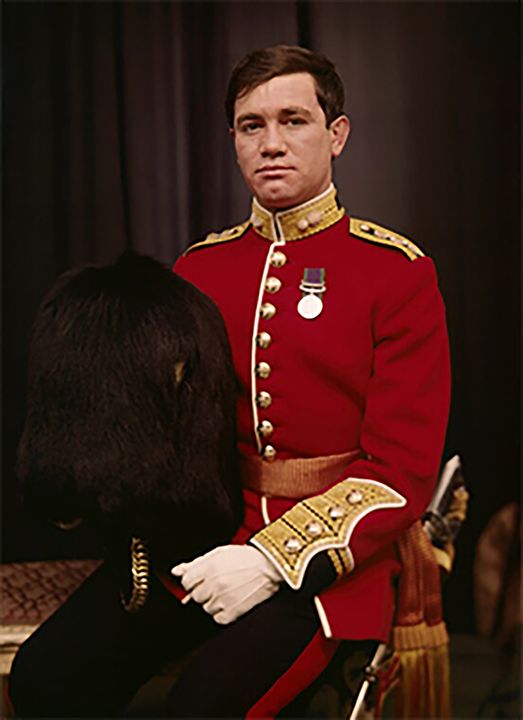
Captain Robert Nairac.
Des suffered a shrapnel wound to his knee and two UDR soldiers – Wesley Somerville and Harris Boyle – both also members of the Mid-Ulster UVF – also died.
But this week, as he prepared to travel to Dublin for the launch of his new book My Saxophone Saved My Life, Des told us: “My eyes didn’t deceive me. I am an eye-witness to that dreadful night. I know what I saw and more importantly, I know who I saw.”
He added: “I was standing right next to Captain Robert Nairac just seconds before the bomb went off. I went back to the van to get my sax, that’s the reason I’m still here today.”
The British army has persistently denied Nairac’s involvement and says that on the day of the attack, 28-year-old Nairac – a liaison officer linked to the SAS – took leave from an army barracks in London and went straight to a pre-arranged fishing trip in the Outer Hebrides.
And the army further insisted the Guards officer would ‘have had no window’ to travel back to Northern Ireland.
But this week Des Lee was adamant Nairac led the attack. He told us: “I can only tell what I saw with my own eyes and I can categorically state: Captain Robert Nairic was in charge of the men who attacked us that night.
“On the night of the attack, we had played to a sell-out show in Banbridge and we were on our way home when we were stopped at an army checkpoint at Buskhill, outside Newry.
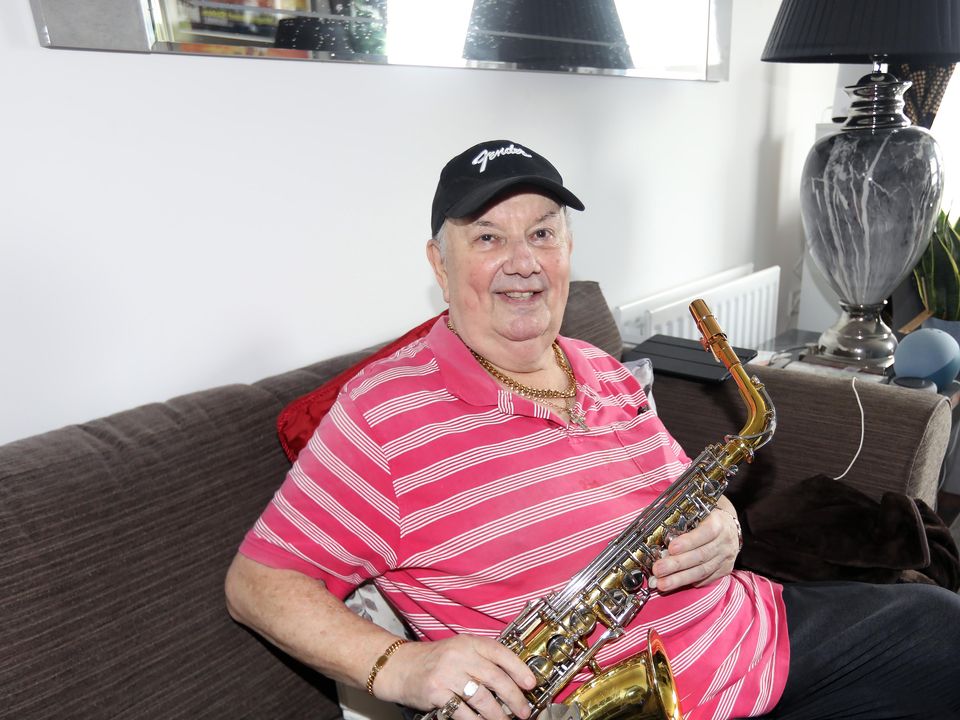
Des Lee, one of the surviving members of the Miami Showband.
News in 90 Seconds – Thursday, July 31
“It was manned by soldiers in uniform. We were all ordered out of our minibus and told to stand in a line in front of a ditch.
“It didn’t bother us, because we had gone through a similar procedure many times before.
“We could hear the various accents going on around us. Straight away, I recognised the Northern Ireland accents, but there was one which stuck out.
“It was a posh English accent. He was the one who was calling all the shots. And after the bomb detonated and the shooting died down, I made a run for it and managed to make my way to Newry RUC Station, I told all of this to the police.
“I said there was one man appeared to be in charge of the whole operation. But when we got down to telling the nitty gritty of what happened, they always denied there was anyone there with a English accent.
“The RUC explain it away by claiming it was one of the loyalists imitating a English accent. But as far as we were concerned, this was just a cover-up and a pretty weak one.
“As soon as I saw a picture of Robert Nairac, I knew he was involved in the Miami Massacre and I stated it at the time. It’s clear that the reason the British didn’t want the truth to be made public was because it would have been a hell of a thorn in the side of the British government.
“The British would have to acknowledge a high-profile soldier was involved in the Miami Showband massacre and they were never going to do that.
“But it has gone on to be proven that Nairac was involved and I’ve seen written proof with my own eyes that Nairac was there,” Des said.

Three members of the band were killed by the UVF on a rural road after a gig in Banbridge, County Down, in 1975.
However, Des also concedes that when he met with members of the Historic Enquiries Team, its representatives told him they had no evidence to suggest Captain Nairac took part in the attack.
“The HET lads said it had been claimed Nairac was on a fishing trip to Scotland at the time, but we knew that wasn’t true.
“Then what happened was, myself and the author and investigative reporter Ken Murray went to see my now retired lawyer in Belfast.
“And he showed us a document which claimed Nairac was present at the murder scene.
“But things went further. We went to the offices of my other lawyer in Belfast and he gave us access to dozens of files and we trawled our way through them.
“We eventually found a Ministry of Defence document which clearly stated Robert Nairac was involved. The British government persistently denied his presence, but we now have absolute proof Nairac was there.
“That’s why I wrote the book. We now have the proof that what I had stated on day one was correct.
“But it’s much more than that, Nairac organised the whole thing. He organised the uniforms and he organised the transport and he even organised the bomb. It was all organised by Robert Nairac, front start to finish.
“I stood right next to Nairac that night, he stood on my left, I well remember his face and I’ll never forget his accent,” Des insisted.
He added: “I’ll believe that until the day I die.”
Three Ulster Defence Regiment soldiers, James McDowell, Robert Crozier and John Somerville, were convicted for the Miami Showband massacre and sent to jail for life.
After the bomb blast, John Somerville pursued singer Fran O’Toole into a field, where he shot him in the face 22 times.
Somerville later told a BBC Spotlight reporter: “I’m not proud of it. It was something I believed in at the time.”
Although he opposed the Good Friday Agreement, John Somerville walked free from prison under its terms. He later contracted cancer and died.
Fingerprints found on a Luger pistol used in the attack were found to belong to Robin ‘The Jackal’ Jackson but he was never charged. He too died of cancer.