
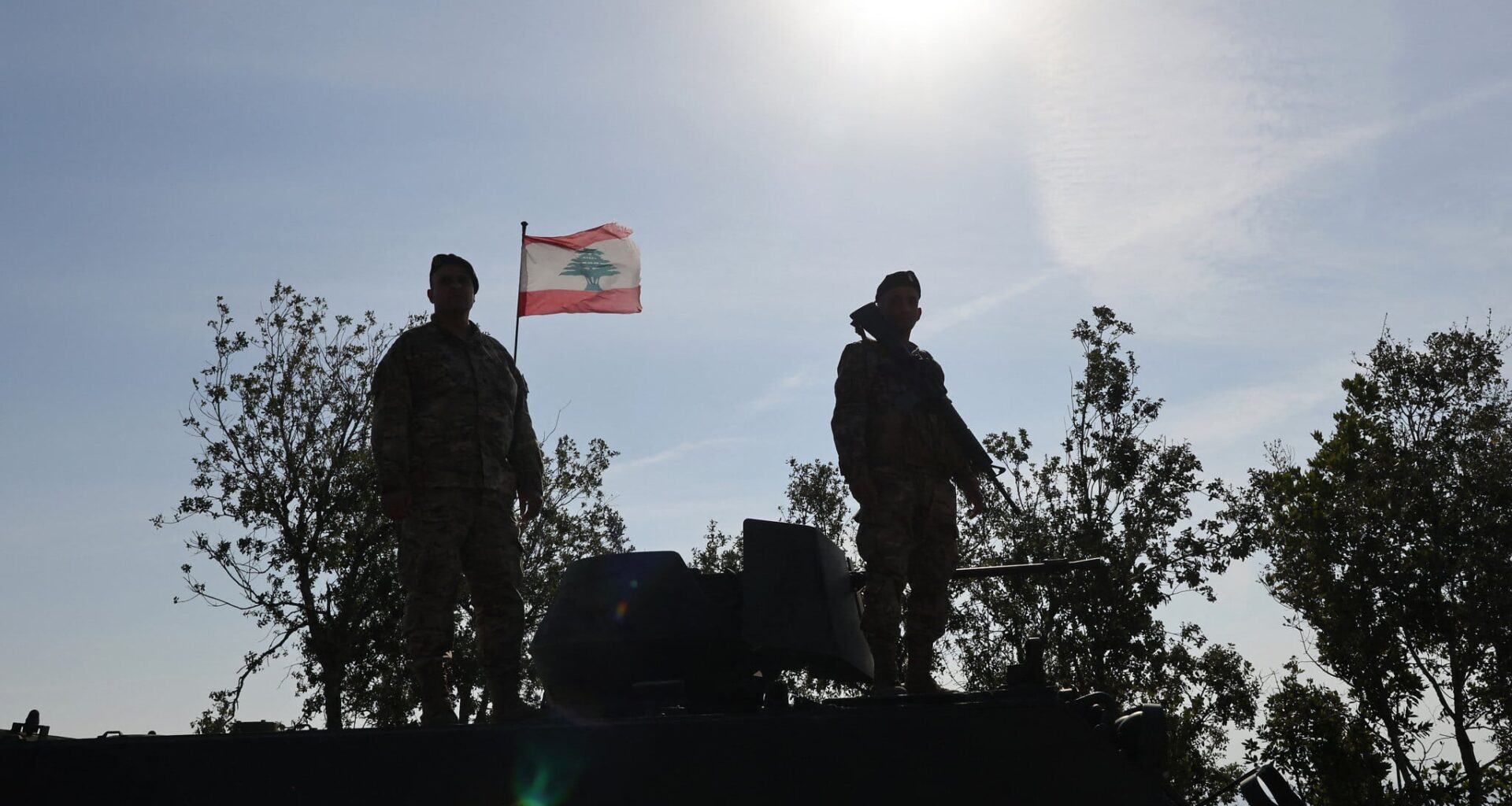
French, Saudi Arabian and American officials held talks in Paris with the head of the Lebanese Armed Forces on Thursday aimed at finalizing a roadmap to enable a mechanism for Hezbollah’s disarmament.
The meeting with General Rudolf Heykal was planned amid worry that Israel could embark on a new military operation against the Iran-backed group after the December 31 deadline for its disarmament passes.
With growing fears the ceasefire could unravel, officials aimed to create more robust conditions to identify, support and verify the disarmament process and dissuade Israel from escalation, four European and Lebanese diplomats and officials told Reuters.
Israel and Lebanon agreed to a US-brokered ceasefire in November 2024, ending more than a year of fighting between Israel and Hezbollah that severely weakened the Iran-backed group. Under the deal, Lebanon’s army was to disarm Hezbollah south of the Litani by the end of the year before tackling the rest of the country.
Since then, the sides have traded barbs over violations, with Israel questioning the Lebanese army’s efforts to disarm Hezbollah. Meanwhile, Israeli forces have increasingly targeted the terror group in airstrikes.
Get The Times of Israel’s Daily Edition
by email and never miss our top stories
By signing up, you agree to the terms
Speaking after the meeting, France’s foreign ministry spokesperson Pascal Confavreux said the talks had agreed to document the Lebanese army’s efforts to disarm Hezbollah, as well as to strengthen the existing ceasefire mechanism.
The parties also agreed to hold a conference in February to reinforce the Lebanese army, he said.
Diplomats voiced worry that President Joseph Aoun — under increasing pressure due to upcoming legislative elections — will be less likely to press for disarmament in the coming months.
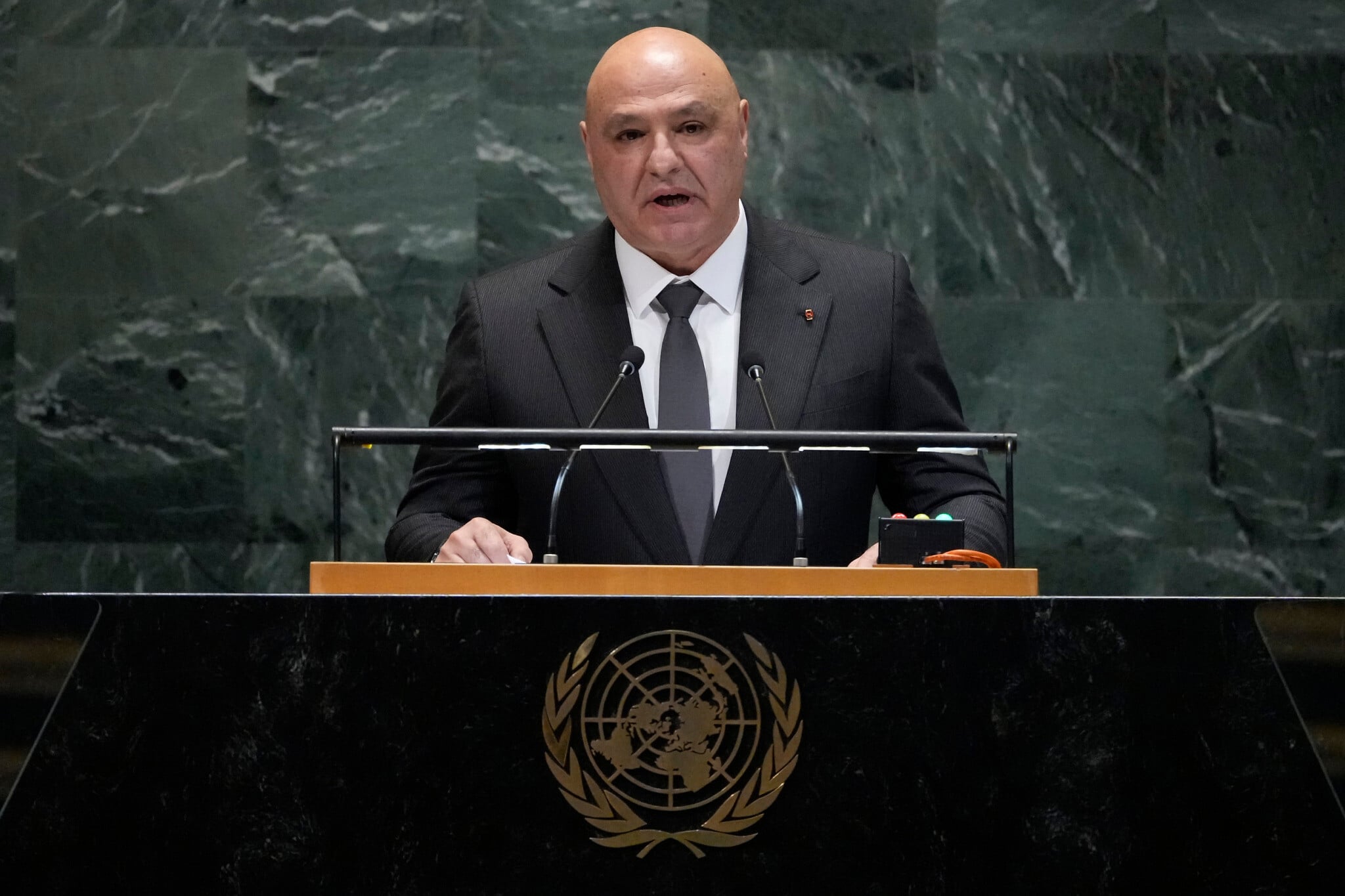
Lebanon President Joseph Aoun addresses the 80th session of the United Nations General Assembly, September 23, 2025, at UN headquarters. (AP Photo/Pamela Smith)
“The situation is extremely precarious, full of contradictions, and it won’t take much to light the powder keg,” said one senior official speaking on condition of anonymity.
“Aoun doesn’t want to make the disarming process too public because he fears it will antagonize and provoke tensions with the Shi’ite community in the south of the country,” he continued.
With the Lebanese army lacking the capacity to disarm Hezbollah, officials at the Paris conference discussed reinforcing the existing ceasefire mechanism with French, US and possibly other military experts, along with UN peacekeeping forces.
During the meeting, the US was represented by Morgan Ortagus, the American special representative for Lebanon, while French President Emmanuel Macron’s Middle East adviser Anne-Claire Legendre headed the French side.
The committee monitoring the ceasefire — which includes the United States, France and the UN in addition to Lebanon and Israel — is set to meet on Friday.
The truce agreement required both Israel and Hezbollah to vacate southern Lebanon and allow the Lebanese Armed Forces to fill the void. Israel has withdrawn from all but five strategic posts along the border, and regularly strikes Hezbollah targets, saying the attacks target the terror group’s attempts to rebuild its strength following the war, in contravention of the truce agreement.
Even as officials met in Paris, Israel launched several strikes on Hezbollah targets in southern and eastern Lebanon.
The strikes targeted “terror infrastructure sites in multiple areas across Lebanon,” including a “military compound used by Hezbollah to conduct training and courses” for operatives under the Iran-backed group, the IDF said.
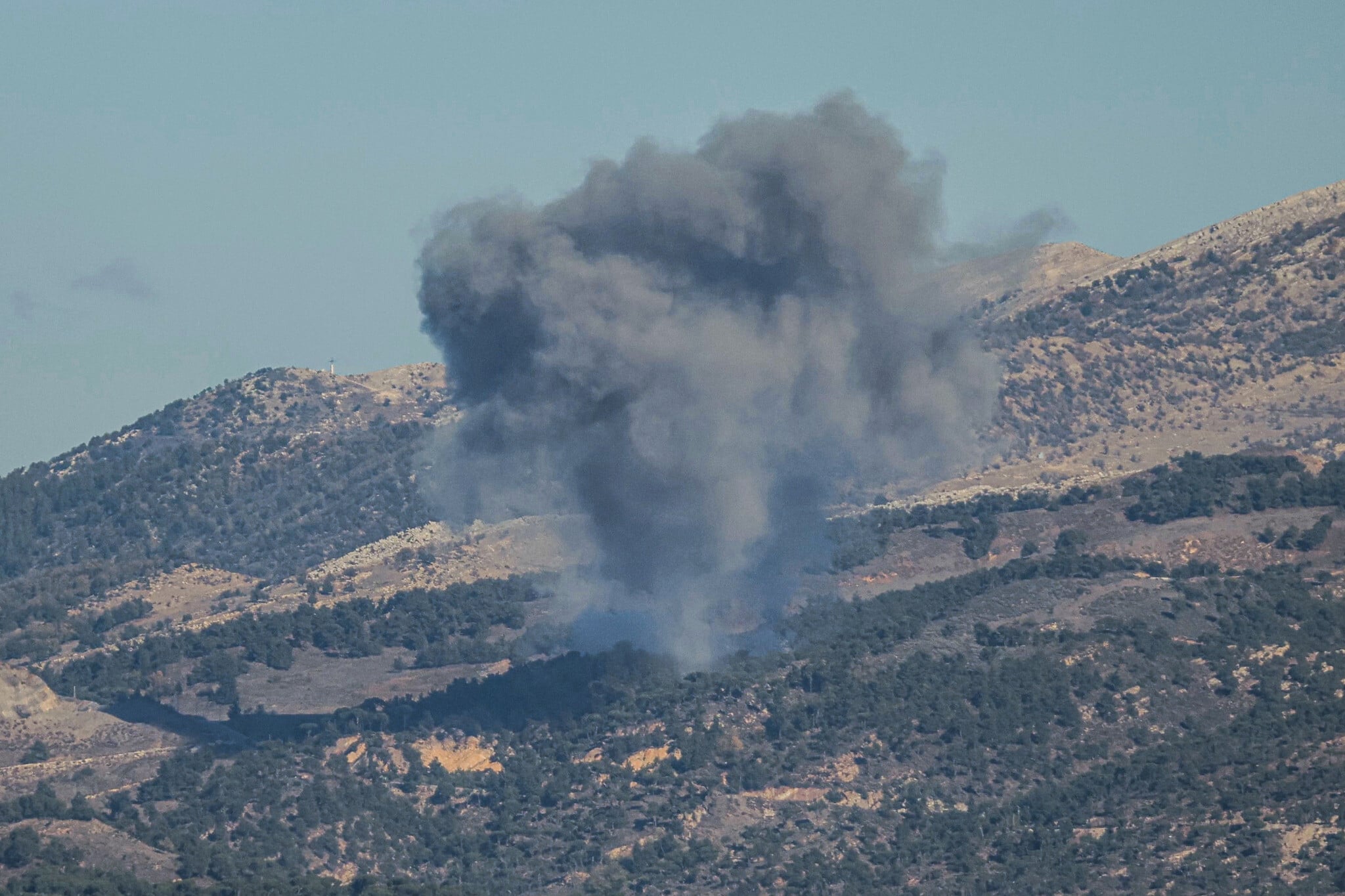
Smoke rises from the site of a series of Israeli airstrikes that targeted the outskirts of the southern Lebanese village of al-Qatrani on December 18, 2025. (Rabih Daher/AFP)
In another statement, the army said that its forces had “struck a Hezbollah terrorist in the area of Taybeh in southern Lebanon.”
The Lebanese health ministry said four people were wounded in the Taybeh strike. Lebanon’s state-run National News Agency reported that the strike wounded several employees in Lebanon’s state electricity company, as their truck was passing next to the targeted vehicle.
Commenting on the attacks, parliament speaker and Hezbollah-allied Amal Movement leader Nabih Berri said the strikes were an “‘Israeli message’ to the Paris conference, dedicated to supporting the Lebanese army.”
Around 340 people have been killed by Israeli strikes since the ceasefire agreement went into force, according to an AFP tally of health ministry reports. There is no data on how many of those were terror operatives.
The US-brokered ceasefire with Hezbollah came after two months of open conflict in Lebanon, including an IDF ground operation in the country’s south in a bid to enable the safe return of some 60,000 residents of northern Israel displaced by the terror group’s near-daily attacks.
The rocket and drone attacks began on October 8, 2023 — a day after fellow Iran-backed terror group Hamas invaded southern Israel, sparking the war in Gaza.
You appreciate our journalism

You clearly find our careful reporting valuable, in a time when facts are often distorted and news coverage often lacks context.
Your support is essential to continue our work. We want to continue delivering the professional journalism you value, even as the demands on our newsroom have grown dramatically since October 7.
So today, please consider joining our reader support group, The Times of Israel Community. For as little as $6 a month you’ll become our partners while enjoying The Times of Israel AD-FREE, as well as accessing exclusive content available only to Times of Israel Community members.
Thank you,
David Horovitz, Founding Editor of The Times of Israel