
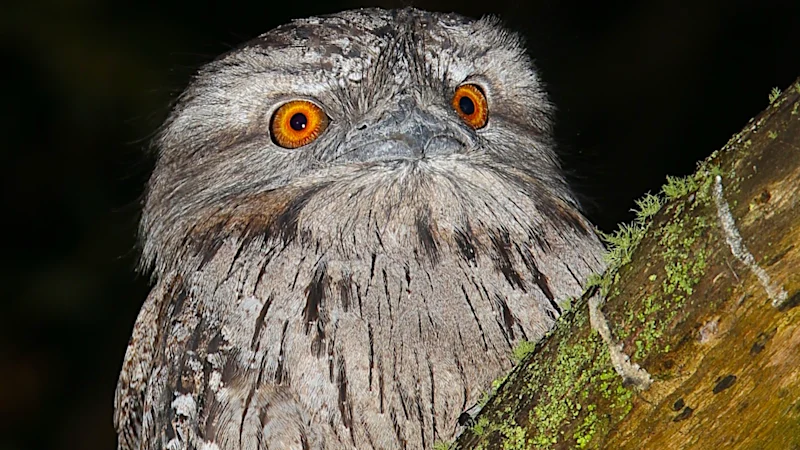
“They’re a good omen in other countries, and it baffles my mind that we think it’s OK to poison them. They are the No. 1 rodent control factor that we have.”
Other native animals falling prey to SGAR poisons include kookaburras, ravens, crows, magpies and even possums, which feed on poison bait stations.
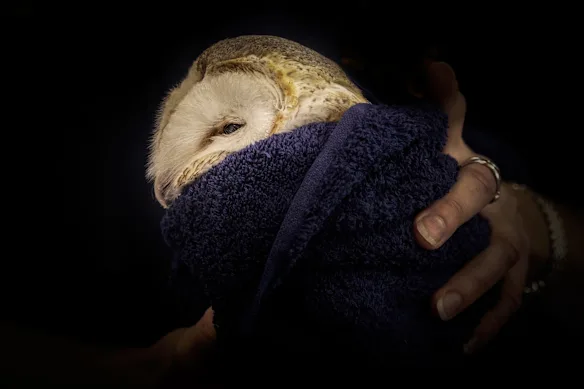
A barn owl peers from a towel during a health check in Dubbo.Credit: Getty Images
Ecologists were bitterly disappointed this week when the Australian Pesticides and Veterinary Medicines Authority (APVMA) handed down the findings of its four-year review of SGARs but rebuffed calls to ban the products.
Instead, the authority has recommended changes to how the products are sold, such as containing poisons to within bait stations rather than throw packs, recommending mice poisons be used only inside buildings, and recommending rat poisons be used only within two metres of buildings.
The authority has proposed to suspend the sale of products so that “stricter controls” can be put in place for their use, but it will give industry and state and territory governments six weeks to have their say on the changes before choosing whether to proceed with the suspension.
In an interview with this masthead, chief executive Scott Hansen defended the process, saying there was a statutory requirement to offer “procedural fairness” to registration holders of the killer products.
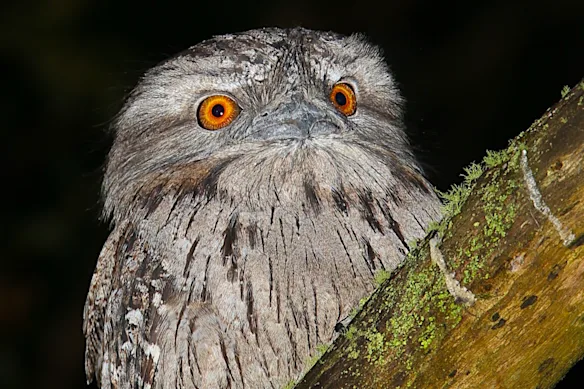
Birds, including tawny frogmouths (pictured), are frequently killed by second-generation rodent poisons.Credit: John White
The authority has a legal obligation to protect humans and the environment in its regulation of pesticides, but it considered the risks of poisons could be mitigated, Hansen said.
“If we see that a product is having a deleterious effect on wildlife, we act to suspend and we propose alternative methods in which we mitigate that risk to wildlife, which is what we’ve done in this case.”
Loading
He did not directly answer questions about how mice and rats – which take five to seven days to die after eating the poison – would no longer be taken by predators under the proposed changes.
Ecologist Dr Barry Traill estimates that tens of thousands of Australian owls alone are killed by rodent poisons each year. Associate Professor John White said poisoned rodents were picked off at a higher rate than healthy rodents because as the poisons took effect, the rodents became dopey and uninhibited.
“The thing that most people don’t realise is if you put out a second-generation rat poison in your roof and a rat eats it, and that rat gets eaten by, say, an owl or a frogmouth, it might not have enough poison in its body to kill that frogmouth,” he said.
“But the problem is that these poisons go straight to the liver, and they’re held by the body, so a poison that you put out nine or 10 months ago could still be in a frogmouth living around your house because it takes about a year to get out.”
Ten per cent of the APVMA’s income comes from taxpayers, with the remaining 90 per cent generated by the fees charged for the approvals and registration of products and on levies on sales of agricultural and veterinary products, Hansen confirmed.
Traill said the authority’s funding model constituted an inherent conflict.
“The APVMA funding model is fundamentally flawed – the more poisons they legalise, the more money they get. Would we like, say, a gun regulator to take fees from gun manufacturers?
“Ministers [Murray] Watt and [Julie] Collins need to intervene and sort out this failed bureaucracy.”
Get to the heart of what’s happening with climate change and the environment. Sign up for our fortnightly Environment newsletter.