
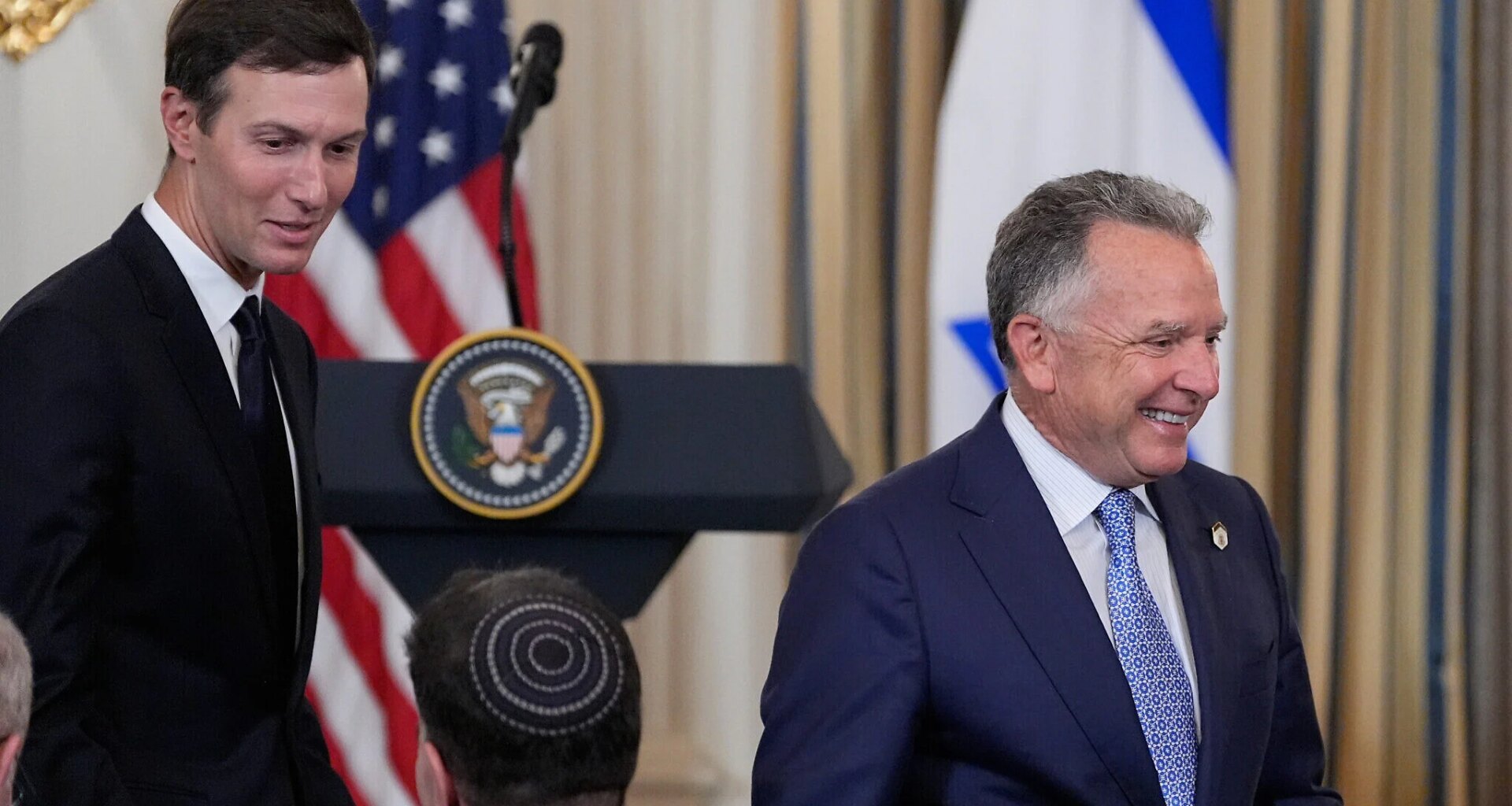
The mediators of the fragile Gaza ceasefire expressed their support Saturday for US President Donald Trump’s peace plan for the Gaza Strip following a Friday meeting in Miami, but a source briefed on the meeting said little progress was made on implementing the plan beyond the current truce.
A joint statement issued by the US, Qatar, Egypt and Turkey was light on details and didn’t contain any new announcement.
The mediating countries urged both Israel and the Hamas terror group – which remains the de facto government of about half the Strip – to adhere to the peace plan, and to exercise more restraint to avoid a return to war.
The mediators also called for the swift establishment of a so-called Board of Peace as envisioned by the plan, and of a technocratic government to oversee the Strip’s postwar management.
Attending the meeting Friday were US special envoy Steve Witkoff, Qatari Prime Minister Mohammed Abdulrahman Al Thani, Egyptian intel chief Hassan Rashad and Turkish Foreign Minister Hakan Fidan.
Get The Times of Israel’s Daily Edition
by email and never miss our top stories
By signing up, you agree to the terms
The source briefed on the sit-down said advancement into the second phase of the ceasefire will require compromises from the leaders of Israel and Hamas regarding the issues of the IDF’s withdrawal from Gaza and disarmament.
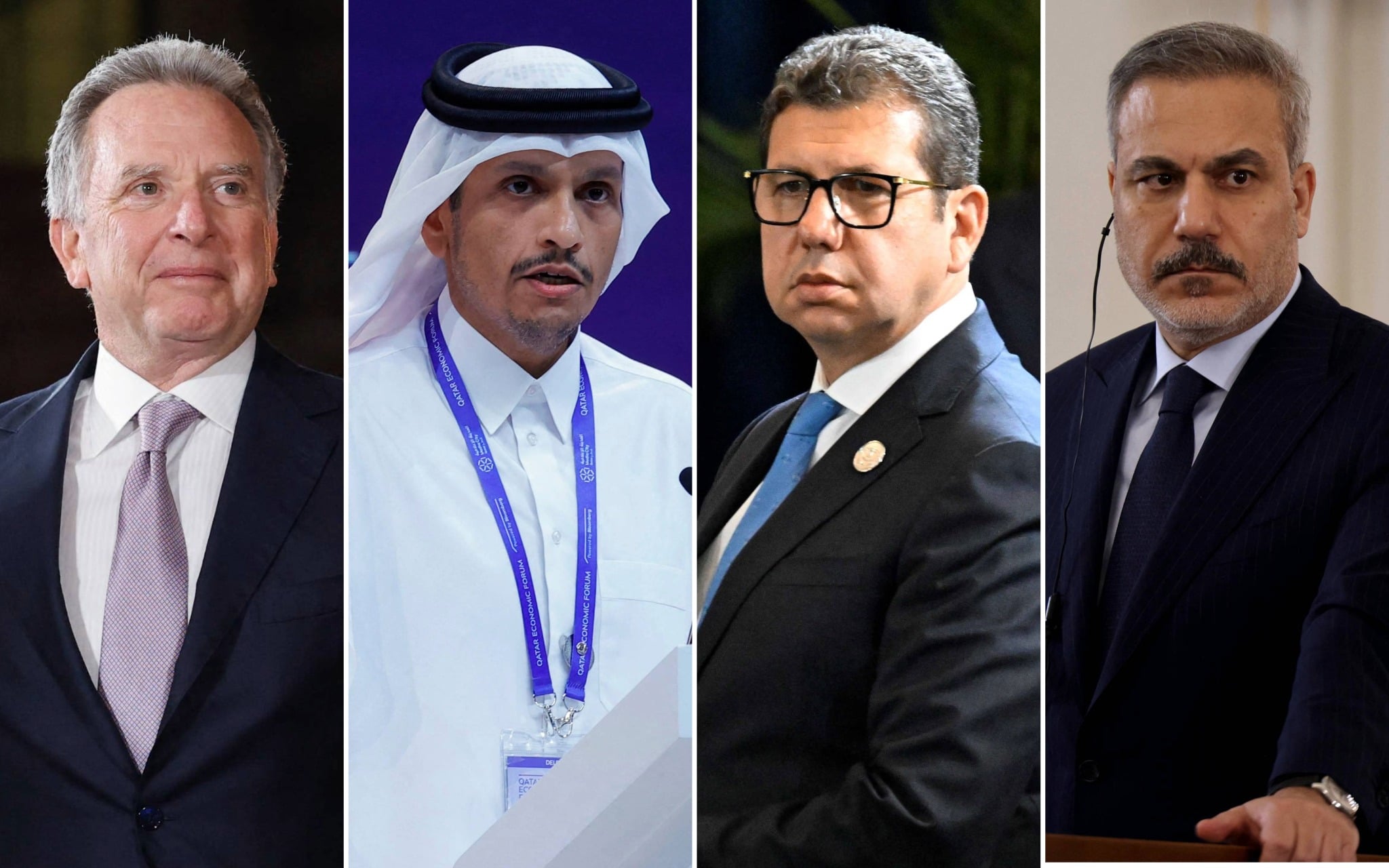
L-R: US envoy Steve Witkoff, in Berlin on December 15, 2025 (Odd Andersen/AFP); Qatari Prime Minister Mohammed bin Abdulrahman Al-Thani in Doha, on May 20, 2025. (Karim Jaafar/AFP); Egypt’s intelligence head Hassan Rashad in Sharm-el-Sheikh, on October 13, 2025 (Khaled Desouki/AFP); Turkey’s Foreign Minister Hakan Fidan, in Tehran on November 30, 2025. (Atta Kenare/AFP)
The mediators discussed ways to pressure the two sides toward an agreement, but the source said that Israel and Hamas can’t be forced against their will.
The joint statement said the four representatives met “to review the implementation of the first phase of the Gaza ceasefire and to advance preparations for the second phase.”
The plan’s first phase, which Israel and Hamas agreed to in the October deal, consists of the initial ceasefire, a limited pullback by the Israel Defense Forces, a hostage-prisoner swap and a surge in humanitarian aid.
Both sides accuse the other of violating the terms of the first phase; however, as the body of one hostage, Sgt. Ran Gvili, remains in Gaza, and as Israel has refused to open the Rafah Crossing between Egypt and Gaza in both directions, agreeing only to allow movement out of the Strip.
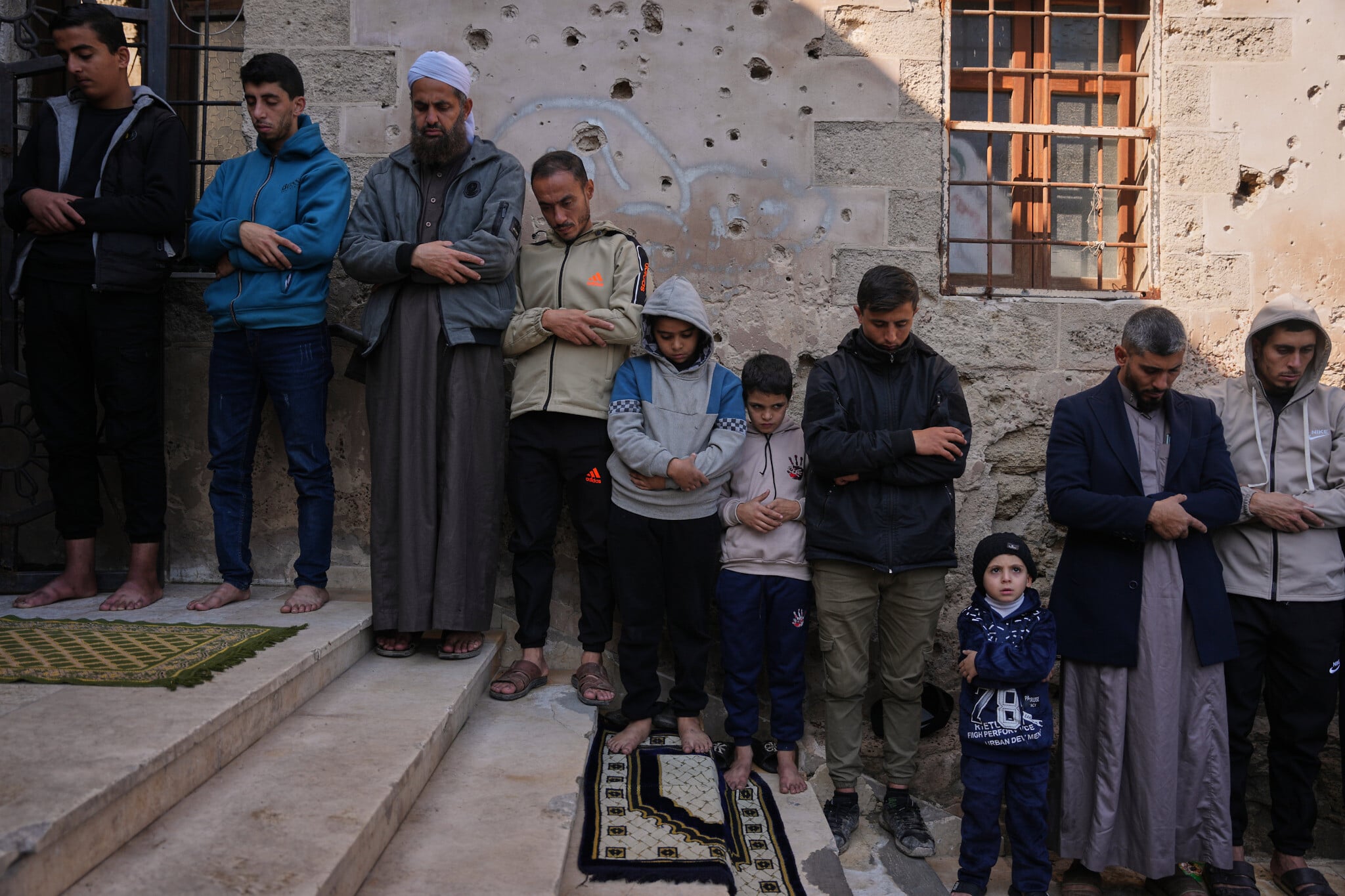
Palestinians attend Friday prayers at the Sayyid Hashim Mosque, in Gaza City, on December 19, 2025. (AP Photo/Abdel Kareem Hana)
Israeli troops have come under attack in a few cases, with three being killed since the ceasefire went into effect, and the IDF has responded with airstrikes while also repeatedly striking what it says are gunmen crossing the ceasefire line and posing a threat to troops. According to the Hamas-run Gaza health ministry, nearly 400 Palestinians have been killed since the truce began. The ministry’s figures do not differentiate between civilians and combatants.
Israel and Hamas have not formally signed on to the second phase. It is supposed to see the establishment of a Palestinian technocratic government for the Strip, overseen by a Trump-led Board of Peace, as well as the deployment of an International Stabilization Force as the IDF’s presence in the Strip is phased out.
It also advances the decommissioning of Hamas’s weapons and the demilitarization of Gaza, though Hamas has vocally refused to lay down its arms.
The US has struggled to recruit countries to join the International Stabilization Force, as questions remain unanswered regarding whether and how Hamas will disarm, and whether Israel will relinquish its control of Gaza.
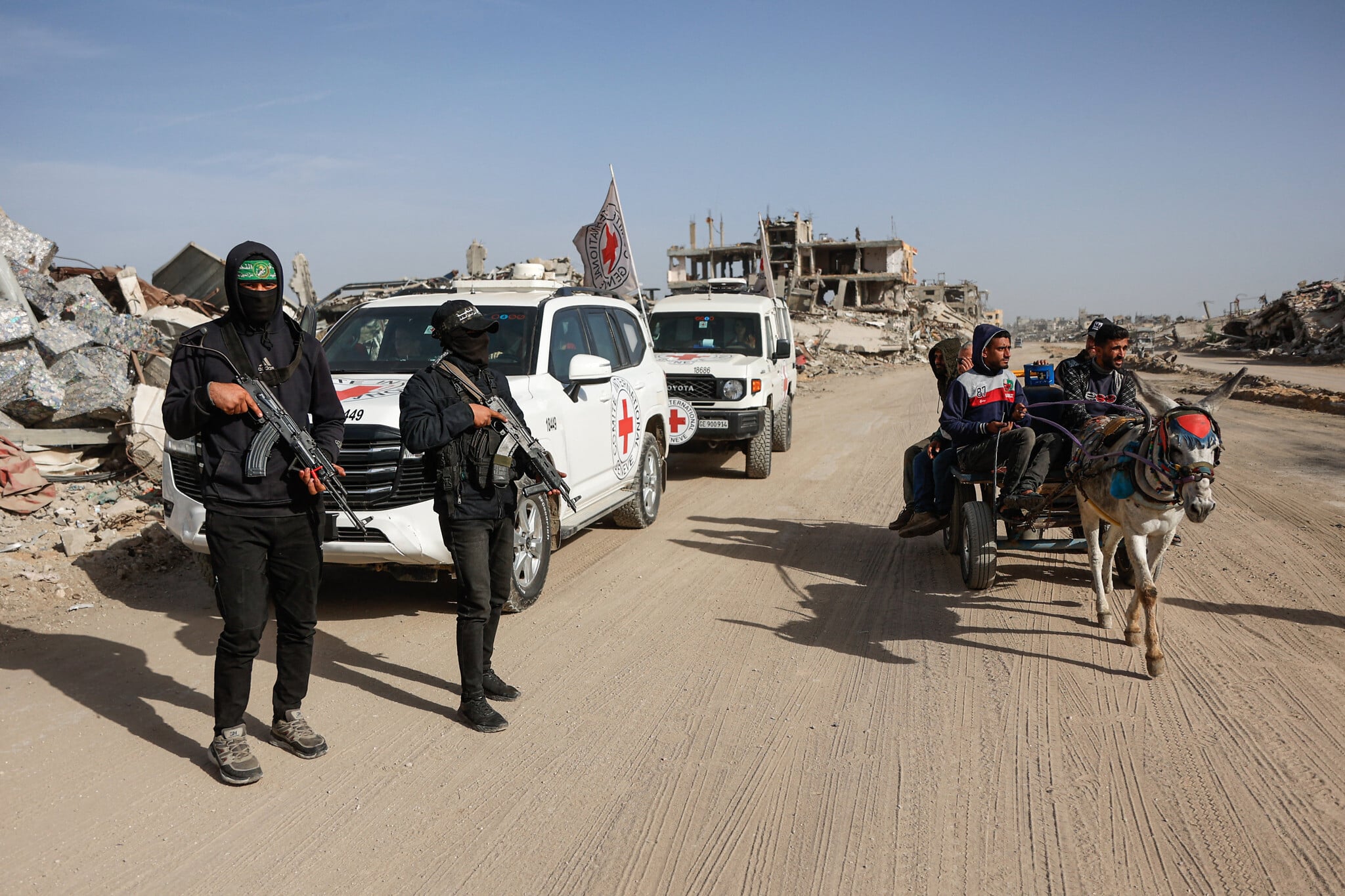
Hamas gunmen are present as Egyptian workers, accompanied by members of the International Committee of the Red Cross, search for the remains of the last Israeli hostage, Sgt. Ran Gvili, in the Zeitoun neighborhood of Gaza City on December 8, 2025. (Omar AL-QATTAA / AFP)
Nonetheless, the joint statement from mediators insisted that the first phase “has yielded progress, including expanded humanitarian assistance, the return of hostage bodies, partial force withdrawals and a reduction in hostilities.”
The mediators said that during their meeting, they “emphasized enabling a governing body in Gaza under a unified Gazan authority to protect civilians and maintain public order.” This appeared to be a reference to the Palestinian technocratic government that also has yet to be stood up.
The mediators said they also discussed “regional integration measures, including trade facilitation, infrastructure development and cooperation on energy, water and other shared resources,” saying this will be “essential to Gaza’s recovery, regional stability and long-term prosperity.”
“In this context, we expressed our support for the near-term establishment and operationalization of the Board of Peace as a transitional administration for the civilian, security, and reconstruction tracks of the reconstruction,” the joint statement said.
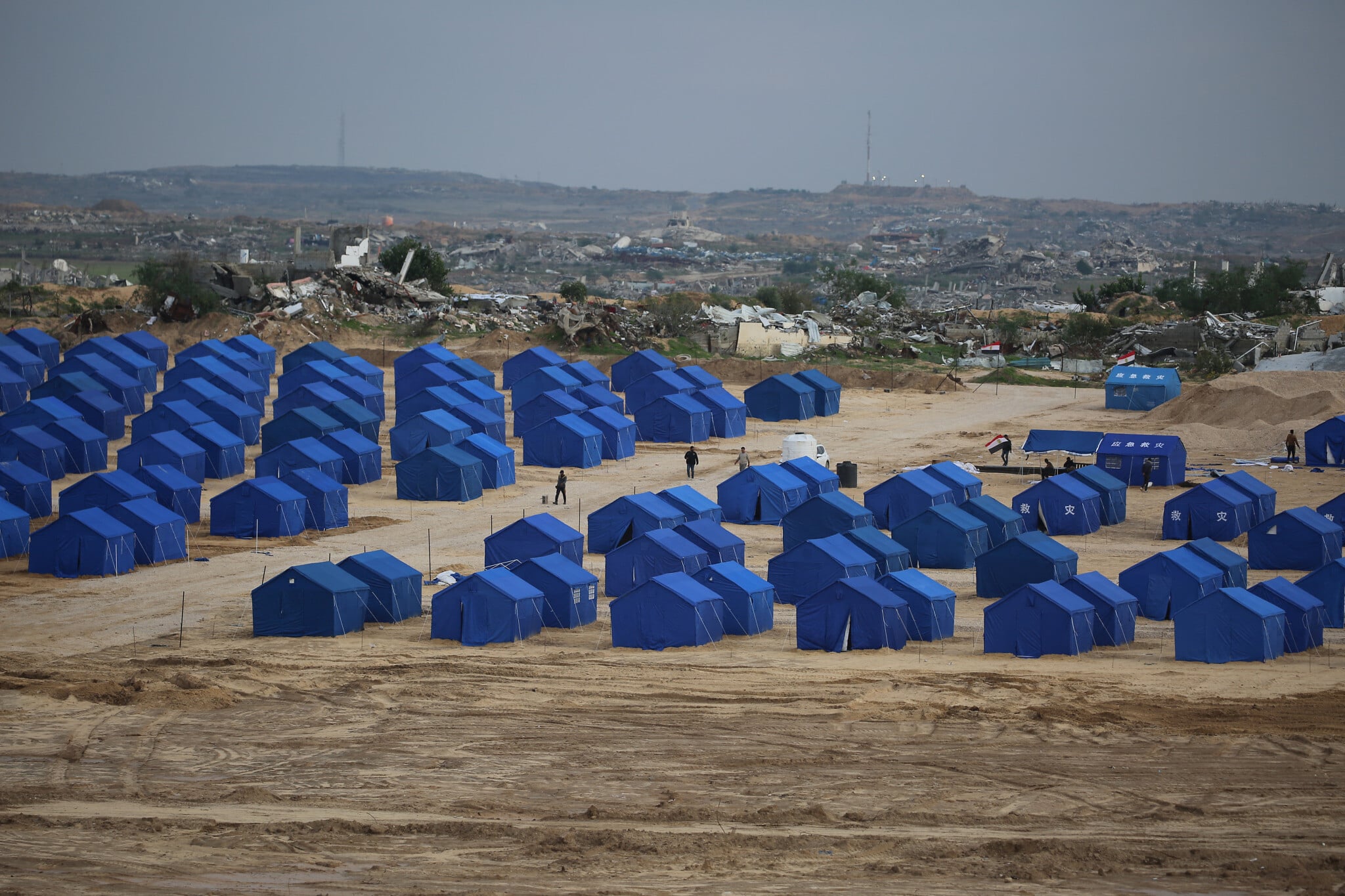
A general view of the shelters for displaced Palestinians and destroyed houses in Nuseirat camp in the central Gaza Strip on December 19, 2025. (Eyad Baba / AFP)
Both Hamas and the Palestinian Authority, which governs parts of the West Bank, are looking to have influence over what is supposed to be an independent body, but Israel has pushed back against this.
The Trump plan calls for the PA to complete a “reform program,” and says that governance of Gaza could eventually be handed over to it, if and when the program has been completed. Israel, however, has consistently opposed any role in postwar Gaza for the PA.
Turkey’s intelligence chief meets Hamas official
On Saturday, the head of Turkey’s MIT intelligence service met with top Hamas official Khalil al-Hayya, who heads the terror group’s negotiating team, and discussed necessary measures to be taken for proceeding to the second phase of the peace plan, Turkish security sources said.
The Turkish sources, speaking on condition of anonymity, said MIT chief Ibrahim Kalin met the Hamas delegation in Istanbul within the scope of the Gaza ceasefire agreement, and they discussed steps to be taken to prevent what they said were Israel’s ceasefire violations.
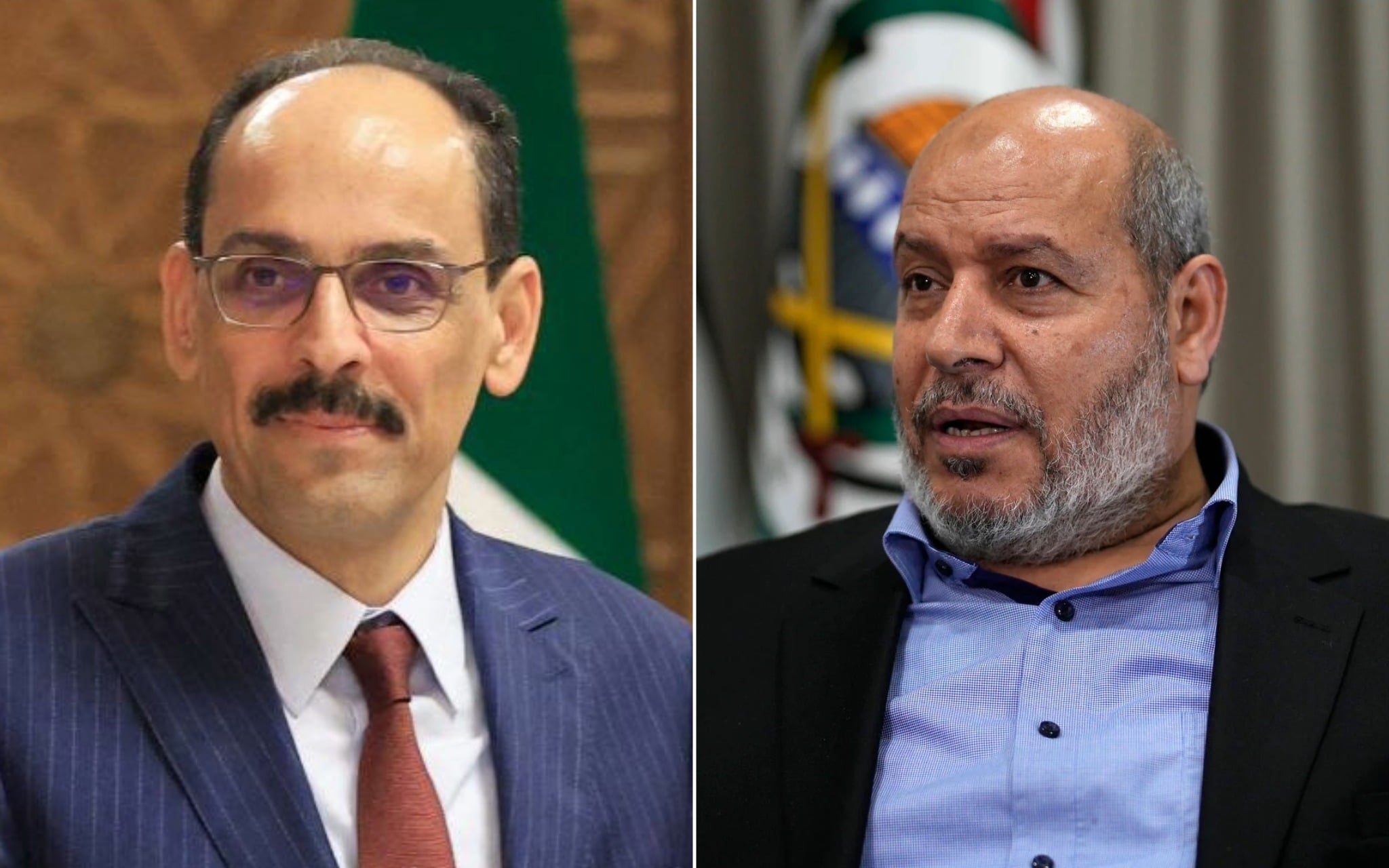
L: Turkish intelligence chief Ibrahim Kalin in Damascus on September 17, 2025 (Syrian Presidency Facebook page / AFP): R: Hamas’s Khalil al-Hayya in Istanbul on April 24, 2024. (AP Photo/Khalil Hamra)
They also discussed measures to be taken to resolve existing issues for proceeding to the second phase of the plan, the sources also said, without giving details.
Israel has insisted that Turkey — whose government vocally supports Hamas and frequently compares Israel to Nazi Germany, but which serves as a mediator for the truce — not deploy any of its troops to Gaza. The US has expressed support for the idea of Turkish involvement in the Strip, but it excluded Ankara from recent talks on the International Stabilization Force.
Times of Israel staff contributed to this report.
You appreciate our journalism

You clearly find our careful reporting valuable, in a time when facts are often distorted and news coverage often lacks context.
Your support is essential to continue our work. We want to continue delivering the professional journalism you value, even as the demands on our newsroom have grown dramatically since October 7.
So today, please consider joining our reader support group, The Times of Israel Community. For as little as $6 a month you’ll become our partners while enjoying The Times of Israel AD-FREE, as well as accessing exclusive content available only to Times of Israel Community members.
Thank you,
David Horovitz, Founding Editor of The Times of Israel