
Social media bans may now be law but for many families, the main enforcers of the new rules are parents.
For some parents, the bans have come as a relief after previously trying and failing to cut down on their child’s social media use.
For others, they have further fuelled conflict with teens who want to keep their social media apps and are finding ways to circumvent the laws.
Lee McGregor said her 14-year-old daughter did not lose her social media after the ban kicked in.

Lee McGregor says her 14-year-old daughter has used social media platforms “responsibly for years”. (Supplied)
“And I have no intention of removing platforms she’s used responsibly for years,” Ms McGregor said.
She said she felt the ban was a government overreach.
“It feels like a knee-jerk reaction that doesn’t reflect what families actually want.
“Within my circle, we all communicate with our kids and feel capable of parenting them around social media ourselves.
“Meanwhile, there are far more pressing issues, like the surge in e-bike injuries and deaths, that desperately need attention,” she said.
Living without a smartphone in New York
Ms McGregor said it was concerning that some kids would turn to less safe platforms as workarounds.
And she said the ban did not consider taking something away from kids who had used it for years.
“It should apply from this point forward to children under 12. But for kids over 12, who already have established accounts and connections, they should be allowed to continue.”
‘I’m going to have to police it even more’
Jill Shaylor said her 12-year-old had already worked out ways to circumvent the ban.
“It’s just going to happen behind my back and I’m just going to have to police it even more,” Ms Shaylor said.
She said she was worried that by posing as older teenagers, her daughter and friends would be exposed to more inappropriate chats and content.
“I feel it is even harder to monitor than [it was] before the ban.”
She said while the intent of the ban was good, social media companies had not “come to the party”.
“I work full time. I’ve got two kids, I will slip up, I guarantee you. Even the best parent will slip up.
“It’s a lot of pressure for me because I’m trying my absolute best to mitigate any risks from this thing,” she said.

Some parents are worried about the added responsibility of monitoring their children’s social media activity. (Pexels)
‘Despondent and so angry’: The teenage fallout from the ban
Mark said he was completely unprepared for the fallout of the ban after his 14-year-old son deleted his social media apps.
“He was so despondent and so angry and sad. He wasn’t really telling me what he was feeling or what the issue was.”
Eventually, Mark’s son told him that he was struggling with the loss of photos, videos and saved artwork.
Mark said he supported the ban.
“I’ve worked in frontline health and I’ve seen the sort of negative impacts of social media addiction and the dangers of it.”
But he said he would have liked some more time or tips about how to save some of his son’s social media memories.

Some see the ban as a positive step, while others are critical. (ABC News: Luke Stephenson)
‘Without any threat of punishment’: How parents should manage the bans
Marie Yap is a professor of psychology at Monash University and a clinical psychologist.
Dr Yap said for some teenagers, who relied on social media for connection, the bans could have a big impact.
“That could come up in the form of acting out, lower mood or irritability.”

Marie Yap says the bans could have a big impact on teens who have relied on social media for connection. (Supplied)
She said others may find ways to work around the bans.
“And of course, being digital natives, unlike their parents, they would easily be a few steps ahead.”
She said trust and open conversations between parents and their children about social media use were essential.
“Honest, open conversations without judgement, without any threat of punishment … being genuinely curious.”
She said parents should say things like “I would like to know how best I can support you to meet your needs and actually come out of this change stronger.”
What the eSafety Commissioner recommends
The eSafety Commissioner has information and advice about the bans for parents and carers.
It has tips about how to talk to your child about the restrictions.
It advises parents to create a safe space for under-16s to feel “heard, supported and empowered” to make switching off as stress-free as possible.
Parents are encouraged to explain that the restrictions are designed to protect them from too much time on screens and being overexposed to negative and harmful content.
And to organise joint activities or events to help relieve the boredom for under-16s withdrawing from social media accounts
The eSafety Commission said young people struggling with the loss of their accounts could seek help from Kids Helpline’s My Circle and Beyond Blue’s forums are open to under-16s — there’s even one where they can discuss how they’re feeling about the social media age restrictions.
Law a ‘crucial piece of the solution’
Dany Elachi is the cofounder of The Heads Up Alliance, a community of families who delayed social media and smartphones for children before the ban was introduced.
“This law is a crucial piece of the solution to handing back our children a healthier and happier childhood,” Mr Elachi said.
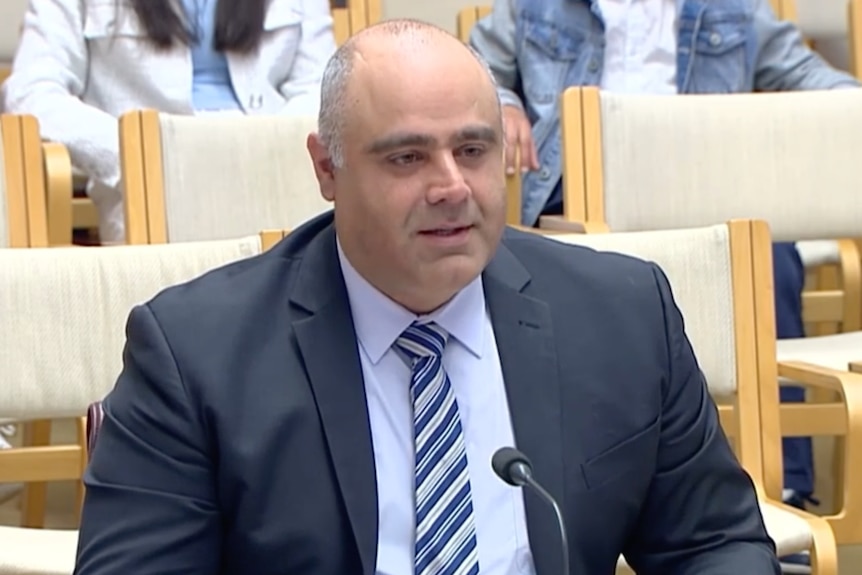
Dany Elachi says children have much to gain from the bans. (Supplied)
He said the change would take years but parents now had support to keep kids off social media.
“Speak to other parents in your child’s school, and encourage each other to comply with the new legislation, together.”
He said the key to managing the ban was to focus not on what children were losing but what they were gaining:
“More quality time with parents, more rest and sleep, more sport and real-life activities, more opportunities to connect with friends in person.
“It’s also helpful to remind teens that when everybody misses out on social media, nobody misses out.”
He said the law was pro-parent and pro-family.
“It gives parents a better chance to raise their children in their own values, as opposed to the values of influencers.”