

Listen to this article
Estimated 4 minutes
The audio version of this article is generated by AI-based technology. Mispronunciations can occur. We are working with our partners to continually review and improve the results.
On a rainy December day, divers braved the currents of the Burrard Inlet to plant thousands of microscopic bull kelp onto a new underwater rock reef.
The reef, which spans about 1,800 square metres, at the Lynn Creek Estuary in North Vancouver, was completed earlier this month in a partnership between Neptune Terminals and the University of B.C.
Matt Simmons, execution planning lead for Neptune, said four barges worth of rocks — about 4,000 tonnes — travelled by barge and tug from Sumas Mountain in Abbotsford to the terminal for the reef, which is intended to create a more complex habitat for marine life down in the reaches of the estuary.
Neptune, a major bulk shipping terminal for potash, is funding the project as part of offset measures as it rebuilds its shiploader and conveyor systems.
Patrick Martone, a botany professor at UBC, said the project is a great opportunity for both conservation and scientific research.
His lab specializes in seaweed physiology and biodiversity and is developing methods for restoring bull kelp in the Burrard Inlet.
They’re growing the kelp, in its microscopic phases, in the lab and then outplanting the baby kelps in the field.
Martone said the Lynn Creek Estuary project is the lab’s first chance at outplanting a new kelp forest on new substrate — the reef rocks.
Kelp forests provide habitat to fish, seabirds, marine mammals and invertebrates, according to Martone.
“They’re really critical to giving animals a place to live,” he said.
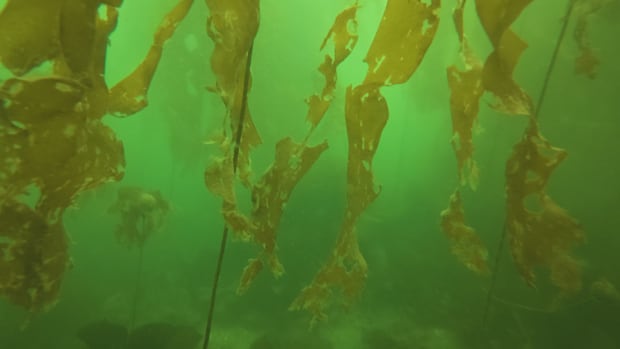
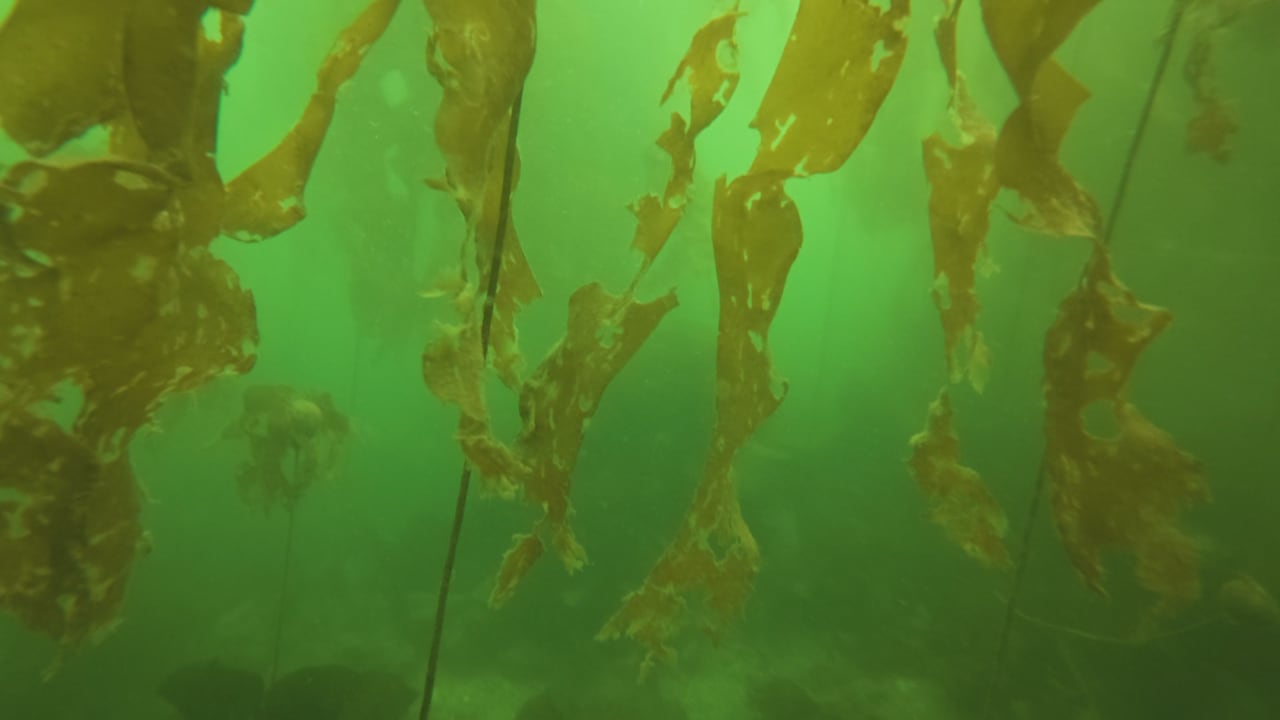 A bull kelp forest grows underwater. (Tate Williams/UBC)
Bull kelp is also a source of food for much of the ecosystem: snails, urchins, crabs, fish, among many others.
“Who doesn’t eat kelp?” Martone said with a laugh.
“But maybe more importantly to some of us is that we eat the things that eat kelp,” Martone said.
WATCH | A new rock reef is coming to Lynn Creek: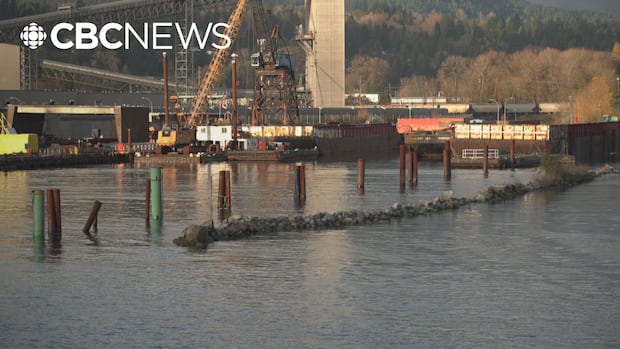
Massive underwater rock reef built to protect salmon at North Vancouver’s Lynn Creek
For various predators, the mouth of Lynn Creek in North Vancouver can be a salmon smorgasbord. But maybe not for long. As Troy Charles explains, a major underwater rock reef is being created to give the fish a fighting chance.
Bull kelp is also a “finicky” species, one difficult to grow in a lab setting, according to Martone.
“The baby kelps are very, very sensitive,” he said.
The researchers are specifically interested in fostering bull kelp, because it’s one of the fastest growing photosynthesizers.
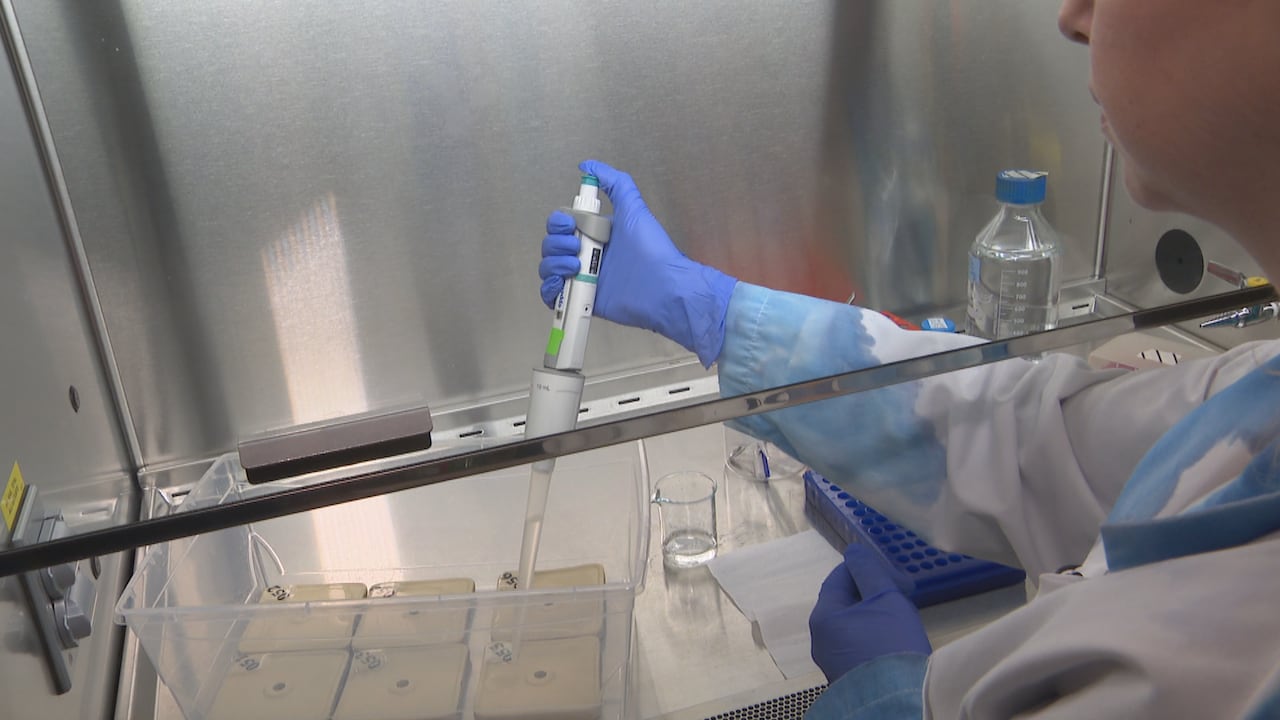 Researcher Kelsey Pierce syringes a solution with bull kelp gametophytes onto numbered tiles in a lab. (Shawn Foss/CBC)
“You can practically watch them growing in the tank.”
They can grow between five and 10 centimeters per day, Martone said — adding that researchers constantly have to trim the kelp in the lab, as they outgrow the tanks.
Rebecca Hansen, kelp restoration dive technician at UBC, said the thousands of young, microscopic kelps were placed onto 32 tiles glued to the rocks using marine epoxy.
“They all got stuck down and we now just let nature take its course, and let them wait for the sunshine of spring.”
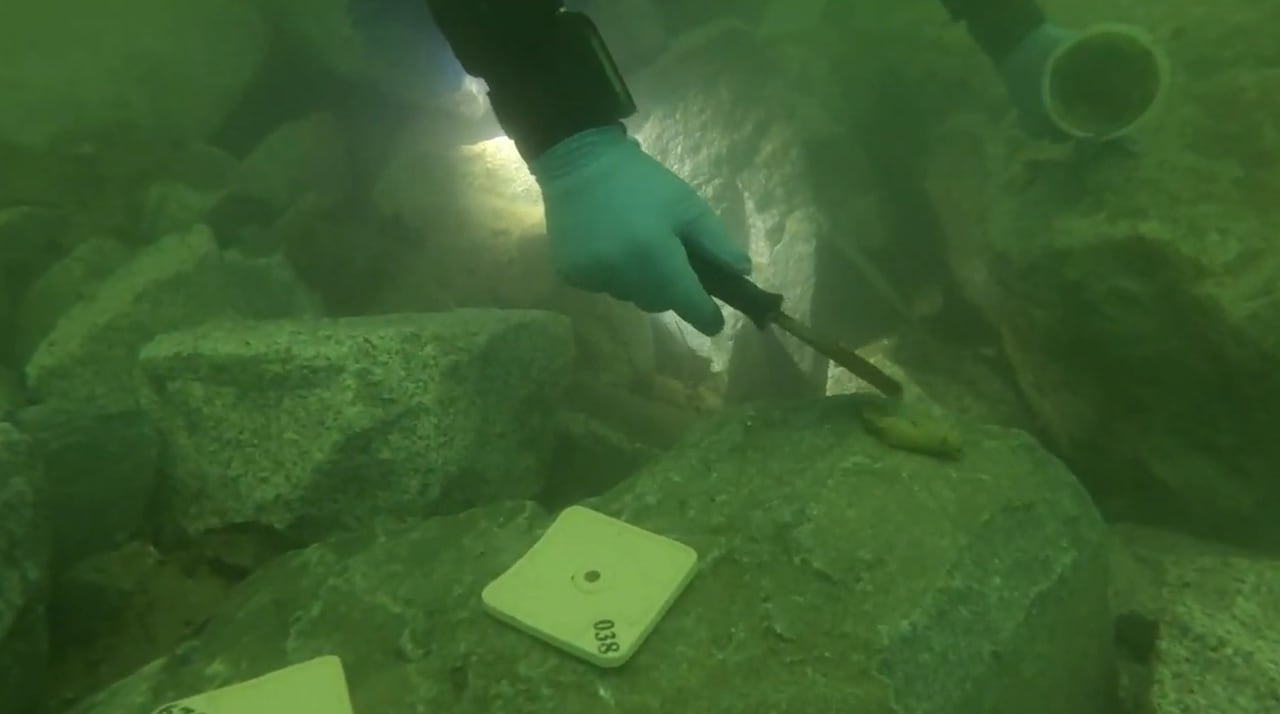 A diver spreads marine epoxy on a rock in the Lynn Valley Estuary. The epoxy is a thick putty, often used in beach science and the aquarium trade, that has a chemical reaction that solidifies it like concrete. (UBC)
And while thousands of kelp were planted, the researchers don’t expect them all to grow.
Hansen said even five or six full-grown bull kelp would be enough to start forming a lush forest.
The researchers hope the bull kelp will eventually reproduce on its own, so the scientists don’t have to continually outplant the babies.
Hansen said bull kelp as a species has been struggling, particularly over the last decade but also over the last century. Some scientists note kelp forests are vulnerable to climate change and rising ocean temperatures.
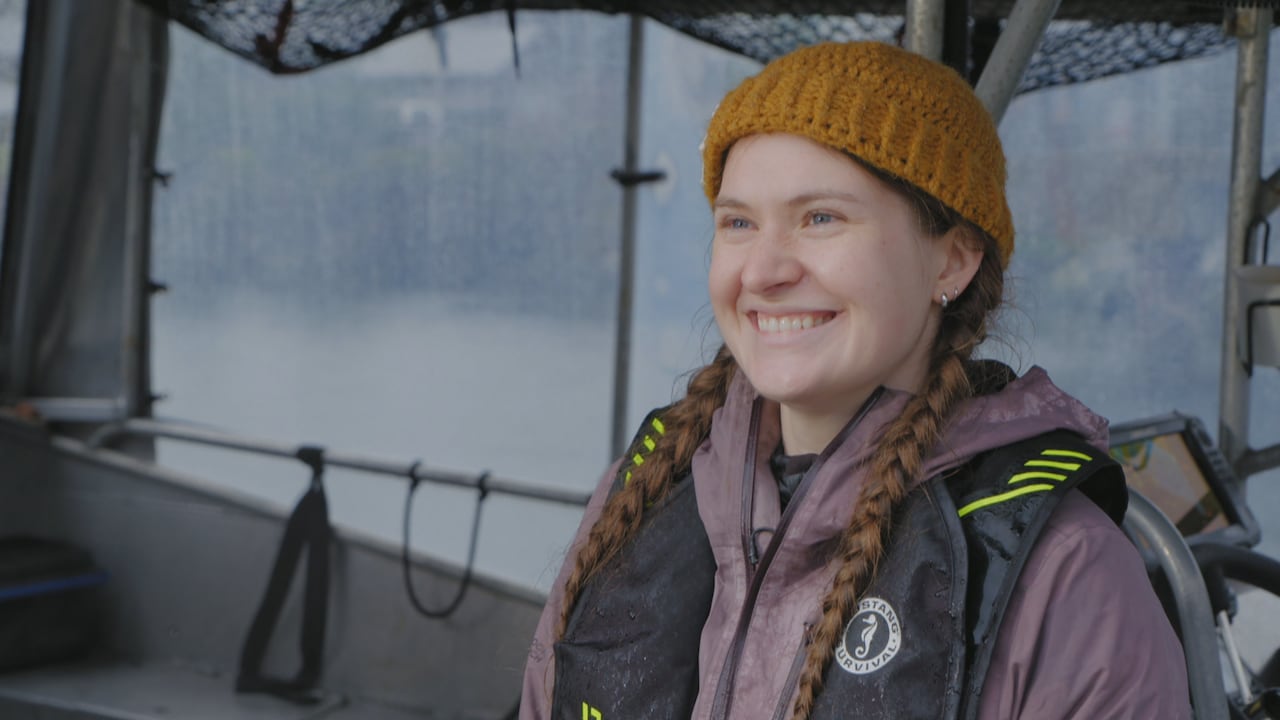 Rebecca Hansen, kelp restoration dive technician at the University of B.C., says five or six full-grown bull kelp would help to form a new lush kelp forest at the Lynn Creek Estuary in North Vancouver. (GP Mendoza/CBC)
But Hansen noted Tsleil-Waututh Nation has already shown bull kelp can be restored at nearby Cates Park.
Last week’s heavy rains made for intense diving conditions, but Hansen said the rock reef provided the divers with “a nice little shelter from the current.”
The kelp babies are expected to become visible in March or April, Hansen said, and the researchers also plan to outplant more kelp at an older life stage in the spring.
“We want to see these bull kelp start their own self-driven forest, and we can just come back and admire the work.”