
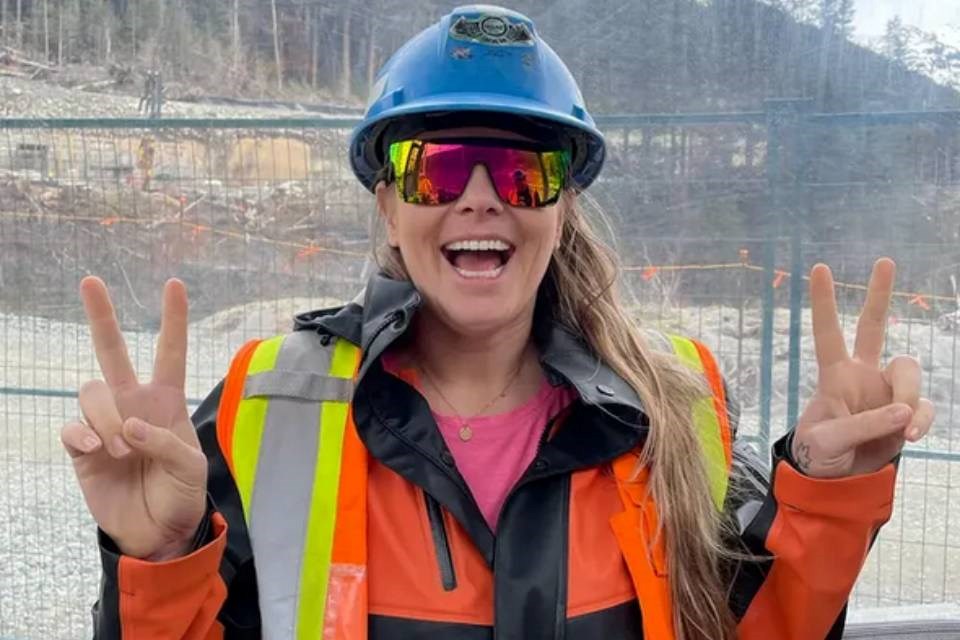
Supporting Women in Trades provides long-distance, multi-year support at all stages of their careers
Since Supporting Women in Trades (SWIT) was originally launched nationwide in 2024, it has helped hundreds of tradeswomen find region-specific apprenticeship support, mentorship resources, and resume-building help.
Now, CLAC hopes to increase uptake and awareness of SWIT’s long-distance services for women working in isolated Northern Ontario communities where access to career supports may be limited.
“SWIT is a one-size-fits-all program where women who might be interested in the trades can get support,” Melanie St. Andrews, SWIT’s program manager, told Northern Ontario Business.
“All support can be done on the phone or online. It’s free, and you don’t have to register or pay access fees to talk to someone, and we think that will help bridge the gaps. …You can be anywhere and get support from us. We want to see women explore, enter the trades, and succeed.”
Women at all stages of their careers can fill out a form on the SWIT website, call, or email to contact a SWIT coordinator who will offer tailored support with things like making connections to pre-employment schooling, job hunting, mentorship and training, and support in the workplace, said St. Andrews.
“You don’t have to be a CLAC member to call and ask for advice. There’s no cost for talking to someone or getting coaching. Just call and ask us a question. We want to help,” said St. Andrews.
For CLAC members, SWIT grants access to one-on-one support for representation in the workplace, and can help with applications to CLAC signatory companies offering positions with employers seeking to hire women.
SWIT is also able to connect CLAC members and non-members with job training certification provided by CLAC, and with partner organizations that provide mandatory health and safety training under Ontario’s Occupational Health and Safety Act.
“We meet women where they’re at, whether they’re just thinking about employment in the trades or they’re a journeyperson having problems on site,” St. Andrews said.
CLAC is an independent, national labour union with over 60,000 members, 18,000 of which work in Ontario. Since 1952, CLAC has worked to advance the skilled trades as a viable career option in a wide range of sectors.
In addition to supporting women in the trades, CLAC has a commitment to equity, diversity, and inclusion in the workplace, and supports other equity-deserving communities that face systemic barriers to accessing opportunities and resources.

SWIT Influencer Desiray Foster-Kemps recently spoke at the CLAC Career Development College in Albert. CLAC/Supplied
The push for raising the awareness of SWIT’s services for northern tradeswomen was the result of recommendations from leaders of pre-existing CLAC programs in Northern Ontario that were designed to develop relations with Indigenous communities.
CLAC has also recently made an effort to expand awareness of its services among women living in remote regions like the Far North, home to the Ring of Fire.
St. Andrews said SWIT is responding to an urgent provincial and national shortage of skilled trades workers in areas such as mining, construction, transportation, and health care.
Factors such as retirement, outmigration, and difficulties attracting talent have caused the shortage.
A recent news release from the Government of Ontario stated that, of the 1.3 million people working in skilled trades-related occupations in the province, only 390,000 are women.
New female apprenticeship registrations in Ontario increased by over 11 per cent to 4,157 in 2024-2025, making programs like SWIT essential aids in building the provincial tradeswomen community.
“Women are outnumbered, and in some scenarios they face unique barriers,” said St. Andrews. “They tend to feel like they have to work twice as hard to get anywhere, or like there’s not a huge acceptance of having women on work sites. Sometimes there isn’t proper-fitting PPE (personal protective equipment) and adequate washroom facilities.”
Tradeswoman Kat of Oshawa reached out to SWIT while training to become an elevator technician. After being laid off from her job, a SWIT coordinator helped her find a new position.
“The mentorship-style guidance from the SWIT program was very helpful in figuring out options in the skilled trades…. With resume and interview prep support from a SWIT coordinator, I found work with an equipment supply and repair company,” said Kat. “Working with my hands is something I enjoy and want to pursue.”
The SWIT website also offers aspiring tradeswomen the chance to connect with women working in the trades.

CLAC’s Supporting Women in Trades event brought together CLAC staff, tradeswomen, and panellists committed to building a more inclusive future for the skilled trades. CLAC/Supplied
Desiray Foster-Kemps, a CLAC member, SWIT mentor, and fourth-year carpenter apprentice, helps raise awareness by sharing her story on Instagram.
“I truly believe that if I had found this program and met the women I’ve connected with through it sooner, I would have discovered my voice in the workplace much earlier in my apprenticeship,” said Desiray.
“You don’t realize how much of an impact the right people can have on your outlook until you meet them. The SWIT Program is full of inspirational women, and I’m honoured they’ve welcomed me, allowed me to share my story, and have given me the opportunity to mentor women of all ages who are considering a career in the trades.”
“There are many women who have reached out to us, asking for support and advice,” said St. Andrews. “[The program] can help them think this is not just for men, there’s a space for them and they belong. That’s the biggest thing.”
SWIT has recently offered presentations to high school students and has hosted panel-style events where young women can ask questions of mentors and employers. St. Andrews hopes to see more community-building events in the future.
“We want to expand our mentorship program so women like heavy-equipment operators can have a network of other heavy-equipment operators, uniting women with common interests in the regions where they live,” said St. Andrews. “I think that’s the real success of the program — when women feel supported.”