
Gas producers on Australia’s east coast will have to reserve a portion for domestic use to shore up supply and put “downward pressure” on prices, the federal government has confirmed.
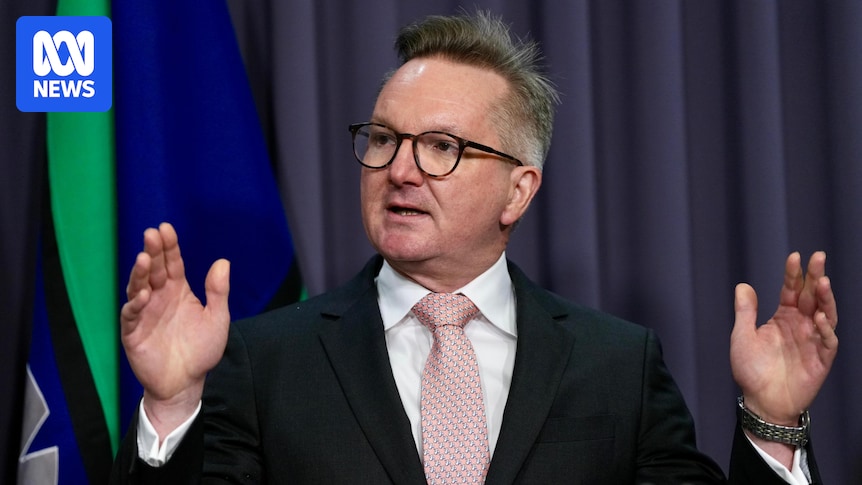
Energy Minister Chris Bowen on Monday announced there would be consultation with the gas industry on a plan to reserve between 15 and 25 per cent of gas extracted in Australia for local use.
Victoria’s gas shortage explained
The scheme would start operating in 2027, but apply to any new contracts entered into from today.
“Most Australians think that Australians should have first rights to what’s under Australian soil … and Australians are right about that,” Mr Bowen said.
“This is the way that the government can put the maximum downward pressure on gas by engineering a slight oversupply of Australian needs.”
Faced with a looming gas shortage, the government earlier this year commissioned a six-month review of the market, weighing competing demands from the gas sector, manufacturers, unions and key trading partners.
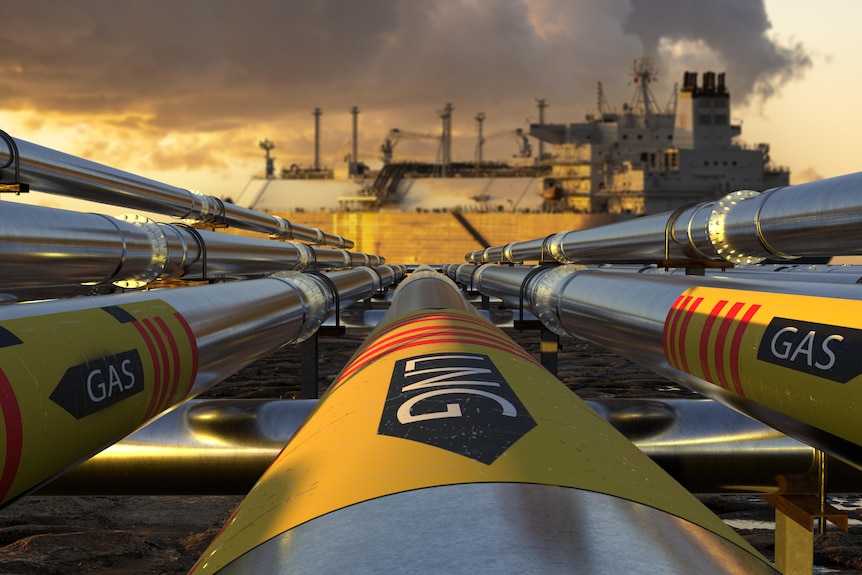
Australia is one of the world’s biggest LNG exporters. (Supplied: Mike Mareen)
After much deliberation about the best model for a reserve, Mr Bowen said cabinet had settled on a permit scheme, which would now be subject to a period of consultation.
“Under the preferred export model, exporters will need to meet domestic supply obligations first and supply Australian users,” he said.
Mr Bowen said he had briefed his Malaysian, Singaporean, Taiwanese, Japanese and South Korean counterparts, who were among the biggest buyers of Australian gas, about the proposal.
“They have understood the policy framework, they’ve understood its perspective,” he said.
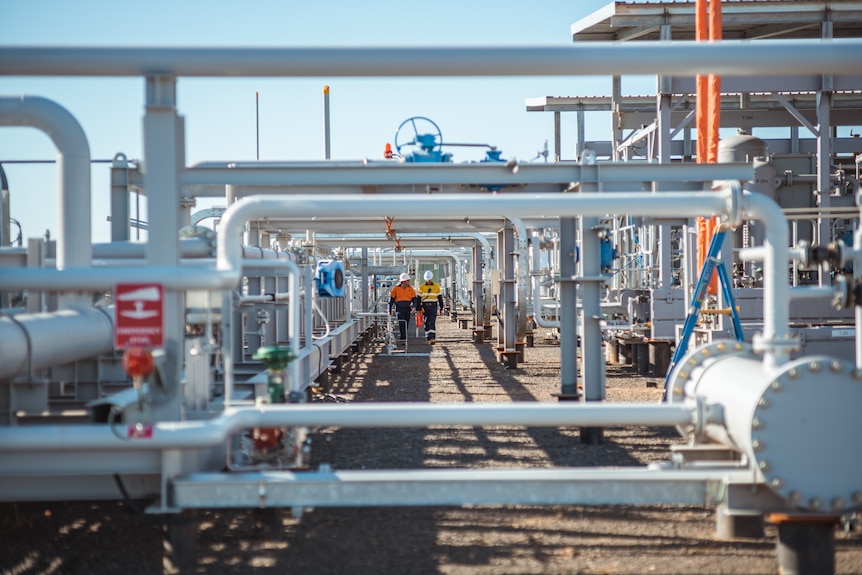
The scheme will start operating in 2027. (Supplied: Senex Energy)
Australia is one of the world’s biggest LNG exporters, but according to the Australian Competition and Consumer Commission, east coast gas supplies could fall well short of demand from 2028 “despite there being sufficient reserves and resources for at least the next decade”.
At the same time, gas prices on the east coast have tripled, pushing up power prices and pushing energy intensive industries including aluminium smelters to the brink of closure and forcing the government to spend billions bailing them out.
It is not yet clear how far below the current $12 to $14 a gigajoule gas prices would fall under the proposed permit-based reservation scheme.
Bowen: New gas supply needed ‘in some instances’
Mr Bowen said the depletion of gas in the Bass Strait meant it was likely new sources would be required to meet Australia’s needs.
“I think a lot of Australians haven’t quite realised yet just how little of the Bass Strait gas is left,” he said.
“That will mean that we need to ensure adequate supply, and that does mean new supply in some instances, and that’s why we want to provide certainty to the industry.”
Fears gas reservation plan will not lower prices as hoped
Mr Bowen said gas was “an important support as we transition to renewables”.
“It’s very easy on the one hand for the Liberals to say ‘gas is the answer to all our problems’ — that’s wrong,” he said.
“And the Greens to say … ‘no new gas,’ — that’s also wrong.
“Gas is important to calibrate and support renewables.”
But Australian Conservation Foundation energy policy adviser Annika Reynolds said Australia didn’t “need” to open new gas projects.
“Australia does not have a gas supply problem, it has a gas export problem, with 80 per cent of our gas going to the export industry, which has been ripping off Australians for years,” they said.
“It will be important that a reservation scheme redirects gas from existing export projects to the domestic market, not facilitates new climate-heating gas projects.”
‘Certainty’ for heavy industry and manufacturing workers
Tim Ayres says the scheme will boost economic resilience. (ABC News: Matt Roberts)
Industry Minister Tim Ayres said the reserve would “deliver certainty” for blue-collar workers in heavy industries where gas will be needed as a “back up” and “stabilising force” in the transition to electrical heating systems.
“[The reserve] is a very important piece of work for securing Australia’s industrial future and our future economic resilience,” he said.
Australian Workers Union national secretary Paul Farrow has “strongly endorsed” the reserve, calling it a “historic victory” for manufacturing workers.
“The best time to introduce an Australian gas reservation scheme was a decade ago. The next best time is now,” he said.
Mr Farrow said there were still details to be finalised, including what measures would be put in place to guarantee gas would be available to industry “from day one of the scheme”.
“The gas market won’t be fixed until we solve the price problem once and for all,” he said.
“But today’s announcement puts us firmly on that path.”
Loading