

Seasonal workers at a prominent cherry orchard have accused their employer of exploitation, claiming they were unfairly denied an end-of-season bonus and exposed to squalid living conditions.
The workers, who want to remain anonymous to avoid being blacklisted, picked fruit for Hallmark Cherries in central NSW during the summer harvest in late 2024.
The ABC has seen 10 written complaints signed by individual workers, and has spoken directly with four of them.
They describe working 10 hours a day, seven days a week in hot and humid conditions, while paying the farm to stay at a campground with faulty facilities and periods without water.
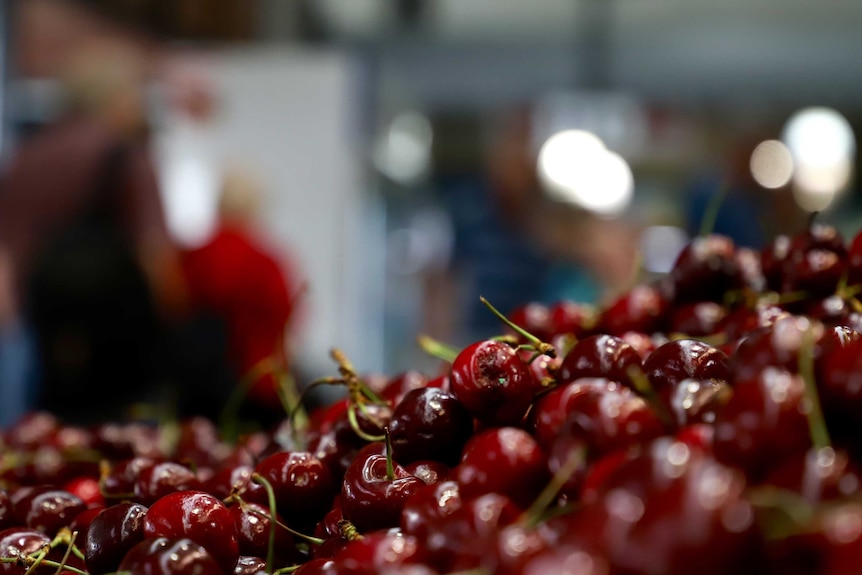
Cherry pickers on a NSW farm complain about working conditions and unfair denial of discretionary bonuses. (ABC News: Jake Evans)
Multiple workers said before taking the job they were promised a bonus if they worked from the first to the last day of the picking season, which can run for six to eight weeks.
One worker, Joe (not his real name), alleged the bonus was used as a carrot to incentivise the workforce.
“They hold it over your head the entire time,” he said.
At the end of the season, Joe said 12 returning Australians received the bonus but he and about 50 other mostly foreign workers were denied their bonus.
“I worked every day, I never called in sick, I never complained,” he said.
“I did the right thing and I don’t know why they’re doing this.
He said the company did not respect its workers.
“Any issue brought, it’s met with this feeling that they don’t give a shit,” he said.
“I think they have this idea that it’s foreign workers that don’t have a general sense of their working rights, that they can keep getting away with stuff like this.”
Joe, who is an Australian citizen and an experienced picker, said he was expecting a bonus of about $2,000, and this experience had soured his desire to keep working in the sector.
The ABC has seen a worker’s contract that stated they would be paid $15/lug (a 32L container for collecting cherries).
The contract also included a bonus of $1.20/lug paid at the end of the season, but it was paid at the employer’s discretion.
Hallmark Cherries was investigated by both the Fair Work Ombudsman and SafeWork NSW following complaints, but no evidence of breaches was found in relation to working conditions or industrial legislation.
Both agencies said complaints about the payment of worker bonuses was outside their jurisdiction.
‘It was squalor’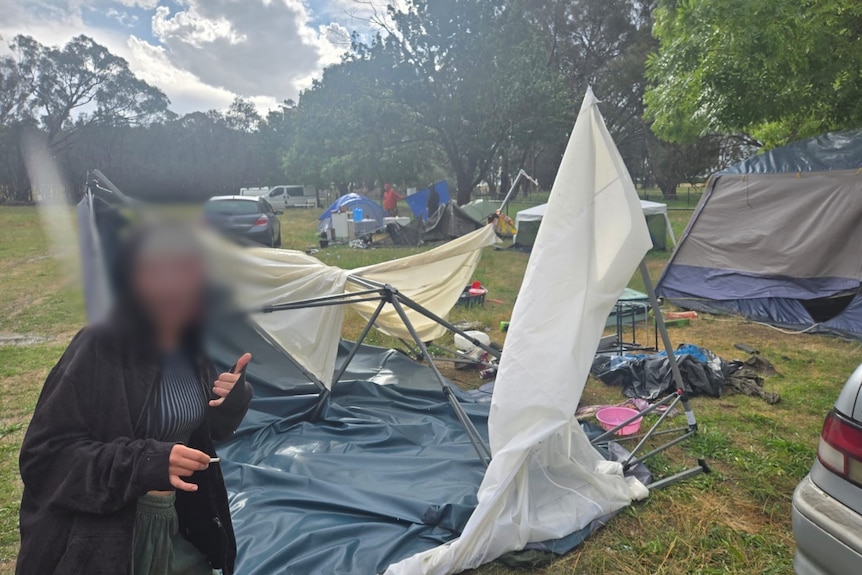
Workers lived in a campsite at the Hallmark Orchard in 40C heat and torrential rain. (Supplied)
The workers have all raised concerns about the conditions of the campground where they stayed during the season.
They were each charged $80 a week to stay at a campsite on the property, which amounts to almost $5,000/week.
Workers complained about the cleanliness of the shower and the drop toilets.
“It was squalor,” said one worker.
“A hundred pickers and no toilet flush; you can imagine.”
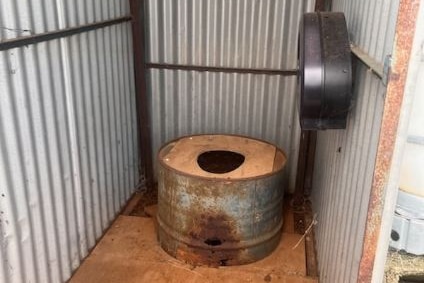
Workers complained of unsanitary toilets at the Hallmark Cherries site. (Supplied)
Workers reported that for extended periods of time, the campsite had no water.
“Multiple people sent messages and went to the office to complain,” Joe said.
“They did not do a single thing about it, leaving us without any water to drink or wash for over a week.”
Another worker, Anna (not her real name), who was in Australia on a tourist visa, said in a statement that during her first two weeks at the farm, she only had four hot showers.
“Working in agriculture you get a lot of pesticides and it’s crucial for hot showers to get rid of them,” she said.
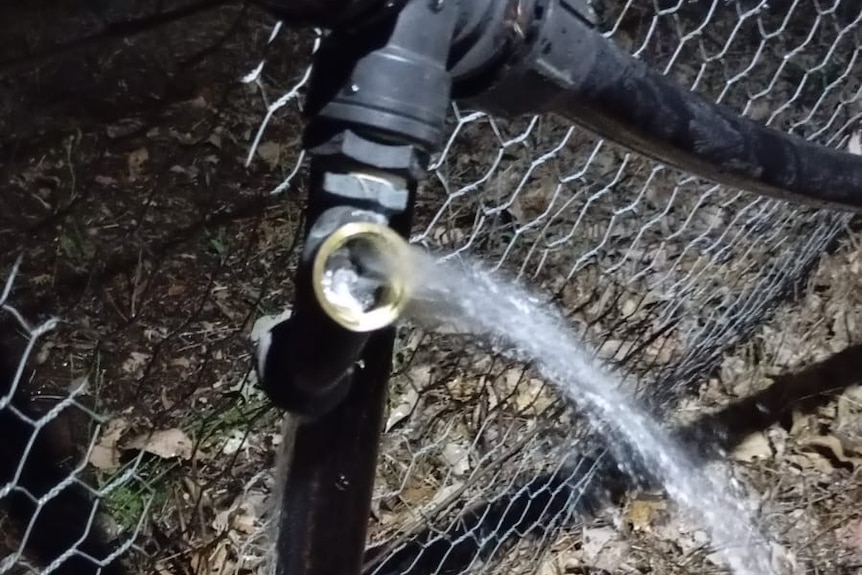
Workers say the showering facilities at the Hallmark Cherries site were broken for a week when they were working in extreme heat. (Supplied)
She said the conditions at the farm were the worst she had encountered.
“I requested for my water bottle to be filled up [while picking in the orchard] and was denied and told that they were not able to fill my water bottle up,” she said.
“It’s like there’s a lack of humanity, you’re just here to make money for us and pick our fruit, so we don’t really care for your quality of life.
“I’ve been cherry picking for about four years and this is definitely one of the worst brands I’ve ever experienced in my life.”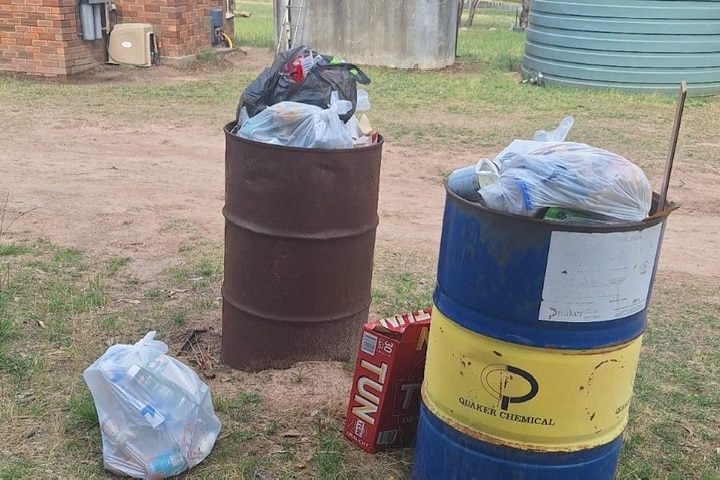
Workers were charged $80 per week for facilities they say were substandard, not maintained and often broken. (Supplied)
Following the conclusion of the picking season, multiple workers contacted the company to complain about missing out on the discretionary end-of-season bonus.
The workers’ contracts state that workers will forfeit the bonus if the company records more than $250 worth of damage to the equipment or property by an employee.
Some pickers also reported the company had deducted money from their accommodation bonds, alleging workers had scrawled graffiti on the facilities.
The workers argued there was graffiti on the facilities when they arrived at the campground, or they were being “punished” for the mistakes of a few.
Some workers said they were told they missed out on the bonus due to significant damage to fruits and trees, but they believed wild weather during the season caused the damage.
One said he was denied a bonus because other members of his team performed badly.
“I picked clean [but] there was a bunch of people in that team that were picking horribly.”
Company’s explanation
The pickers were employed through labour hire firm North Koepang Pty Ltd.
The sole director of the firm is Matt Burgess, who is also the accounts, sales and marketing manager at Hallmark Cherries.
The ABC contacted Hallmark Cherries and Matt Burgess for comment by email, text and phone, but they have not responded.
The ABC has, however, seen an explanation sent via social media to the workers by Mr Burgess about the decision to deny the discretionary bonus.
Mr Burgess said he had received information about a range of issues that was “damning enough for professional pickers and new pickers in the Hallmark team” but he didn’t detail the behaviour.
He described it as an “extremely difficult situation” and asked for workers to come forward to provide information.
“We understand that everyone may believe they are entitled to the incentive, worked hard and stayed to the end of the season,” Mr Burgess said.
“However, the discretionary picking incentive is assessed throughout the harvest season and a final decision is only made once everything has been taken into consideration.”
The ABC has contacted the peak industry body, Cherries Australia, about the workers’ allegations.
Chief executive Penny Meashams said in a statement that: “Cherry Growers Australia have discussed the issues with Hallmark Cherries Ltd, who say they have fully complied with investigations about these complaints by the FWO and SafeWork NSW and consider the matter closed.”
Hallmark investigation
SafeWork NSW and the Fair Work Ombudsman both received complaints about working conditions at Hallmark Cherries and the failure to pay the bonus.
The workplace regulator visited the site in February 2025, after the 2024 cherry-picking season had concluded, and could not substantiate the allegations about working conditions at that time.
It did not investigate the bonus because that was not within the jurisdiction of SafeWork.
The Fair Work Ombudsman (FWO) started an investigation into North Koepang in July 2025, which included a request for records and a visit to the Hallmark site.
The ABC sought documents relating to that investigation and found there were 13 contacts to the FWO about Hallmark between 2019 and 2025, including 10 enquiries and two disputes that were referred for further investigation.
A final investigation letter, released to the ABC under freedom of information laws, showed the FWO found no breaches of the Fair Work Act 2009 or the Horticulture Award 2020.
“North Koepang Pty Ltd appears to be meeting its obligations under Commonwealth workplace laws and the Horticulture Award 2020,” it read.
The FWO found the company paid its workers the minimum wage, as required, but the bonus payment was outside of the jurisdiction of the FWO as bonuses are not mandated within the award.
“Such payments would be a contractual matter and may be pursued through a small claims process,” the letter stated.
It costs a minimum of $295 to take a claim to the relevant court, and few backpackers or seasonal workers bother to make a claim as they are moving on to other jobs or heading back to their own countries.
Joe, who lives in Australia and has been a seasonal worker for a number of years, took his concerns to a community legal centre but was told there was nothing they could do to help.
In relation to complaints about alleged non-payment of breaks, the FWO said that matter also fell outside their jurisdiction because of the nature of the contracts the workers signed.
In a letter to the FWO, North Koepang advised that its contracts were based on a 2005 agreement, which it described as a “pre-reform certified agreement made by the Australian Industrial Relations Commission”.
“The agreement … overrides any awards which may cover employees in our workplace,” the letter stated.
Under that agreement, casual employees are not paid for breaks, which they would be under modern awards.
The Fair Work Ombudsman will not be taking further action in relation to this matter.