
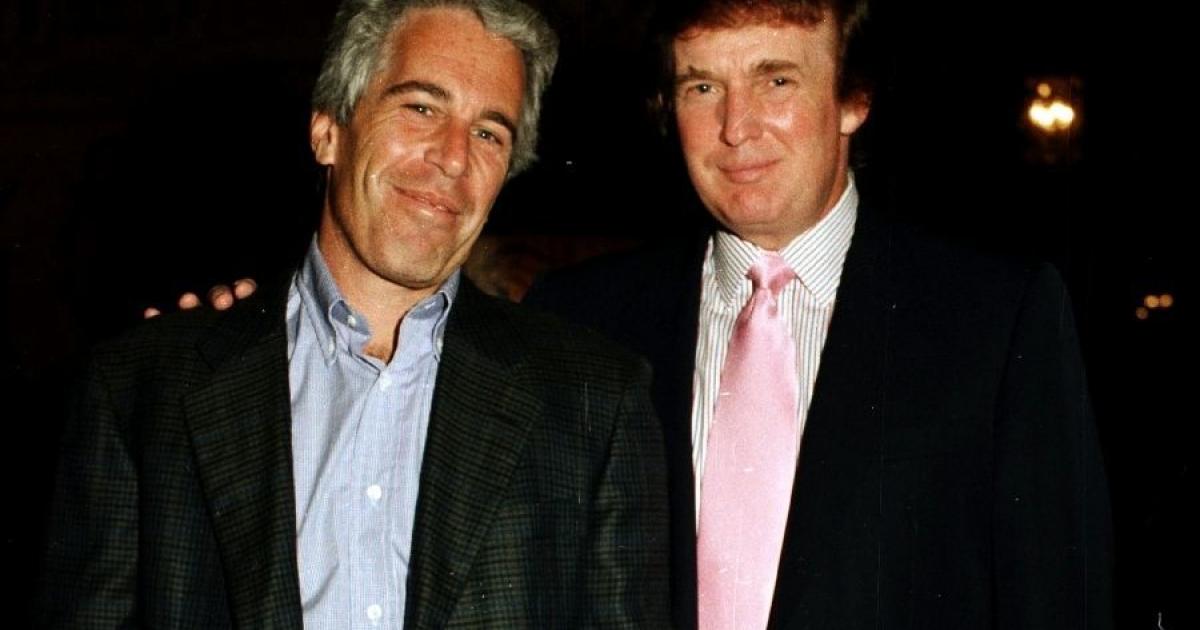
Yet much of the media response has treated that scale of concealment as secondary. In its place, we’ve been offered spectacle. The Daily Mail has devoted entire pages to publishing and republishing photographs of celebrities who once appeared alongside Epstein. I stopped counting after 20 images.
All are presented despite repeated acknowledgements that they establish no new facts, no allegations, and no accountability.
READ MORE: Queues as hundreds of thousands of Epstein files released
This pattern is not accidental. The Justice Department’s own website reportedly struggled under the volume of public traffic as the files were released – not because people expected meaningful disclosure of institutional responsibility, but because many were hoping to see political enemies exposed, disgraced, or morally annihilated. That is what the coverage has trained audiences to expect. When none of that materialised, the vacuum was filled with imagery, insinuation, and repetition.
We have taken one of the most serious crimes of recent decades – systematic sexual exploitation enabled by wealth and protection – and turned it into a political football. The spectacle allows people to search for faces they dislike, while the machinery that protected Epstein, negotiated immunity, obstructed prosecutions, and continues to redact decision-making remains untouched. The seat of power stays protected, while outrage is redirected sideways.
Even outlets that present themselves as evidence-led have fallen into this trap. The BBC has correctly reported the scale of redaction and the criticism that the Justice Department may be in breach of the transparency law that ordered these files be released. Yet those facts are quickly overshadowed by image-led, personality-driven coverage that displaces attention from the central issue: who authorised this level of concealment, under what authority, and in whose interests?
READ MORE: David Walliams dropped from children’s book festival
The effect is corrosive. A media environment saturated with faces but starved of structure trains the public to confuse visibility with truth and proximity with guilt. Accountability dissolves not through silence, but through noise.
What distinguishes The National is its refusal to participate in that displacement. By resisting the fetishisation of imagery and treating the absence of information as the story itself, you’ve approached this release with seriousness rather than spectacle. When hundreds of pages are deliberately blacked out, journalism does not serve the public by counting photographs. It serves the public by holding attention on what remains hidden, and why.
If this episode has revealed anything new, it is not the contents of the files, but how readily large parts of the media default to distraction when confronted with institutional opacity. That The National has not done so matters – because clarity, not volume, is the measure of journalism that takes power seriously.
James Murphy
Bute
THE Trump-led US government is breaking the law yet again. Shame on them all for not complying with the Supreme Court’s legal request to release documents, even though those with criminal intent have been removed from public view. With UK politicians such as Farage adopting this disregard-for-the-law approach, I fear for England in any political union with others.
Thomas Waller
via thenational.scot