
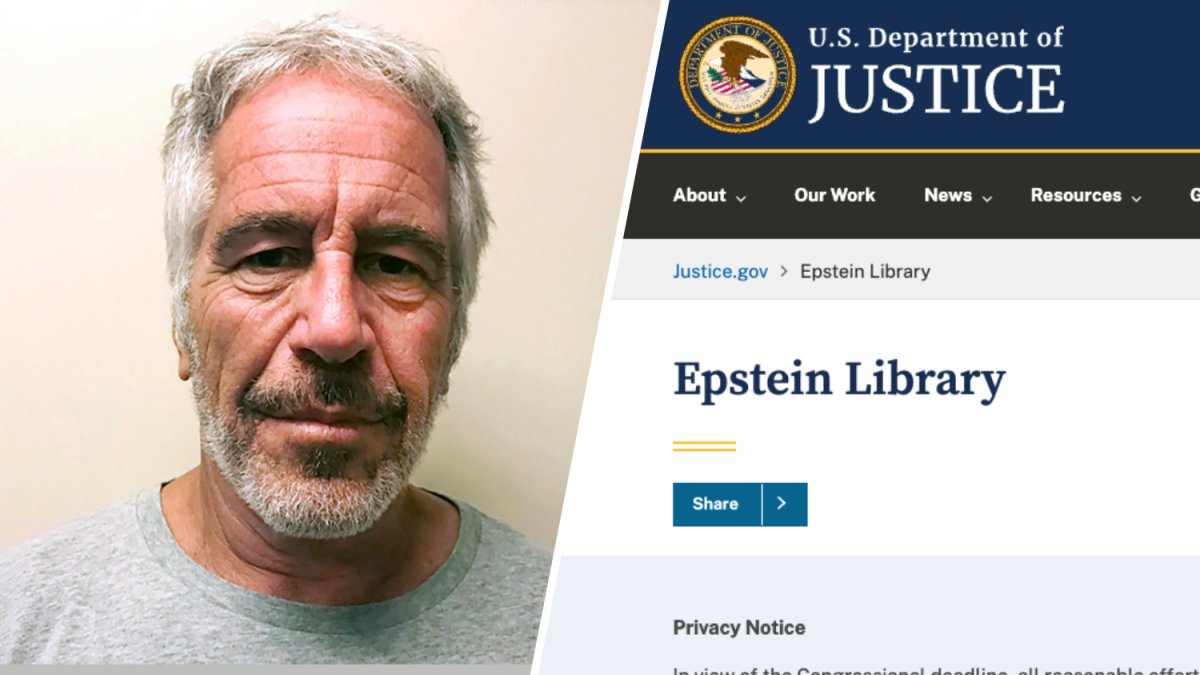
The Justice Department released thousands of files Friday about convicted sex offender Jeffrey Epstein, but the incomplete document dump did not break significant ground about the long-running criminal investigations of the financier or his ties to wealthy and powerful individuals.
The files included photographs of famous people who spent time with Epstein in the years before he came under suspicion, including some candid snapshots of Bill Clinton, who flew on Epstein’s jet and invited him to the White House in the years before the financier was accused of wrongdoing. But there was almost no material related to another old Epstein friend, President Donald Trump, aside from a few well-known images, sparing the White House from having to confront fresh questions about a relationship the administration has tried in vain to minimize.
The records, consisting largely of pictures but also including call logs, grand jury testimony, interview transcripts and other documents, arrived amid extraordinary anticipation that they might offer the most detailed look yet at nearly two decades worth of government scrutiny of Epstein’s sexual abuse of young women and underage girls. Yet the release, replete with redactions, seemed unlikely to satisfy the clamor for information given how many records had yet to be released and because some of the materials had already been made public.
Democrats and some Republicans seized on the limited release to accuse the Justice Department of failing to meet a congressionally set deadline to produce the files, while White House officials on social media gleefully promoted a photo of Clinton in a hot tub with a woman with a blacked-out face. The Trump administration touted the release as proof of its commitment to transparency, ignoring that the Justice Department just months ago said no more files would be released. Congress then passed a law mandating it.
In a letter to Congress, Deputy Attorney General Todd Blanche wrote that the Justice Department was continuing to review files in its possession, was withholding some documents under exemptions meant to protect victims and expected additional disclosures by the end of the year.
Trump, who was friends with Epstein for years before the two had a falling-out, tried for months to keep the records sealed.
But bowing to political pressure from fellow Republicans, Trump last month signed a bill giving the Justice Department 30 days to release most of its files and communications related to Epstein, including information about the investigation into his death in a federal jail. The law set a deadline for Friday.
President Donald Trump said Monday that he would support releasing files in the case of Jeffrey Epstein, accusing Democrats of orchestrating a “hoax” to distract the public from Republican wins.
What’s in the files?
One photos shows former President Bill Clinton in a hot tub alongside someone whose face has been redacted, NBC News reported.
It’s not clear when or where this photo was taken, or who the other person was, NBC News noted. There are no indications of the person’s gender or age.
Angel Ureña, a spokesman for Clinton, defended the former president in a statement posted on X Friday evening.
“The White House hasn’t been hiding these files for months only to dump them late on a Friday to protect Bill Clinton. This is about shielding themselves from what comes next, or from what they’ll try and hide forever. So they can release as many grainy 20-plus-year-old photos as they want, but this isn’t about Bill Clinton. Never has, never will be,” Ureña said.
 Photo appears to show Bill Clinton in a hot tub next to a person whose face has been redacted.
NBC News reported that the format does not appear to be functioning in line with what is required by the Epstein Files Transparency Act.
The law directed the attorney general to “make publicly available in a searchable and downloadable format all unclassified records, documents, communications, and investigative materials in the possession of the Department of Justice, including the Federal Bureau of Investigation and United 6 States Attorneys’ Offices,” relating to Epstein and Maxwell, it noted.
While the files are downloadable, the search function does not appear to be working. A search for the terms “Epstein” and “Maxwell,” for example, came up with no matches, according to NBC News.
Actor Kevin Spacey was also included in several photos from the release. He is pictured alongside Jeffrey Epstein and many other unidentified men. NBC News reached out to Kevin Spacey’s team.
Another photo shows the late pop star Michael Jackson and Epstein standing together, but the context and date of the photo are unknown.
Jackson has on a pair of sunglasses and a suit jacket, while Epstein is wearing a zip-up hoodie with his hands in his pockets. They are standing in front of a piece of artwork.
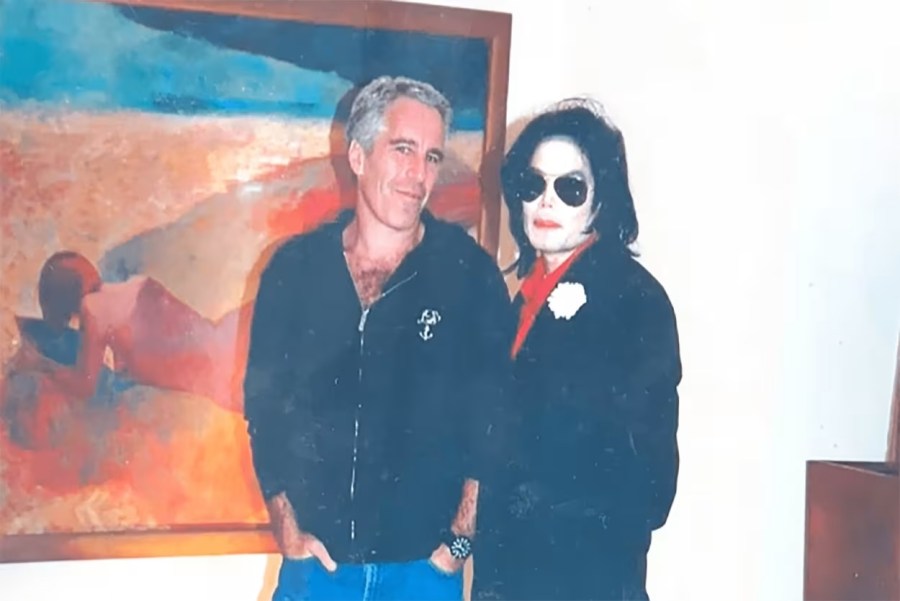 Jeffrey Epstein and Michael Jackson.
In another photo, Epstein standing with a woman whose face is blacked out, and they’re both holding a giant novelty check with a Trump signature on it, NBC News reported. The picture is in a frame that says “Once in a blue moon.”
It’s unclear when and where the picture was taken.
The check appears to be the same one Epstein was photographed holding in a birthday book Maxwell assembled for his 50th birthday, according to NBC News. That page included a message from a Mar-a-Lago member joking about selling a ‘fully depreciated’ woman to Trump for $22,500.”
The White House did not immediately respond to a request for comment.
What the law allows
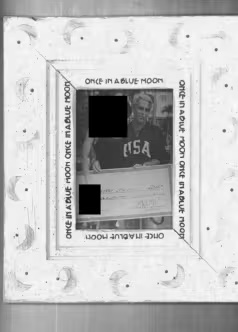 Jeffrey Epstein holds a novelty check bearing Donald Trump’s signature in an undated photo released by the Department of Justice on Friday. The photo is in a frame with “Once in a Blue Moon” written around the edge.
That law allows for redactions about the victims or ongoing investigations but makes clear no records shall be withheld or redacted due to “embarrassment, reputational harm, or political sensitivity.”
Attorney General Pam Bondi said on Nov. 14 that she had ordered a top federal prosecutor to investigate Epstein’s ties to Trump’s political foes, including former President Bill Clinton. Bondi acted after Trump pressed for such an inquiry, though he did not explain what supposed crimes he wanted the Justice Department to investigate. None of the men Trump mentioned in a social media post demanding the investigation has been accused of sexual misconduct by any of Epstein’s victims.
In July, Trump dismissed some of his own supporters as “weaklings” for falling for “the Jeffrey Epstein hoax.” But both Trump and House Speaker Mike Johnson, R-La., failed to prevent the legislation from coming to a vote.
Trump did a U-turn on the files once it became clear that congressional action was inevitable. He insisted that the Epstein matter had become a distraction to the Republican agenda and that releasing the records was the best way to move on.
Deputy Attorney General Todd Blanche told Fox News this morning that “several hundred thousand documents” would be posted today, with more coming “over the next couple of weeks.”
The law required the Justice Department to make public “all unclassified records” related to Epstein with limited exceptions, including to protect the identity of victims, within 30 days. President Donald Trump signed the law on Nov. 19 — exactly 30 days ago, according to NBC News.
Senate Judiciary Committee Democrats accuse DOJ of failing to comply with Epstein Files Transparency Act, NBC News reported.
Sen. Dick Durbin of Illinois, the top Democrat on the Senate Judiciary Committee, released a statement with other committee Democrats saying the Justice Department had failed to comply with the Epstein Files Transparency Act.
“The Justice Department’s failure to fully comply with the Epstein Files Transparency Act not only violates the law, it continues this Administration’s pattern of protecting President Trump and other perpetrators and perpetuating the ongoing Bondi-Patel cover up at the expense of Epstein’s survivors,” Josh Sorbe, a spokesperson for Durbin and Senate Judiciary Committee Democrats, said.
Senate Minority Leader Chuck Schumer, D-N.Y., criticized the Justice Department’s incomplete release of the Epstein files this afternoon, NBC News said.
“This set of heavily redacted documents released by the Department of Justice today is just a fraction of the whole body of evidence,” Schumer said.
“Simply releasing a mountain of blacked out pages violates the spirit of transparency and the letter of the law,” he added.
Schumer pointed to a 119-page document in the files that was “completely blacked out,” and said that Democrats are looking into actions to ensure the Trump administration’s accountability.
President Donald Trump was asked about a possible pardon for Ghislaine Maxwell after the Supreme Court rejected the appeal of her criminal conviction.
The Epstein investigations
After nearly two decades of court action, a voluminous number of Epstein records had already been public before Friday, including flight logs, address books, email correspondence, police reports, grand jury records, courtroom testimony and deposition transcripts.
Besides public curiosity about whether any of Epstein’s associates knew about or participated in the abuse, Epstein’s accusers have also sought answers about why federal authorities shut down their initial investigation into the allegations in 2008.
“Just put out the files,” said Marina Lacerda, who says she survived sexual assault by Epstein. “And stop redacting names that don’t need to be redacted.”
One of the few revelations in the documents was a copy of the earliest known concern about Epstein’s behavior — a report taken by the FBI of a woman in 1996 who believed photos and negatives she had taken of her 12-year-old and 16-year-old sisters for a personal art project had been stolen by Epstein. The documents don’t show what, if anything, the agency did with that complaint.
Police in Palm Beach, Florida, began investigating Epstein in 2005 after the family of a 14-year-old girl reported being molested at his mansion. The FBI joined the investigation. Authorities gathered testimony from multiple underage girls who said they’d been hired to give Epstein sexual massages.
Ultimately, prosecutors gave Epstein a deal that allowed him to avoid federal prosecution. He pleaded guilty to state prostitution charges involving someone under age 18 and was sentenced to 18 months in jail.
Epstein’s accusers spent years in civil litigation trying to get that plea deal set aside. One of those women, Virginia Giuffre, accused Epstein of arranging for her to have sexual encounters, starting at age 17, with other men, including billionaires, famous academics, politicians and Andrew Mountbatten-Windsor, then known as Britain’s Prince Andrew.
Mountbatten-Windsor denied ever having sex with Giuffre, but King Charles III stripped him of his royal titles this year.
Prosecutors never brought charges in connection with Giuffre’s claims, but her account fueled conspiracy theories about supposed government plots to protect the powerful. Giuffre died by suicide in April.
Federal prosecutors in New York brought new sex trafficking charges against Epstein in 2019, but he killed himself in jail after his arrest. Prosecutors then charged Maxwell, his longtime confidant, with recruiting underage girls for Epstein to abuse. She was convicted in 2021 and is serving a 20-year prison sentence.
___
Sisak reported from New York. Associated Press reporters from around the country contributed to this report.
Republican Reps. Thomas Massie and Marjorie Taylor Greene and Democrat Ro Khanna called on the Justice Department to release all of the files relating to the Jeffrey Epstein investigation.