

Listen to this article
Estimated 4 minutes
The audio version of this article is generated by AI-based technology. Mispronunciations can occur. We are working with our partners to continually review and improve the results.
Halifax’s registry of rental properties is now available to the public online, showing what HRM staff believe are the “bulk” of rentals in the city.
Now, city staff say they are moving toward a “proactive” approach to enforcing building standards, where previously they only investigated if someone complained.
“I’m actually a little bit surprised that it’s come this far within two years,” said tenant advocate Heather Clark. “But it does need some tweaking, still.”
Clark is the chair of the Nova Scotia ACORN Halifax mainland chapter, which advocated for the registry before Halifax council passed a bylaw in 2023 that established it by requiring rental property owners to register.
Initially the information wasn’t available online but it was uploaded to HRM’s Open Data website in May 2025, and the most recent update was done on Monday, Dec. 14.
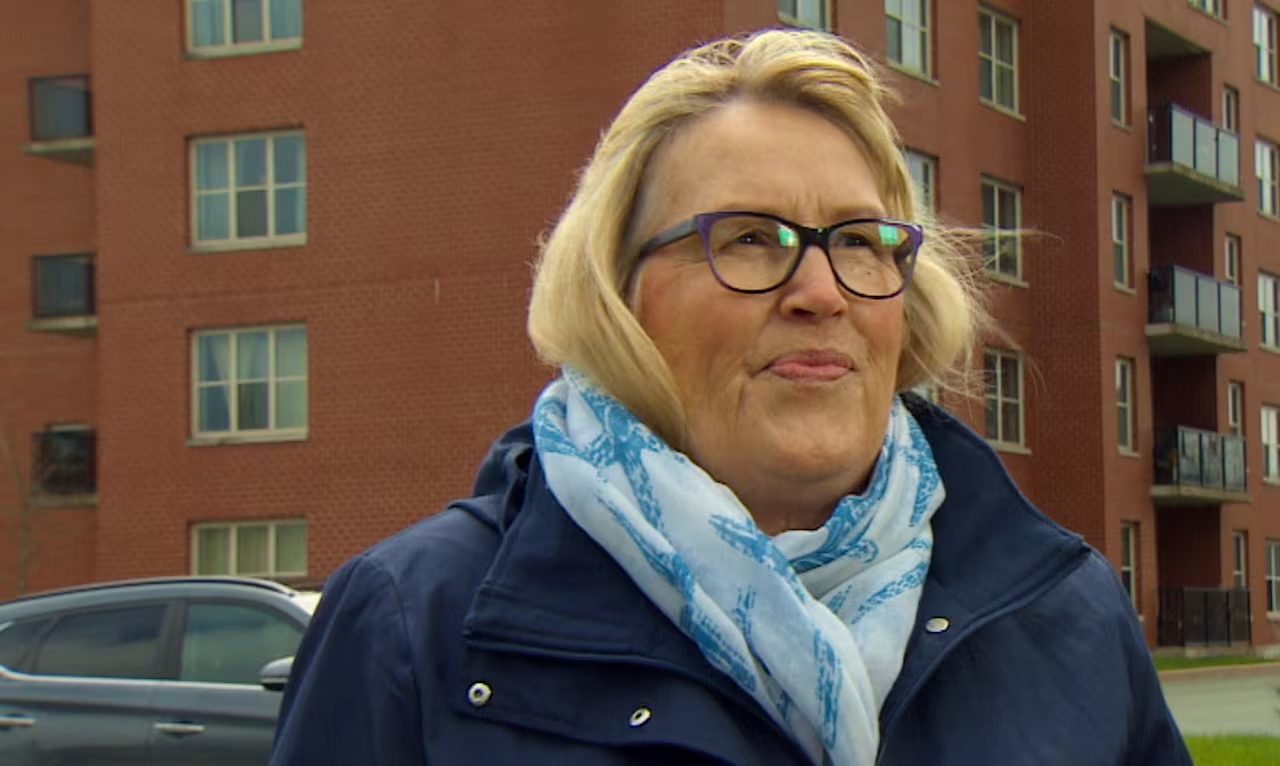 Heather Clark works with ACORN, a group that has been pushing for a rental property registry for years. (Dan Jardine/CBC)
“Folks can see exactly where these rental properties are on the map, and who is not registered,” Clark said, adding that tenants can use this information to make sure landlords are following city bylaws about building standards.
Clark feels that the registry should be tweaked to more clearly link properties to bylaw violations and to specify what types of violations have been reported.
In an email, the executive director of Rental Housing Providers Nova Scotia, Kevin Russell, said he felt the registry was “generally pointless” as it is “nothing more than an interactive map with basic information on rental housing properties in Halifax Regional Municipality.”
“Halifax Regional Council needs to stop with red tape and gimmicks and start focusing on curing their addiction to tax hikes that drive up the costs of housing,” he wrote.
Change in enforcement approach
A city staff report from October analyzed the registry and found a total of 63,023 rental units. Staff estimate there are about 90,000 rental units in total in the city.
At that time, staff wrote they’d also identified at least 4,608 rental properties that weren’t registered, several of which had complaints about their building standards.
Staff planned to prioritize these properties for proactive inspections, which they wrote would reduce “landlord retaliation” against tenants.
“This is a challenge that we are having,” said Clark, saying she is concerned that tenants are afraid to report problems with their building to the city’s 311 service, as they may believe their landlord will be upset and take actions such as refusing to offer the tenant another fixed-term lease.
“So people are afraid to call in and report.”
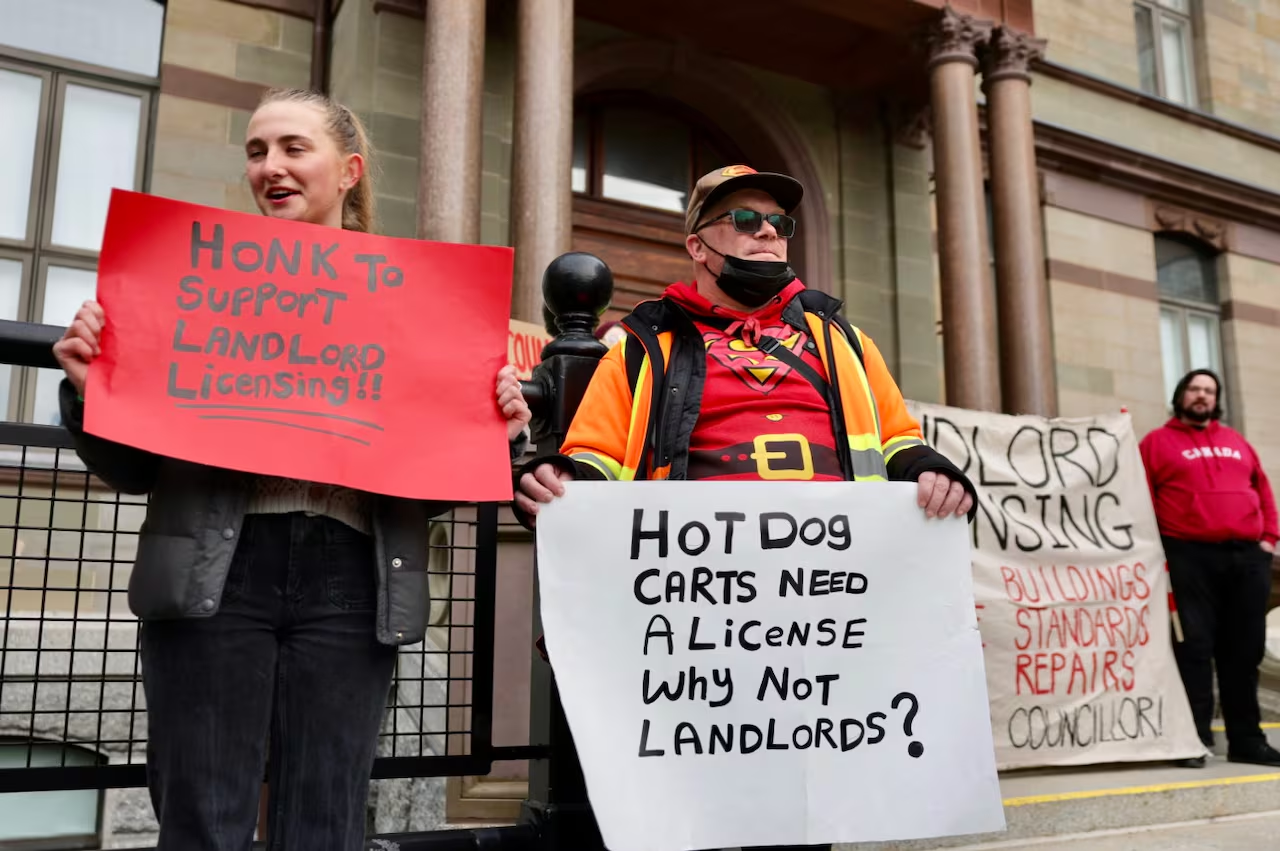 Advocates with ACORN, an organization for low-income tenants, gathered in front of Halifax city hall in April 2023 to show support for the rental registry bylaw. (Robert Short/CBC)
As of the most recent update, 11,837 addresses were registered, containing 63,046 units.
The properties included large multi-storey apartment buildings, basement apartments, condos, mobile homes, and more than 4,500 addresses labelled “entire house.”
In October, staff wrote they believed about 1,152 out of the more than 60,000 units in the registry were short-term rentals. The registry doesn’t make clear which properties are in that category.
The city also publishes separate information about violations of residential occupancy standards, although that information doesn’t specify whether the property is a rental or not.
MORE TOP STORIES