
Jeremie Charron reports on how tensions are escalating between the U.S. and Venezuela over access to oil resources and the seizure of oil tankers.
Amid growing tension between the U.S. and Venezuela over access to the South American country’s oil resources, Canada, and specifically its oil industry, could be impacted.
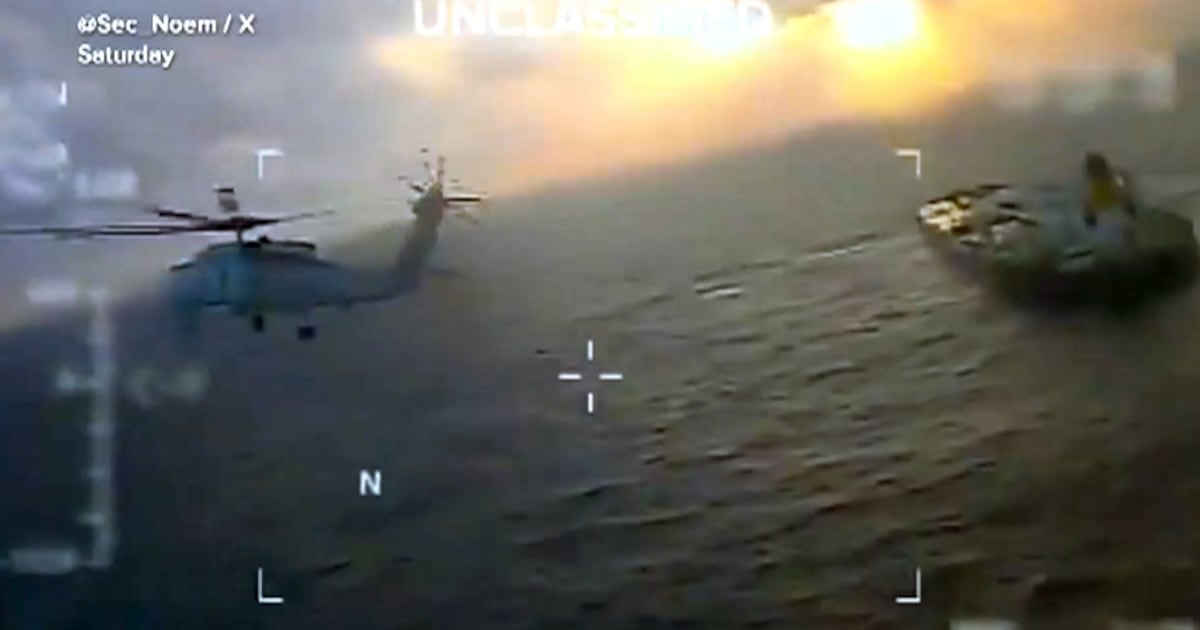
Off the coast of Venezuela, sanctioned oil tankers have become the target of U.S. authorities. Washington has already seized two – along with millions of barrels of oil – and says its going after more.
“Maybe we’ll sell it, maybe we’ll keep it, maybe we’ll use it in the strategic reserves,” U.S. President Donald Trump said on Monday.
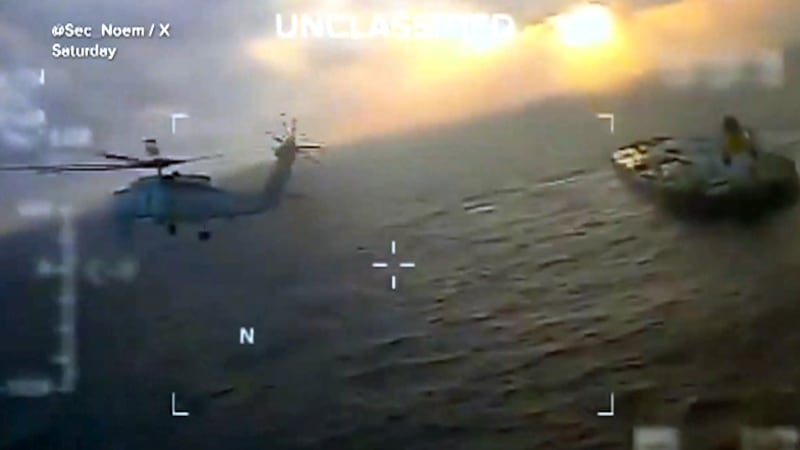 Trump administration continues to target vessels they say funds Maduro’s ‘illegitimate regime’ U.S. authorities continu9e to target Venezuelan oil tankers, claiming they fund Venezuela President Nicolas Maduro’s ‘illegitimate regime.’ (U.S. Secretary of Homeland Security Kristi Noem X account)
The U.S. increased its military presence in the Caribbean Sea after Trump ordered a blockade last week, calling it the biggest armada the U.S. has ever had in South America.
On Tuesday, Venezuelans hit the streets in protest of the U.S. president – whom they call “Pirate Trump” – who Monday had a warning for Venezuelan President Nicolas Maduro.
“He can do whatever he wants, it’s alright, whatever he wants to do, if he wants to do something,” Trump said. “If he plays tough, it’ll be the last time he’s ever able to play tough.”
 Oil and gas, Alberta A rainbow appears to come down on pumpjacks drawing out oil and gas from wells near Calgary, Alta., Monday, Sept. 18, 2023. THE CANADIAN PRESS/Jeff McIntosh Canadian impact
Meanwhile, the tension in South America could have implications for Canada too.
“Venezuela has some of the largest oil reserves in the world,” said Richard Masson, a former Canadian oil industry executive. “They’re primarily heavy oil and bitumen, which are very much like what Canada’s reserves are here in the oil sands.”
Experts say political instability in Venezuela had long given Canadian oil producers the advantage, but if Trump can topple the Maduro government, it could mean increased competition.
“This makes it all the more important for us to think about sending out oil to the pacific, to a northwest pacific pipeline, knowing that the Asian market is growing,” said Heather Exner-Pirot, a senior fellow and director of natural resources, energy and environment at the Macdonald-Laurier Institute.
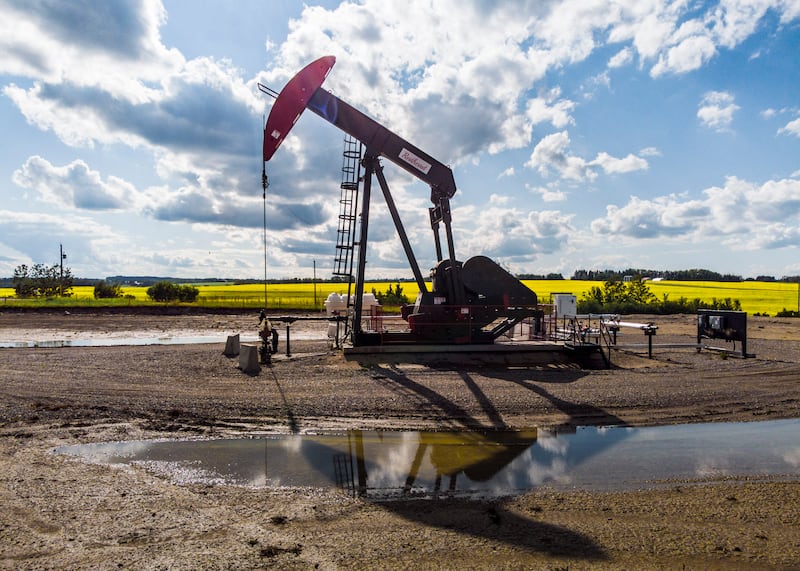 Environment group holds Calgary rally to push for more protections in Alberta A pumpjack draws out oil and gas from a well head with a Canola field in the background near Cremona, Alta., Tuesday, July 15, 2025. THE CANADIAN PRESS/Jeff McIntosh
Exner-Pirot suggests Trump’s interest in Venezuelan oil could eventually force a fight for access to the U.S. market. Masson says it may take long for the impact of those tensions to take affect.
“The question becomes: If Venezuela became a democracy, with the rule of law, with a stable investment climate, how long would it take to build the projects to displace western Canadian oil?” Masson said. “I think that would take a long time.”