
“Because of their long journey, sometimes, especially if some of the smallholders had a few pet flocks, they would make little leather boots for them,” says Mrs Graham.
Most turkeys, however, would have their feet coated in a protective layer of hot tar and sand.
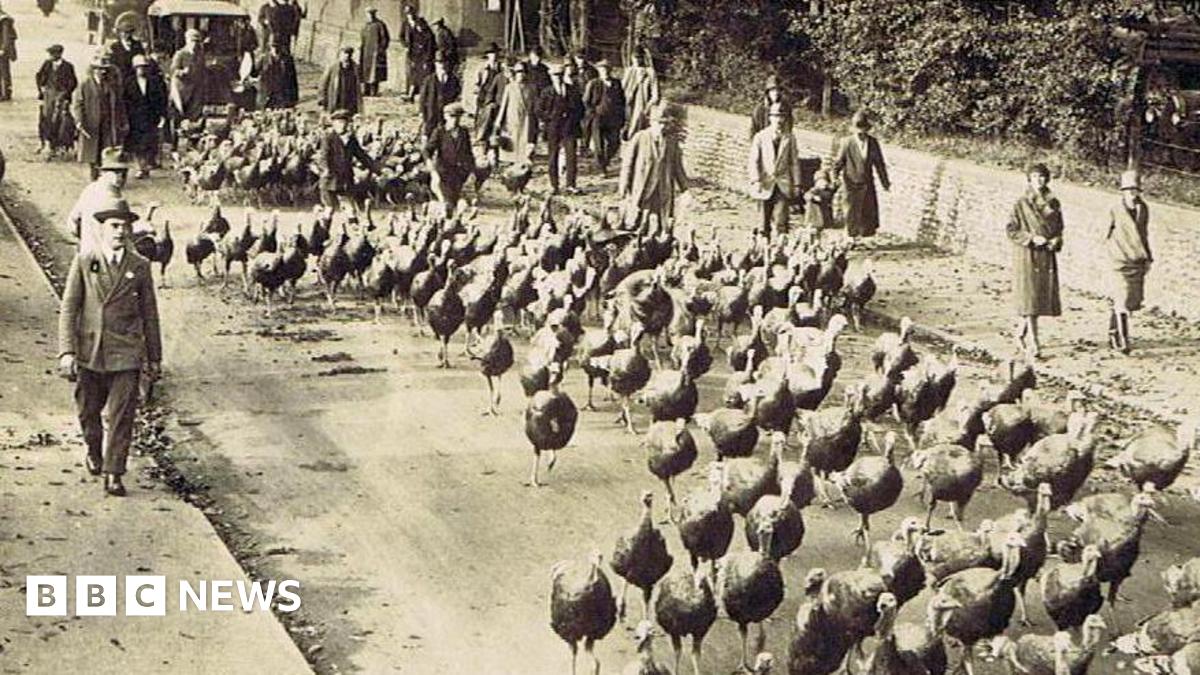
“There’d be flocks of up to 1,000 turkeys go down to London,” she says.
The drovers would forage along the way, picking berries, acorns and gleaning corn for the birds to eat.
The turkeys would roost at night in trees before being encouraged down in the morning with food and then walking on again.
Some died along the way or were eaten by predators.
The turkey drives to the capital ended when the steam engine and railways came along in the late 1800s.
By 1913, Mrs Graham’s father’s farm would instead slaughter and rough-pluck the birds, putting them on trains in wicker crates to arrive in London a week later.
Live birds were still walked but much shorter distances to railway stations, from where they were sent to the capital.
And from the mid-1930s, onwards improved refrigeration saw more birds slaughtered and sent on trains and lorries.