
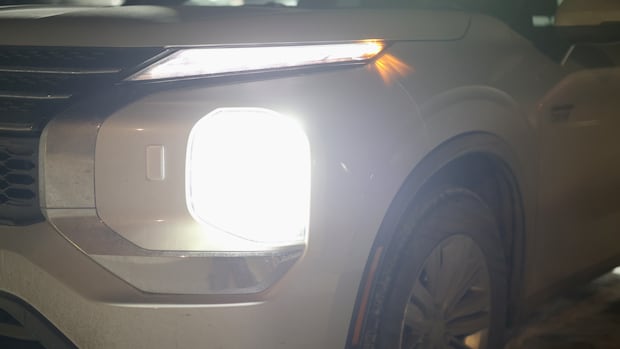
If you find yourself being blinded by headlights these days, you’re not alone.
It’s a subject Chris Hart hears about regularly as service manager and technician at Calgary auto shop Tunerworks. He says there are a few reasons why lights on the road appear so bright nowadays, including advancements in headlight technology.
“Now we’re on LEDs, and the future is very bright, no pun intended,” he said.
Tunerworks deals with high-end exotic vehicles, meaning many of the headlights Hart works with are of the aftermarket variety.
“It’s part and parcel of sometimes aftermarket lights being installed as additional lighting, or it’s part and parcel sometimes of aftermarket bulbs being used, and maybe the incorrect housings or lighting fixtures,” he said.
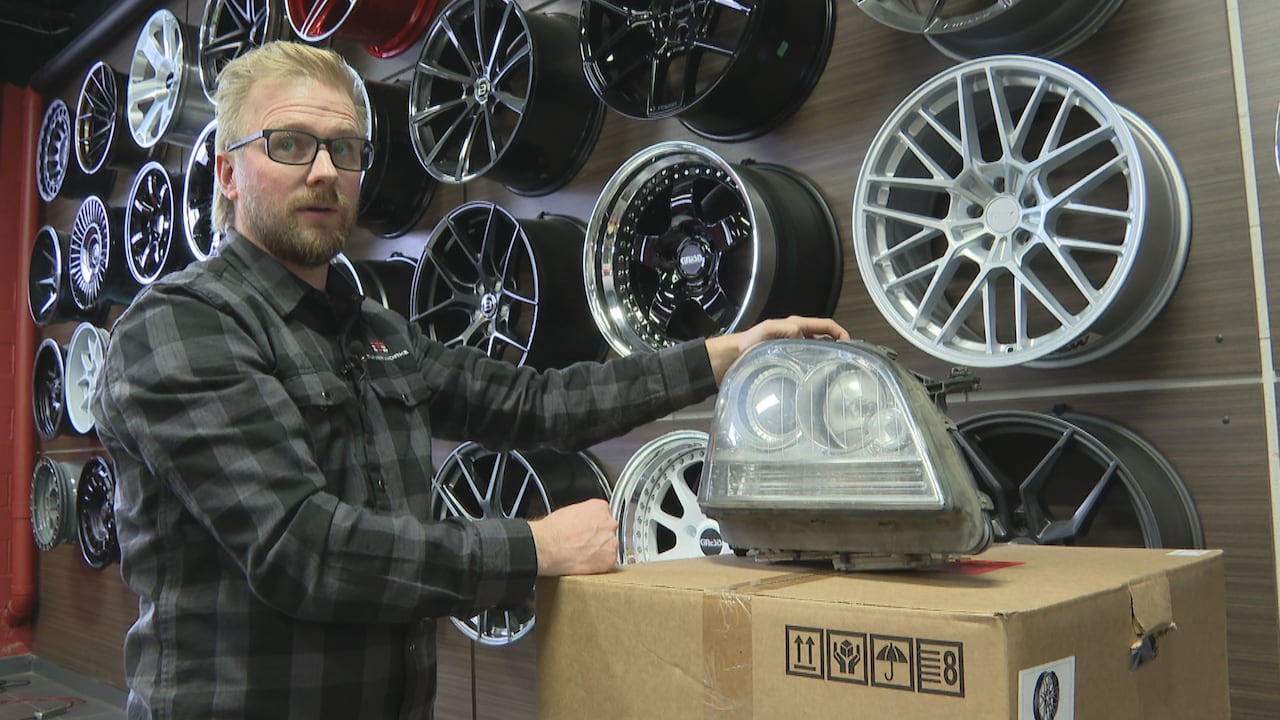 Tunerworks service manager and technician Chris Hart shows off what he describes as ‘a very typical 2000s headlight,’ equipped with a halogen bulb and HID (high-intensity discharge) bulb, rather than the brighter LED lights that have become standard in vehicles today. (Jo Horwood/CBC)
Beyond the type of product being used, improper installation is a key factor behind lights being too bright, Hart explained.
“One thing that’s very important is to ensure that your headlights are aimed properly,” he said. “If the headlights are not aimed, you might be directing light where it’s not beneficial for you.”
When it comes to lights, Alberta follows the standards set by Transport Canada, which in turn closely mirror those laid out by the U.S. Department of Transportation.
Hart said those North American standards may not be up to par with those of other countries. That’s not to say North American headlights aren’t well-designed, Hart said, but their quality can vary.
WATCH | Headlights are brighter than ever. What’s changed?: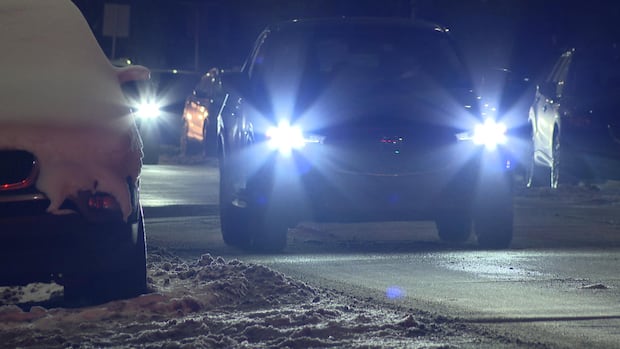
Headlights are brighter than ever. What’s changed?
The bulbs used in headlights have evolved, and there are common mistakes people make when they install their own. CBC’s Jo Horwood explains why newer headlights seem so uncomfortably bright, and what’s being done about it.
“Other countries or other markets outside of North America that have different lighting standards, some of them are much better, I’ll openly admit,” Hart said.
A 2019 study by the American Automobile Association points to the lower amount of glare associated with adaptive driving beam headlights, which adjust their brightness or the direction of the light based on the presence of other vehicles. They’re far more common in Europe and elsewhere in the world than in North America.
Prof says regulations may be outdated
LED (light-emitting diode) bulbs became the standard for headlights relatively recently. Before that, vehicles primarily used incandescent bulbs, which work similarly to traditional household lightbulbs.
“Unfortunately, they make better heaters than they do light emitters, so they quickly moved on,” Hart said.
Halogen bulbs became the norm in the 1990s. Those pale in comparison to modern LED headlights when it comes to brightness.
LEDs create an intense light that helps drivers see their surroundings at night, but doesn’t necessarily help the visibility of drivers who find themselves staring into them.
WATCH | Blinded by the light? New LED headlights are extremely bright: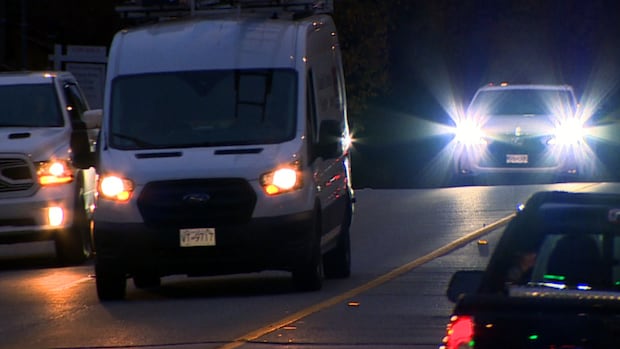
Blinded by the light? New LED headlights are extremely bright
More new cars are being equipped with LED headlights that are extremely bright, producing something experts describe as discomfort glare.
Kartik Murari said in headlights with LED bulbs, the light is concentrated from a significantly smaller spot than in halogen bulbs, making it appear much brighter in many cases.
He said if modern standards for headlights were created with halogen bulbs in mind, they need to be updated to reflect the brighter bulbs being used today.
“The fact of the matter is standards need to be changed,” said Murari, a professor of electrical and biomedical engineering at the University of Calgary.
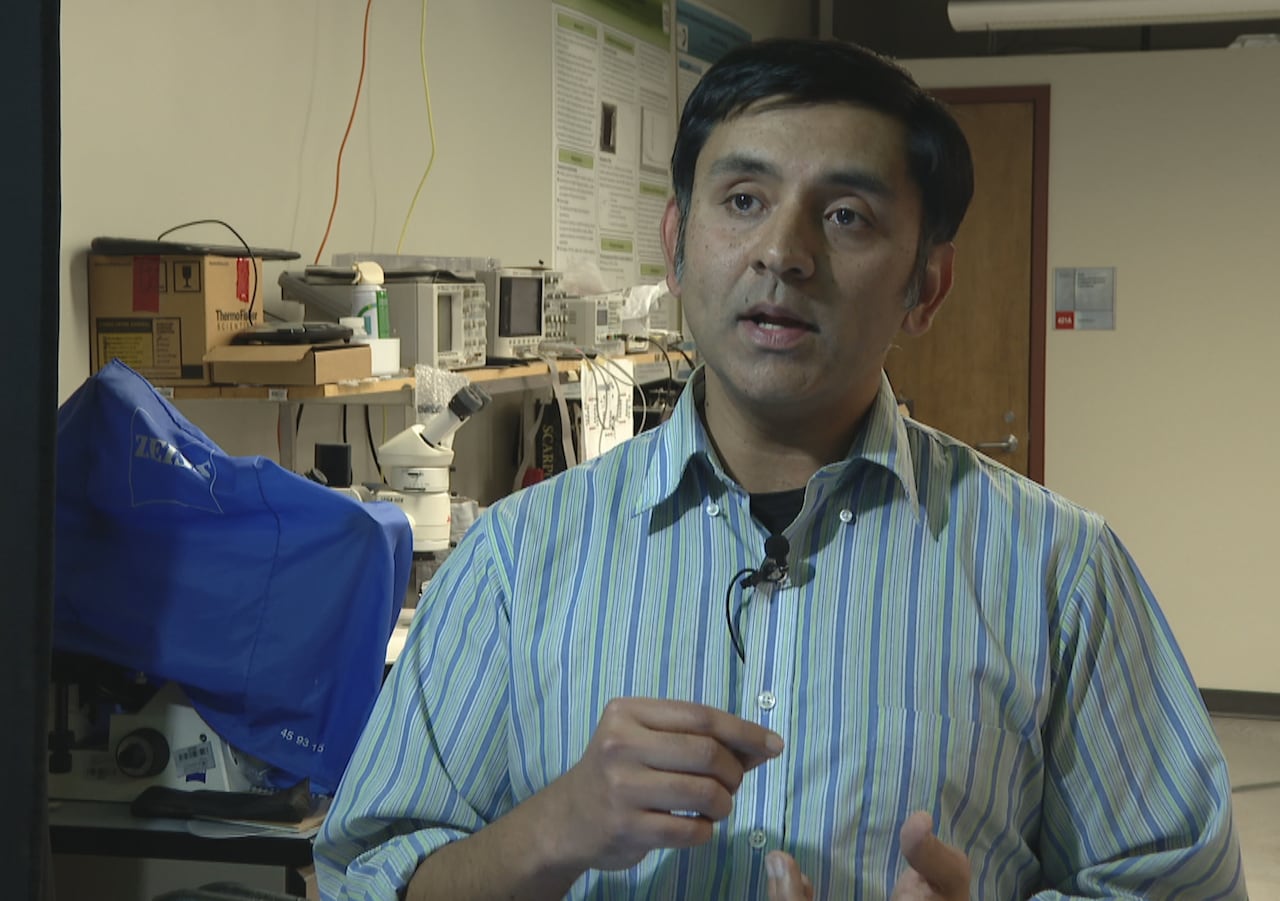 Kartik Murari, a professor of electrical and biomedical engineering at the University of Calgary. (Jo Horwood/CBC)
According to the Calgary Police Service, four tickets have been given out in the last two years for “high beamshine in approaching drivers’ eyes.”
Police could not confirm whether any serious injuries or fatal collisions were caused by headlights.
Husam Khalo, a spokesperson for the provincial Ministry of Transportation and Economic Corridors, said in a statement that the province has “received 11 public inquiries related to vehicle headlamps — a number that typically rises during winter when headlights are used more frequently.”
Khalo said “no regulatory changes are being considered at this time” when it comes to regulations around headlights, adding that the province will “continue to monitor new technologies like LED lighting to ensure they meet Transport Canada requirements.”
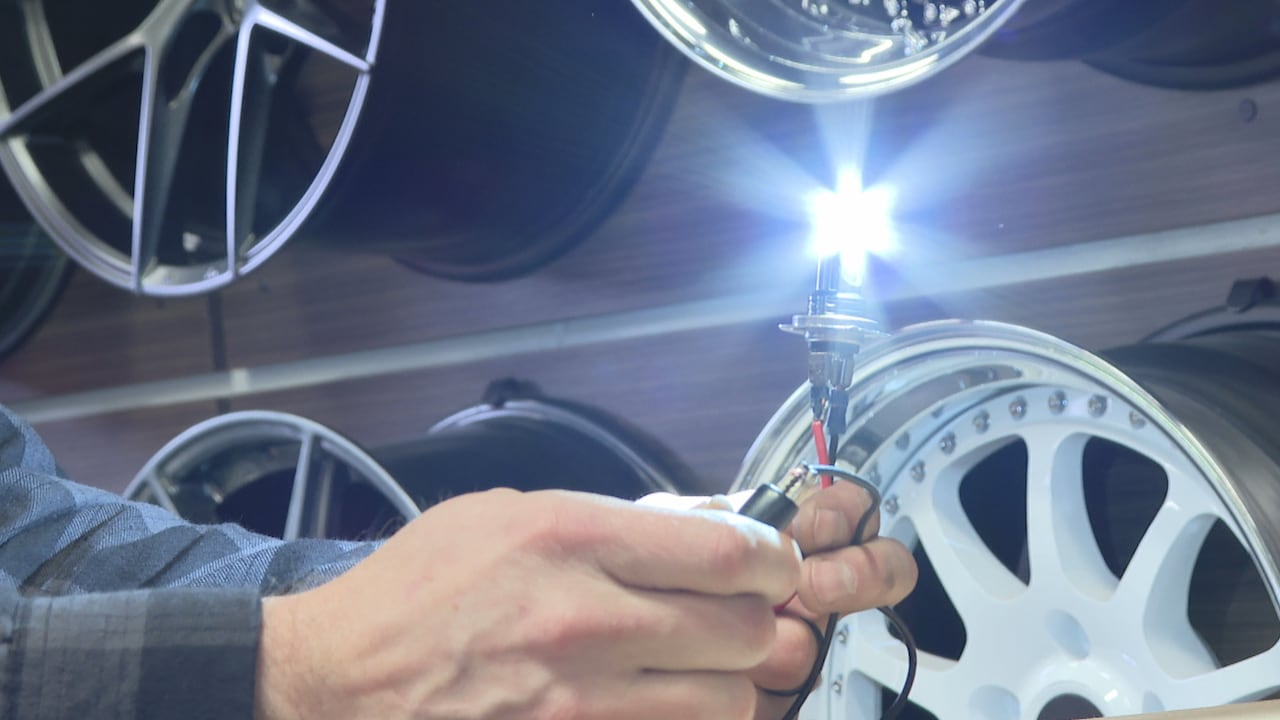 Tunerworks service manager and technician Chris Hart demonstrates the intensity of an LED bulb, which is able to provide high brightness at a smaller size than other bulbs. (Jo Horwood/CBC)
Transport Canada spokesperson Flavio Nienow said the federal government regulates the safety performance aspects of vehicles, but it’s up to provincial governments to regulate anything that has to do with maintenance or aftermarket equipment.
Nienow said the federal government has been working to improve regulations around glare, including working alongside other countries as part of a United Nations taskforce.
A nationwide survey by Transport Canada will be conducted as part of the department’s “research on the relationship between headlights, glare, and their effects on visibility and driving performance,” Nienow said.
Regulations around inspections could be improved, technician says
Hart’s concerns with Alberta vehicle regulations go beyond headlights. He said the province “could do a better job at regulating inspections in general,” especially when it comes to requiring mandatory inspections for vehicles that are currently on the road.
He noted that many vehicles brought in from other provinces have to go through a mandatory inspection. The province also requires salvage vehicles to be inspected before being re-registered.
“But there’s no inspection required for any vehicle on the road at any point in time, unless it changes hands … and the insurance company has asked for an inspection,” said Hart.
“If you’re the original owner of a car from 1994 and you haven’t had it into a mechanic shop for inspection, you don’t know what the condition of that vehicle is, or what the headlights are aimed at,” Hart said.
Inspections of all vehicles are mandatory in Prince Edward Island annually, and every two years in New Brunswick and Nova Scotia, though new vehicles purchased in that province are exempt from mandatory inspections for the first three years.