
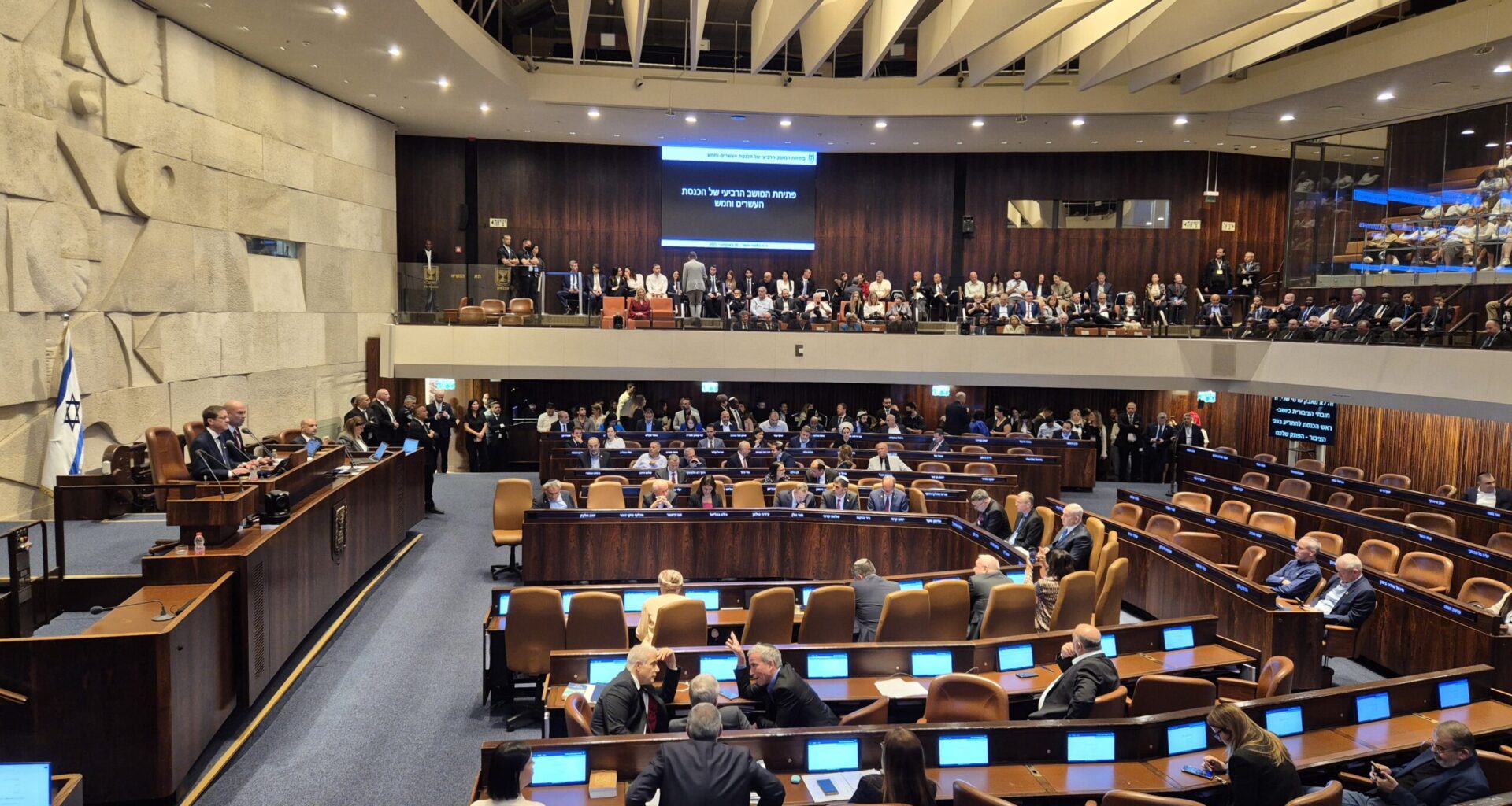
A first-reading vote on a politically appointed inquiry into the October 7 attacks exposed deep divisions inside Israel’s parliament, unfolding amid protest and accusations of political self-investigation
Israel’s Parliament approved, in a preliminary vote, an alternative investigative framework into the October 7 massacre, amid scenes highlighting how far the country remains from consensus. As lawmakers debated the proposal on the floor of the Knesset, bereaved families stood above them in the public gallery, holding photographs of their loved ones. Below, opposition lawmakers tore copies of the bill in protest. Throughout the session, the prime minister’s chair remained empty.
For Rafi Ben Shitrit, a member of the October Council whose son, Sgt. Elroy Ben Shitrit, was killed while serving near the Gaza border, the confrontation was not political theater. It was a test of whether Israel is willing to examine its own failures without controlling the outcome. Speaking with The Media Line, Ben Shitrit described the legislation as a distortion of accountability. A former mayor of Beit She’an and a longtime city councilman in northern Israel, he comes from a political background historically aligned with Likud, a fact he says matters when assessing his opposition.
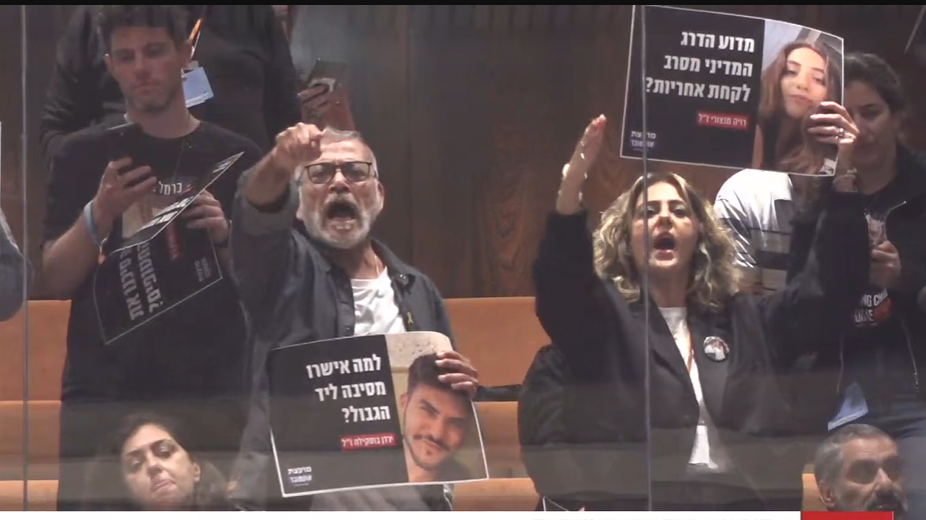
Families of Oct. 7 victims protest bill calling for politically appointed investigation. December 24, 2025. (Screenshot: Knesset Channel)
“There is already a law in Israel that governs commissions of inquiry,” Ben Shitrit said. “What the government is proposing now is not a state commission. It is a political committee. They will appoint the members. They will define the mandate. They will decide what is investigated and what is not. That is not accountability.”
This is not left versus right. This is about a government that does not want to be investigated.
He rejected claims that resistance to the bill reflects ideological rivalry. “This is not left versus right,” he said. “This is about a government that does not want to be investigated.”
Those concerns framed a tense session in the Knesset, where lawmakers approved the bill in its first reading by 53 votes in favor, 48 against, with one abstention. Several coalition lawmakers did not participate. The proposal was introduced by Likud lawmaker Ariel Kallner, who presented it as a response to what he described as a collapse of public trust in Israel’s institutions.
The bill seeks to establish what it calls a “state-national investigative commission” to examine the October 7 attacks, the outbreak of the Gaza war, and the circumstances that preceded them. While it formally incorporates parts of Israel’s 1969 Commissions of Inquiry Law, it removes the Supreme Court of Israel from any role in appointing the commission or overseeing its work.
Authority would instead be transferred to elected officials. Under the proposal, the commission would consist of six or seven members. The Knesset Speaker would attempt to assemble an agreed slate in consultation with coalition and opposition factions, subject to approval by a supermajority of 80 lawmakers. If consensus fails, the coalition and opposition would each appoint three members. Should either side miss the deadline, the Speaker would complete the appointments. If the commissioners cannot agree on a single chair, the law allows for two co-chairs, one from each political bloc, with key decisions requiring joint approval.
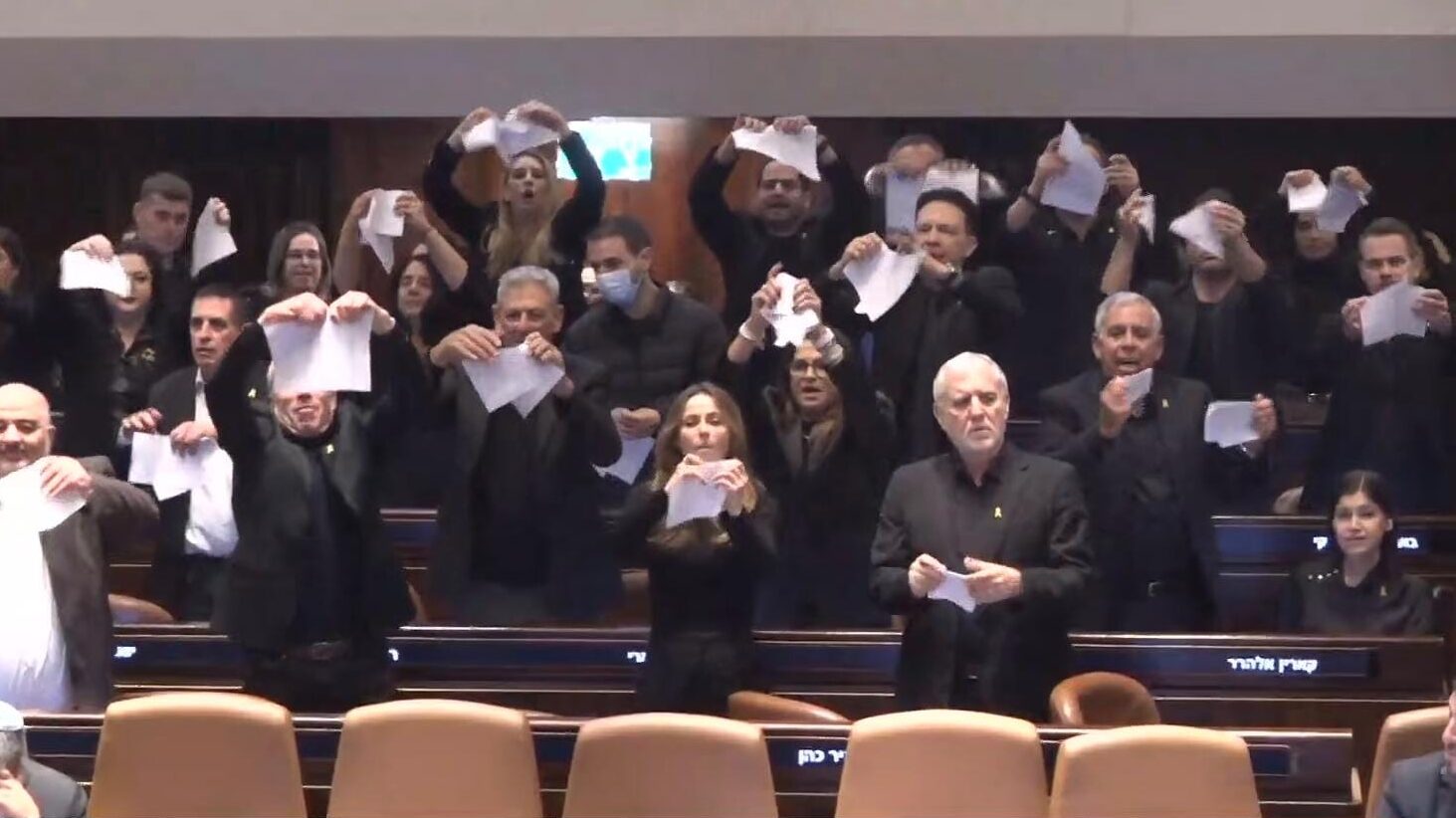
Opposition Knesset members tear up bill calling for a politically appointed probe in to October 7 on December 24, 2025. (Screenshot: Knesset Channel)
Beyond appointments, the bill assigns the government a central role in defining the investigation itself. One clause states explicitly that the executive will determine the subjects of inquiry and retain the authority to expand, clarify, or narrow that mandate as the commission proceeds. Supporters argue this reflects political reality in a society fractured by mistrust. Critics say it allows those under scrutiny to shape the boundaries of their own examination.
Defending the proposal from the plenum, Kallner argued that neither a government-appointed commission nor a court-appointed one could command public confidence. “Large parts of the public do not trust the Supreme Court,” he said, naming the court’s president directly and accusing him of lacking objectivity. Only a politically balanced body, he insisted, could uncover the truth.
Kallner repeatedly cited the US 9/11 Commission as a model, emphasizing its bipartisan composition and lack of judicial leadership. He also read aloud a petition he said was signed by hundreds of bereaved parents and widows opposing Supreme Court involvement. “No one owns bereavement,” he told lawmakers. “All systems of the state must be examined.”
No one owns bereavement. All systems of the state must be examined.
The response inside the chamber was immediate. In the gallery, families affiliated with the October Council held up photographs of relatives killed on October 7 and, at times, turned away from coalition speakers. On the floor, opposition lawmakers tore copies of the bill just before the vote. After repeated warnings from the Speaker, several were removed as the chamber grew louder.
Speaking on behalf of the government, Deputy Minister Almog Cohen delivered one of the most confrontational speeches of the session. He accused senior security officials and judicial figures of pushing for a State Commission of Inquiry to shield themselves from responsibility.
“I understand those who do not trust the government,” Cohen said. “But there is another side. We do not trust the Supreme Court.”
Referring to October 7, Cohen described entering combat and seeing fellow Israelis killed. He accused unnamed senior officials of ignoring intelligence warnings and argued that those responsible should face prison sentences. “We want people to go to jail,” he said. “People who, until their last day, will sit in prison.”
For critics of the bill, the speech illustrated how politicized the inquiry debate has already become, even before any commission has been formed.
Opposition leader Yair Lapid focused his remarks not on the technical details of the legislation but on what was missing from the chamber. Pointing to an empty seat, he said the absence of Prime Minister Benjamin Netanyahu spoke louder than any defense of the bill.
I understand those who do not trust the government. But there is another side. We do not trust the Supreme Court.
“Netanyahu is running from responsibility,” Lapid said. “That is the only purpose of this proposal. To help him run. To help him shift blame to others.”
Lapid went further, mocking what he called the government’s attempt to widen the scope of blame indefinitely. “Why stop at Oslo?” he asked, referring to remarks suggesting the commission could examine decisions made decades earlier. “Why not investigate the destruction of the First Temple? Or the Warsaw Ghetto Uprising? Maybe it’s time to investigate the death of Trumpeldor?”
Without a State Commission of Inquiry appointed under existing law, Lapid warned, Israel would never fully understand what happened on October 7 or how to prevent it from happening again. “Our dead deserve more,” he said. “The country’s security deserves more.”
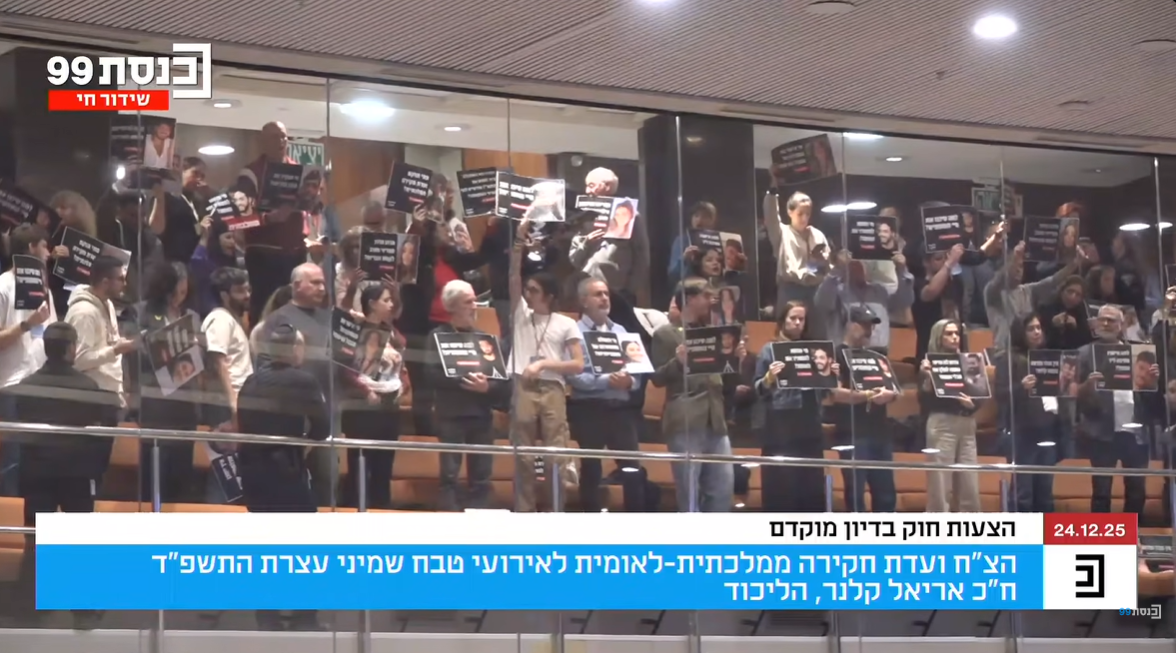
October Council Families protest at Knesset, December 24, 2025. (Screenshot: Knesset Channel)
Ben Shitrit echoed that assessment, pointing not only to Netanyahu’s absence but to what he described as a broader pattern of avoidance. In his view, resistance to a judicially appointed inquiry reflects fear of what an independent investigation might reveal. He cited the long-standing policy of transferring Qatari funds into Gaza, a practice intended to stabilize Hamas rule and maintain quiet along the border, including cash payments approved by successive Israeli governments, as a failure that requires scrutiny.
“There was a concept that Hamas was an asset,” Ben Shitrit said. “That concept collapsed on October 7. A real commission would have to examine it honestly.”
The bill includes one provision intended to address public trust: the appointment of four bereaved family representatives as “inspectors.” According to the text, they would be permitted to attend hearings, submit written questions and comments, and offer remarks before the final report is published. They would hold no voting rights and no authority over conclusions or recommendations.
Families involved in the October Council have dismissed the provision as symbolic. In a statement issued after the vote, the group accused the Knesset of advancing an evasion mechanism rather than a genuine investigation, arguing that only a State Commission of Inquiry could restore public trust.
The legislative push comes as the Supreme Court assesses petitions demanding the establishment of a formal State Commission of Inquiry and as the government has been required to explain its prolonged delay in establishing it. Advancing an alternative model allows the coalition to argue that it is acting on accountability while retaining control over the process. Whether that argument will withstand legal scrutiny is still uncertain.
The bill now moves to committee deliberations, where its language may still be amended before returning to the plenum for second and third readings. Opposition parties have vowed not to cooperate with any commission formed under its terms, promising instead to establish a traditional State Commission of Inquiry under a future government.
What remained after the vote was not resolution but fracture; families watching from above, lawmakers yelling at each other below, and after two years, no answers on how to determine responsibility or how the next national disaster could be prevented.