
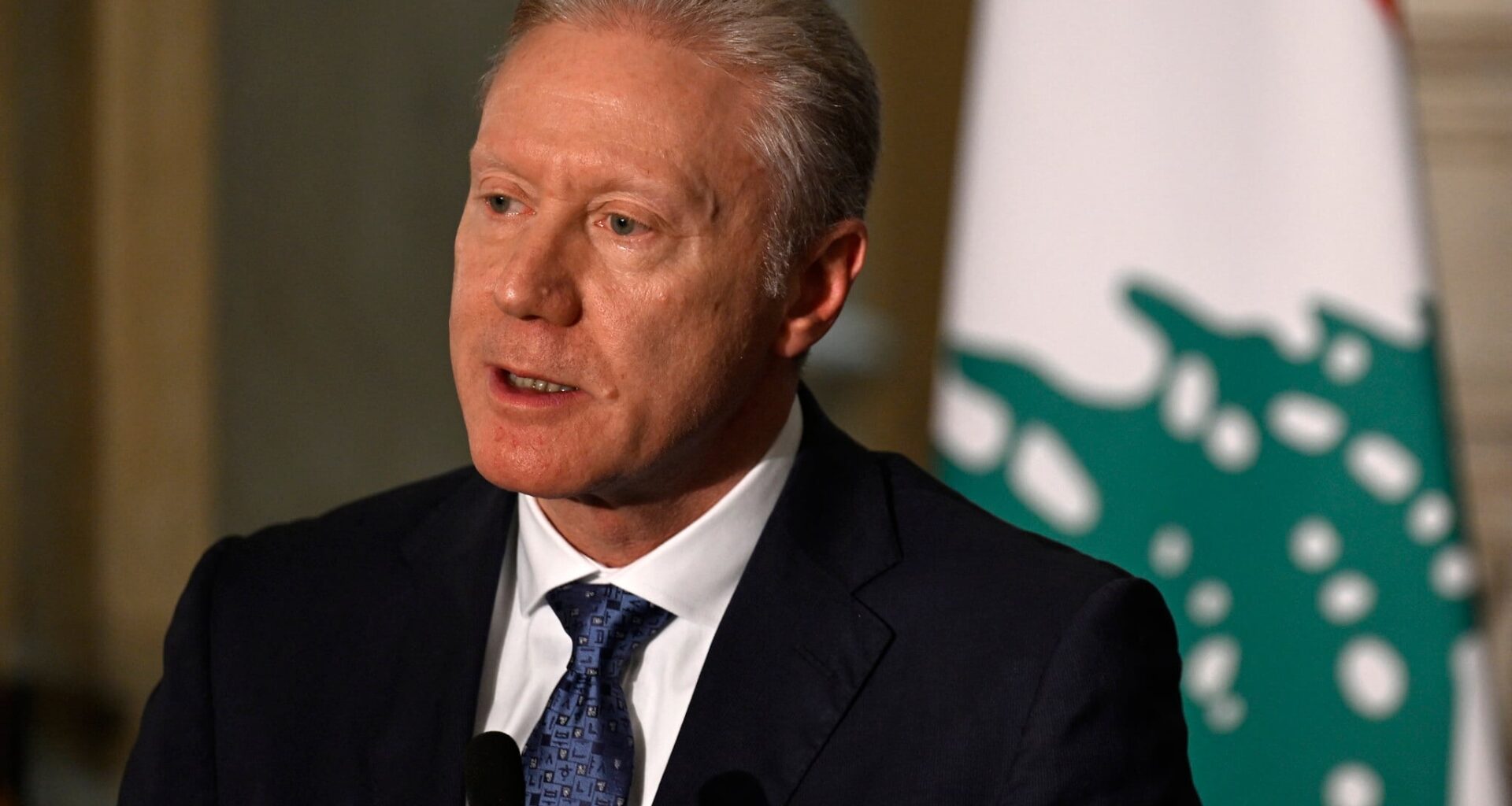
Lebanon’s foreign minister on Wednesday criticized Hezbollah and demanded its entire military system be dismantled and disarmed, saying that it was “unacceptable” that a non-state armed organization continues to operate within the country.
In comments published by the Iranian WANA news agency, Foreign Minister Youssef Rajji railed against both the Iran-backed terror group and Iran itself, as the Lebanese government has sharpened its tone against Tehran and Hezbollah in recent months.
Hezbollah’s entire military structure needs to be dismantled in order for Lebanon’s security to be guaranteed, Rajji said, calling for full disarmament and demilitarization beyond just the confiscation of small arms or the removal of Hezbollah forces and infrastructure from southern Lebanon.
Meanwhile, the Israeli military carried out a wave of attacks in southern Lebanon on Wednesday, saying it targeted several Hezbollah rocket-launching sites.
Several buildings and other infrastructure recently used by the terror group’s operatives were also destroyed in the strikes, the military announced, saying the presence of the rocket-launching sites was a violation of the ceasefire deal between Israel and Lebanon.
Get The Times of Israel’s Daily Edition
by email and never miss our top stories
By signing up, you agree to the terms
According to Lebanese media, the IDF struck targets in the southern towns of Tebna and Nmairiyeh.
غارات إسرائيلية تستهدف بلدتَي تبنا والنميرية جنوبي لبنان pic.twitter.com/YnOxXBeuAI
— Annahar النهار (@Annahar) December 24, 2025
Last week, Lebanese Prime Minister Nawaf Salam said that the country was close to completing the disarmament of Hezbollah south of the Litani River, and that the government was now moving towards confiscating weapons north of Litani, “based on the plan prepared by the Lebanese army pursuant to a mandate from the government.”
Accusing Hezbollah of using Israeli attacks as an excuse to hold onto its arms, Rajji said that the group was trying to buy time in hope of political shifts and was refusing to seriously discuss full disarmament.
Rajji also claimed that Hezbollah was threatening Beirut with potential civil war if the government acts on its demands to fully disarm, a threat Rajji called unacceptable.
Turning his sights on Iran, the foreign minister said that the country was destabilizing Lebanon with its continued “direct” financial and military backing of Hezbollah.
“Iran is not our enemy, but we have deep problems with it,” Rajji said, stressing that Beirut seeks peaceful ties with Tehran, provided it respects Lebanese sovereignty and does not interfere in its politics or society.
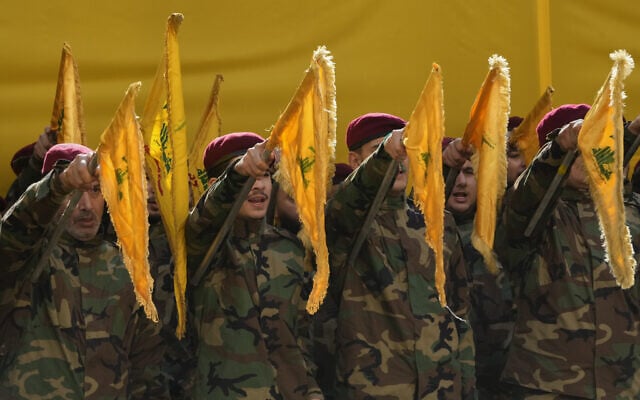
Hezbollah members raise the terror group’s flags and chant slogans as they attend the funeral procession of Hezbollah’s military chief of staff, Haytham Tabatabai, and two other Hezbollah members who were killed in an Israeli airstrike, in a southern suburb of Beirut, Lebanon, November 24, 2025. (AP Photo/Hussein Malla)
Rajji, who is a member of the Christian-led Lebanese Forces party, has led the rhetorical charge against Iran and Hezbollah over the course of this year, recently calling Tehran’s influence in the region “very negative,” and “a source of instability.”
Earlier this month, Rajji refused an invitation to Tehran from Iranian Foreign Minister Abbas Araghchi, saying: “I could not accept his invitation to visit Tehran under the current circumstances,” instead inviting Araghchi to come to Beirut or a “neutral” country.
Responding to his Lebanese counterpart’s comments, Araghchi said he would “gladly accept the invitation to come to Beirut,” although he said he found Rajji’s position “bemusing.” He said foreign ministers of countries with “full diplomatic relations” did not need a neutral venue to meet.
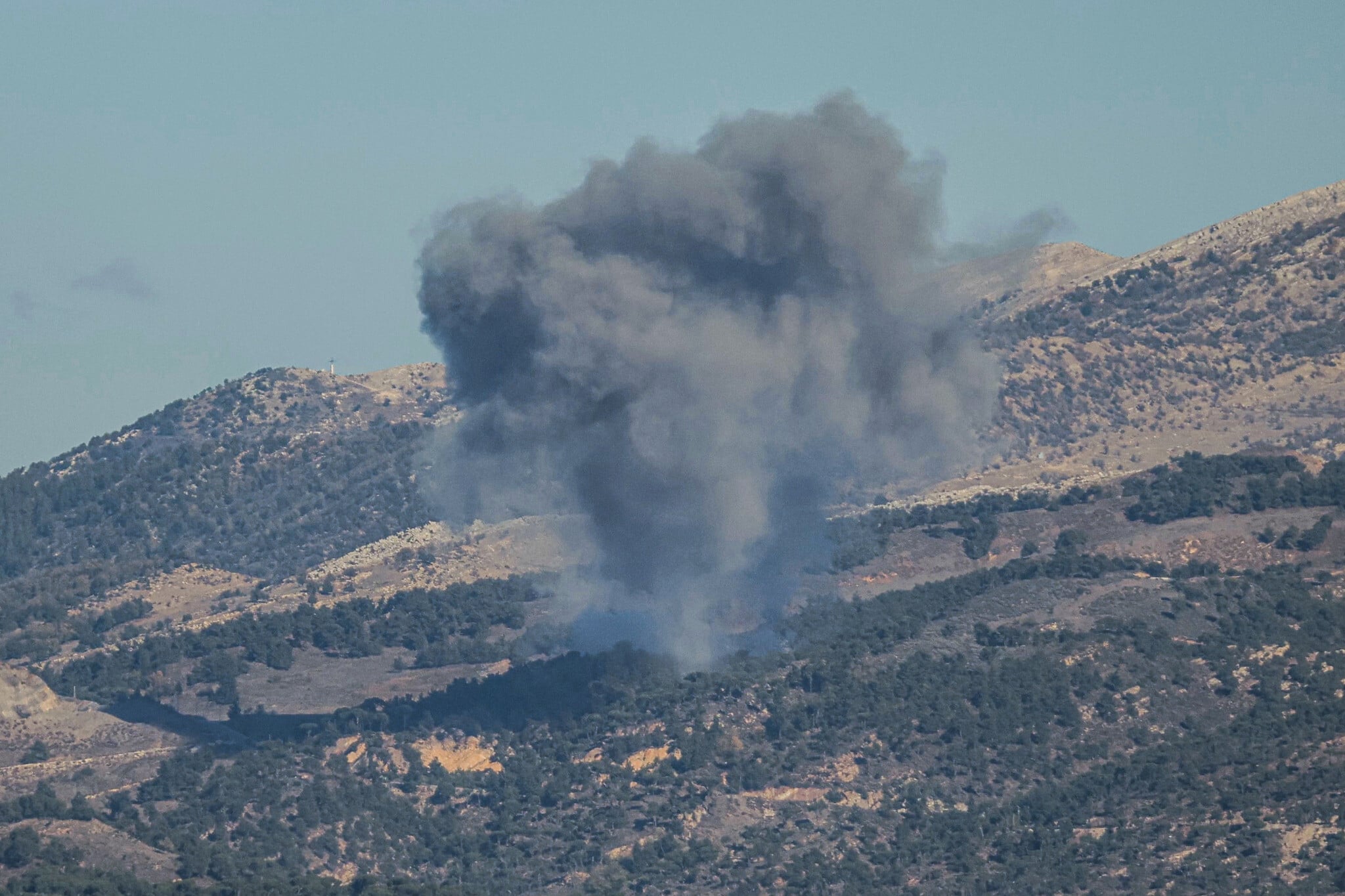
Smoke rises from the site of a series of Israeli airstrikes that targeted the outskirts of the southern Lebanese village of al-Qatrani on December 18, 2025. (Rabih Daher/AFP)
A year of intense conflict between the Lebanese Iran-backed terror group and Israel came to a halt just over a year ago with a US-brokered ceasefire. Under the terms of the truce, Hezbollah was to be disarmed and allow the Lebanese Armed Forces to deploy fully across the country as the IDF withdrew. That disarmament has not yet happened, however, despite Lebanon having drawn up a plan to do so.
Lebanon is now under pressure to speed up the process or risk intensifying Israeli action.
Israel has retained troops in Lebanon at five strategic points near the border, and regularly conducts strikes that it says are against Hezbollah attempts to rebuild its strength.
Is The Times of Israel important to you?
If so, we have a year-end request.
Every day during the past two years of war and rising global antisemitism, our journalists kept you abreast of the most important developments that merit your attention. Millions of people rely on ToI for fact-based coverage of Israel and the Jewish world.
We care about Israel – and we know you do too. So as 2025 draws to a close, we have an ask: show your appreciation for our work by joining The Times of Israel Community, an exclusive group for readers like you who appreciate and financially support our work.
Already a member? Sign in to stop seeing this
You appreciate our journalism

You clearly find our careful reporting valuable, in a time when facts are often distorted and news coverage often lacks context.
Your support is essential to continue our work. We want to continue delivering the professional journalism you value, even as the demands on our newsroom have grown dramatically since October 7.
So today, please consider joining our reader support group, The Times of Israel Community. For as little as $6 a month you’ll become our partners while enjoying The Times of Israel AD-FREE, as well as accessing exclusive content available only to Times of Israel Community members.
Thank you,
David Horovitz, Founding Editor of The Times of Israel