
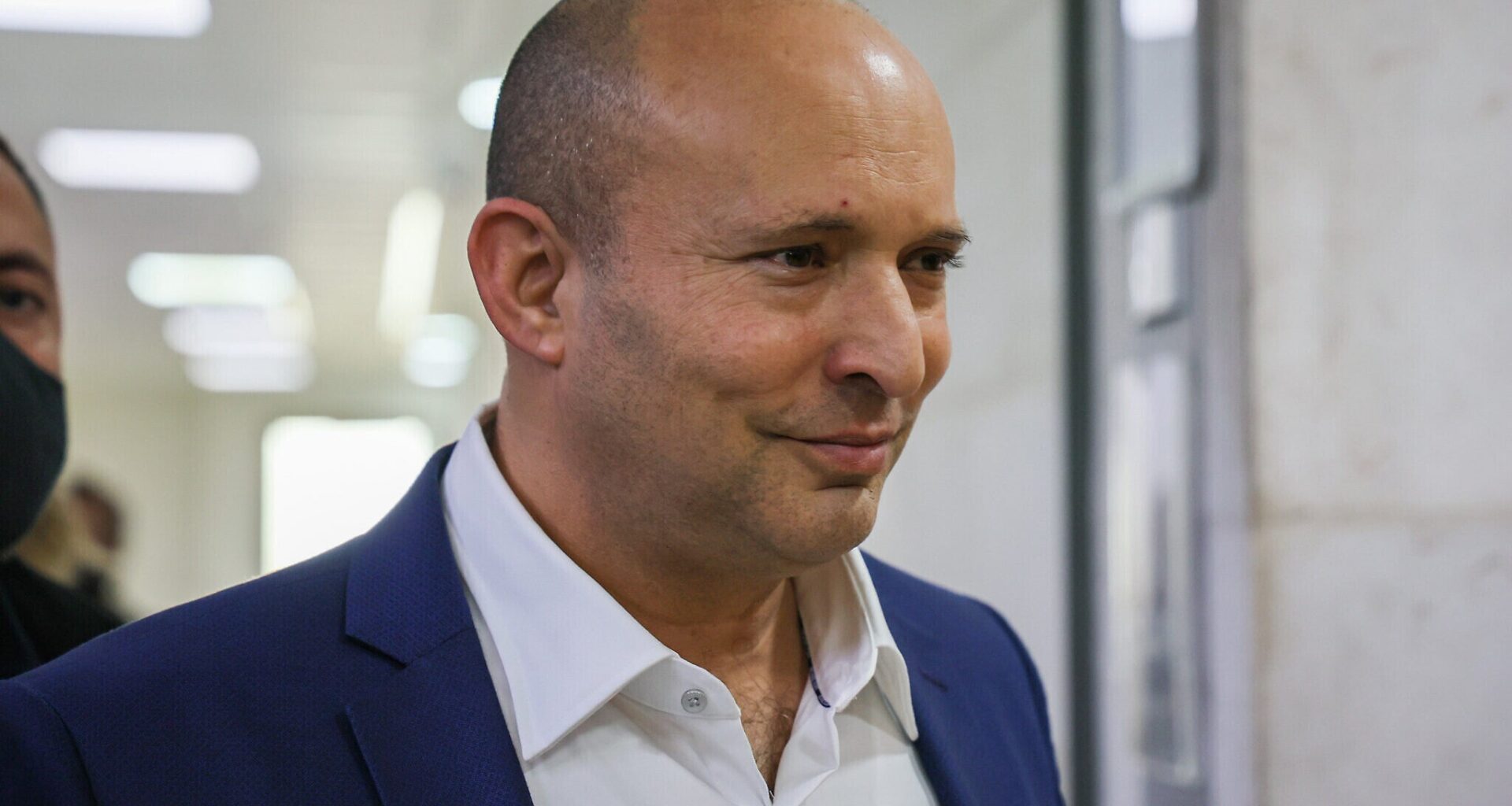
State prosecutors filed charges Thursday against an Israeli citizen accused of spying on former prime minister Naftali Bennett on behalf of Iranian interests.
Shortly before the indictment was filed against 40-year-old Vadim Kupriyanov, police announced that they had arrested the Rishon Lezion resident on December 8, several weeks after he was spotted filming outside Bennett’s home in Ra’anana.
According to a report by the Kan public broadcaster, Kupriyanov has worked in maintenance at the Kirya military base in Tel Aviv for the last three years, operating in sensitive areas of the Israel Defense Forces’ headquarters.
He was even called in to fix a leak in the office of IDF Chief of Staff Eyal Zamir on the day that the latter entered office, according to Kan.
Responding to the news, ex-premier Bennett vowed: “Iran’s efforts to harm me will not stop me in my life’s mission.”
Get The Times of Israel’s Daily Edition
by email and never miss our top stories
By signing up, you agree to the terms
It isn’t the first time the former prime minister has been targeted in Iranian espionage efforts. Hackers linked to the Islamic Republic broke into his Telegram account several weeks ago, gaining access to his contacts and chats on the messaging app.
In May, an Israeli teen was caught spying on Bennett during a hospital stay, when the politician underwent a cardiac catheterization.
In the newly revealed case, the Iranian agent that Kupriyanov worked for reached out to him over Telegram in November, and the two maintained contact until the now-defendant was nabbed by law enforcement a month later.
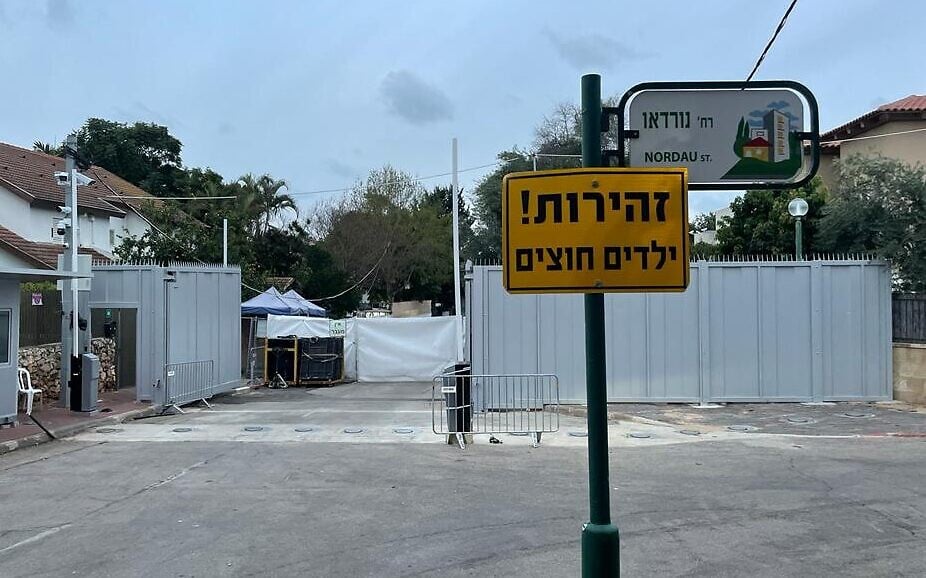
Unfinished construction of one of the three metal wall roadblocks encircling Prime Minister Naftali Bennett’s Ra’anana home, January 13, 2022. (Carrie Keller-Lynn/Times of Israel)
The defendant used a camera mounted to his car’s dashboard to take the footage of Bennett’s home from the road, prosecutors wrote.
The agent wanted Kupriyanov to park on the road near the residence and remain there overnight with his camera on. The defendant drove up and down the street several times, but gave up and returned home after he couldn’t find a suitable parking spot.
Nevertheless, he sent his handler five videos taken during the drive, some of which showed the entrance to Bennett’s home.
In addition to spying on Bennett, Kupriyanov also gathered intelligence on shopping centers in central Israel and food prices in supermarkets, recorded the process of obtaining a tourist SIM card, and then shared the material with his handler.
Like most other Israelis recruited to spy for Iran, Kupriyanov worked in exchange for money, which was transferred by his handler via Paypal. However, prosecutors stressed his tenacity and willingness to “think outside the box” when confronted with obstacles in espionage missions.
In an apparent bid to earn more pay, Kupriyanov used his girlfriend’s phone to contact the agent, with her permission. He carried out additional missions while posing as her to the handler, prosecutors said.
The defendant was indicted in the Central District Court in Lod on charges of maintaining contact with a foreign agent and espionage. Prosecutors are requesting that he remain in custody until sentencing.

The entrance to the Central District Court in Lod (CC BY-SA Yarin50/Wikipedia)
Kupriyanov’s case, investigated by the Shin Bet and police in Lahav 433’s National Fraud Investigation Unit, is one of dozens of instances in which Iranian agents have succeeded in recruiting Israelis into a growing network of homegrown spies.
The phenomenon has picked up over the past two years. Most of the alleged spies begin with relatively innocuous tasks, such as vandalizing buildings with anti-government and pro-Iranian messages, then sending photos of the graffiti to their handlers. These gradually turn into more serious offenses, like intelligence-gathering and sometimes even assassination plots.
The growing number of Iranian agents prompted Israel to open up a new wing for them in Haifa’s Damon prison. Only one of the alleged spies has been convicted so far, as most cases are still making their way through the legal system.
Times of Israel staff contributed to this report.
Is The Times of Israel important to you?
If so, we have a year-end request.
Every day during the past two years of war and rising global antisemitism, our journalists kept you abreast of the most important developments that merit your attention. Millions of people rely on ToI for fact-based coverage of Israel and the Jewish world.
We care about Israel – and we know you do too. So as 2025 draws to a close, we have an ask: show your appreciation for our work by joining The Times of Israel Community, an exclusive group for readers like you who appreciate and financially support our work.
Already a member? Sign in to stop seeing this
You appreciate our journalism

You clearly find our careful reporting valuable, in a time when facts are often distorted and news coverage often lacks context.
Your support is essential to continue our work. We want to continue delivering the professional journalism you value, even as the demands on our newsroom have grown dramatically since October 7.
So today, please consider joining our reader support group, The Times of Israel Community. For as little as $6 a month you’ll become our partners while enjoying The Times of Israel AD-FREE, as well as accessing exclusive content available only to Times of Israel Community members.
Thank you,
David Horovitz, Founding Editor of The Times of Israel