
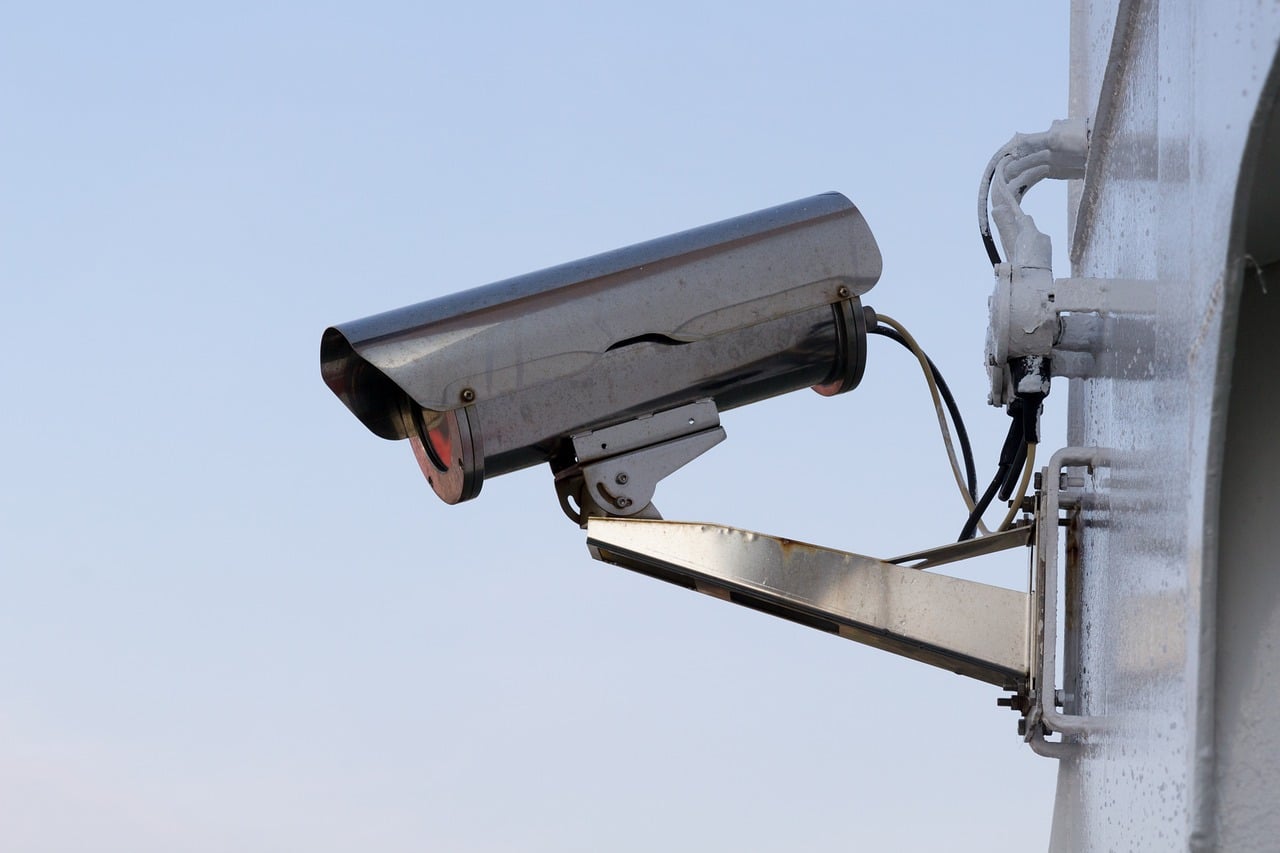
Lawmakers voted 10-0 on Wednesday in favor of the final reading of a government bill authorizing the Israel Defense Forces and the Shin Bet to covertly break into civilian security camera systems, extending by one year a temporary measure passed in the wake of Hamas’s attack on October 7, 2023.
The passage of the law drew widespread criticism from rights groups, who charge that it upends legal protections and violates privacy rights.
The law initially permitted hacking into security camera back-end technology to prevent or thwart access by nefarious actors only if the visual material endangered national security or IDF operations connected to the war in Gaza. However, the latest extension decouples this authority from an ongoing state of “significant military operations.”
The bill’s explanatory notes state that “the severity of the latest cyber threats and the risks posed by them… the need for additional tools to properly deal with enemy elements’ access to visual information produced by stationary cameras remains,” a claim apparently given additional weight by the recent hacking of former prime minister Naftali Bennett’s Telegram account by Iranian hackers.
However, this extension, especially in light of the recent ceasefire in Gaza, has led to significant criticism from legal experts and human rights advocates, who argue that the law, as written, harms both due process and citizens’ right to privacy.
Get The Times of Israel’s Daily Edition
by email and never miss our top stories
By signing up, you agree to the terms
“This is very troubling legislation that, for the first time, grants the IDF authority to operate within civilian property and civilian space,” attorney Haim Ravia, one of Israel’s most prominent experts on privacy and cyber law, told The Times of Israel.
“It is hard to understand why… this cannot be done by means of a judicial warrant,” said Ravia. “It is also difficult to understand how the Knesset extended such a draconian provision without taking into account that the explanatory notes justify extending it indefinitely,” he added, calling the law a “severe infringement” of citizens’ privacy.

Haim Ravia (law.co.il)
“Under the law, the cameras can observe any area, including private ones. It would have been possible to give citizens retroactive notice of the intrusion into their computers, but even that was not done. Together with a number of experts, we submitted reservations to the law, but they were not addressed,” the attorney said.
In a telephone interview with The Times of Israel, attorney Amit Ashkenazi, an expert on cyber law and policy who previously served as the legal adviser to the Israel National Cyber Directorate, declared that the law is problematic on several fronts.
Israeli law, like that of other Western nations, bans unauthorized computer access, requiring the state to obtain a judicial warrant. There is a procedure “meant to protect you and the computer,” but the current measure circumvents such protections, he said.
According to Ashkenazi, there are three major issues with the legislation: it extends the authority to access citizens’ computers to the military; it “doesn’t require the authorities to go to a judge” to ensure there are reasonable grounds for the intrusion and that “there is no abuse of power”; and those whose systems are hacked “do not receive any notification from the state at any point.”
“Today the army has no authority vis-à-vis civilians, and this law breaks that principle,” Ashkenazi said. “This isn’t dependent on a judicial warrant.”
“Imagine this happening to you. You put a camera outside your yard to protect yourself from thieves and you didn’t do the job properly. As a result, Hamas, Hezbollah or Iran hacks into the camera and uses it to see what’s happening along the border. Now this law allows the army—or the Shin Bet to hack into your camera themselves and disconnect it from the network. When the risk ends, they’re supposed to restore things to how they were, but at no point does it say they must notify you,” he explained.

Then-Defense Minister Yoav Gallant meets with soldiers of Unit 8200, the Israeli military’s main signals intelligence unit, at one of the unit’s bases, May 19, 2024. (Ariel Hermoni/Defense Ministry)
And even if the law is necessary, its implementation is “paternalistic,” Ashkenazi argued. “I’m talking about the method, because in a democratic state what matters, among other things, is the method by which we ensure that the authority we agree to grant to address a problem we’ve agreed exists is exercised in a way that also protects rights.”
The Association for Civil Rights in Israel also panned the law, stating that even if “at the outset of the war there was a proper purpose or a security justification that led to authorizing the IDF and the Shin Bet to penetrate computer material without the need for a judicial warrant,” following the war it was “no longer possible to justify extending the temporary provision.”
“The provision allows intrusion into private cameras that document intimate and sensitive situations and into personal information stored on the computers of citizens and residents, on the basis of broad and vague grounds, and raises serious concern about misuse of the information,” a spokesperson for the rights group said.
“Extending the provision, while severing the connection between these intrusive powers and the state of hostilities, disproportionately violates human rights, first and foremost the right to privacy.”
Is The Times of Israel important to you?
If so, we have a year-end request.
Every day during the past two years of war and rising global antisemitism, our journalists kept you abreast of the most important developments that merit your attention. Millions of people rely on ToI for fact-based coverage of Israel and the Jewish world.
We care about Israel – and we know you do too. So as 2025 draws to a close, we have an ask: show your appreciation for our work by joining The Times of Israel Community, an exclusive group for readers like you who appreciate and financially support our work.
Already a member? Sign in to stop seeing this
You appreciate our journalism

You clearly find our careful reporting valuable, in a time when facts are often distorted and news coverage often lacks context.
Your support is essential to continue our work. We want to continue delivering the professional journalism you value, even as the demands on our newsroom have grown dramatically since October 7.
So today, please consider joining our reader support group, The Times of Israel Community. For as little as $6 a month you’ll become our partners while enjoying The Times of Israel AD-FREE, as well as accessing exclusive content available only to Times of Israel Community members.
Thank you,
David Horovitz, Founding Editor of The Times of Israel