
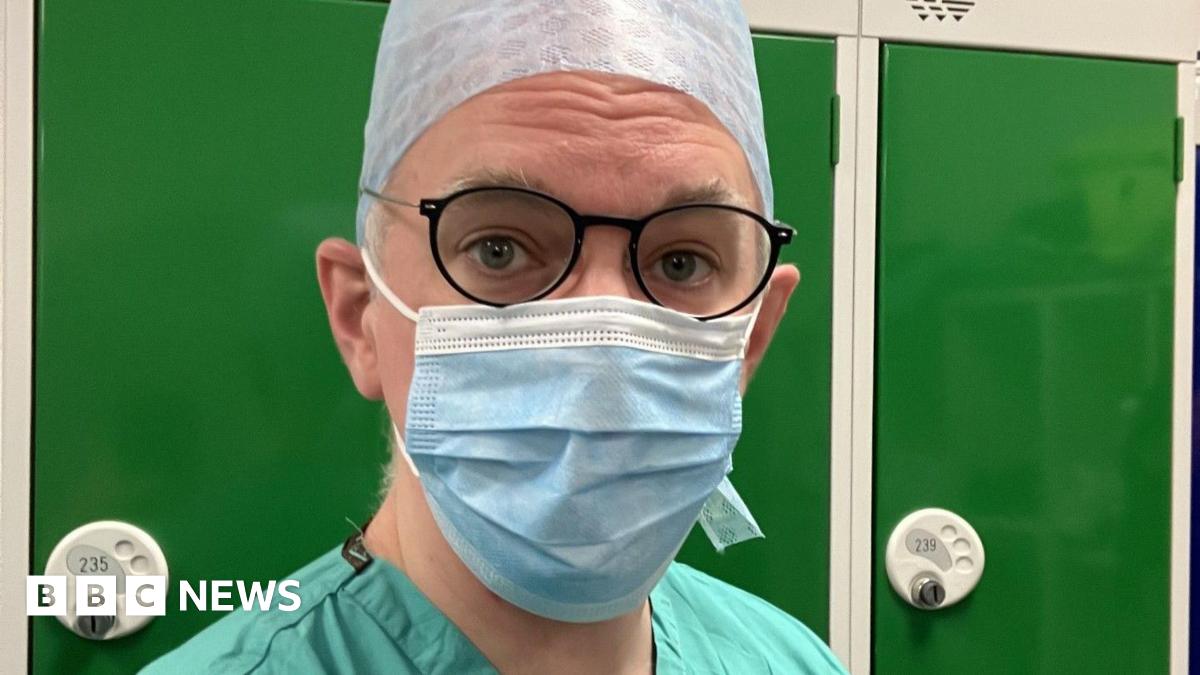
“It’s not on the surface of the brain so we need to make a hole in the cortex,” Prof Paul Brennan, professor of neurosurgery tells me, “as small as possible, but large enough that we can get down towards the tumour”.
The cortex is the outer layer of the brain involved in language, memory, and thought. The inner parts of the brain are softer, but the cortex has to be cut through.
Prof Brennan uses a surgical drill to remove a flap of skull. The exposed brain is pink, flushed with blood, and gently pulsing to the beat of the heart.
Standing next to me is Dr Claire Durrant, an Alzheimer’s researcher at the University of Edinburgh.
She’s holding a container of ice-cold, artificial cerebrospinal fluid, which mimics the liquid that bathes the brain and spinal cord.
In most brain surgeries the removed section of cortex is medical waste and would be binned. But Edinburgh is one of only a handful of centres around the world where it is collected, with permission, for dementia research.
When the moment comes, it is quick. Prof Brennan places a section of brain – about the size of my thumb nail – into the jar to sustain it.