
Steve KnibbsGloucestershire
 BBC
BBC

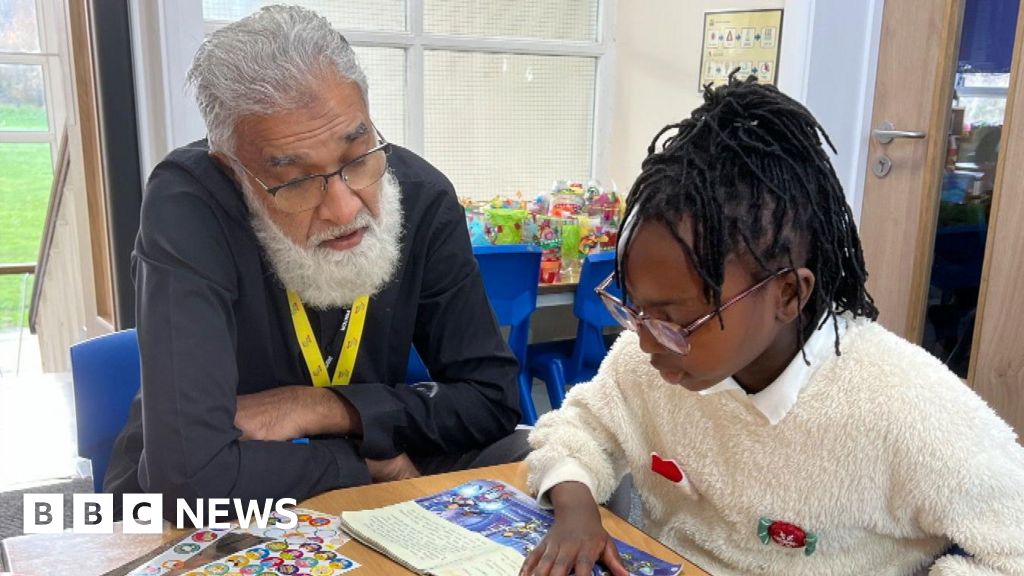
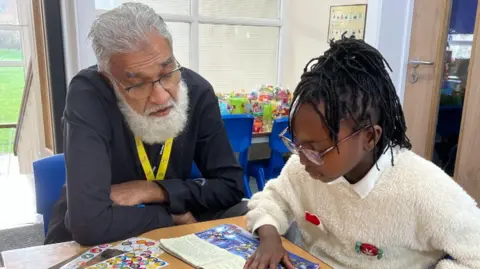
More than 500 volunteers work in schools as part of the Read With Me charity
Getting children reading in schools is helping them become “more confident, more imaginative and more creative”, a charity has said.
Read With Me currently works in 110 out of the 244 primary schools in Gloucestershire, with the help of 500 volunteers.
It said it is changing lives and improving the outcomes for young people, and as part of the National Year of Reading next year, it wants to run reading sessions in every primary school.
It comes as the Education Committee calls for evidence for its Reading for Pleasure inquiry, following the National Literacy Trust’s (NLT) latest survey found that just one in three children aged eight to 18 read in their spare time.
The NLT said that represented a decrease of more than a third (36%) since 2005, with the decline particularly steep in primary school children and boys aged 11 to 16.
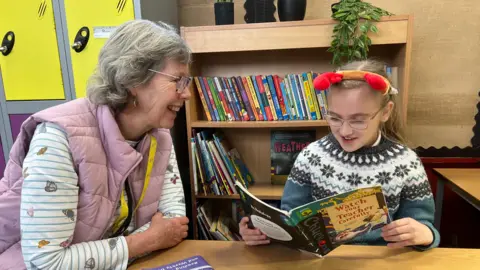
Ewa says she loves reading as much as she can throughout the day
At Hillside Primary School in Gloucester, volunteers from Read With Me regularly listen to the pupils read.
Founder of the charity, Linda Cohen, said: “Every time we survey the schools, they tell us that the children’s reading ages are improving, but also the landscape in terms of schools and teaching has got more and more challenging and difficult.
“For a lot of teachers, they just don’t have time to hear children reading in class, so this gives them the opportunity to be sure that children are being heard to read and frees them up to attend to the curriculum.”
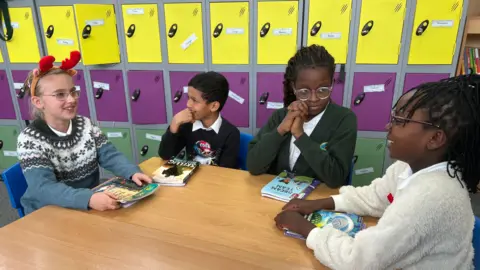
Ewa, Yaaeesh, Ebunoluwa and Janelle are nine-year-old students at Hillside Primary School
Many of the nine-year-olds at Hillside said that they love reading.
“Reading is really important for your brain. Your brain needs words in it,” said Ewa.
Ebunoluwa said it helps with her learning: “You learn new words, new things, and even if you don’t know the meaning of them, you can look in the dictionary or ask for help.”
“If you want to be a scientist, like me, you need to be able to read stuff to learn information,” Yaaeesh said.
And Janelle said reading is not just important in school: “If you’re playing a game, the game might give you instructions. How are you supposed to play it if you can’t read? So you need to be able to read to do things.”
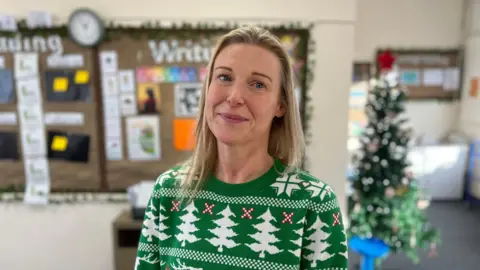
Teacher, Cannie James, said parents can also help to get children reading
Cannie James, a year 3 teacher at Hillside Primary, said parents can also help promote enjoyment of reading.
“As a parent, the most important thing you can do with your child at a primary age is to read, share books,” she said.
“But not just reading with your child, asking them questions about the things that they read, sharing books, talking about books, it’s just so vitally important at this age.”
Ms Cohen said she had invited the chair of the Education Committee to see the work the charity does.
“I would say to Helen Hayes, come out and have a look at what we’re doing, you can see what’s working already, and then let’s just start scaling it,” she said.
“They’re just more confident, more imaginative, more creative, enjoy talking about books and sharing books with each other, and they are the ones that go home to their parents and remind their parents they need to read.”