
If you’ve just unboxed a telescope for Christmas 2025, you’re in luck. Not only is a waxing crescent moon in the evening sky in the week between Christmas Day and New Year’s Eve, but Jupiter is riding high — looking like a “Christmas Star” — and some of the best deep-sky objects are at their best. There’s even a full moon coming — the Wolf Supermoon — in the first week of 2026.
The trick with a new telescope is not to chase everything at once; the best gift you can give yourself when starting in astronomy is patience. Your first nights should be about getting comfortable: setting up, choosing the right magnification and aiming at bright, forgiving targets rather than hunting for “faint fuzzies” in a night sky you cannot yet navigate.
You may like
Setting up for the first time
Before you think about what to look at, make sure your telescope is ready to use while it’s still light outside. Use the instructions in the box to assemble it, taking your time to get it right. Take it outside and level the tripod, tighten all the clamps, familiarize yourself with what the various knobs and levers do, and which direction they move, and — perhaps most importantly — get your finder aligned by using a distant object, such as a tree. Once what you see in the finder and eyepiece are identical, you’re ready to use it for astronomy. Setting up in daylight also gives the telescope time to cool down before night arrives; a cold telescope will give you sharper views.
The best affordable beginner telescope
Finding the moon
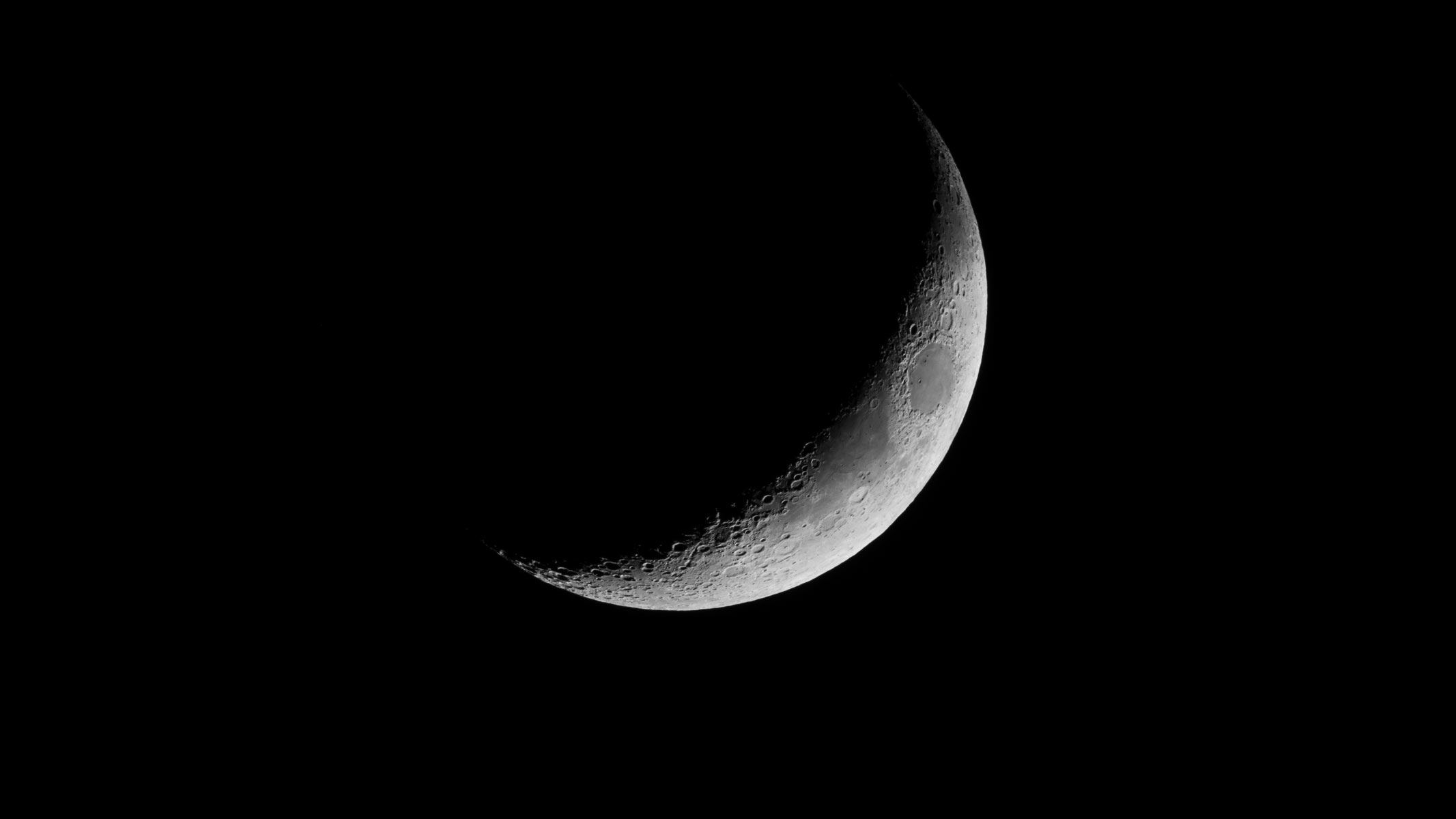
A crescent moon makes an ideal first target. (Image credit: Getty Images)
The first thing most new telescope owners want to do is to get a close-up of the moon. Luckily, the last week of December 2025 is the sweet spot for observing the moon in the evening, helping you learn your way around a telescope. The moon is waxing from a thick crescent in the southwest on Christmas Day through to first quarter on Dec. 27, when it’s half-lit and visible in the south after dark. It will be easy to find as soon as it gets dark — about 30 minutes after sunset — so it’s perfect for practising pointing and focusing on the moon’s bright limb.
Most beginner telescopes come with two eyepieces — 10mm and 25mm. Start with the low-power 25mm eyepiece, whose low magnification and wide field of view are handy for locating objects. If you have a red dot finder, point it at the moon, and a bright light will appear in the eyepiece. Adjust the focus until it becomes sharp. Concentrate your gaze on the terminator, the dividing line between light and dark on the moon, and you’ll see shadowed craters and mountains. Now is the time to switch to the medium-power 10mm eyepiece.
Try to get your telescope on the moon before it reaches first quarter phase, after which the shadows get shorter. Full moon is not the best time to point a telescope at the moon because the light is flat and so bright, but it can be fun during a moonrise.
Navigating the night sky
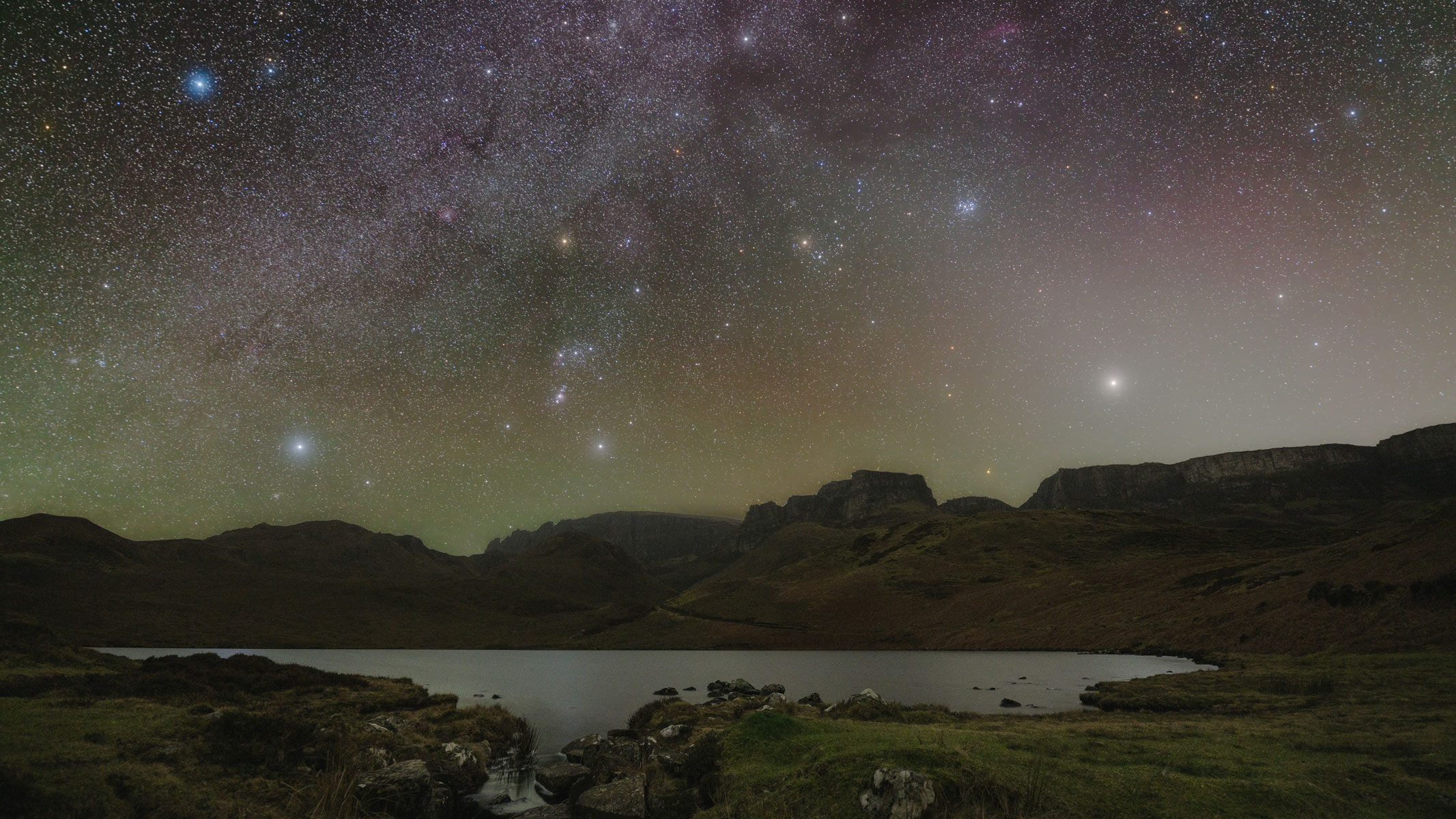
The winter night sky is packed with iconic constellations and deep-sky objects. (Image credit: Getty Images)
Patterns of stars that make up constellations are irrelevant to a telescope because it sees straight through them, right? Not so. Using a telescope properly is only possible once you know the basic geography of the night sky — so think of constellations as regions, counties or states, within which are objects of interest such as star clusters, galaxies and nebulae.
In late December and January evenings from the Northern Hemisphere, constellations including Orion, Taurus, Auriga and Gemini dominate the southeast sky. In late 2025 and early 2026, Jupiter is shining brightly within this region, too. Together, they form a ready-made roadmap for a new telescope owner to navigate. With the naked eye, find Orion’s Belt, trace up to bright Capella in Auriga and over to the Pleiades open cluster (M45) in Taurus.
From the Southern Hemisphere, Orion appears the other way up and in the northeast, with Taurus nearby. Bright stars Sirius and Canopus blaze low in the south, with the Southern Cross rising beneath.
You may like
Once the major constellations become familiar, dropping a telescope on a cluster or nebula within becomes much easier.
Observing planets
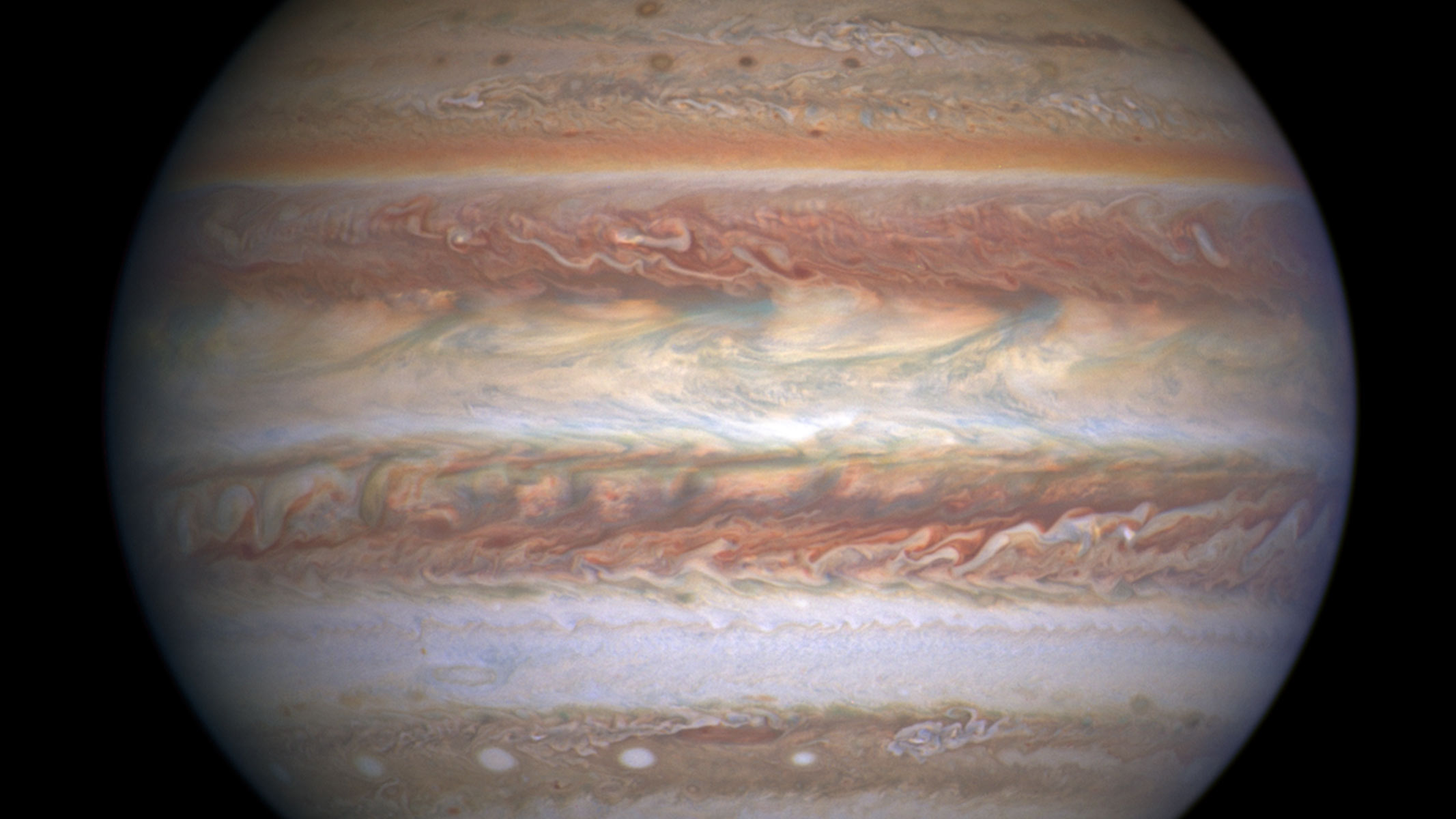
Jupiter at opposition, as captured by the Hubble Space Telescope in 2017. (Image credit: NASA, ESA, and M.H. Wong (UC Berkeley))
Can you tell the difference between a planet and a star? It’s easy — planets don’t twinkle because they are much larger disks rather than mere points of light. Planets are some of the most rewarding objects for a new telescope owner, and this season is all about Jupiter and Saturn. Through late December 2025 and into January 2026, the giant planet is blazing in the night sky; on Jan. 10, 2026, it reaches opposition, when Earth is directly between Jupiter and the sun. That’s when it’s closest, largest and brightest in our sky.
You don’t need to hit that exact date – a few weeks either side is fine. Step outside in the early evening, look east for the brightest “star” that doesn’t twinkle (clue: it’s close to the “twins” of Gemini, Castor and Pollux), center it in the finder, then put it in the 25mm eyepiece. Once you’ve got a clean, sharp disk, swap to the 10mm eyepiece. You may see one or two dark cloud bands and up to four tiny moons — Ganymede, Callisto, Europa and Io — lined up beside the planet. Since it’s close to opposition, Jupiter is “up” all night in January.
Saturn is the other planet on show, but you should try to catch it early in the evening. It’s lower and fainter than Jupiter, hanging in the southwestern sky shortly after sunset, but even a modest telescope will show its iconic ring pattern (currently edge-on). As with Jupiter, locate it using the red dot finder and the low-power eyepiece before swapping to high-power. With steady seeing (astro-speak for a lack of turbulence in Earth’s atmosphere), you may spot Titan, Saturn’s largest moon, shining nearby.
Well-known targets in the Northern Hemisphere
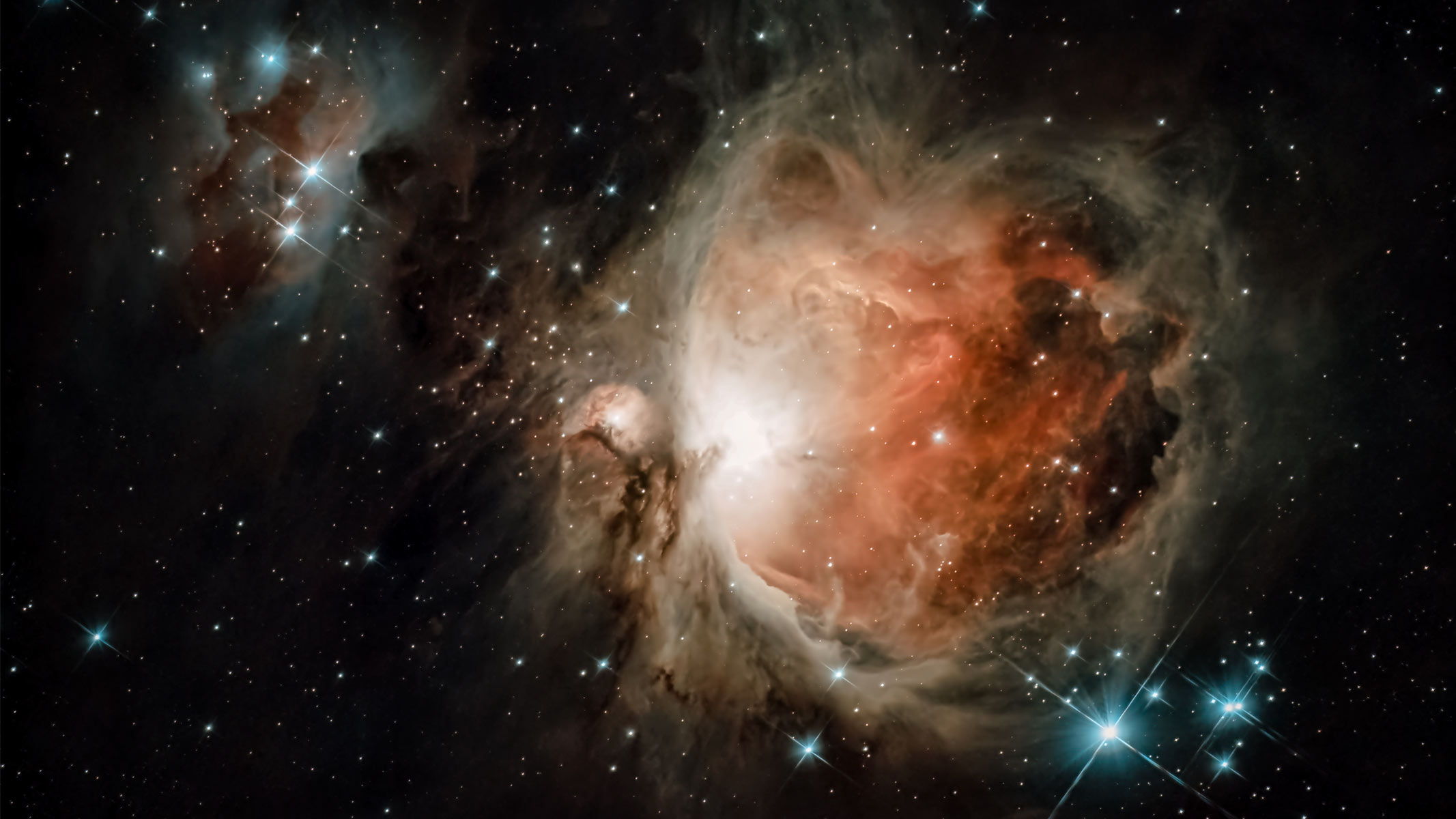
The Orion Nebula is unmissable in December and January. (Image credit: Getty Images)
The winter night sky north of the equator has many classic sights ideal for first-time telescope users:
Orion Nebula (M42) in Orion
The Pleiades (M45) open cluster in Taurus
Double Cluster (NGC 869 and NGC 884) in Perseus
Beehive Cluster (M44) in Cancer
Crab Nebula (M1) in Taurus
Andromeda Galaxy (M31) in Andromeda
Well-known targets in the Southern Hemisphere
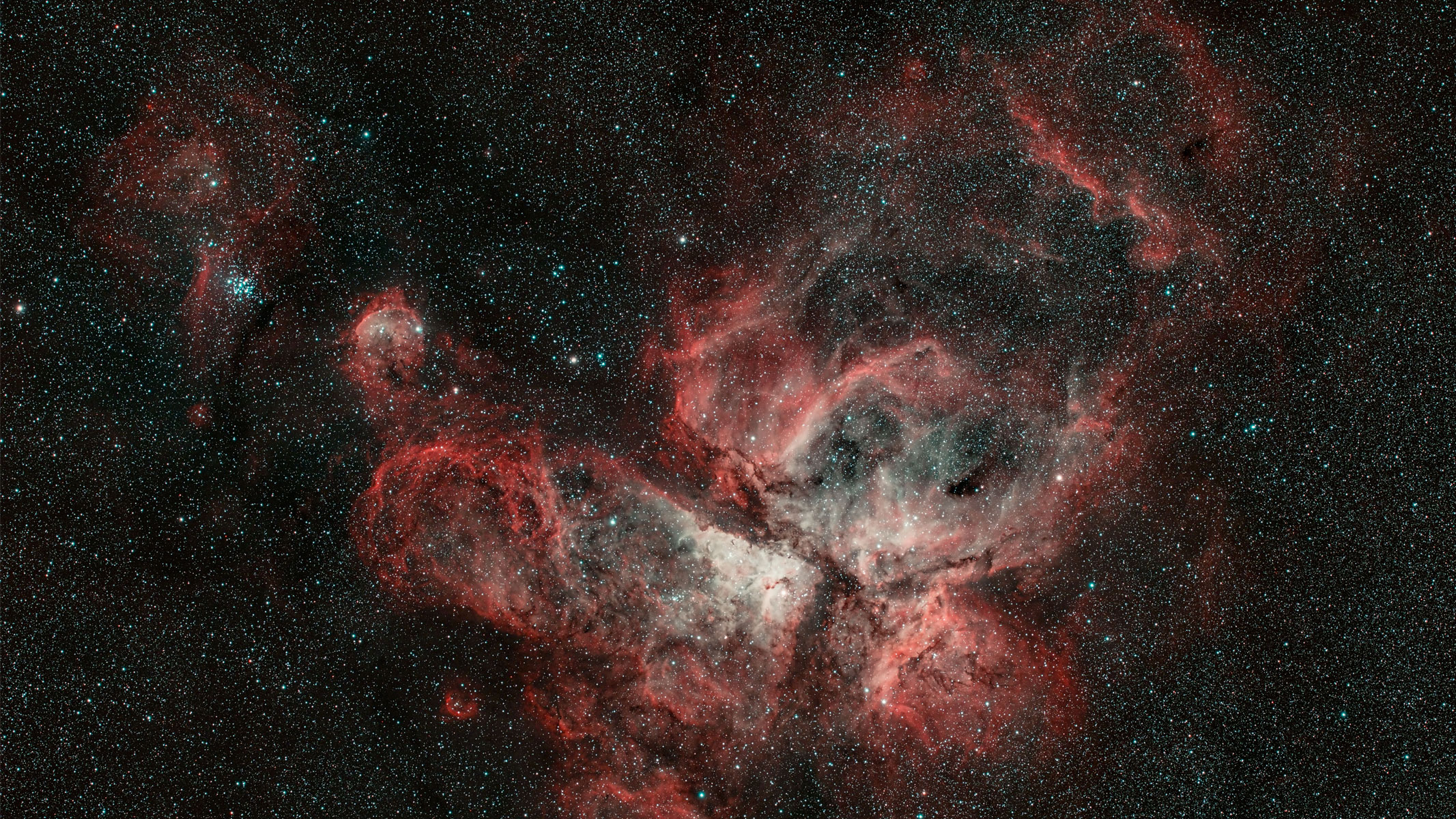
The Carina Nebula is at its best in December and January in the Southern Hemisphere. (Image credit: Getty Images)
If you’re under southern skies, the same December-January period has its own list of showpieces:
Orion Nebula (M42) in Orion
The Pleiades (M45) open cluster in Taurus
Carina Nebula (NGC 3372)
Southern Pleiades (IC 2602)
Large Magellanic Cloud (LMC) and Small Magellanic Cloud (SMC)
Omega Centauri (NGC 5139)
Where to point your telescope at next
You’ve used your telescope for the first time. You’ve seen the moon up close (what a sight!) and how it changes phase, watched Jupiter at opposition and ticked off a handful of bright star clusters and spectacular nebulae. That’s an incredible way to begin, but don’t rush the next part. Spend time gradually building up your knowledge and experience, taking advantage of any clear nights — preferably the dark, moonless nights between the last quarter moon and the new moon. What begins as an overwhelming infinity of stars soon becomes a map — and with time, a landscape you know well — once you start observing it regularly through a telescope.