
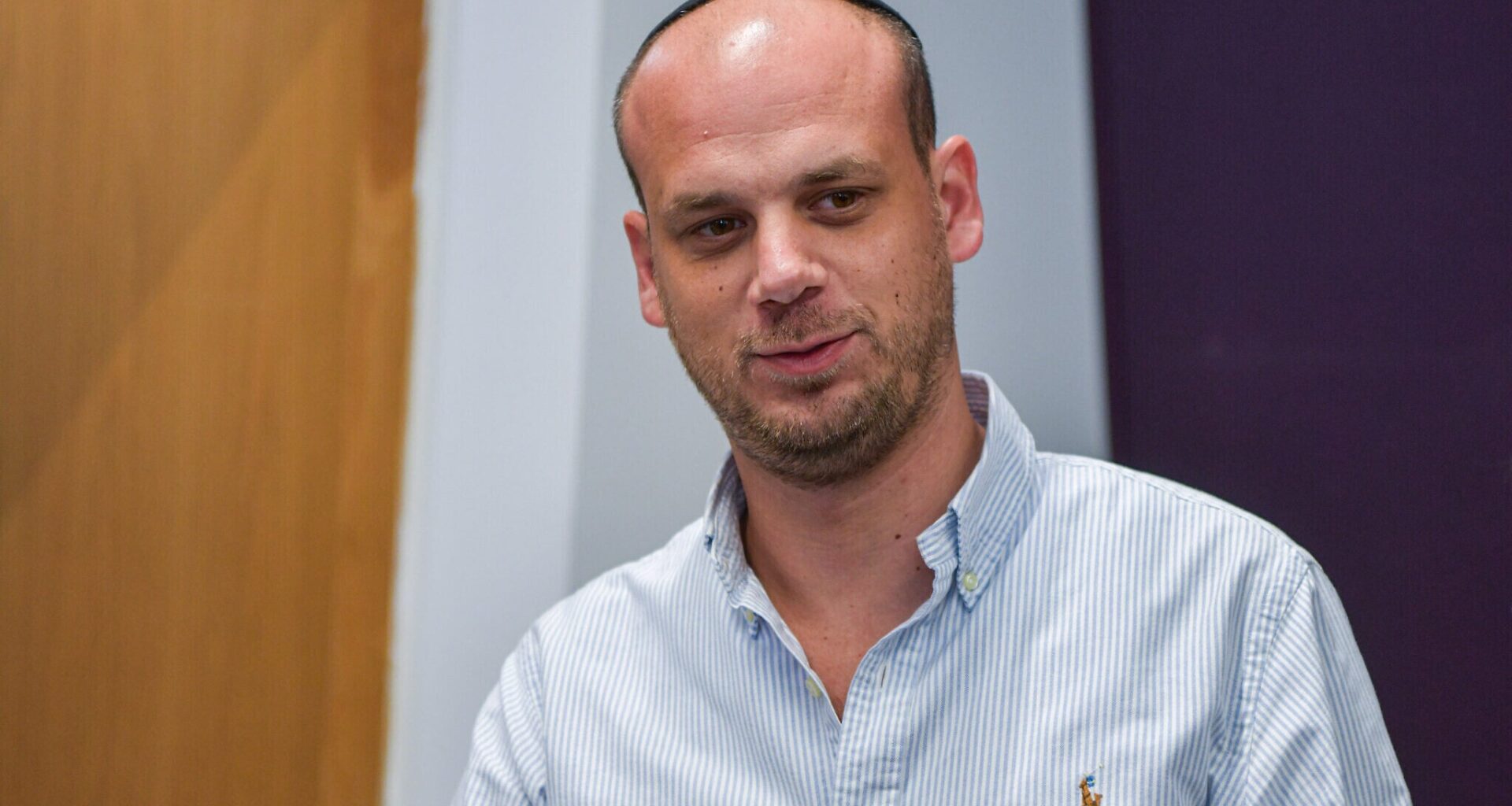
In a rare statement on Shabbat eve, Prime Minister Benjamin Netanyahu’s Likud party on Friday downplayed his ties to Eli Feldstein, after the ex-aide claimed that the premier was behind the leak of a stolen document containing classified intelligence.
The allegation against the prime minister was made during a three-part interview series that Feldstein conducted this week with Kan, which made significant headlines. Netanyahu had, to date, not been personally implicated in the so-called Qatargate probe, in which top aides have either been prime suspects or faced charges.
In the Qatargate affair, Feldstein and the prime minister’s top media adviser Jonatan Urich are suspected of taking money to spread pro-Qatari messaging to reporters, in order to boost the Gulf state’s image as a mediator in hostage talks between Israel and Hamas, all while in the prime minister’s employ.
Feldstein has been indicted for allegedly leaking classified intelligence to the German Bild daily for that purpose.
While Feldstein was widely known as Netanyahu’s spokesman for military affairs and regularly briefed reporters under that auspice throughout the war, Likud spokesman Guy Levy insisted in a Friday night statement that Feldstein was not actually the premier’s spokesperson.
Get The Times of Israel’s Daily Edition
by email and never miss our top stories
By signing up, you agree to the terms
Levy asserted that Feldstein wasn’t even employed by the main bureau of the Prime Minister’s Office, but rather by the PMO’s director-general. The Likud spokesperson didn’t explain the difference between the offices. Levy said Feldstein was later transferred to the PMO’s National Public Diplomacy Directorate, where he worked as an external consultant.
This was a departure from the initial claim from Netanyahu’s office after Feldstein’s arrest, which stated that he had never worked for the premier at all.
For roughly three weeks after his November 2024 arrest, Feldstein avoided implicating Netanyahu or Urich in the Bild leak, insisting that he had acted on his own. But after the premier’s office did not come to his defense, Feldstein revised his account, telling interrogators that he was acting at the direction of Netanyahu and Urich.

Eli Feldstein, a former media adviser to Prime Minister Benjamin Netanyahu and one of the suspects in the so-called Qatargate investigation, and a defendant in the Bild leak scandal, speaks to the Kan public broadcaster in an interview aired December 23, 2025. (Screenshot: Kan)
Netanyahu’s office also flip-flopped in its position on Feldstein. After initially distancing itself from him, when it became clear that the aide had in fact been close to Netanyahu, the PMO shifted to calling him a “patriot.” But since he implicated the prime minister and Urich, Netanyahu’s office has turned on him, accusing him of lying and insisting that the premier and his other staffers did not know about any illicit activity.
Feldstein began working for the PMO under Urich shortly after Hamas’s October 7 onslaught. In April 2024, though, he failed his security clearance. Feldstein told Kan this week that this was over his acknowledgment of having once used soft drugs.
Feldstein said Urich still wanted him to work for Netanyahu, so he arranged an external payment scheme whereby an American consultant would regularly funnel him cash. That consultant was Jay Footlik, who is also registered as a foreign agent for Qatar under the US Foreign Agents Registration Act (FARA).
Feldstein claimed in the Kan interviews that he was not aware of Footlik’s ties to Qatar or that Urich was allegedly using him to promote pro-Qatari messages in the media.
While Feldstein was photographed several times throughout the war alongside Netanyahu at high-level security meetings — including after he failed his security clearance — Levy wrote on Friday that Netanyahu “almost never came in contact with [Feldstein], didn’t include him in discussions and certainly didn’t let him into classified meetings and discussions.”
The Likud statement also denied that Netanyahu had paid fealty to Qatar, and said the so-called Qatargate investigation into his former aides’ ties to the Hamas-backing Gulf state should be dubbed “Qatar-fake.”
The statement also came after i24 published correspondence between Feldstein, Urich and another top Netanyahu aide, Yisrael Einhorn, leading even some Netanyahu allies to support the criminal investigation against the three for allegedly receiving payments to promote Qatar’s image as a mediator during the war in Gaza.
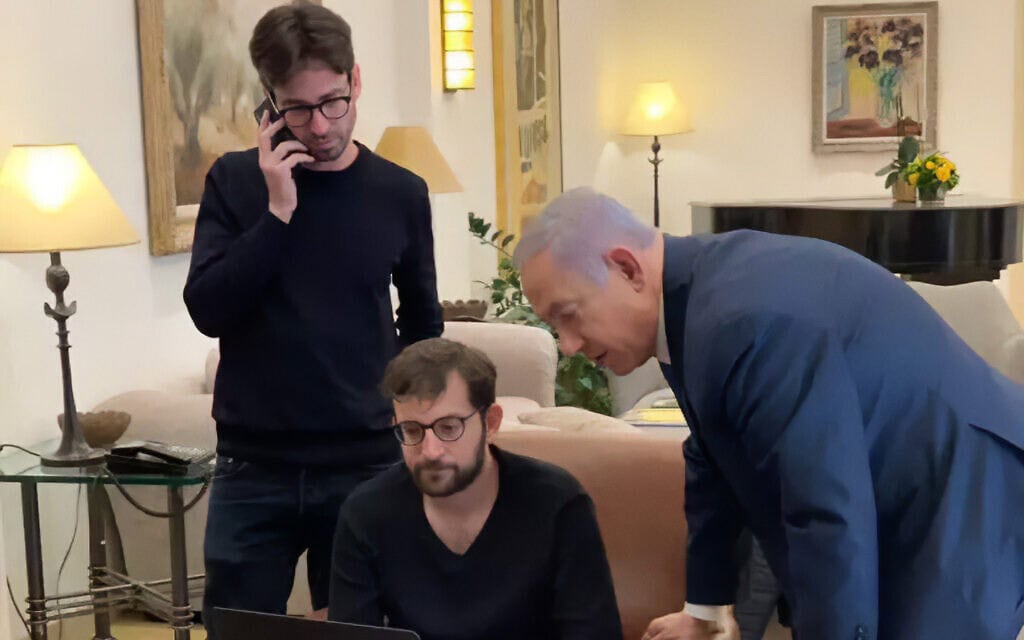
Aides Yisrael Einhorn (left) and Jonatan Urich (center) with Prime Minister Benjamin Netanyahu in 2019. (Courtesy/ File)
“The prime minister rejects with disgust the attempts to attribute foreign influence or illegal actions to him,” Levy said. He wrote that Netanyahu had, from the start of the war, issued “harsh statements” against Qatar despite the objections of “officials in the security establishment and left-wing journalists that he is ‘endangering the hostages.’”
Qatar, in turn, had criticized Netanyahu in official statements “time after time,” Levy wrote.
According to Levy, this contrasted with the “widespread ties” between Qatar and former IDF officers, prominent left-wing figures, and the Hostages and Missing Families Forum — the organization that represented most of the families of people abducted in the Hamas-led onslaught of October 7, 2023.
Levy did not mention that Netanyahu’s top aides had also hailed Qatar’s role as a mediator throughout the war, and that the premier himself had made a point to characterize the Gulf country as “complex,” as he came under criticism from opposition lawmakers over his previous approval of Qatari funds to Gaza.
The Times of Israel published documents last year revealing how Netanyahu and his top aides sought out and expressed appreciation for the monthly Qatari cash payments to Gaza in the years leading up to the October 7 attack, as they believed that the funds were essential in preventing a humanitarian collapse in the Strip.
Critics argued that the payments were part of a broader strategy to boost Hamas at the expense of the more moderate Palestinian Authority in the West Bank, which backs a two-state solution — a framework that Netanyahu has long opposed.
The Friday Likud statement also noted that Netanyahu had ordered an Israeli airstrike on Qatar this past September, targeting Hamas’s leadership — an operation that Netanyahu later apologized for under pressure from US President Donald Trump.
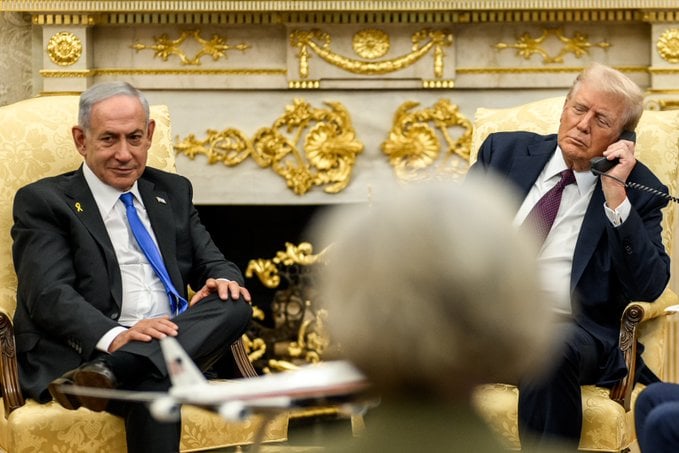
President Donald J. Trump hosts a trilateral phone call with Prime Minister Benjamin Netanyahu of Israel and Prime Minister Mohammed bin Abdulrahman bin Jassim Al Thani of Qatar in the Oval Office, September 29, 2025. (The White House)
As for Urich — whose legal fees are reportedly being covered by Likud — “the court has already clearly ruled that there is no crime and no scandal,” Levy claimed.
He appeared to be referring to the Rishon Lezion Magistrate Court, which has at least five times ruled in favor of Urich on procedural matters related to the case, only to have those decisions overturned by the Lod District Court — most recently last week, when the higher court extended a ban on Urich returning to work at the PMO as the investigation continues.
Levy accused the media of reporting extensively on the Qatargate scandal this week as a means to distract the public, just as “actually serious cases are blowing up.”
One of those cases, according to Levy, was former Military Advocate General Yifat Tomer-Yerushalmi’s leak of footage purporting to show IDF troops abusing a Palestinian inmate, “and the blood libels against IDF troops that have caused immeasurable damage to the State of Israel.”
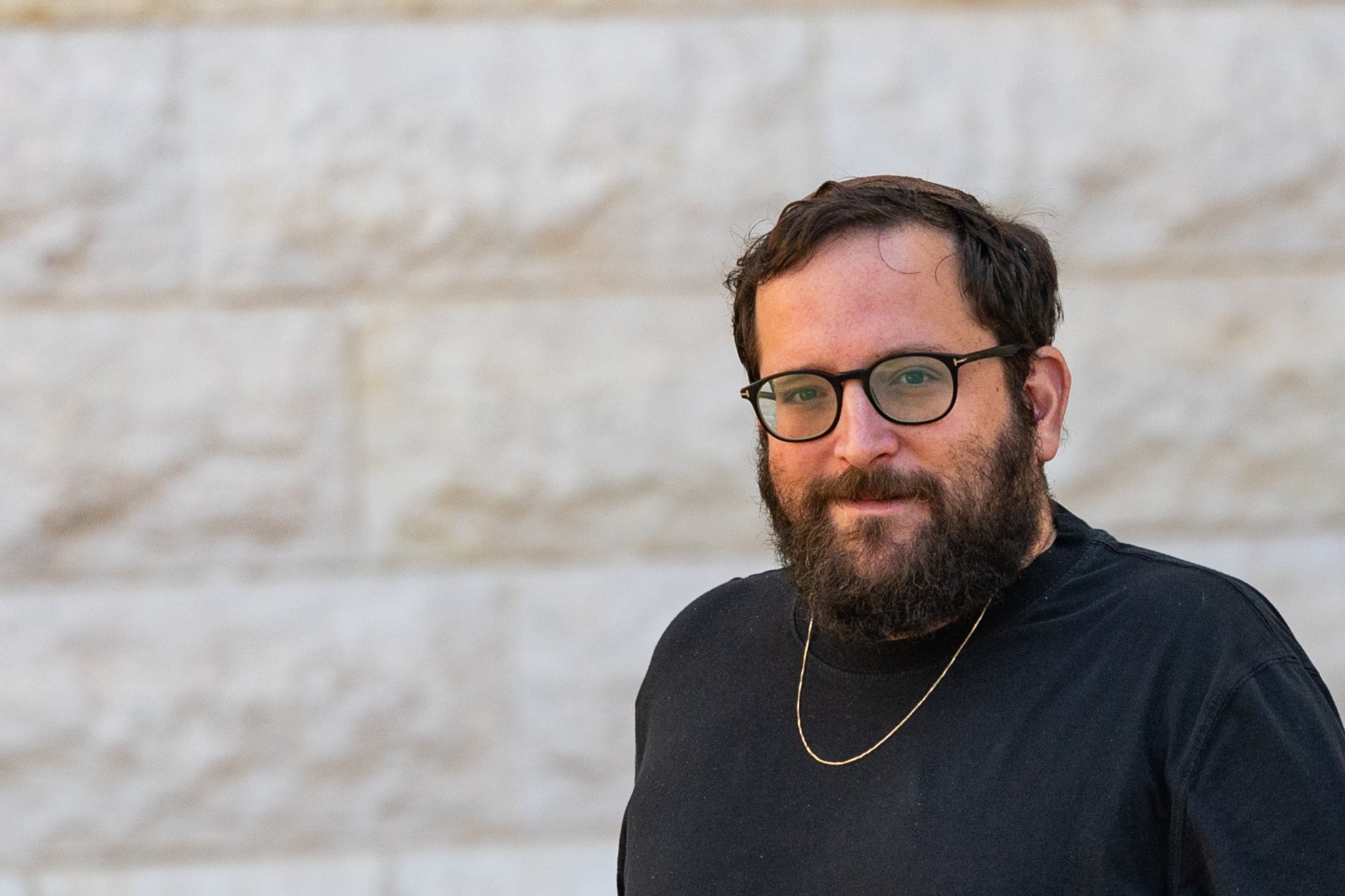
Jonatan Urich seen after a court hearing at the Supreme Court in Jerusalem, October 27, 2025 (Chaim Goldberg/Flash90)
The other case, per Levy, was “the Iranian hacking of Naftali Bennett’s phone.” The former premier has said only his Telegram account was compromised, not the device itself.
Levy separately took aim at Bennett, claiming that as prime minister in 2022, he let then-Shin Bet chief Ronen Bar travel to Qatar “as a guest of honor of the Emir of Qatar.”
Bennett, who is Netanyahu’s main political challenger, said after the latest revelations in the Qatargate case that it represents the “most serious act of treason in Israeli history” and that Netanyahu must resign.
Netanyahu’s critics were already blasting his positions on Qatar before the Qatargate investigation, pointing to the long-time premier’s policy of letting Qatar give Hamas millions of dollars in cash on a monthly basis for years leading up to the October 7 onslaught that sparked the war in Gaza.
Netanyahu has defended the policy and said the funds go to civil servants’ wages rather than Hamas’s military activities. Intelligence assessments have indicated that some of the funds did help Hamas build up its military capabilities over the years.