
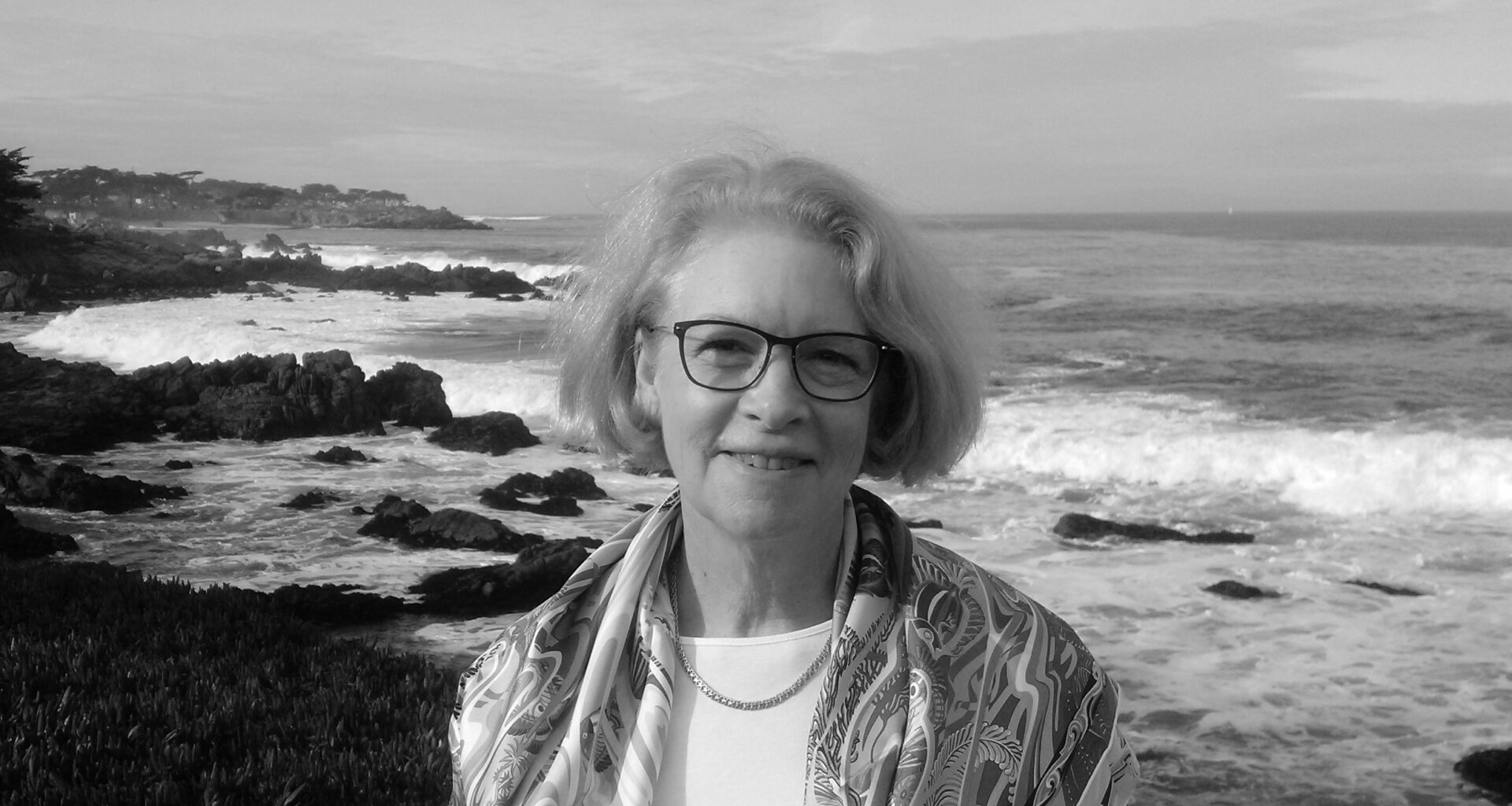
Much of the global ocean lies beyond national borders, where governance long lagged behind industrial expansion and responsibility thinned with distance from shore.Kristina Maria Gjerde helped reframe that problem as one of law and institutions, combining science, legal craft, and persistence to make protection of the high seas politically workable.Over two decades, she built and sustained coalitions that turned scattered warnings about deep-sea damage into a binding international framework.That effort culminated in the 2023 High Seas Treaty, an agreement whose force lies less in sudden ambition than in the accumulation of careful, patient work.
See All Key Ideas
Half the planet lies outside any country’s border. In those waters, rules have long been thinner than the myths: freedom to fish meant freedom to take; “out of sight” became “out of mind.” The deep ocean and the high seas were treated as a backdrop to coastal concerns, even as they stored carbon and heat, generated oxygen, and held most of Earth’s living space.
The legal problem was not a lack of treaties so much as a lack of fit. Shipping, fishing, mining, and conservation each lived in their own institutional compartments, with mandates that rarely added up to stewardship. The further from shore one went, the more governance faded into procedure: meetings, footnotes, and a slow erosion of responsibility. Changing that required someone willing to take committee work as seriously as fieldwork, and to make diplomats care about places they would never see.
That someone was Kristina Maria Gjerde, a lawyer by training and an ocean advocate by vocation, who died today, December 26th, of pancreatic cancer. She was 68.
For much of her career Gjerde worked through the International Union for the Conservation of Nature (IUCN), where she became one of the most persistent architects of efforts to protect biodiversity beyond national jurisdiction. Admirers sometimes called her the “mother of the high seas.” The phrase was affectionate, but also descriptive: she helped raise an idea from an obscure concern into a mainstream obligation.
Gjerde’s focus sharpened as industrial activity pushed deeper and farther offshore. Bottom trawling flattened ancient coral systems in minutes. Interest in seabed minerals promised a new wave of disturbance before earlier damage had been fully understood. She argued that the high seas should not be governed by the absence of rules, but by precaution, assessment, and restraint. Freedom, in her view, required conditions: monitoring, prior evaluation, and a duty to avoid significant harm.
Her effectiveness came from an unusual fluency across domains. Trained in law, she made a point of learning the science well enough to translate it accurately, without diluting its force. She worked closely with oceanographers, ecologists, and technologists, helping turn emerging knowledge into material that could withstand legal scrutiny and political bargaining. Where others treated biodiversity as an appeal to conscience, she treated it as a governance problem with mechanisms that could be used.
What distinguished Gjerde most clearly, however, was endurance. She understood that progress on the high seas would be made not through declarations but through process: agenda-setting, draft text, technical workshops, and years of repetition in rooms where attention was scarce and compromise the only currency. She became adept at moving between institutions that rarely spoke to one another—linking marine science to legal standards, and legal standards to political feasibility. Over time, she earned a reputation for being both principled and workable, someone who knew when to press and when to reframe.
Peter Thomson, the UN Secretary-General’s Special Envoy for the Ocean, captured that approach by describing her pursuit of ocean protection as “calmly reasoned” and her dedication as unwavering, even through the long hours of multilateral negotiation. It was an apt description of a career spent persuading governments to take responsibility for places beyond their borders, and to do so before damage became irreversible.
Her greatest public milestone was also, in some ways, her most patient one: the long campaign that culminated in the 2023 UN Agreement on Biodiversity Beyond National Jurisdiction (the BBNJ agreement, often called the High Seas Treaty). Beginning in the early 2000s, she worked to turn what had been a loose constellation of scientific warnings and NGO concerns into something negotiable. That meant building coalitions broad enough to matter, yet disciplined enough to endure as talks stretched on and priorities shifted.
Those efforts produced the High Seas Alliance and the Deep Sea Conservation Coalition, coalitions built for the unglamorous work of aligning NGOs, scientists, and states around a text that could survive contact with geopolitics. They provided continuity where the diplomatic calendar did not, keeping evidence, arguments, and pressure aligned as negotiations stalled and resumed.
Chuck Fox, executive director of the ocean philanthropy Oceans5, later credited Gjerde with giving the campaign its early momentum, saying she “started the campaign to protect biodiversity on the high seas” when few others were focused there. Two decades on, that early insistence had hardened into a binding treaty. Its adoption reflected not a sudden shift in political will, but the accumulation of groundwork she had helped lay: frameworks tested, alliances maintained, and objections answered again and again.
 Kristina in a Deep-Ocean Exploration and Research (DOER) sub in Morro Bay, California.
Alongside her policy work, Gjerde taught international marine law, including at the Middlebury Institute of International Studies, drawn to the practical challenge of preparing students for institutions that reward patience more than idealism. She believed governance could improve if people understood how it actually functioned. The classroom, for her, was another place where long-term change could be engineered.
The High Seas Treaty is set to enter into force on January 17th 2026. That date will arrive without her, but not without her fingerprints. For the high seas, which have always been good at swallowing evidence, that is a rare outcome.
Header image: Kristina Maria Gjerde. Image courtesy of the Deep-Ocean Stewardship Initiative (DOSI).
