
In a year marked by sweeping legislative changes, Indigenous youth across Northern Ontario launched a powerful resistance movement — one that spanned hundreds of kilometres, multiple rallies, and a growing online presence
From street protests in Timmins to a 700-kilometre walk to Queen’s Park, 2025 became a defining year for Indigenous youth across Northern Ontario as they mobilized against Ontario’s Bill 5 and the federal government’s Bill C-5.
The movement began to take shape in early June, after Bill 5 passed at Queen’s Park on June 4. Just two days later, Indigenous youth organizers led a protest in downtown Timmins, calling the legislation a direct threat to Indigenous rights and environmental protections.
Ontario’s Bill 5, the Protect Ontario by Unleashing Our Economy Act, allows the provincial cabinet to override provincial and municipal laws by designating “special economic zones.”
Bill C-5, the One Canada Economy Act, gives the federal cabinet the power to fast-track approvals for major projects — such as mines, ports, and pipelines — considered to be in the national interest, bypassing existing laws.
On June 6, youth including Katherine Jeremiah-Génier helped bring more than 100 people into the streets in a united show of resistance. Organizers said at the time the rally was only the beginning of a broader effort to hold governments accountable.
Later that month, a parallel movement was launched on the land itself.
Jeronimo Kataquapit, a 20-year-old filmmaker and post-secondary student from Attawapiskat First Nation, used his university savings to launch Here We Stand, a campaign aimed at reasserting Indigenous presence in the Ring of Fire and challenging narratives that the land is unused.
SEE: Filmmaker uses university fund to lead land defence journey in the Far North
On June 16, Kataquapit and his family started their roughly 20 kilometres journey by boat along the Attawapiskat River, planting community flags and tipi poles at culturally significant sites, including the confluence of the Muketei and Attawapiskat rivers — a location his parents had also marked years earlier to raise awareness about the Ring of Fire.
The journey was documented through drone footage and video storytelling, tools Kataquapit has developed over the past three years as a self-taught filmmaker. His first video, an eight-minute piece pairing aerial shots of the James Bay coast with a voiceover outlining concerns about the legislation, was viewed more than 47,000 times within a week. The Here We Stand Facebook page has since grown to nearly 2,000 followers.

Jeronimo Kataquapit. Supplied photo
By late June, youth organizers were preparing to take their message south.
On June 25, Jeremiah-Génier launched a GoFundMe to help Youth Rising Together — a coalition of Indigenous youth from across Northern Ontario — rent a bus and travel to Toronto. The goal was to camp at Queen’s Park from June 29 to July 2 and amplify northern voices in opposition to Bill 5.
SEE: Group raising money to bring call to kill Bill 5 on the road
Jeremiah-Génier said the trip was about showing solidarity with those who had already been maintaining a sacred fire at Queen’s Park.
On June 27, youth from across the region gathered again in Timmins, this time at Hollinger Park. Despite poor weather, dozens turned out, holding signs, sharing their concerns and calling the bill a violation of treaty rights and a threat to their future.
At that rally, Ramon Kataquapit — the founder of another Indigenous youth movement called Okiniwak — said the implications of the legislation extend beyond land use, striking at the heart of treaty relationships between Indigenous nations and the Crown.
SEE: ‘Upsetting and disheartening’: Northern First Nations youth call Bill C-5 a threat to their future
Youth Rising Together and Okiniwak announced they would co-lead the Queen’s Park campout.
In July, the movement took on a new and physically demanding form.
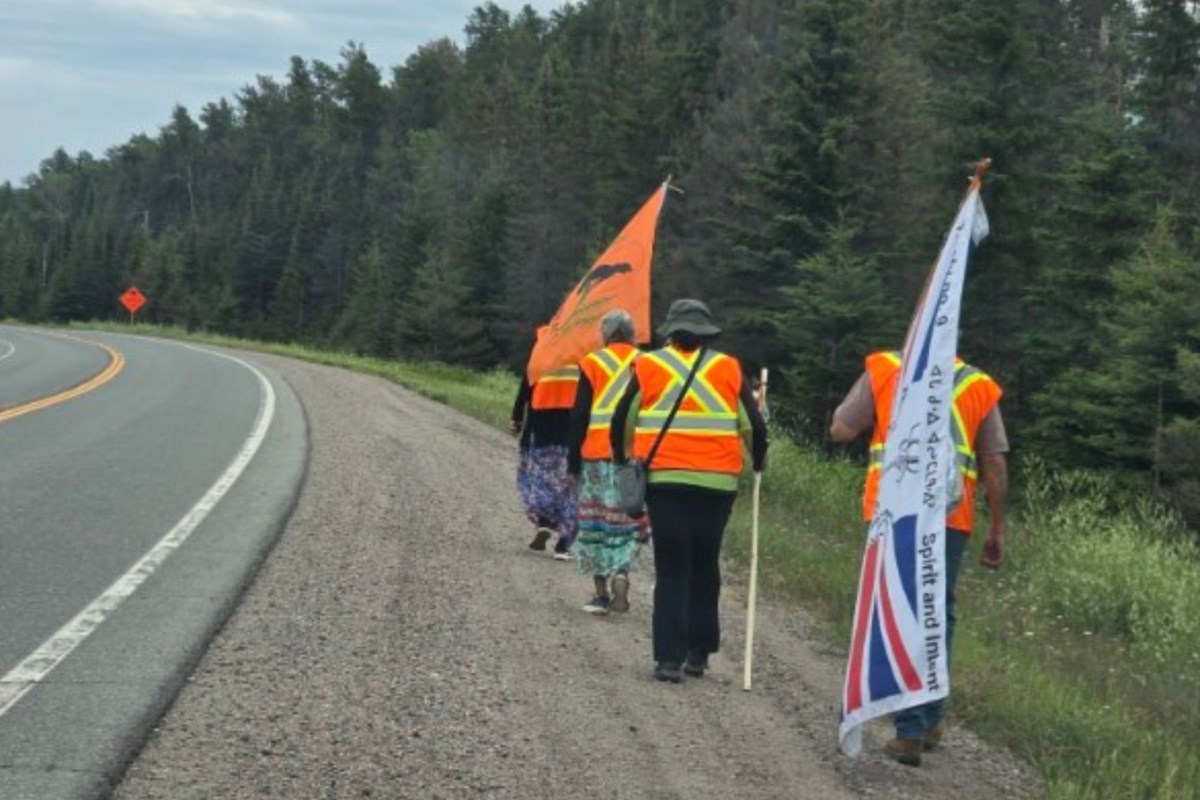
Tristan Ashishkeesh, who traces his roots to the Lawashi River in Attawapiskat First Nation, resigned from his position as executive director of the Ojibway Cree Cultural Centre to lead a more than 700-kilometre walk from Timmins to Toronto. Joined by Sage Iahtail, Craig Koostachin and Todd Spence, the group began walking on July 15, averaging 30 to 35 kilometres a day.
SEE: ‘Positive change’: Protestors walking to send message to governments
Ashishkeesh said his decision followed witnessing tensions between police and Indigenous youth at Queen’s Park on Canada Day. The walk, funded largely through personal savings, family support and a GoFundMe campaign, was meant to send a message to both provincial and federal leaders.
Along the way, the walkers faced mounting injuries and exhaustion. Koostachin was forced to leave the journey after doctors warned that muscle breakdown was affecting his kidneys and continuing could cause permanent damage.
On July 26, the walkers were joined by Youth Rising Together, Okiniwak and other Indigenous youth in North Bay for another rally against Bill 5 and Bill C-5.
By Aug. 6, the remaining walkers had reached Newmarket, with roughly 30 kilometres left to travel down Yonge Street. Two days later, on Aug. 8, they arrived at Queen’s Park, where more than 80 supporters gathered for a day of ceremony, song and education.
SEE: ‘Stand your ground’: Activist calls for Bill 5 protests to be escalated
The rally brought together youth organizers and leaders including Mushkegowuk Council Grand Chief Leo Friday, Deputy Grand Chief Amos Wesley and Attawapiskat First Nation Chief Sylvia Koostachin-Metatawabin, marking the end of the three-week trek.

Ontario Green Party supporters and members of Garden River First Nation stood outside Queen’s Park holding placards opposing Bill 5. Mushkegowuk Council
Momentum continued into the fall.
On Sept. 29, roughly 200 people filled the Isabel Bader Centre for the Performing Arts in Kingston for Standing for the Land: Taking on Bill 5, a four-day series organized by local residents with support from Treaty 9 leaders.
SEE: Treaty 9 members bring Bill 5 resistance movement on the road
RELATED: ‘Youth keep getting stronger’: Fight against Bill 5 continues
Speakers included Indigenous land defenders, environmental advocates and community members raising concerns about Bill 5.

Roughly 200 people filled the Isabel Bader Centre for the Performing Arts in Kingston on Sept. 29 to hear from Indigenous land defenders and environmental advocates raising concerns about the recently passed bill. Marissa McGrath/TimminsToday
Kingston and the Islands MPP Ted Hsu attended, saying it was important to show support for Treaty 9 leaders who had travelled south.
Kataquapit spoke at the event, describing the movement as about both resistance and carrying forward generations of struggle and healing.
Ashishkeesh, who also attended the Kingston events, said the solidarity shown by residents was powerful and called on non-Indigenous allies to continue raising their voices.
By year’s end, Indigenous youth across Northern Ontario had made it clear their opposition would not be short-lived — or quiet.