
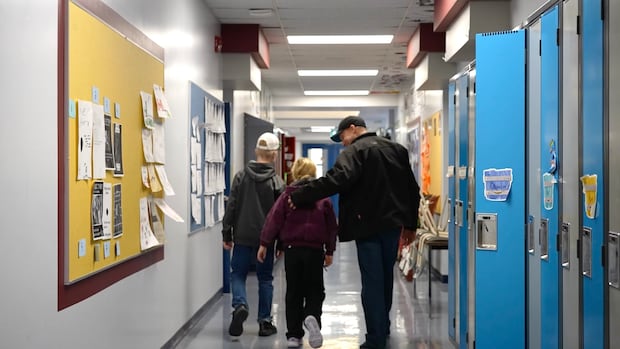
As Alberta’s urban schools grapple with overcrowded classrooms, rural schools can face the opposite challenge – not enough students to keep the school viable.
In the small hamlet of Byemoor, about 140 kilometres east of Red Deer, the local school has between 35 and 40 students. If enrolment falls below 35, the school could lose nearly half of its provincial funding.
Guy Neitz, board chair with Clearview Public Schools, says the potential for a funding cut puts the future of schools like Byemoor at serious risk.
“Our biggest concern with east central rural Alberta is declining student enrolment …we’re really worried that you hit one year where you trigger the threshold for one or two students, even though you have a viable school that’s supported by the community,” Neitz said.
Neitz said it would be hard to keep a small school like Byemoor open if it loses half its funding.
Clearview has written to Alberta’s education minister asking for changes to how rural schools are funded.
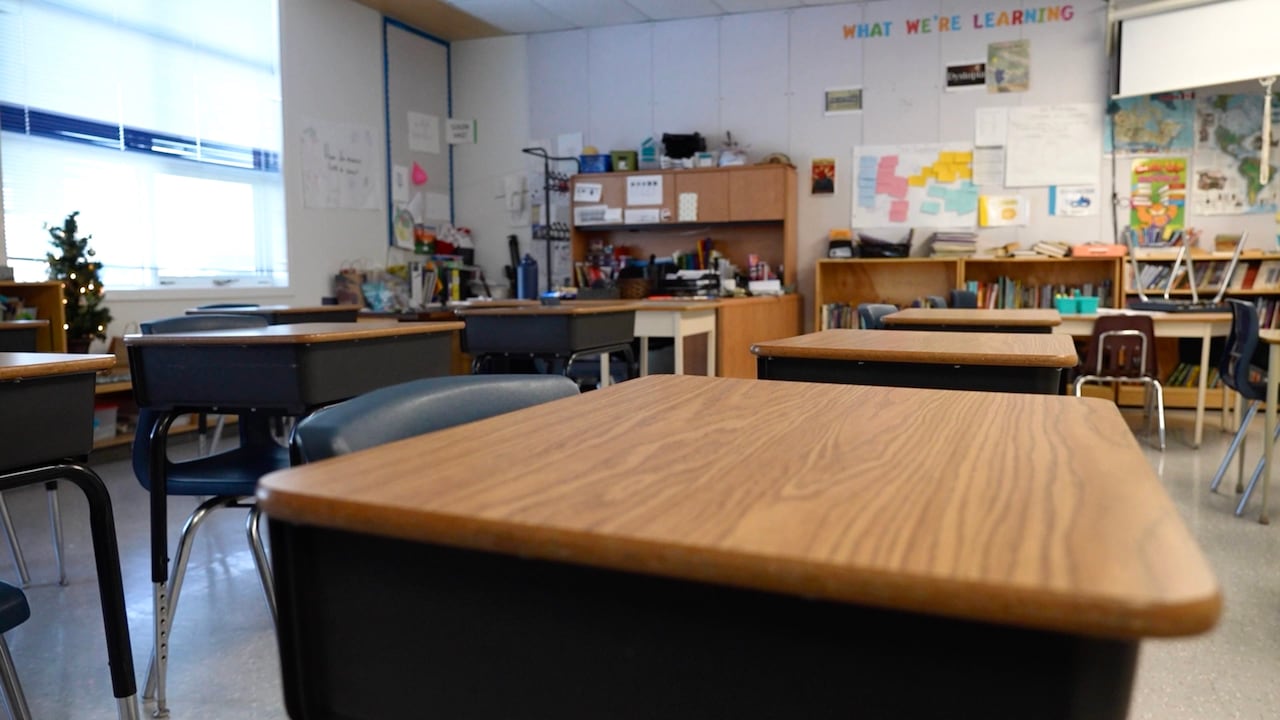 Byemoor school has around 35 to 40 students. If enrolment falls below 35, the school board said it could lose nearly half of its provincial funding. (Nadeer Hashmi/CBC)
Neitz says losing the school would mean longer bus rides for young children and the loss of a key community hub.
“It would essentially kill their community,” he said.
Scot Leys, superintendent of Clearview Public Schools said, rural schools’ importance to their communities can go beyond the classroom.
“They really are the piece that brings and draws these families together on a regular basis to spend time together, to visit together, to socialize together.”
He said the school is already operating with just four staff teaching multiple grades and has annual operating costs around $500,000. If enrolment drops below the threshold, funding would fall to roughly $240,000.
“We can’t afford the staffing levels that we’ve got,” Leys said.
Leys thinks province should reconsider other factors as well for the funding rules, particularly when alternative schools are far away.
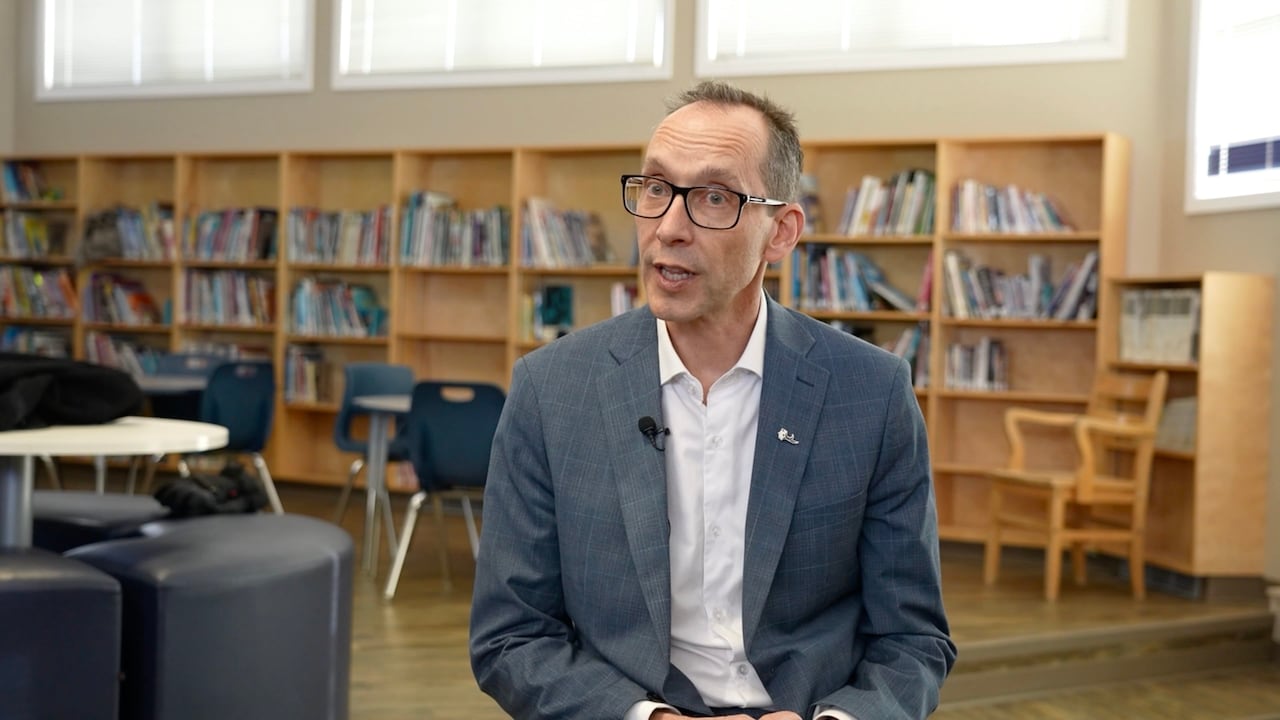 Scot Leys, superintendent of Clearview Public Schools, said the hard funding cutoff of 35 students doesn’t make sense for smaller isolated schools, and needs to incorporate other factors as well. (Nadeer Hashmi/CBC)
In an emailed statement, Garrett Koehler, senior press secretary for the Minister of Education and Childcare, said rural schools are essential to their communities and pointed to existing supports in the funding model.
“Alberta’s funding model includes extra supports like the Rural Small Schools Grant and the Geographic Grant to help keep these schools open,” Koehler said.
He said that schools with fewer than 35 students receive a block grant of $26,791 on top of base funding, amounts set after consultation with school boards. Additional operations and maintenance funding have also been added for the 2025–26 school year.
“Our goal is predictable, fair funding so rural students continue to get a high-quality education close to home,” Koehler said.
Population shift
Byemoor’s declining enrolment reflects broader population shifts in the community and surrounding areas. Most students come from farm families who had two to three generations going to the school.
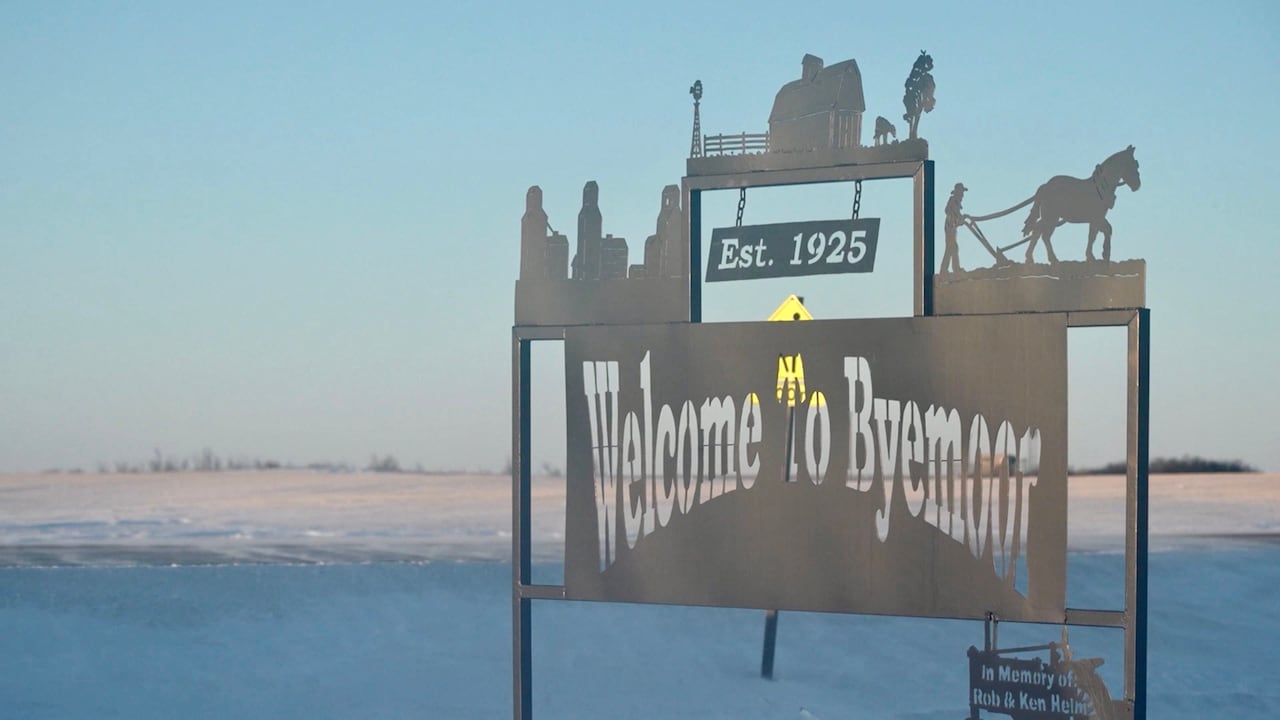 Byemoor, is a small hamlet about 140km east of Red Deer, and a population of around 30 people. (Nadeer Hashmi/CBC)
Maureen Mappin-Smith, a parent, farmer and former student, said as farms grew larger, fewer families remained, making it difficult for people to keep coming back to the community.
“There were 11 kids in my grade and I am the only one who came back to farm out of those 11 kids,” she said.
“There’s so much potential there that would be lost for our students, for our community, and it would be just horribly sad to lose that potential.”
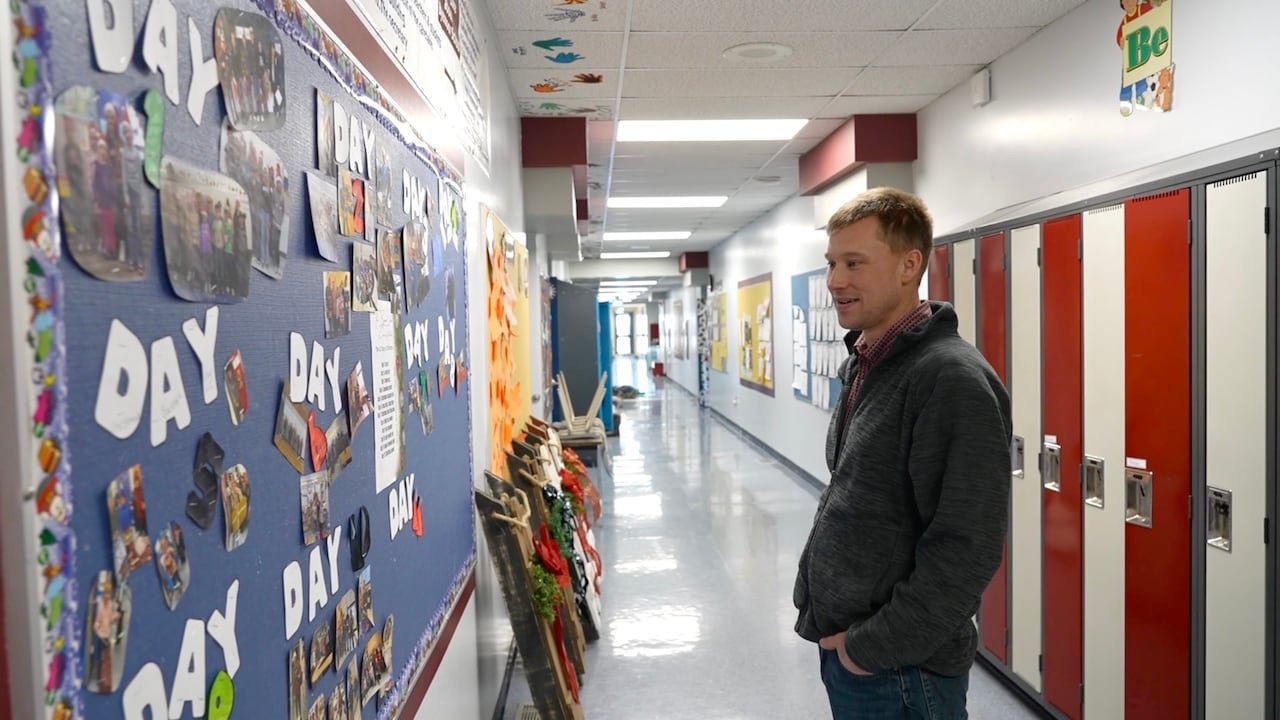 Kyle Sorensen, a parent and former student of Byemoor school, said students come to this school not just from the hamlet but also from surrounding farming families. (Nadeer Hashmi/CBC)
Parent Kyle Sorensen worries the loss of the school would ripple far beyond education.
“The biggest thing is the school leaves, the community leaves, and a lot of these small towns will end up dying,” Sorensen said. “And we need these small towns. There’s still people out here. But there’s just not as many of us.”
Though the hamlet of Byemoor has a population of around 30 people, Sorensen notes that the school includes students from several surrounding farming communities.
Rural challenges
Earlier this year, another rural school in Dixonville, northwestern Alberta, closed due to low enrolment. Other school boards, including Grande Yellowhead Public School Division, have also recently raised concerns with the province about rural funding thresholds.
Darryl Hunter, an education policy professor at the University of Alberta, says this is a relatively common occurrence across the Prairies.
“Rural education has been proven over and over again to be very valuable…but you have to have a certain number of students who are there in person,” he said.
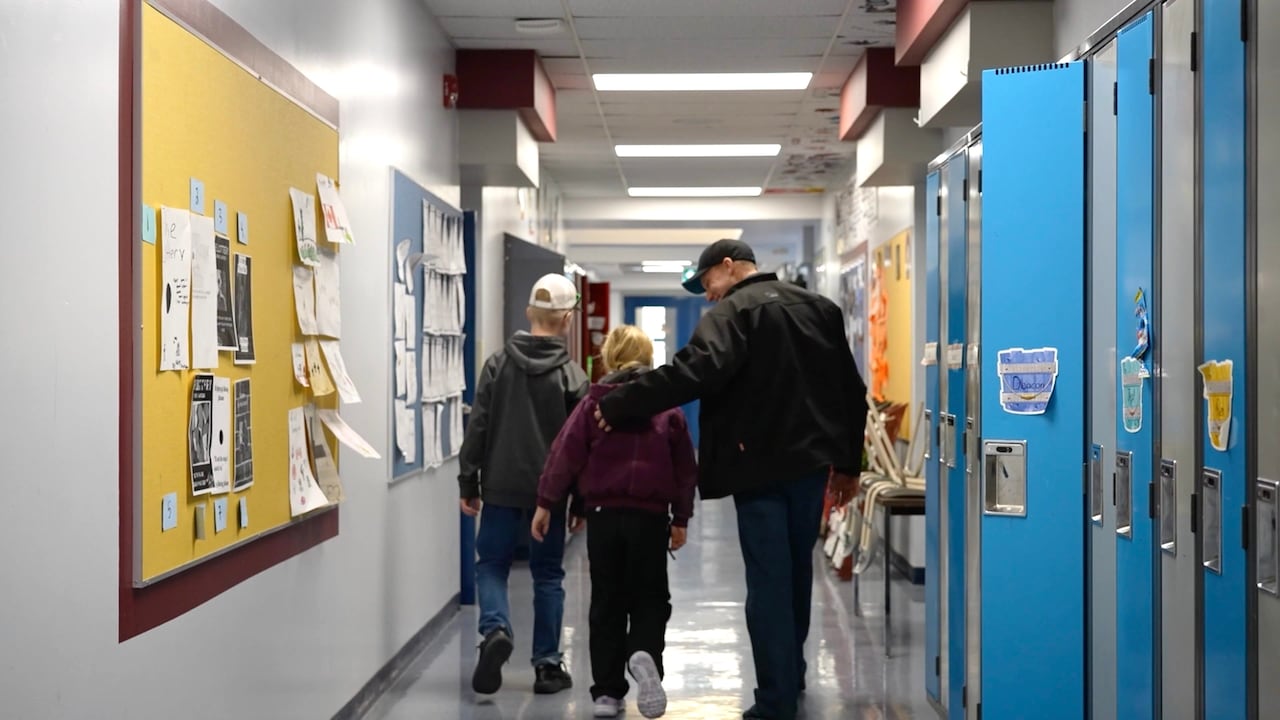 Kyle Sorensen is a parent and alumni of Byemoor School. He said losing the school would make the future of his rural community uncertain. (Nadeer Hashmi/CBC)
But he cautions against sudden changes that could destabilize students’ lives. If closure is inevitable, he said it needs to be carefully planned.
“I speak for some degree of stability in student lives so that they can have a high quality education and plan to change. I speak toward planned change,” Hunter said.