

Listen to this article
Estimated 4 minutes
The audio version of this article is generated by AI-based technology. Mispronunciations can occur. We are working with our partners to continually review and improve the results.
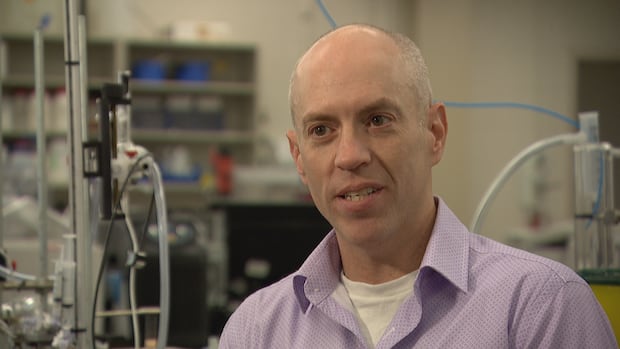
A New Brunswick biochemist says fish and humans have something in common — and it could change how we look at promoting heart health.
Tyson MacCormack, a professor in chemistry and biochemistry at Mount Allison University, says his research shows an amino acid called taurine plays a critical role in helping fish endure extreme conditions.
He discovered this while studying cuttlefish in Portugal and found they have a lot of taurine in their bloodstreams and hearts.
“When we looked into what it was doing in cuttlefish, we recognized that it was actually a really potent regulator of heart function,” said MacCormack.
“We found that taurine was protecting cuttlefish hearts from things like high calcium levels, which would be toxic to human hearts, and it allowed them to regulate the volume of their heart muscle … that’s really important in facilitating the pumping of blood.”
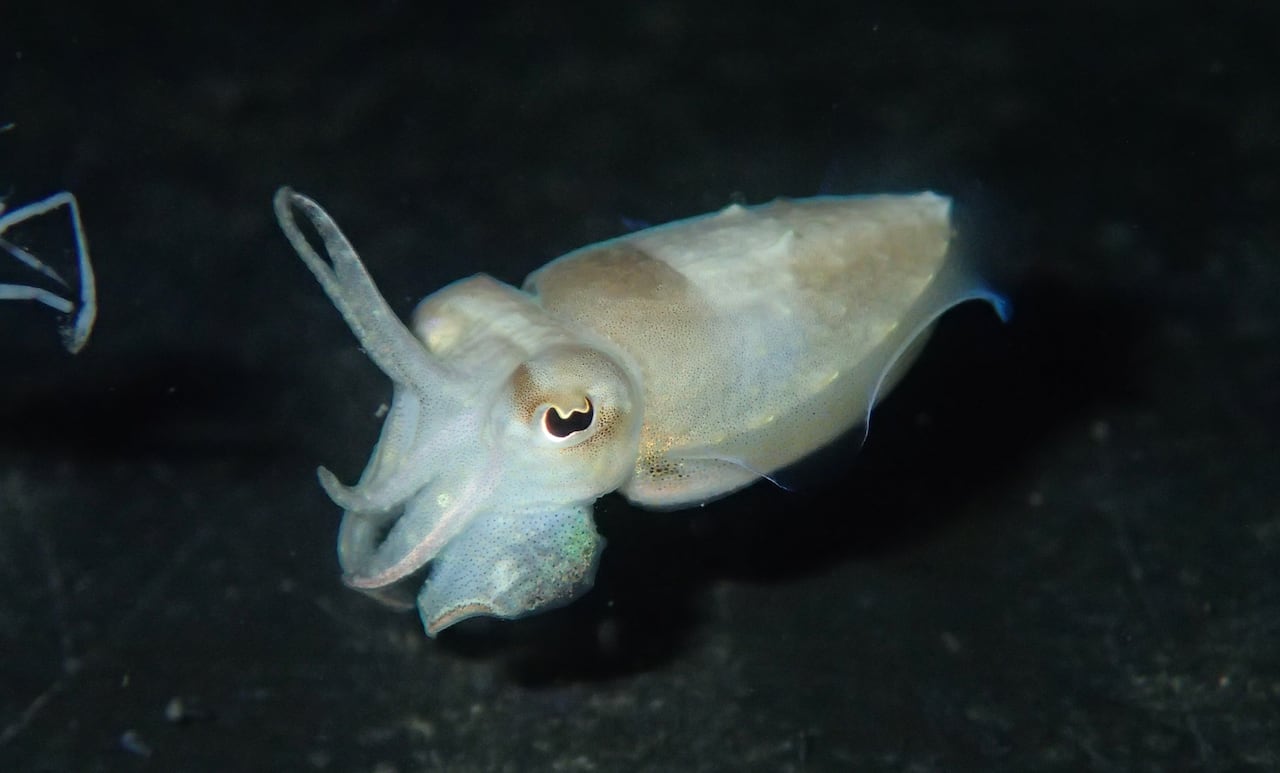 MacCormack first studied cuttlefish on a research trip in Portugal. That team of researchers found that cuttlefish have a lot of taurine in their bloodstream and heart and it protected the species from high calcium levels. (Ben Speers-Roesch)
Humans have smaller amounts of taurine in their hearts, which is found in their diets from eating fish and red meat. So, MacCormack wondered how this discovery might be applied to human heart health.
He brought that knowledge back to his lab in Sackville and began testing on New Brunswick-native fish, such as brook trout. MacCormack manipulates their diet and monitors their heart rate with the help of swim tunnel respirometers.
Kind of like a treadmill, fish are placed inside a tank where water flow can be manipulated to make them swim at different speeds. The fish’s oxygen consumption is then tracked.
WATCH | Look inside the lab where fish treadmills are used to understand how taurine affects heart health: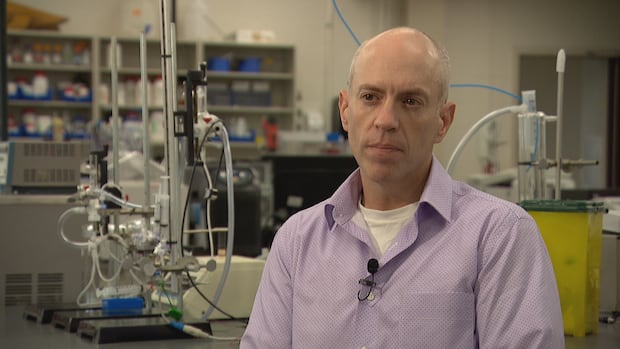
Biochemist explains how an amino acid can help reduce heart stress
While studying fish, a Mount Allison University biochemist discovered taurine could be the answer to a healthier heart in humans.
“We’re experimentally manipulating the concentration of taurine in their hearts to figure out why it’s important to function,” said MacCormack.
“It’s becoming apparent that a small change in diet that has an effect on how taurine gets into your heart can change the capacity of your heart to deal with stress.”
He said taurine is pumped up to the human heart with the help of a specific protein, which is responsible for moving other amino acids into the heart.
“The interesting thing about this is that if you increase the amount of those other amino acids that you’re taking in your diet, you can block taurine influx into your heart,” said MacCormack.
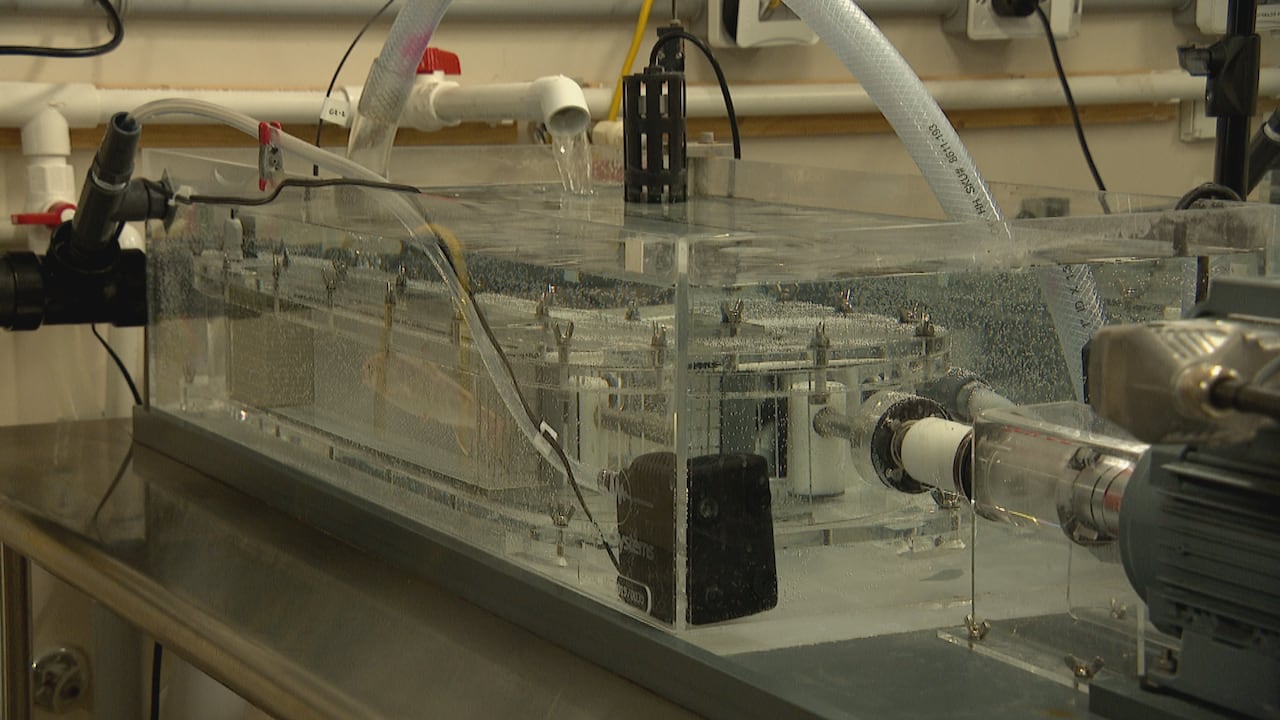 MacCormack and his team are currently using swim tunnel respirometers to understand the impact that a change in diet can have on fish heart health. (Pierre Fournier/CBC )
He said this research is leading his team to understand that even small changes in a human’s diet, with a focus on adjusting protein and amino acid intake, can either predispose someone to a heart attack or help to mitigate one.
MacCormack said the goal is to create a nutritional guideline to help people ensure their diet is helping their heart and to create a supplement pill for people who can’t get taurine from their diets.
“Vegans and vegetarians have the capacity to synthesize their own taurine, so that in itself is not a problem,” he said. “But if those individuals were to eat a diet rich in beta-alanine, [which] is a common pre-workout supplement, that could predispose them to taurine deficiency.”
The research project is being funded by the Natural Sciences and Engineering Research Council of Canada, New Brunswick Innovation Foundation, Research New Brunswick, the Heart and Stroke Foundation of New Brunswick and the Canadian Foundation for Innovation.
MacCormack said the next step in research is to take a non-invasive approach with testing this theory on rodents, by manipulating their diets and examining changes in behaviour.
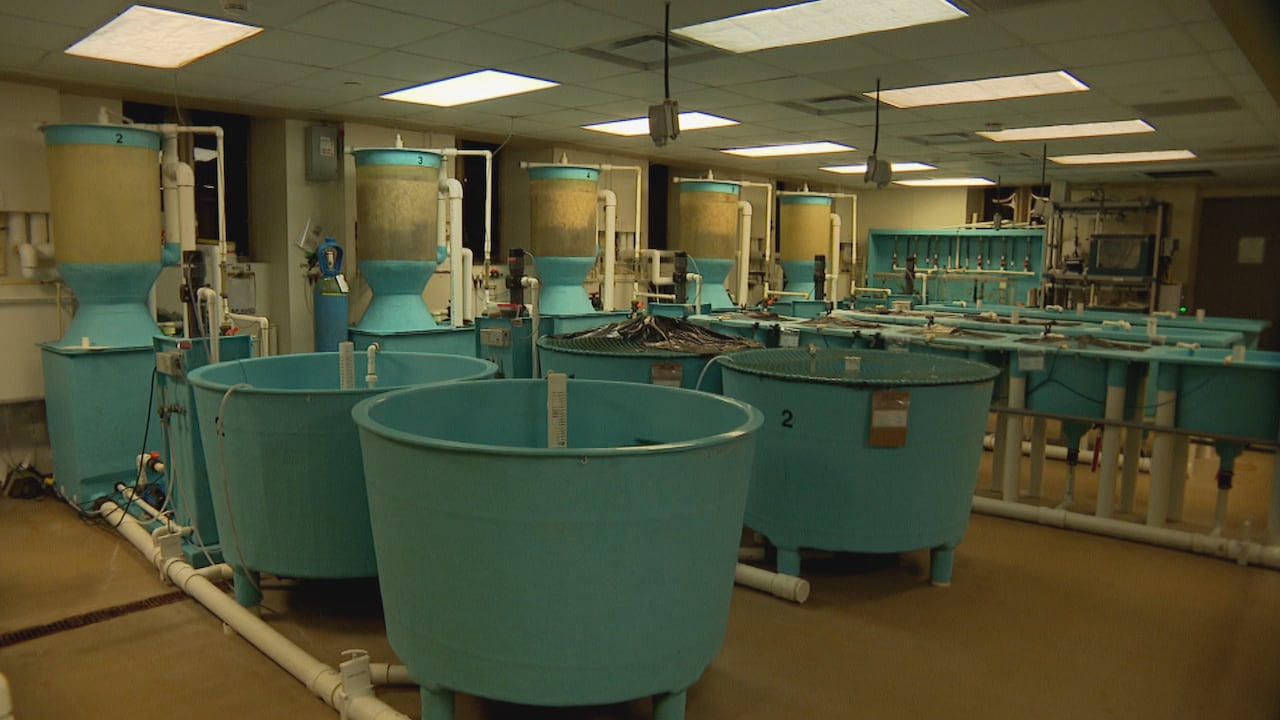 MacCormack said his team breeds brook trout for research in a space right below the lab. They spend most of their time swimming in large fish tanks. (Pierre Fournier/CBC )
He said this research could also help provide a solution to help fish cope through rising water temperatures because of climate change.
“What we’ve seen in our studies so far is that having the capacity to move taurine around is really important for those animals to support cardiovascular function and to tolerate those environmental stressors,” said MacCormack.
He said the idea is to create a feed formulation that could be supplied to the aquaculture industry.
“They could perhaps give it to their animals before a heat wave is predicted to come to better allow those cultured fish to survive.”