
The concept of using light as a weapon dates back over 2,000 years to ancient Greece, where commander Hippocrates used polished mirrors to set Roman ships ablaze.
For a long time, laser weapons were confined to science fiction, but that changed in the late 20th century with the development of working lasers in the 1960s.
In the late 1970s and 1980s, the US military began exploring practical uses for lasers. In 1999, the US Department of Defense recognized laser weapons as an important future capability and began specific research programs.
The first real-world use of a laser weapon happened in 2003 during US operations in Afghanistan, where a system was deployed to detonate explosives safely from a distance.
Progress has been slow due to power and cost constraints. However, recent technology advances have changed lasers from experimental tools into effective frontline capabilities.
As of 2025, the US, UK, Israel, Australia, and China are using laser weapons for air defense. This shows a shift in military strategy and an improvement in the efficiency of battle.
Here are the five biggest laser weapon developments of 2025, as reported by Interesting Engineering.
The US Navy’s SONGBOW program is developing what could become the world’s first 400-kilowatt shipboard laser weapon.
The system uses several 50 kW industrial laser units to create a single powerful beam that kills drone swarms, cruise missiles, and fast-moving threats from a long distance.
Australia’s EOS introduced Apollo, which is one of the cheapest and most efficient military lasers for defending against drones.
This system targets around 150 kW and can destroy up to 200 drones on a single battery charge. It offers 360-degree coverage and does not require traditional ammunition.
Israel has deployed the ‘world’s first’ combat laser called the Iron Beam system, a ground-based laser that can take down drones, rockets, and mortars in seconds.
Iron Dome is part of Israel’s air defense system, and it can intercept threats at a lower cost than missile-based defenses, especially during high-volume attacks.
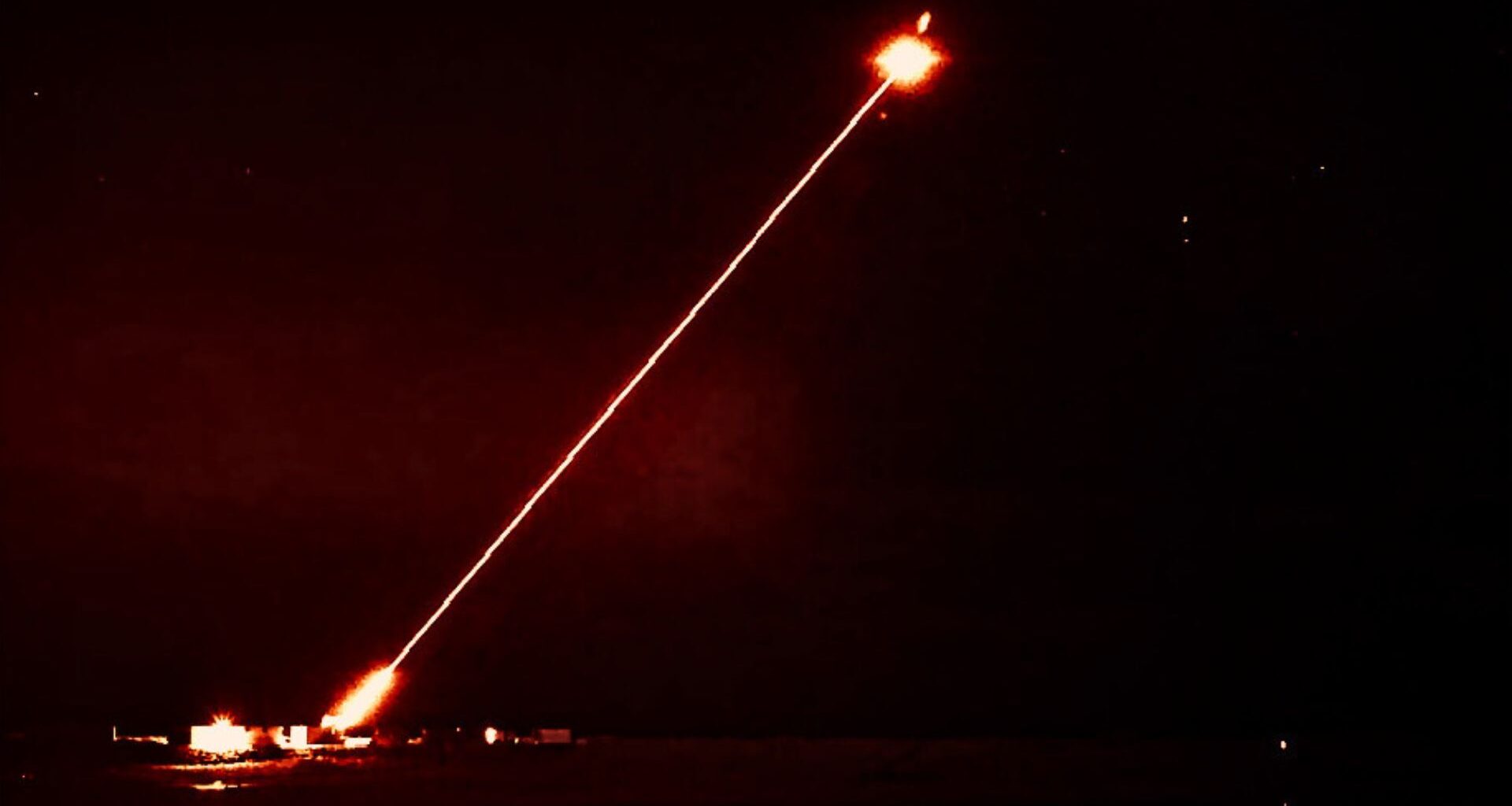
The United Kingdom tested and ordered its DragonFire laser. In the test, the laser shot down drones moving at speeds comparable to twice that of a Formula 1 car.
Each shot is estimated to cost about £10 (around $13), and the system is accurate enough to hit a coin-sized target at one kilometer, making it attractive for future Royal Navy and Army deployments.
China introduced its LY-1 laser system and claimed it can perform better than similar US systems, such as the ELIOS systems designed to target drones and low-flying aircraft.
Deployed on People’s Liberation Army Navy ships and tested on land, these lasers are part of a broader US–China arms race to field powerful, precise, and low‑cost directed‑energy defenses.
Together, these 2025 developments show that powerful, precise, and relatively inexpensive laser weapons are no longer futuristic concepts but are fast becoming standard tools for shooting down drones and other airborne threats.