

Listen to this article
Estimated 4 minutes
The audio version of this article is generated by AI-based technology. Mispronunciations can occur. We are working with our partners to continually review and improve the results.
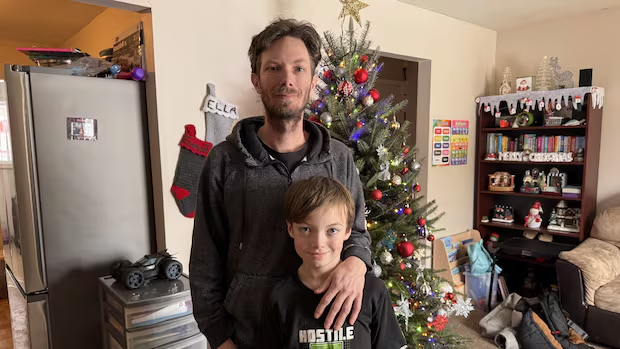
After waiting four years to get his son the support the family says he needs to navigate school with learning challenges, a father from London, Ont. is fighting to make equitable healthcare and education a fundamental right.
Richard Hackett, 41, started a petition earlier this month calling on Ottawa to recognize them under the consitution. Health and education are the responsibility of the provinces, however the father says there should be a minimum national standard to help families like his who have kids on long waitlists.
“We shouldn’t be in this mess,” said Hackett, noting the petition garnered almost 5,000 signatures in three weeks. “Everyone should have access to these services, if they need it right away. There should be no lists.”
Hackett’s son Austin, 8, was diagnosed with a learning disability and ADHD, and has been on a waitlist for a publicly funded occupational therapist since he was 4-years-old.
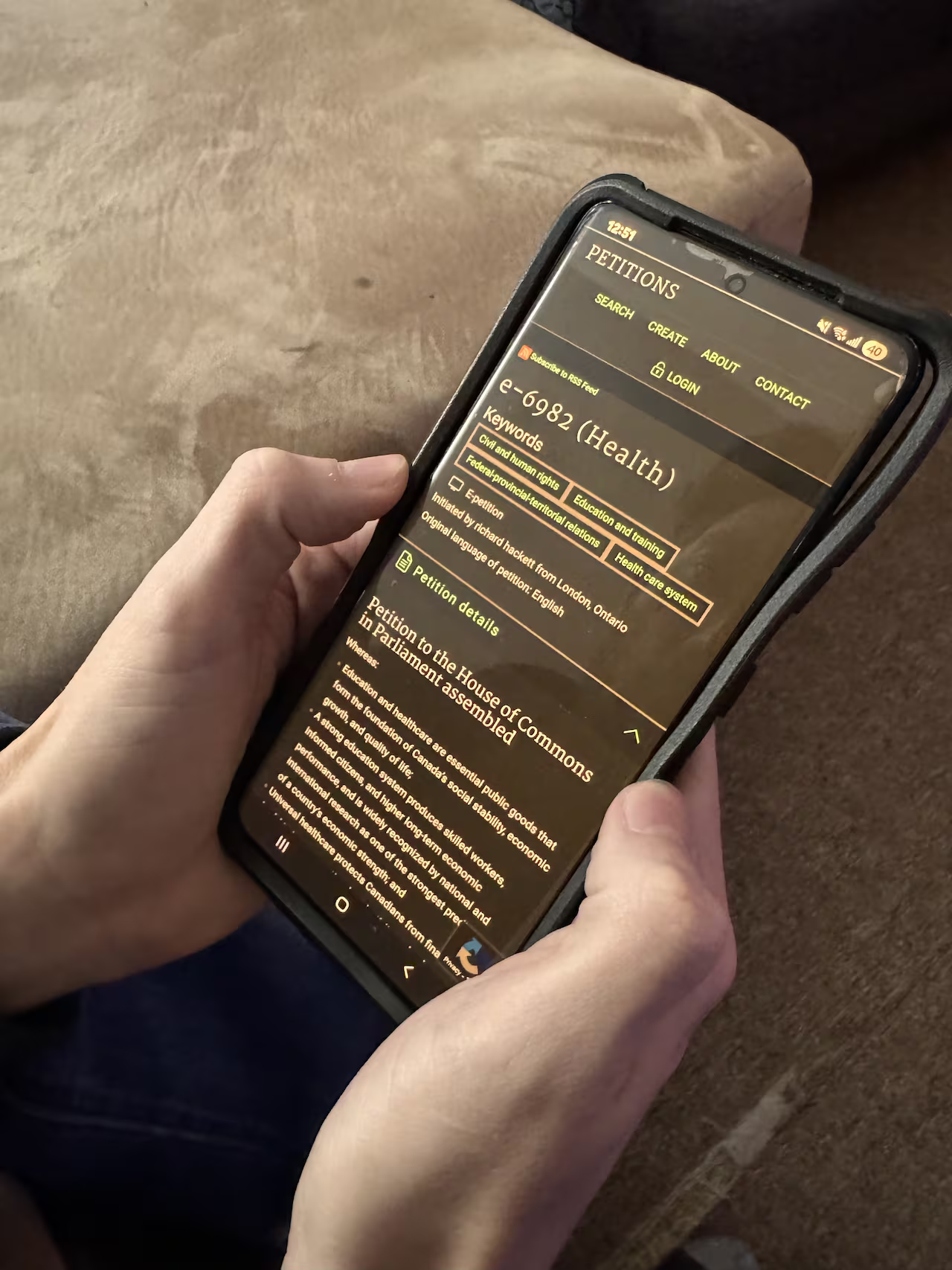 Richard Hackett, 41, started a petition on December 4th, calling for the government to recognize health and education as constitutionally protected rights. It has recieved 4695 signatures in three weeks. (Matt Allen – CBC News)
In Ontario, publicly funded occupational therapy services can be accessed either through a children’s treatment centre, a family doctor or paediatrician, or through the child’s school.
Hackett says his son was seen at school, but there was no follow up, and the family doesn’t know the results of the assessment, or if help is pending.
Hackett’s experience is in line with wait times being experienced by many families looking for publicly funded support for their children, according to the Ontairo Autism Coalition. In October, it released a survey of parents of children with Autism showing that wait times for core services in Ontario averages 5 years.
A freedom-of-information request by the coalition showed that fewer than 1 in 4 children registered with the Ontario Autism Program receive the funding needed to access core services.
“That’s obviously not good enough,” said London Centre Liberal MP Peter Fragiskatos.
Possibilities and complications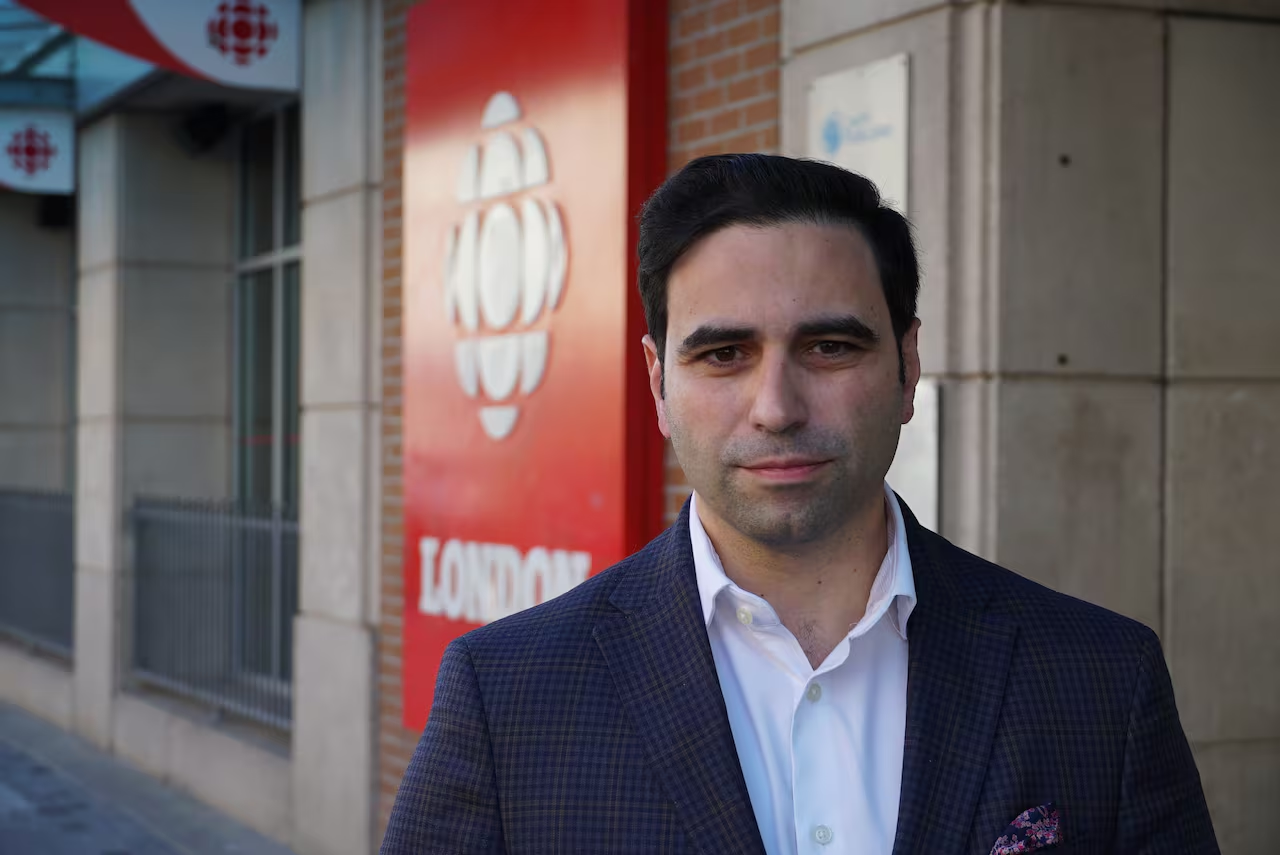 Peter Fragiskatos outside the CBC London newsroom on Nov. 12, 2024. (Alessio Donnini/CBC News)
Hackett reached out to Fragiskatos, his MP, when momentum began to build behind his petition. The two had a conversation both about Hackett’s personal situation and what his petition could realistically accomplish.
Fragiskatos said the jurisdictional divide is a challenge, with the provinces having ownership of healthcare and education. But he also said it would be complicated at a legal level, if the courts had to rule on how social policies are allocated
“They’re not in the business of setting budgets,” Fragiskatos said of the courts. “But it would be a court responsibility, and I’m not sure that is something Canadians are comfortable with.”
A responsibility to listen
Despite the complexity of the issue, Fragiskatos committed to bringing Hacket’s petition before the House of Commons, saying that the idea was interesting, well-intentioned and deserved to be looked at and discussed by the federal government.
“I think that his concern comes from an extremely good place, the love of a father for their child, and how can anyone in my position ignore that,” he said. “We should have systems in place in Canada where those fundamental needs are addressed.”
The petition closes for signatures on April 3, 2026. In the meantime, Hackett and his family hope that his son can get the help he needs in time.
“Without the proper support, he’ll fall behind in society. Without the proper education on top of it, he’ll struggle throughout the rest of his life,” Hackett said. “I don’t want that to happen for my kid or anyone else’s kid.”