
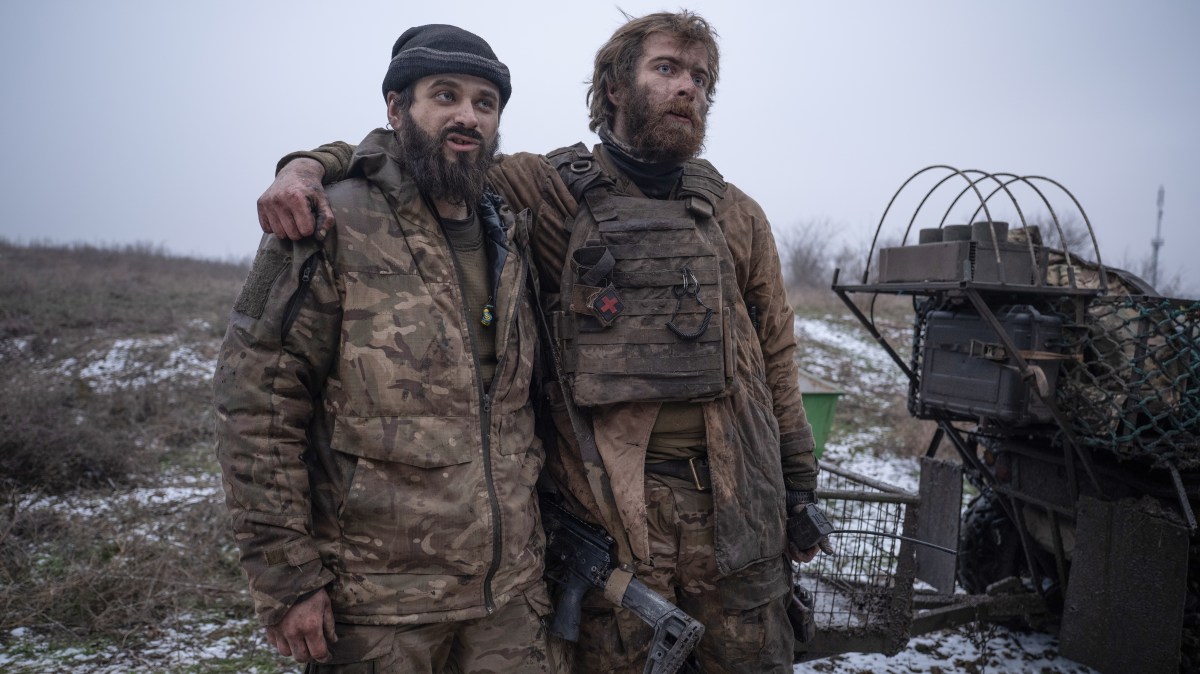
For all the over-optimistic talk coming from the White House about an imminent peace deal, with President Trump saying on Friday that he thought “it’s going to go good” with President Zelensky and President Putin, the negotiations to end the war in Ukraine seem locked in a dynamic stalemate.
Nonetheless, there are reasons to believe that this coming year will bring, if not a negotiated peace, at the very least an exhausted and bad-tempered slowdown in the fighting on the ground.
Even as Zelensky was heading to Florida, though, Kyiv was being hammered in an air attack involving hundreds of drones and dozens of missiles, as a symbolic warning that Russia was willing to sustain the war.
It is not that the shuttle diplomacy started by Trump is proving pointless. The original 28-point plan that heavily favoured Moscow has, in its current iteration, become a 20-point one, instead speaking more to Kyiv’s concerns.
Crucially, although Putin is demanding the surrender of the remaining fifth of the contested Donetsk region, it instead proposes making this a demilitarised zone, still under Ukrainian control — and that Moscow pull its “heavy forces” an equal distance from the line of contact, while also withdrawing from about 500 square miles of territory conquered on other fronts.
Ping-pong diplomacy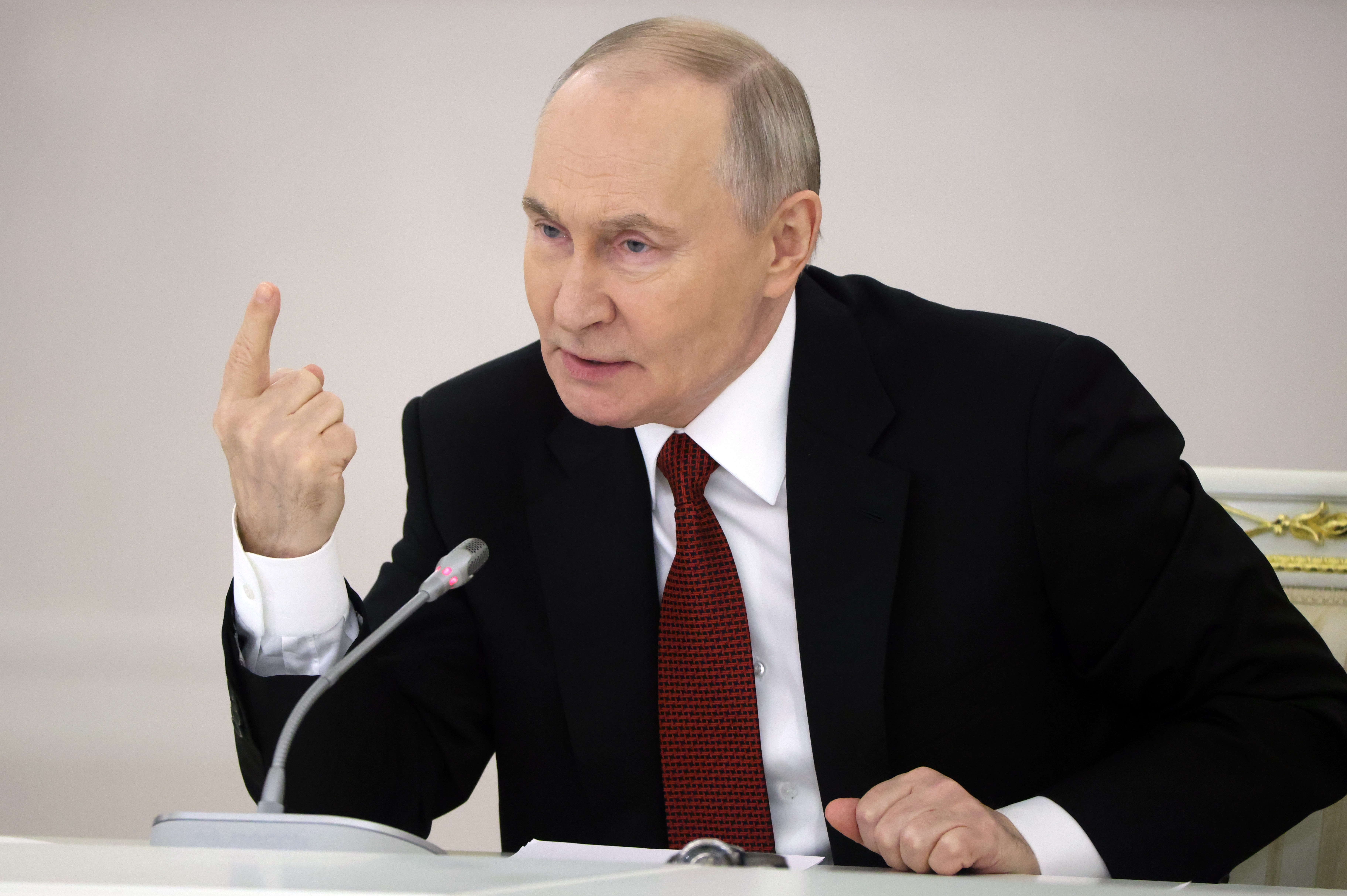
Putin address a state council meeting in the Kremlin on December 25
GETTY IMAGES
Putin has already signalled that this proposal is unacceptable. At the year-end meeting of the state council on Thursday, he reiterated his demand that the whole of Donetsk needed to be under Russian control.
Nonetheless, the diplomatic game continues. While Zelensky was making plans for his meeting with Trump at Mar-a-Lago in Florida on Sunday to discuss the state of the peace plan, the Russian foreign ministry spokeswoman was diplomatically talking of “slow but steady progress”.
This is to a large degree because neither Zelensky nor Putin want to appear to be the obstacle to peace in Trump’s eyes. When not posturing for the White House, though, the tone from both sides is much less cordial.
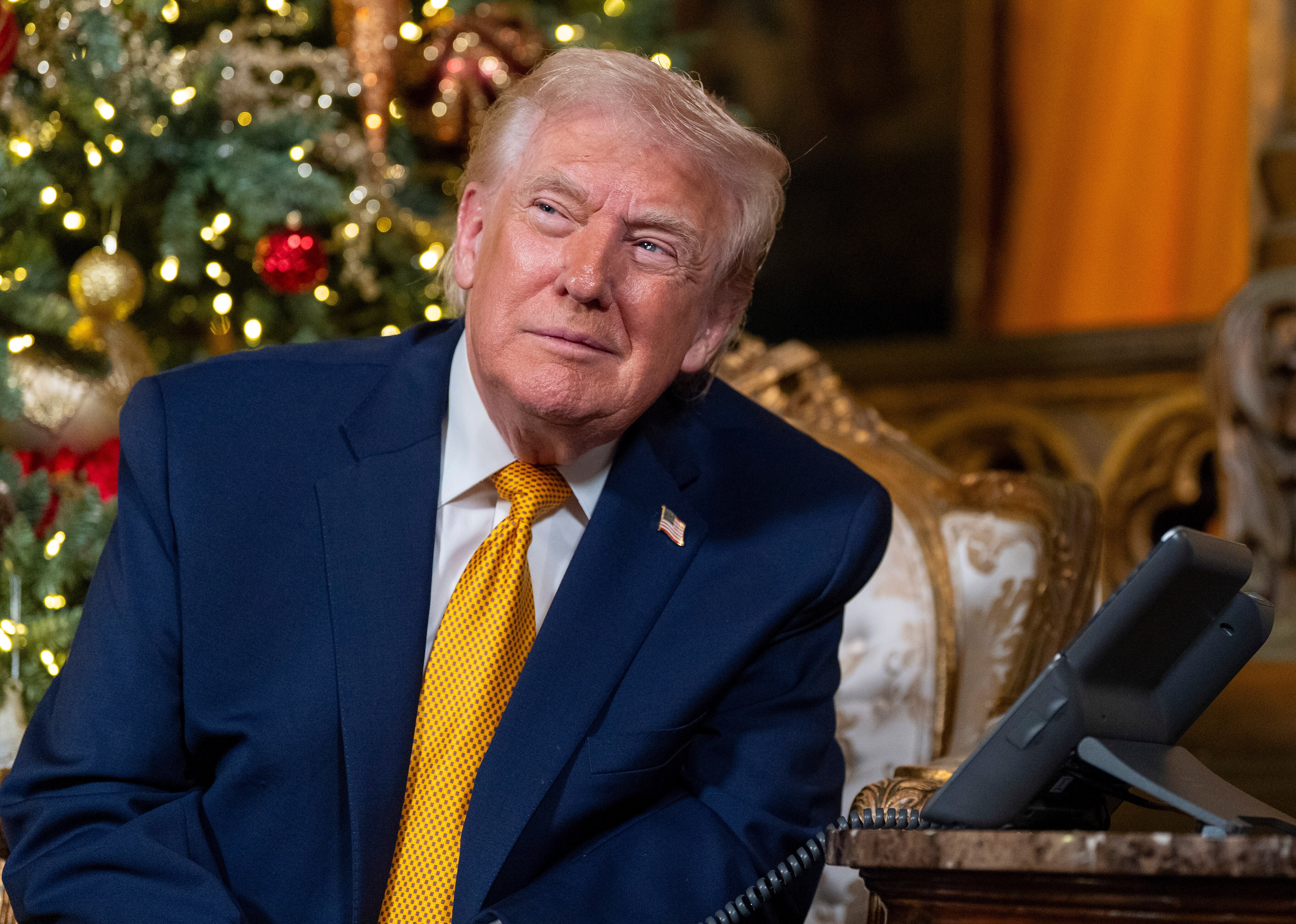
Trump is spending the festive period at Mar-a-Lago in Florida
ALEX BRANDON/AP
In his Christmas Day address, Zelensky expressed a thinly veiled hope for Putin’s imminent death. Monday’s murder of a general in Moscow has led to ultra-nationalists pressing the Kremlin to reply in kind. Dmitry Medvedev, the former Russian president who now represents the more rhetorically rabid camp in the administration, published a lengthy article again accusing Kyiv of being a haven for neo-Nazism, while a senior figure in Putin’s United Russia party claimed Zelensky was working for MI6.
This does not mean that the process is either futile or necessarily doomed. Many secondary issues have been agreed. However, the two crucial issues of the security guarantees for Ukraine and the fate of Donetsk region remain unresolved, and may well prove to be the rocks on which this process founders.
Ultimately, Trump’s evident desire to win a Nobel peace prize notwithstanding, the real impetus for progress may well be simple exhaustion, as all parties begin to feel the pressures of this war more acutely and run low on practical and political resources.
Ukrainians losing optimism
Ukraine, after all, faces problems mobilising the money, manpower and optimism demanded by this brutal struggle. The European Union’s recent decision to raise a €90 billion (£79 billion) loan to keep Kyiv funded into 2027 on the surface addresses the financial issue, but spending this money effectively is not always so easy, especially converting it into the weapons Ukraine needs.
• How much does it cost Ukraine to keep fighting?
Nor is finding enough troops to secure a front line of 1,200km (about 750 miles): drones do the lion’s share of the spotting and killing now, but if they are neutralised by weather or jamming, Russian assault groups can often simply walk unhindered in the gaps between thinly spread defensive positions.
Conscription increasingly looks like press ganging. Ukraine’s notorious practice of “busification”, whereby recruiters forcibly round up men of conscription age and bus them to draft offices, has not only led many to flee the country, it is causing a labour shortage in the civilian economy. Desertion is rife, with more than 160,000 open criminal cases, even though in some cases this is simply a way for soldiers to transfer from one unit to the next.
The aggregate result is that although the Ukrainians remain extraordinarily resilient, it is becoming harder for them to feel optimistic about the fight. Polls are showing confidence in a military victory dwindling and the proportion favouring a deal with Moscow — although not at any price — growing.
Russia feeling the squeeze
Yet more Russians than ever also support negotiations over continued fighting. The economy is struggling. GDP officially still grew 1 per cent this year, but that is largely on the basis of war production: building equipment shortly to be destroyed. Although Putin continues to try to talk it up, the underlying economy is already in recession and is likely to stagnate in 2026.
This does not presage a crash, and authoritarian regimes can continue to spend on their pet projects for years in such circumstances, pushing the burden on to the masses. However, in 2025 Russia recruited more than 30,000 volunteers a month, making up for losses suffered on the battlefield, by offering life-changing sums of money. There are already signs that the pool of available volunteers is running low.
If the Kremlin cannot afford to pay enough to keep Russians volunteering — and some regions are already running out of funds — then Putin faces a difficult choice. He could deploy conscripts, or mobilise reservists. Either option would be politically dangerous and disruptive. The only time he tried mobilising reservists, in autumn 2022, there were protests, and more Russians fled the country than took up arms.
A tiring West
For all the bullish rhetoric, Europe is having trouble maintaining its consensus. Its attempt to use frozen Russian assets to fund the war failed, and Hungary, the Czech Republic and Slovakia all opted out of the replacement loan deal.
Although there is still a majority will to support Kyiv, there is no clear strategy underpinning it beyond continuing to try and do more of the same.
• EU leaders agree €90bn loan for Ukraine, without frozen Russian assets
The United States has largely detached itself from any direct role supporting Ukraine. How long, though, will the mercurial Trump be willing to play the role of peacemaker? He has already indicated a willingness to walk away, and shown what could charitably be described as mixed signals over Moscow. He is reportedly preparing more sanctions on Russia’s energy sector if Putin directly rejects any deal — but a week ago quietly lifted sanctions on a number of foreign companies accused of supplying equipment to Russia’s defence sector.
An exhausted 2026?
The peace process may be unlikely to succeed, but it has narrowed the real issues in play down to two: Donetsk, and security guarantees for Ukraine provided by western troops after the guns fall silent. It has also demonstrated the potential but also the limitations of such a public negotiation process. As a result, any future process will start with a clearer sense of what needs to be addressed to find an acceptable landing zone, and how that can best be discussed.
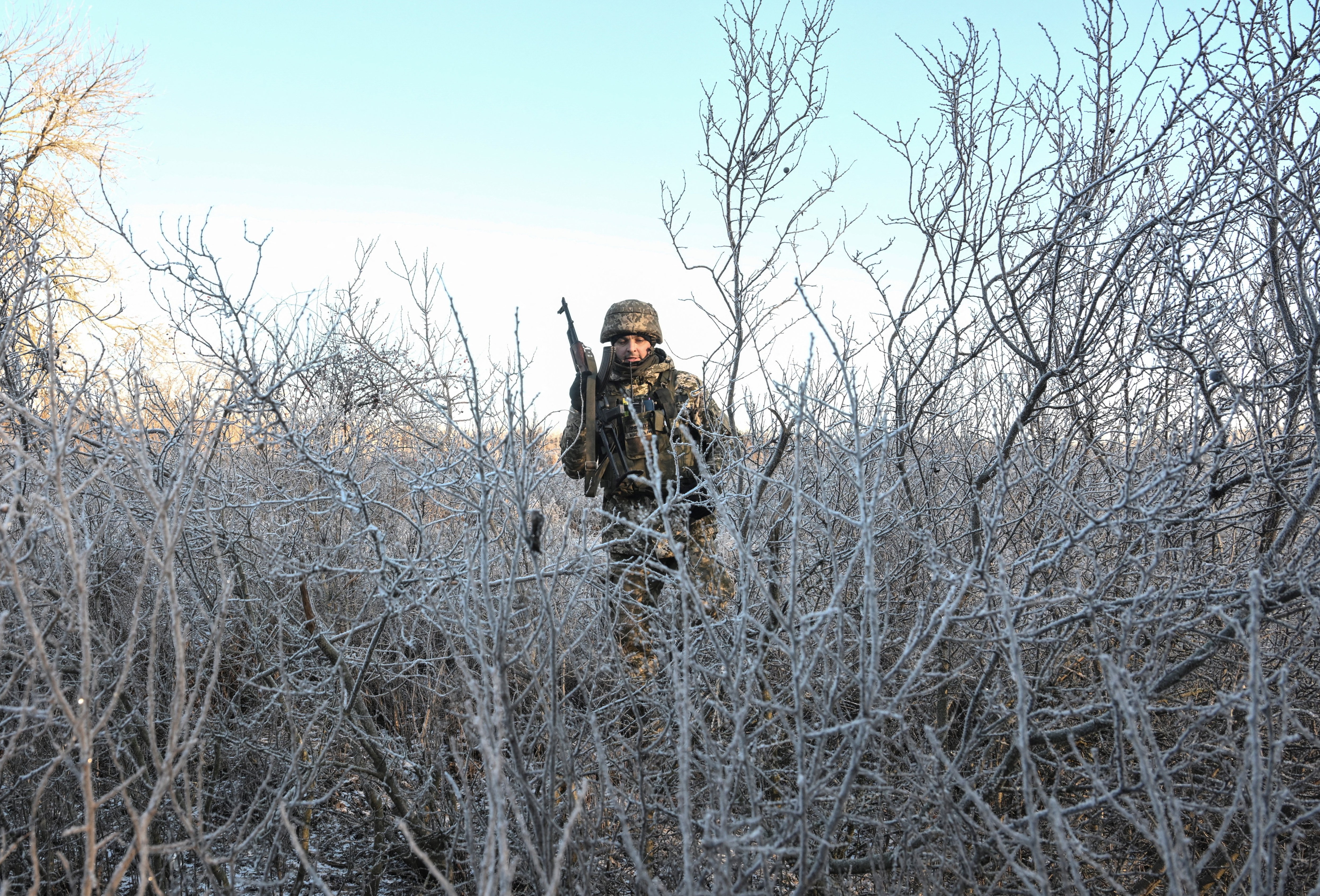
A service member of Ukraine’s 152nd Jaeger Brigade in Donetsk on December 25
REUTERS
Even if war continues throughout 2026, though, it will be increasingly hard to sustain at the current level. The choices everyone is going to have to make are getting more painful — for Putin (whether to mobilise reservists) or Zelensky (whether to lower the conscription age).
Even without a deal, the war may decline in tempo and intensity, at least on the ground. As exhaustion sets in, both sides may be willing to accept compromises currently regarded as impossible.