
“We are in that situation with the Liberals” with the electoral changeover to new generations of Australian voters, says Samaras.
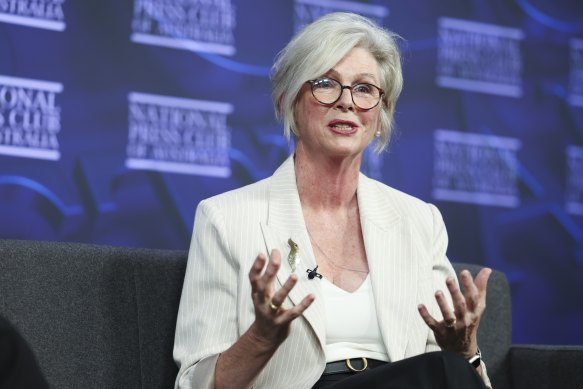
Rather than rage against climate realities and renewables investment, independent MP Helen Haines is preoccupied with making the transition work for her constituents.Credit: Alex Ellinghausen
“The Libs are extra vulnerable to takeover at the ballot box. If the teals can form a network or coalition or whatever you want to call it, they could be it. They could push the Liberals completely off the electoral map.”
While there are fewer than 10 Liberal-held seats in the cities available for possible teal takeover, there are country seats that could be open to challenge by community independents like Helen Haines, who represents the predominantly rural Victorian seat of Indi.
Rather than rage against climate realities and renewables investment, Haines is preoccupied with making the transition work for her constituents. She’s proposed a 20 per cent share in the profits from big renewable projects for regional communities, for instance.
Climate wasn’t always a losing argument for the Coalition. It won some of the critical early battles of the climate wars. Barnaby Joyce was the original Coalition climate warrior. From the Nationals backbench, he illuminated the political pathway for Tony Abbott to follow.
Climate scepticism worked for Tony “climate change is crap” Abbott. It worked for Scott “lump of coal” Morrison, until it did not. It did not work for Peter “nuke ’em” Dutton. And it won’t work for Sussan “moderniser” Ley. If she goes there. But, thanks to the Nationals, it might not much matter.
Because Barnaby, once again, is leading the Coalition into the rejection of climate change policy in all its manifestations. His current campaign is to abolish the Nationals’ commitment to net zero. Which seems odd. Because he was the party’s leader who signed on to net zero in a deal with then-prime minister Scott Morrison only four years ago.
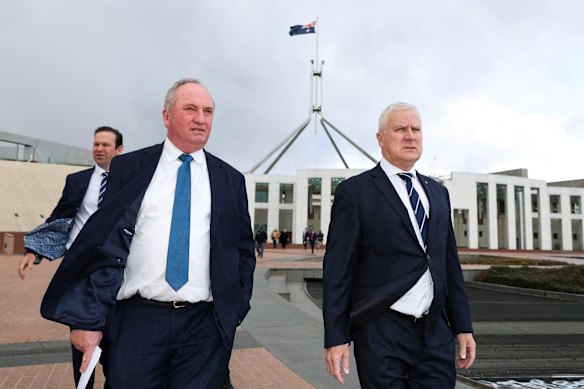
Nationals Party members Matt Canavan, Barnaby Joyce, and Michael McCormack outside Parliament House on Monday.Credit: Alex Ellinghausen
Even “lump of coal” Morrison could see that Australia would be marooned, missing out on the global $US200 trillion ($311 trillion) renewables investment boom, unless it could commit to the bare minimum of plausible climate policy – net zero emissions by 2050. Such national responsibilities mean nothing to the rabble-rousing Joyce and company.
The populist obscurantists in the Nats are more interested in incendiaries than investments.
They only agreed to Morrison’s net zero plan because he bribed them with $30 billion in government spending promises plus an extra seat in the cabinet. But today, there are no bribes on offer. Opposition parties have no access to the Treasury or seats in the cabinet. So Joyce is unchecked.
He’s been joined by his former rival for the Nationals leadership, Michael McCormack. They have enough internal support and momentum to succeed. The man supposed to be leading them, David Littleproud, is meekly following them. Not formally, not yet, but it seems inevitable that he will. His job is on the line otherwise.
“The Nats will be great,” says Samaras. “They’re not losing anything out of this. Their rural constituencies are older and their seats are safe.” Joyce & Co are fomenting a country-versus-city resentment – the countryside is being destroyed by toxic solar farms and fascist new power lines so that rich city investors can make money from them.
But the Liberals? What do they do? They don’t have a formal position at the moment. It’s under review, and the party is divided.
One argument is that they adopted net zero and lost anyway. So why not ditch it? The counter is that they didn’t lose because of net zero, that it was overshadowed by an unpopular nuclear reactor plan. And that a party that aspires to government must have a credible climate and energy policy as a prerequisite to power.
Loading
But the Liberals face a wicked dilemma. With their junior Coalition partner exuberantly trampling climate change for the next three years, the Libs will have three options.
One, join the Nats and suffer more electoral damage. The Liberals were all but driven out of the cities in the May election. Of the 88 seats classified by the Electoral Commission as metropolitan, Labor holds 71. The Liberals hold just nine.
They can’t aspire to government without a recovery in the cities. And if they embrace Barnaby’s climate policy, they can pretty much forget about that.
Two, the Libs can outline a separate policy and spend three years arguing with the Nats over it, which would be divisive and ugly. And how do you take two conflicting policies to an election?
Three, the Libs can terminate the Coalition and go solo, much as Littleproud did by splitting with the Libs in the Eight-Day War in May. But that would be likely to mean being sentenced to permanent opposition – or oblivion – for both. The Libs don’t have enough seats in their own right, and the Nationals don’t have enough votes and rely on Liberal preferences.
When Barnaby first launched the climate wars over a dozen years ago, they were directed against Labor. Today, the Nats’ climate war is waged against the Liberals just as much. A war against the enemy has turned into a war against the supposed ally.
It’s not that Labor’s renewables plan is rolling out smoothly. One of the gurus, Ross Garnaut, gave a damning speech this week, calling the energy transition “sick”. The entire national enterprise was “on a path to comprehensive failure”.
There is a big and rich political fight to be had. Not in raging against the reality of climate change or the advantages of energy transition, but in interrogating the government’s execution of it. The smart course for the Coalition is not to attack Labor’s goals but its incompetence in reaching them.
A colleague of Kos Samaras, fellow Redbridge director and former Liberal campaign chief Tony Barry, sees the opportunity cost of the Nats’ climate crusade: “There are massive problems with the rollout for [Minister for Climate Change and Energy] Chris Bowen, and if Barnaby Joyce retired tomorrow, he’d be beside himself. Barnaby keeps giving him a ‘get out of jail’ card.”
Loading
As the pollster for this masthead, Jim Reed of Resolve Strategic, puts it: “The public debate about climate change is largely over, but the conversation about what to do about it, how urgently and at what cost still rages.”
But a Coalition lost in delusion and distraction can’t prosecute these real problems while it’s caught up in ideological and irrelevant ones. “The Liberals,” concludes Samaras, “are in the killing zone.”
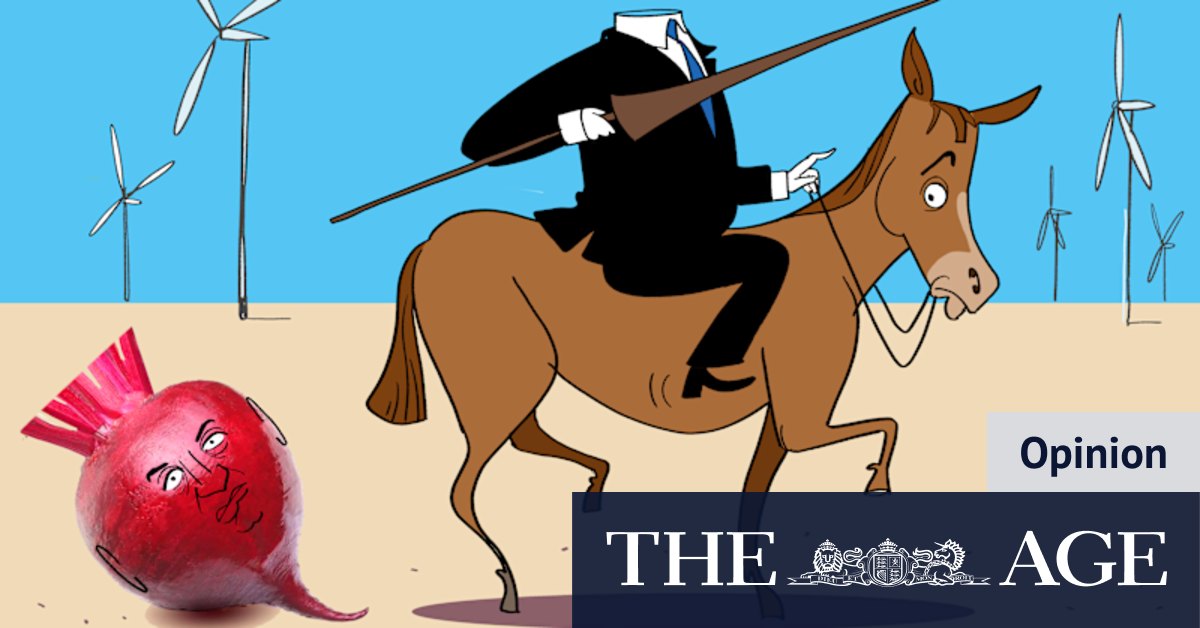
It’s just that, like the Black Knight, the Coalition seems unable to grasp the reality of its situation. As the victorious Arthur goes on his way, the Black Knight, now legless as well as armless, demands that the king come back and keep fighting. “What are you going to do, bleed on me?” retorts Arthur.
Unless Labor honours its time-honoured tradition of self-induced implosion, that may be all that the Liberals will have left.
Peter Hartcher is political editor.
Get a weekly wrap of views that will challenge, champion and inform your own. Sign up for our Opinion newsletter.