
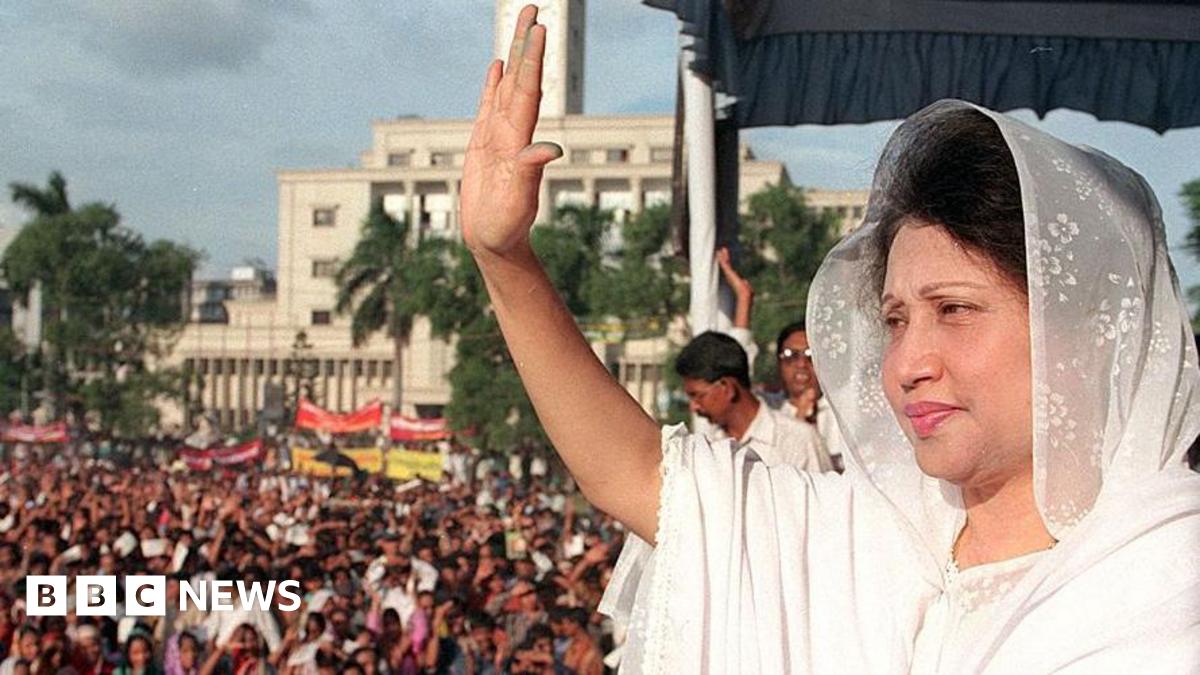
At the age of 36, Khaleda Zia became a widow.
Until then, she had kept a low profile and seemed to take little interest in public life.
But in 1982 she became a member of the BNP, the party founded by her husband, and later rose to become its vice-chairman.
That year – 1982 – was also when Bangladesh began nine years of military dictatorship, after its army chief seized power in a coup.
During this period, Zia embarked on a fervent campaign against military rule, staging a boycott of the army’s heavily-managed elections.
She was put under house arrest multiple times for her activism, but gained a reputation among the people as an “uncompromising leader”.
After the fall of the military government in 1990, Khaleda Zia and the BNP became the largest party in post-military elections, and she was sworn in as prime minister in 1991.
Having absorbed most of the powers of the old presidency, she was now the first female leader of Bangladesh, and only the second elected woman to lead a Muslim country.
With her ascension to the premiership, Bangladesh’s government returned to a parliamentary system.
Among the most notable reforms she implemented during her first term was making primary school education free and mandatory for all.
But in 1996 she would lose her bid for re-election to Hasina’s Awami League.