
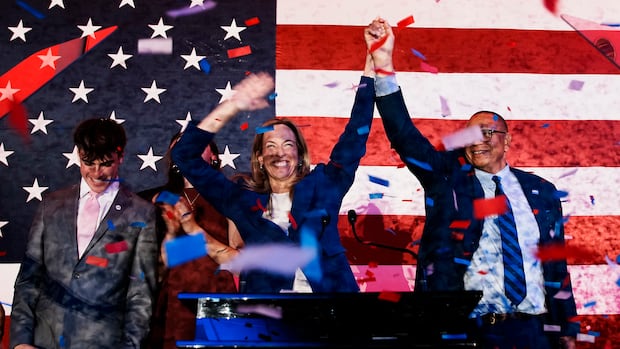
For much of the last two years, the U.S. Democratic Party has been on its back foot, enduring painful electoral defeats to an omnipresent Republican opponent while grappling with a troubling decline in voter registration and a listless party base.
Polling data from summer 2025 painted a bleak picture as surveys showed dismal, multi-year low approval ratings for the party’s performance in Congress.
The number of self-identified Democrats was also dropping sharply, especially in some crucial states needed to win the presidency, according to data from the 30 states and Washington, D.C., that collect and report voter party affiliations.
Progressive columnists spilled barrels of ink trying to identify why exactly the party has been so unpopular with voters — did the leftward shift on race and gender, climate and guns alienate moderate swing voters? Or was it because President Donald Trump, the political chameleon, had robbed the party of its lock on a multiracial working-class coalition?
Whatever the reason, the party was dealing with what some members said was a “seismic crisis” or an “existential threat” to its long-term viability. In July, roughly half of all voters surveyed said they would consider joining a third party.
But, in the closing days of 2025, the pendulum appears to be swinging in the Democrats’ direction.
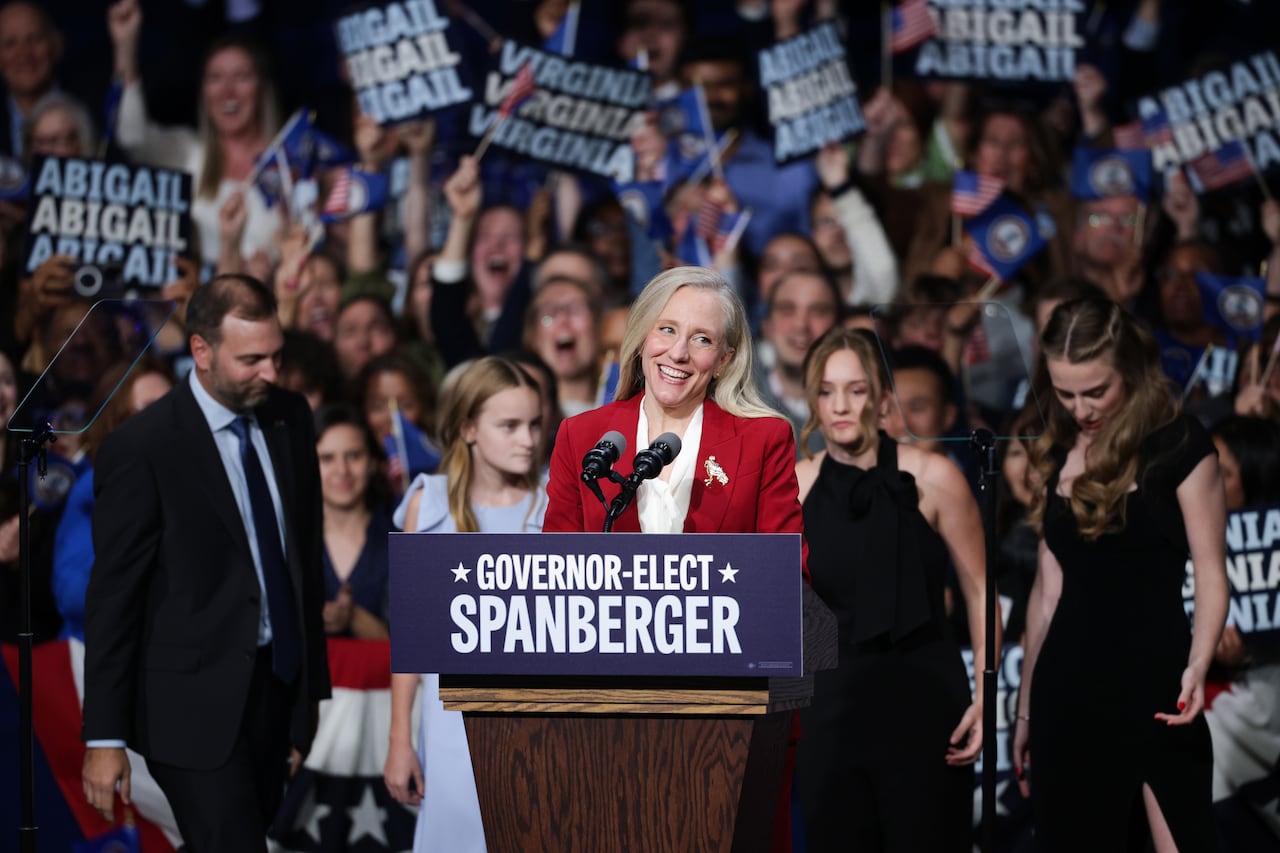 Virginia Democratic gubernatorial candidate, former Rep. Abigail Spanberger delivers remarks at her election night watch party at the Greater Richmond Convention Center on Nov. 4, in Richmond, Va. (Alex Wong/Getty Images)Dems show promise in off-year elections
Many of the party’s candidates stormed to power in November’s off-year elections in Virginia and New Jersey, two states that have been largely Democratic blue in recent years but looked vulnerable only months earlier.
Trump did better than expected in New Jersey in the 2024 presidential campaign — losing to Kamala Harris by just six percentage points, much better than his own past performances and how other recent Republican candidates have fared there. That red wave had some analysts wondering: is New Jersey the next swing state?
But GOP optimism faded quickly as the ballots were counted in the Garden State’s gubernatorial election on Nov. 4.
Democrat Mikie Sherrill, a moderate, trounced her Republican opponent, winning by more than 14 percentage points.
WATCH | Breaking down the Democrats’ 2025 election success:
How Democrats won U.S. election night 2025 | About That
The first major elections in America since U.S. President Donald Trump retook office was a clear success for the Democratic Party. Andrew Chang breaks down how the wins unfolded in key races in Virginia, New Jersey, California and New York City — and explains how momentum in these local and state elections offer lessons for the Democrats about how to take on Trump.
Images provided by The Canadian Press, Reuters and Getty Images
Another centrist Democrat, Abigail Spanberger, cleaned up in Virginia, winning by 15 points in a state Harris won by fewer than six a year earlier.
What followed those victories — and a strong showing for democratic socialist candidate Zohran Mamdani, who won New York City’s mayoral election — was a polling upswing elsewhere.
“These elections have all gone in favour of the Democrats — this is the so-called canary in the coal mine,” Barbara Perry, a presidential historian at the University of Virginia, said in an interview with CBC News. “You are beginning to see cracks in Trump’s power.”
Even in Florida, once a toss-up state that is now deeply red after some COVID-fuelled ideological and demographic changes, a Democrat won Miami’s mayoral race this month with a strong majority. It was the first win by a Democrat there in 28 years and one the local media is calling “a good omen” for a party that has long struggled to connect.
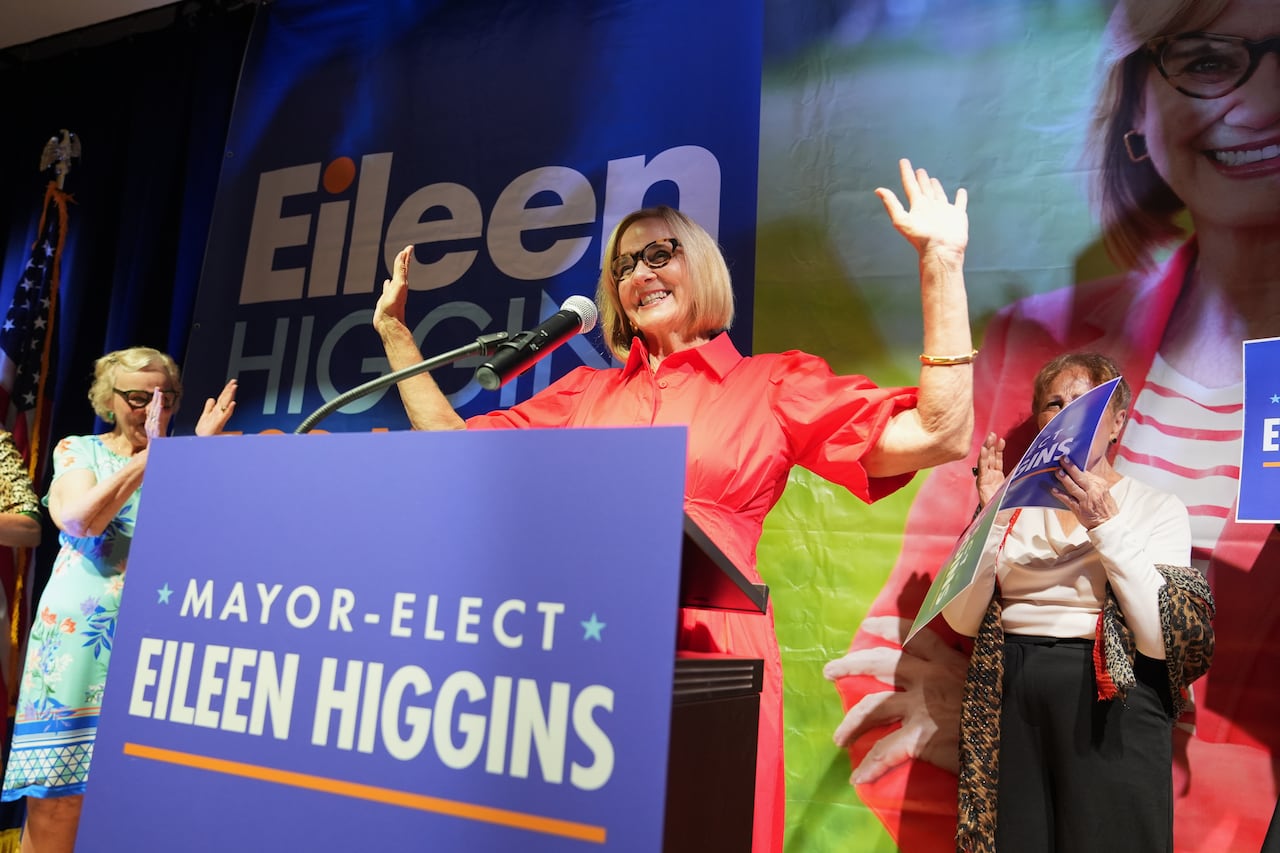 Miami mayor-elect Eileen Higgins celebrates at a watch party after winning the Miami mayoral runoff election, Tuesday, Dec. 9, 2025, in Miami. (Lynne Sladky/The Associated Press)Trump approval ratings slip
Nationally, the Democrats are also seeing signs of life.
Trump’s approval ratings have slipped despite some successes like reining in crime and illegal border crossings. A recent Marist Poll shows the Democrats have a double-digit lead among voters heading into the 2026 congressional midterm elections — the first time in more than three years that Democrats have had a lead like that.
The sluggish U.S. economy appears to be what’s driving voter unease and the Trump backlash, said Matthew Lebo, a professor of U.S. politics at Western University in London, Ont.
While Trump boldly ran on slaying Biden-era inflation on “Day 1” of his presidency, the Democrats are trying, with some early results, to flip the script on affordability.
“Everything comes back to making the case for an affordability agenda,” said Mamdani, whose campaign promises included free buses and daycare.
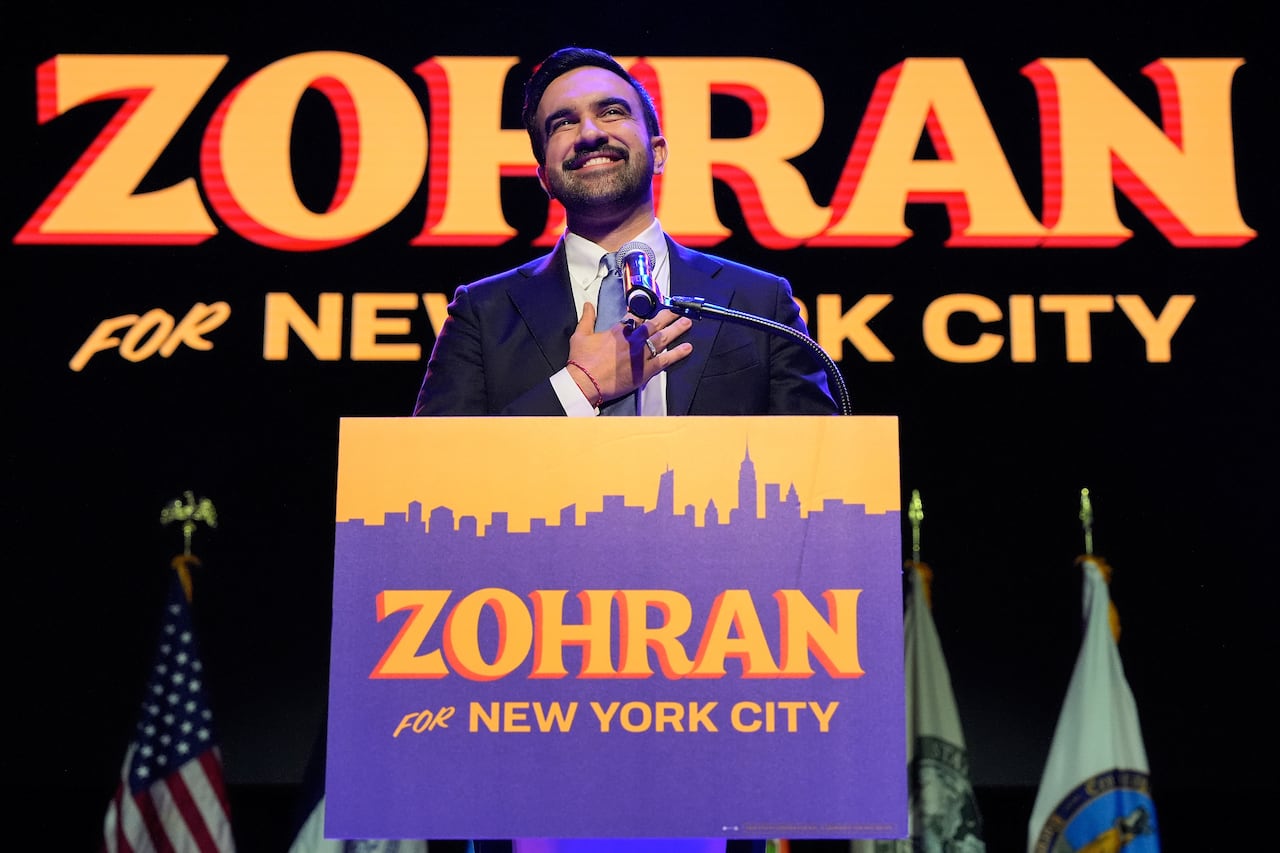 Democrat Zohran Mamdani delivers his victory speech after winning the New York City mayoral race on Nov. 4. (Yuki Iwamura/The Associated Press)
Spanberger, meanwhile, promised to use state powers to cap drug costs and lower energy rates to address cost-of-living challenges Trump recently called “a hoax started by the Democrats.”
“Right now, the Democrats are ahead, and that lead should increase as more bad economic data comes out,” Lebo said in an interview.
“Democrats will be far more energized to go out and vote against Republicans and Donald Trump in 2026 than Republicans will be to keep him propped up,” he said.
Economic struggles could shape voting
Unemployment is up, inflation is stubbornly high, tariffs have spiked the prices of almost everything — with data suggesting more and more of those trade-related levies are being borne by consumers, not just the businesses that initially pay them.
Experts at the National Bureau of Economic Research say the import taxes have increased the inflation rate by 0.7 percentage points.
The stock market has surged after Trump’s chaotic tariff rollout in April — the S&P 500, an index that tracks some of the 500 largest U.S. companies, is up about 18 per cent year-to-date — but those gains have not been felt by all, or even most, voters.
As Bill Clinton’s ex-staffer, James Carville, famously quipped in the 1992 presidential election: “It’s the economy, stupid.”
Then-president George H.W. Bush, who registered some of the highest approval ratings ever recorded after he led the U.S. to victory in the first Gulf War, saw his support crumble as the economy faltered and tipped into a recession.
Carville pressed his protégé, Clinton, to go all-in on economic woes during the campaign — a strategy that paid off.
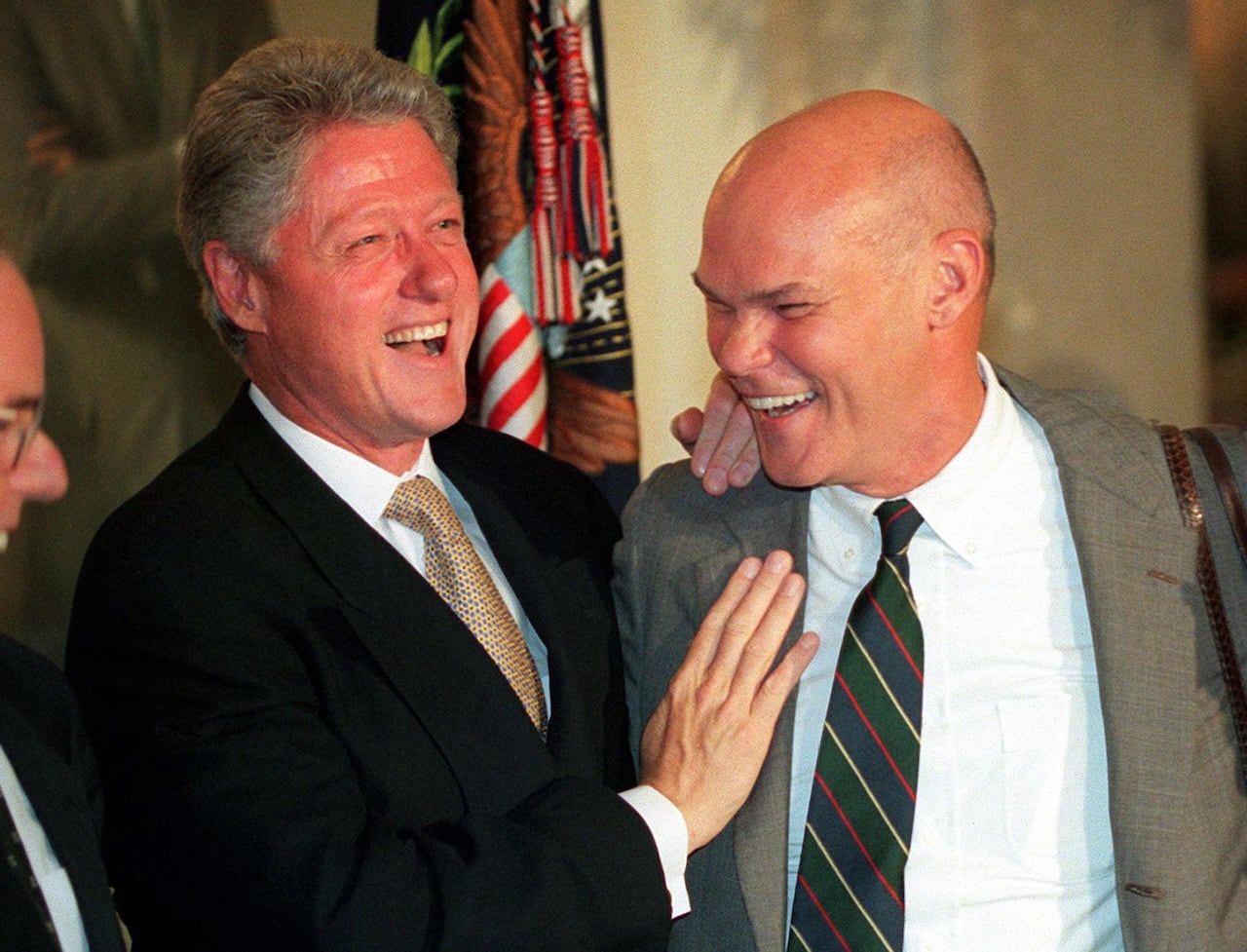 Former U.S. president Bill Clinton and political strategist James Carville laugh during a July 1999 working dinner at the White House in Washington, D.C. (Mario Tama/AFP via Getty Images)Could tariffs be a liability for Trump?
That’s what Michael Negron, a senior fellow at the Center for American Progress and a former Biden White House official on the National Economic Council, thinks his party should do again in the 2026 midterms.
Negron authored a recent report on the economic ramifications of Trump’s tariffs, finding that small-business importers paid about $25,000 more per month due to those levies than they did in the same period last year — a huge increase that has been passed on to consumers in some cases.
As a result, Negron says many people now equate tariffs with inflation — and that’s spurring some voters to rethink their allegiance to the president and his signature economic policy.
Persistent inflation is “one of the core drivers behind the president’s unpopularity,” Negron said in an interview with CBC News. “Tariffs are a liability for him.”
While protectionist Democrats have supported tariffs in the past and some party-aligned trade unions have also voiced support for Trump’s plan, Negron says the party has to forcibly denounce the policy Trump has pursued to appeal to voters worried about affordability.
During the 2024 presidential election campaign, Harris tried to frame Trump’s tariffs as a national sales tax. Though Negron says it “didn’t seem to really resonate with people” at the time, that’s changed.
“Trump has taken this obscure tax tool and made it mainstream. People know what it is now and they don’t like what they see,” he said.
“Trump’s broad, sweeping tariffs are driving up costs for everybody and hurting small businesses — and Democrats have to be willing to say that.”