
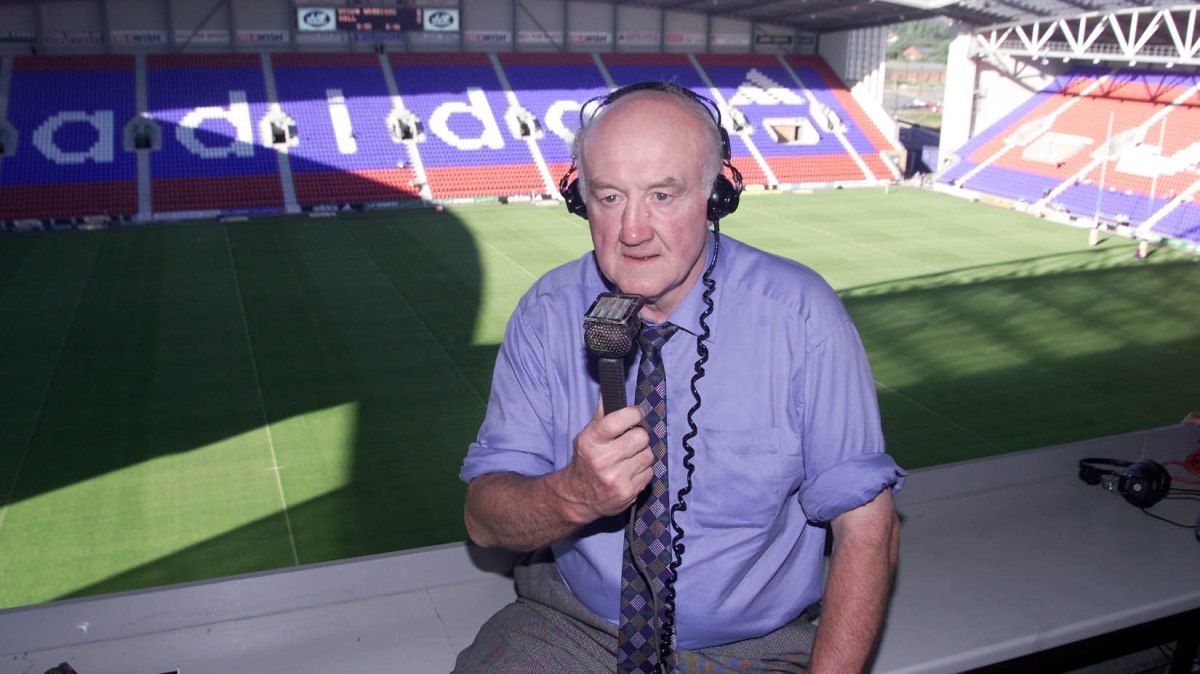
Ray French had received what in rugby league parlance might be described as a “hospital pass”. In 1981 the great Eddie Waring, the BBC’s popular rugby league commentator for three decades, retired and French was asked to succeed him.
A cult figure in his tartan cap, Waring had entertainingly showcased northern colloquialisms — though some found him irritatingly stereotypical and increasingly a parody of himself — and crossed over into light entertainment with appearances on Morecambe and Wise and as a co-host of the popular Seventies European gameshow It’s a Knockout.
As a celebrated former player for St Helens and Widnes, French was arguably a more authentic figure than Waring, if not as charismatic. Yet within a year of taking over the microphone, French had his own idiosyncrasies of speech to match his predecessor, who had come up with phrases such as “up and under” (a ball booted high) and “early bath”, a sending off.
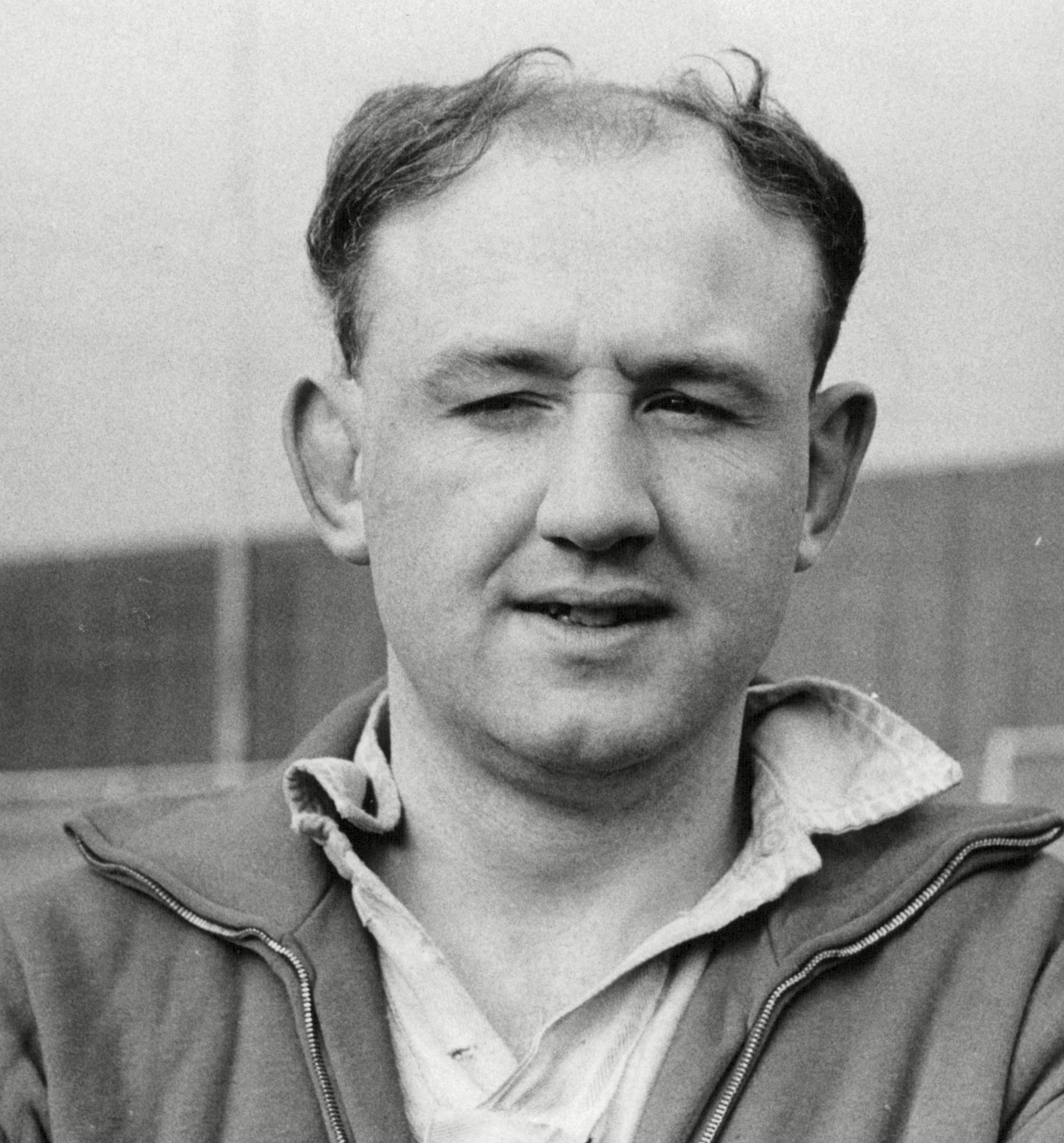
French in his St Helens days
SHUTTERSTOCK EDITORIAL
Over the next 27 years French became the “voice of rugby league” for the BBC, during which the sport featured regularly on Grandstand on Saturday afternoons, while the annual Challenge Cup Final at Wembley was broadcast live and players such as Ellery Hanley, Martin Offiah and Gary Schofield became household names.
As John Ferguson wriggled through the tiniest of spaces to score for Wigan in a famous Challenge Cup Final in 1985, French shouted in broad Lancastrian: “He can sidestep a thr’penny bit, this lad!” He sometimes allowed his enthusiasm to get the better of him to the detriment of precise language, such as when he said: “And there we see the sad sight of Offiah limping off with a broken finger”, or “And he’s got the ice pack on his groin so possibly it’s not his old shoulder injury”. Deprecating the lighter, flashier boots of the modern-day player, in contrast to the thick mud-encrusted leather and steel toe caps of his day, French once said: “This lad’s got boots like carpet slippers.”
Raymond James French was born in St Helens, Lancashire, in 1939, the son of Richard French, a sorter at United Glass Bottles, who captained the company’s rugby league team, and his wife, Ellen. The child would watch St Helens on a Saturday and loiter outside the ground to pick up autographs. At Crowley Grammar School, he played rugby union, but joined 20-a-side rugby league games on the street between gas lamps from dawn till dusk. “We tied handkerchiefs around our knees so we didn’t scrape them badly because we all wore short pants in those days,” he recalled. “We rarely played on grass because the chap who looked after the congregational fields used to chase us out with an air pistol.”
French studied English, French and Russian at Leeds University and trained as a teacher. He made his break in rugby union, winning four caps for England during the Five Nations championship in 1961, though he felt ill at ease. “I had no idea they held a dinner and ball after each game. I’d never worn an evening suit in my life so I had to borrow one.” Feeling self-conscious about coming from a grammar school in St Helens, French told reporters that his hobbies were “skiing and squash” to make himself sound posher. He turned down several lucrative offers to cross codes into rugby league, until his beloved hometown club came calling in 1961 and he formed part of a famed back row forward line.
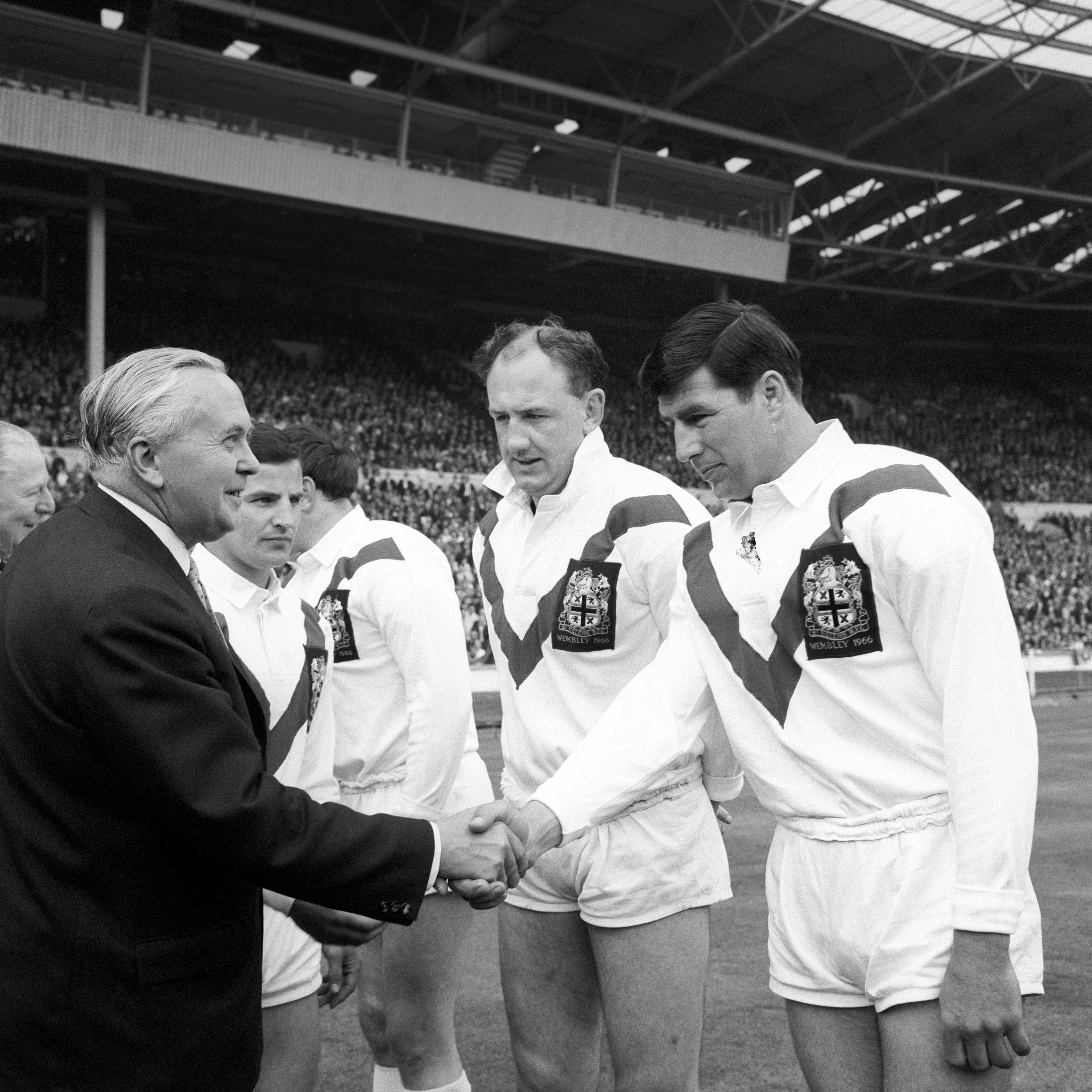
The prime minister Harold Wilson greets players, including French, centre, before the 1966 Challenge Cup Final between Wigan and St Helens at Wembley Stadium
ALAMY
The highlight of his playing career was the Challenge Cup Final at Wembley, playing second row for St Helens in their 21-2 victory over Wigan in 1966 in front of more than 98,000 people, and leading a pack that reportedly “marmalised” Wigan’s. “Our pack could take on anybody,” French recalled. “If the opposition wanted it rough, they would get it tough back, if they wanted it rugby-wise, we would respond. It was the atmosphere on the pitch that made that team. They were your best mates.”
After 207 games for St Helens, French was a makeweight in a deal to sign Frank Myler from Widnes in 1967. He “felt like a piece of meat on a supermarket shelf”. Brought in to be a leader of the pack for Wigan and a mentor to younger players, he warmed to his new club, where he had a freer role to make the play and earned selection for Great Britain. “There was an intelligence to his play, an eye for a pass to go with the robust requirements of playing second row in the hurly-burly of the 1960s,” said Matt Newsom, the BBC’s rugby league correspondent.
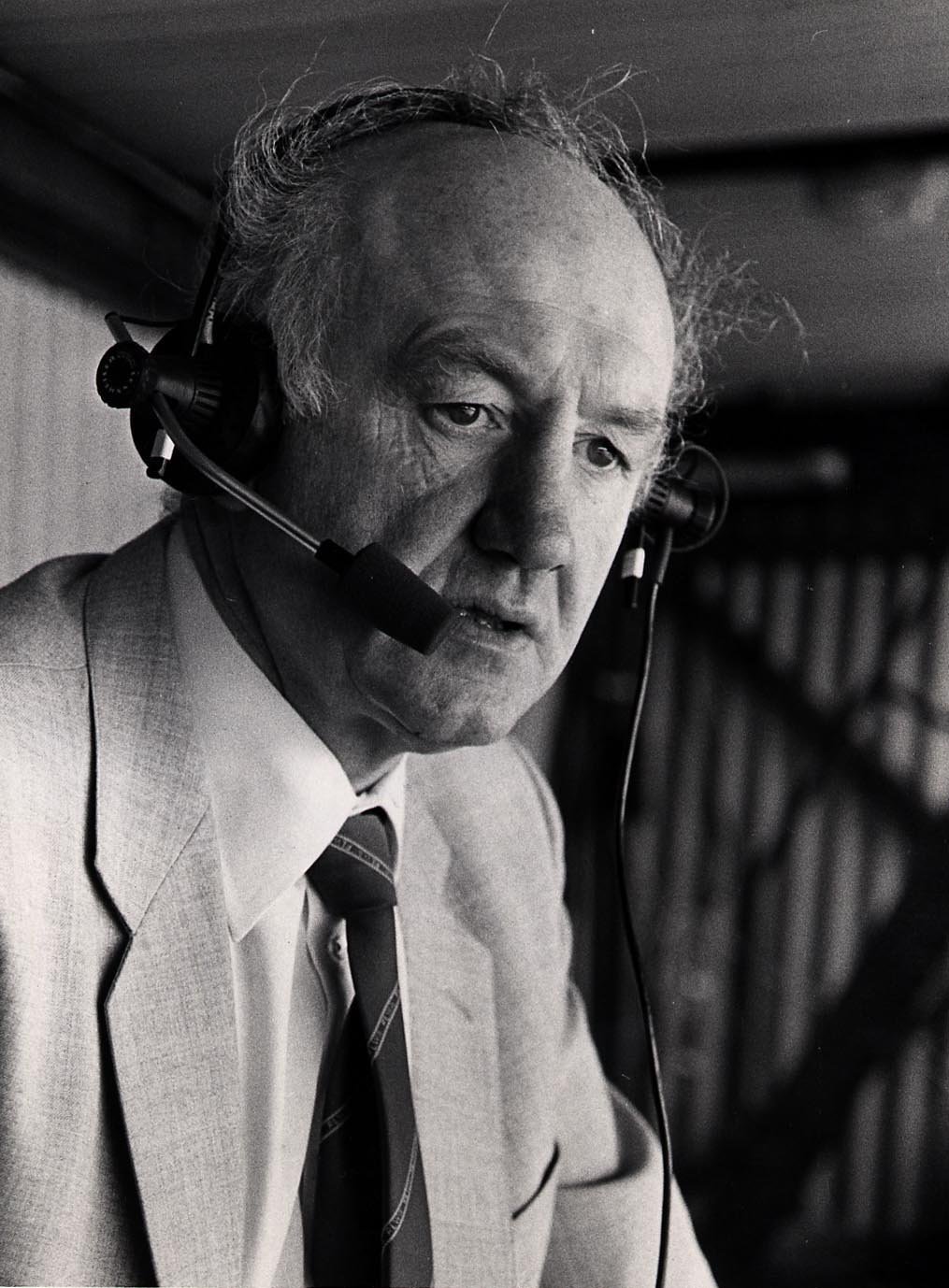
French thought he was the victim of a prank call when the BBC approached him
SHUTTERSTOCK EDITORIAL
He retired from playing in 1971, and continued to teach geography and Latin at Cowley School in St Helens and coach the school’s formidable rugby union first XV and later its rugby league first XIII. He wrote several books on rugby league and a column on the sport for the national newspaper Today in the Eighties.
A down-to-earth and humble figure, French began commentating for Radio Merseyside in the Seventies but when contacted by the BBC to replace Waring, he thought he was the victim of a prank call. As well as calling games, French broke down barriers between rugby union and rugby league, helping to attract several rugby union players to the rival code, including Offiah and Jonathan Davies. Commentating on the latter scoring a memorable try for Great Britain against Australia in 1994, French screamed, “He’s got the head back!”
French is survived by his wife Helen (née Bromilow), whom he married in 1963, and by their daughter Susan and son Gary, a former rugby league player.
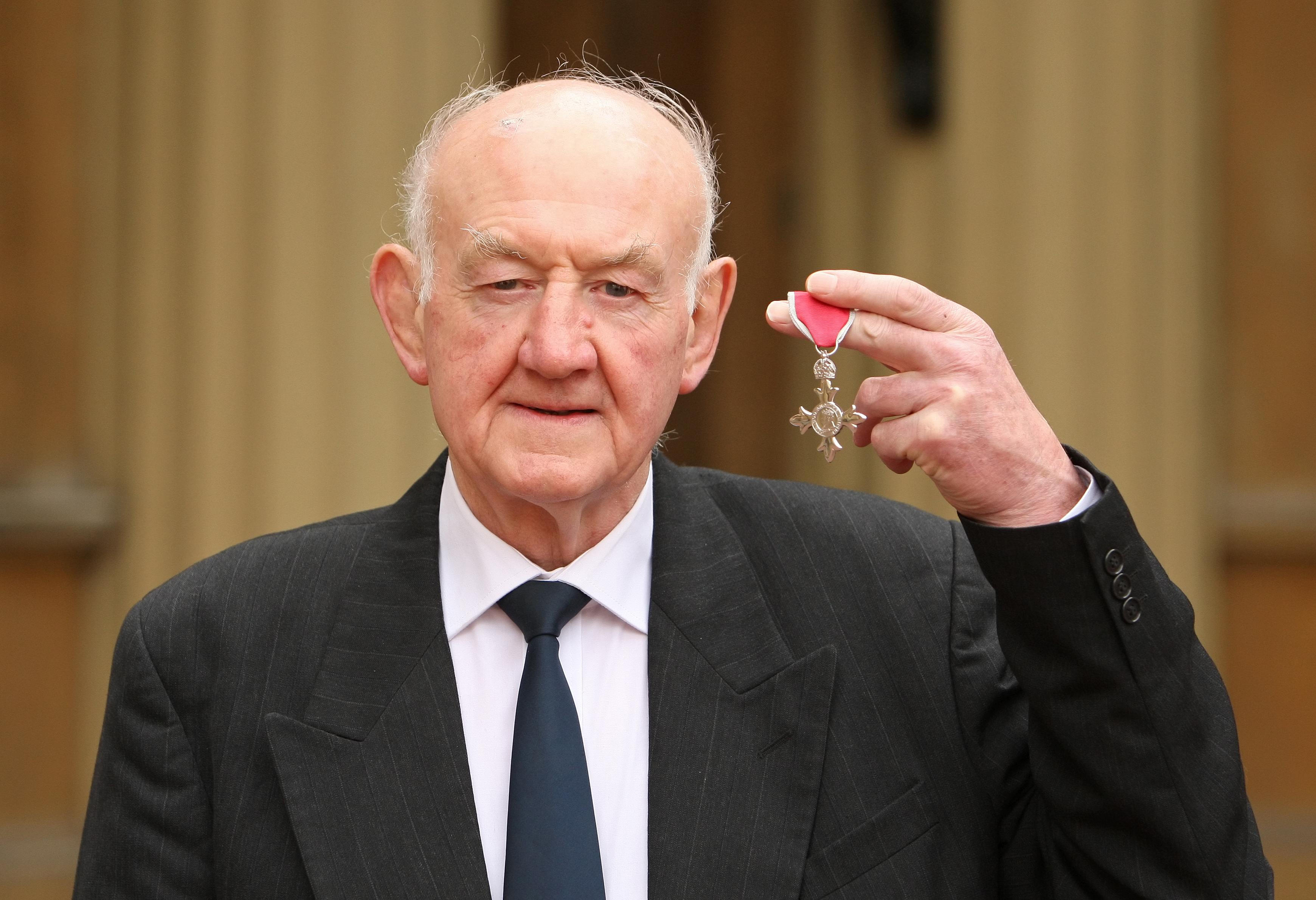
French with his MBE medal at Buckingham Palace in 2011
ALAMY
He retired from the BBC in 2008, but continued to attend games at his beloved St Helens. Indeed, he would “sidestep a sixpence” to do so.
Ray French MBE, rugby league player and commentator, was born on December 23, 1939. He died from complications arising from dementia on July 26, 2025, aged 86